

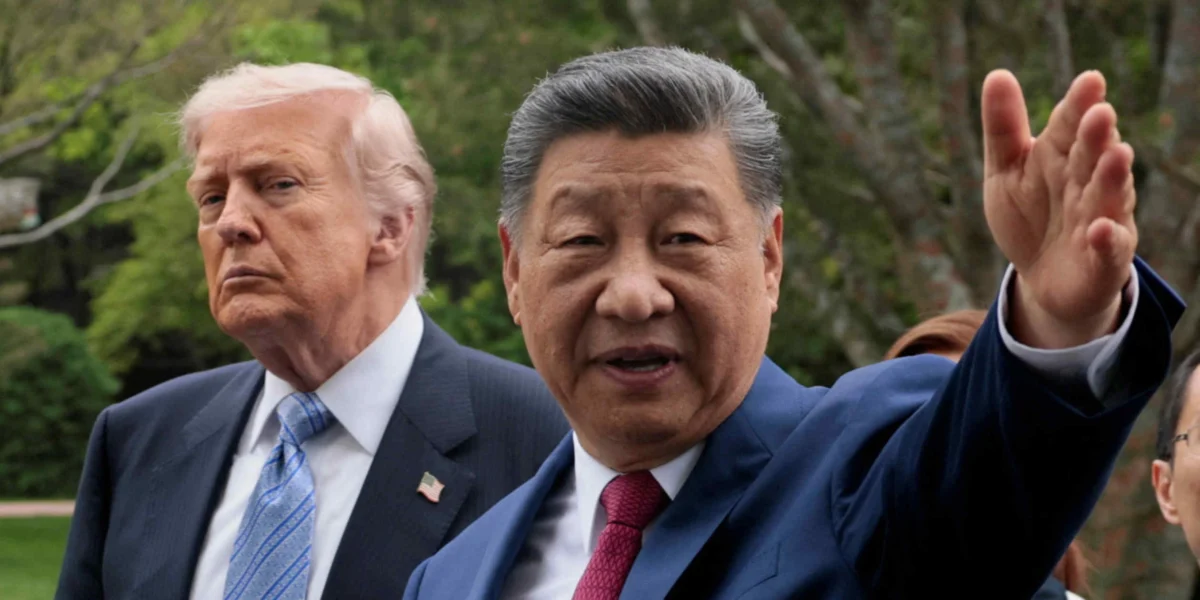
Chinese President Xi Jinping arrived in Washington for a highly anticipated summit with U.S. President Donald Trump, marking the second high-level meeting between the two leaders this year. The meeting, scheduled against a backdrop of escalating trade disputes, technological rivalry, and geopolitical uncertainties, carries significant weight for the future of the U.S.-China relationship and the global order. The White House is preparing a formal state welcome for the Chinese delegation, including a state dinner, underscoring the diplomatic importance of the occasion. However, expectations for breakthrough agreements remain tempered, with many analysts suggesting that the previous May summit between the two leaders prioritized symbolic gestures over substantial policy shifts. Discussions surrounding Taiwan, a perpetual flashpoint in bilateral relations, are expected to be particularly sensitive, especially given President Trump’s past characterization of arms sales to the island as a "very good negotiating chip."
The impending summit occurs as a trade truce between the two economic superpowers is set to expire in November, intensifying scrutiny on ongoing negotiations. The agenda is reportedly broad, encompassing critical areas such as tariffs, the strategic supply of rare earth materials, the burgeoning field of artificial intelligence, and the complex issue of intellectual property rights. The outcome of these discussions will not only shape the immediate economic landscape but also influence long-term technological development and global supply chains.
Shifting American Perceptions: A Generational Divide on China
As President Xi Jinping prepares for his summit in Washington, contemporary analysis reveals a notable shift in American public opinion regarding China, particularly among younger demographics and those leaning Democratic. Recent studies indicate a growing inclination towards engagement with Beijing rather than a complete decoupling, a sentiment that contrasts with the more hawkish stances often prevalent in older and more conservative segments of the population.
A comprehensive survey conducted by the Chicago Council on Global Affairs, released in the week preceding the summit, found that a significant 57% of American respondents favored continued engagement with China. This figure represents the highest level of support for engagement since 2020, a period largely defined by the global COVID-19 pandemic. The same poll also highlighted a perceived decline in global respect for the United States over the past decade, with a majority of respondents indicating that respect for China had either remained stable or increased.
Further granular data from the Ronald Reagan Institute Summer Survey underscores this generational divergence. The survey revealed that an overwhelming 93% of Americans aged 65 and older expressed concern regarding Chinese espionage activities. In stark contrast, this apprehension was shared by a considerably lower 62% of those aged 18 to 29. The younger demographic also exhibited less concern about the potential for military conflict over Taiwan, Chinese acquisitions of U.S. land, and China’s role in the global fentanyl trade. While data on Chinese public perception of the United States is less readily available, a discernible trend of declining visa applications and study abroad intentions from China suggests a growing caution, likely influenced by evolving visa policies and more stringent immigration regulations in the U.S.
China’s Evolving Global Image Amidst U.S. Leadership Perceptions
President Xi Jinping’s arrival in the U.S. coincides with a period where China’s global image has demonstrably improved, particularly when viewed in comparison to the United States. A report published by Gallup in April indicated that China had surpassed the U.S. in global approval ratings in 2025. The median approval for Chinese leadership stood at 36%, compared to 31% for the U.S., marking the widest gap in China’s favor in nearly two decades.
This shift is attributed not only to President Xi’s concerted efforts to project Beijing as a responsible global actor but also to a perceived deterioration in the international perception of American leadership during President Trump’s second term. The Gallup report elaborates, stating, "Overall, China’s move ahead of the U.S. more broadly reflects a decline in U.S. ratings rather than an increase in China’s ratings."
More recent findings from a Pew Research Center survey, conducted across 37 economies, corroborate this trend. The survey revealed that a median of 51% of respondents held a favorable view of China. Perceptions of China were particularly warm in Southeast Asia, Africa, and Latin America, regions where China has significantly deepened its trade ties in recent years through initiatives like the Belt and Road Initiative and increased investment in infrastructure projects.
Confidence in both President Trump and President Xi was generally low across the surveyed nations. However, individuals from 22 countries viewed President Xi more favorably than President Trump. Conversely, respondents in only eight countries, including Japan and Israel, expressed significantly greater confidence in President Trump. Despite these findings, the Pew survey did note that the U.S. government generally ranked higher than Beijing in terms of respect for personal freedoms.
Decades of Change: Context for the 2026 Summit
This visit marks President Xi Jinping’s first official state visit to the United States since 2015 and his first time on American soil since attending the APEC forum in 2023. The intervening decade has witnessed profound transformations in both nations, providing crucial context for understanding the current dynamics of their bilateral relationship and the potential approaches of their respective administrations.
Within the United States, a robust stock market, largely propelled by investments in artificial intelligence, has generated substantial wealth among high-income households. However, middle- and low-income families continue to grapple with escalating costs of living, a situation exacerbated by elevated energy prices stemming from the Trump administration’s geopolitical strategies. According to Mark Zandi, chief economist at Moody’s Analytics, the wealthiest 20% of Americans now account for an imposing 60% of personal spending.
Polling data suggests that persistent affordability challenges have eroded President Trump’s popularity. A Reuters/Ipsos poll released in the week leading up to the summit indicated that only 32% of Americans approved of the president’s job performance, marking a career low. Furthermore, a mere 17% approved of his handling of living costs.
While public polling on President Xi’s performance within China’s Communist Party state is not publicly accessible, indicators of underlying discontent exist, particularly in relation to labor market pressures. Youth unemployment reached a record high of 18.9% in August, coinciding with the widespread adoption of artificial intelligence technologies that are reshaping the employment landscape.
China has solidified its position as the global manufacturing powerhouse, achieving a record trade surplus exceeding $1 trillion. This economic dominance has persisted despite President Trump’s sustained efforts, initiated during his first term in 2018, to curtail China’s trade advantages through the imposition of tariffs. Chinese companies have also made significant strides in technological innovation. However, the nation’s economy is characterized by a two-tiered structure: a protracted property market slump has diminished household wealth and suppressed retail spending, while official growth rates have exhibited a downward trend.
Expert Assessments: Military Buildup and Taiwan’s Future
At a forum held in Sydney prior to the summit, leading experts in Asian affairs and military strategy offered cautious assessments of the geopolitical landscape. Admiral John Aquilino, retired commander of the U.S. Indo-Pacific Command, highlighted China’s ongoing military expansion, describing it as the most significant since World War II. He stated, "Their industrial base is in a wartime footing. They are cranking out ships, submarines and airplanes like it’s their day job. That is for only one reason, and that is for the PRC to change the current world order in ways that benefit China at the expense of all of us."
Admiral Aquilino emphasized the imperative for the U.S. to collaborate with its allies on developing economic alternatives and bolstering deterrence capabilities. He expressed profound concern regarding the trajectory of discussions about Taiwan during the upcoming summit, noting that Reuters had reported Xi Jinping was likely to press President Trump to halt new arms sales to Taipei.
Kurt Campbell, former U.S. Deputy Secretary of State and co-founder of The Asia Group, speaking at the same event, observed that President Xi’s strategy appears to be aimed at "reducing the confidence in Taiwan in the United States" by shaping perceptions of the island and actively resisting arms sales. Lai I-Chung, president of the Prospect Foundation think tank, affirmed that Taiwan would be observing the summit with intense focus but stressed that the island’s ultimate destiny would "not be determined by the negotiation between those two powers."
Elon Musk’s Praise and Beijing’s Diplomatic Framing
In a notable public statement, Tesla CEO Elon Musk, interviewed by Chinese state broadcaster CCTV, lauded President Xi Jinping as a "great leader." Musk, who is reportedly scheduled to attend the state dinner with both presidents in Washington, asserted that China has "prospered immensely" under Xi’s tenure. Musk has repeatedly expressed positive sentiments about China in recent weeks, while simultaneously refuting rumors of intentions to divest Tesla’s operations from the country.
The official Chinese media has framed the summit with a broadly optimistic tone. A commentary in the Communist Party’s People’s Daily described the China-U.S. relationship as "the most important and complex bilateral relationship in the world, and head-of-state diplomacy serves as the ‘guiding star’ of this relationship." The commentary repeatedly invoked the concept of "constructive strategic stability," a framework that emerged from the May summit, suggesting a desire to maintain a predictable, albeit competitive, relationship.
In a separate piece published in People’s Daily, China’s Ambassador to the U.S., Xie Feng, delineated clear boundaries for the bilateral discussions. He stated, "China’s sovereignty, security, and development interests cannot be violated, and four red lines — the Taiwan question, democracy and human rights, development paths and systems, and development rights — cannot be challenged." This assertive framing highlights Beijing’s non-negotiable stance on core issues of national interest.
Arrival in Washington and Strategic Implications
President Xi Jinping, accompanied by his wife Peng Liyuan, top aide Cai Qi, and Foreign Minister Wang Yi, departed for Washington, according to reports from China’s state news agency Xinhua. The presidential delegation is scheduled to land at Joint Base Andrews in the early evening, where President Trump is expected to personally greet President Xi, a gesture of diplomatic protocol that signifies the high level of attention dedicated to this meeting.
Analysts at Oxford Economics characterized the trip as an indication that "the U.S.-China relationship is becoming more predictable," but also suggested that both sides are primarily "buying time." Their assessment posits that China aims to safeguard its export markets while simultaneously reducing its reliance on foreign technology. The U.S., in turn, seeks to mitigate immediate supply chain disruptions and bolster domestic manufacturing capabilities. The firm’s analysis concluded that the unwinding of deep economic interdependence is a protracted process, requiring substantial time for both nations to develop credible alternatives.
The economists anticipate that the summit’s outcomes will likely be "narrow" and "reversible." Potential agreements could include limited tariff relief, an expansion of commitments to purchase American agricultural products and aircraft, and pledges of cooperation on issues such as AI safety and Iran policy. However, more contentious matters, including technological rivalry, the issue of transshipments, and the status of Taiwan, are expected to remain unresolved. This underscores the complex and multifaceted nature of the U.S.-China relationship, where progress in one area does not necessarily translate to breakthroughs in others. The summit, therefore, represents not an endpoint, but a crucial juncture in an ongoing strategic dialogue.
