

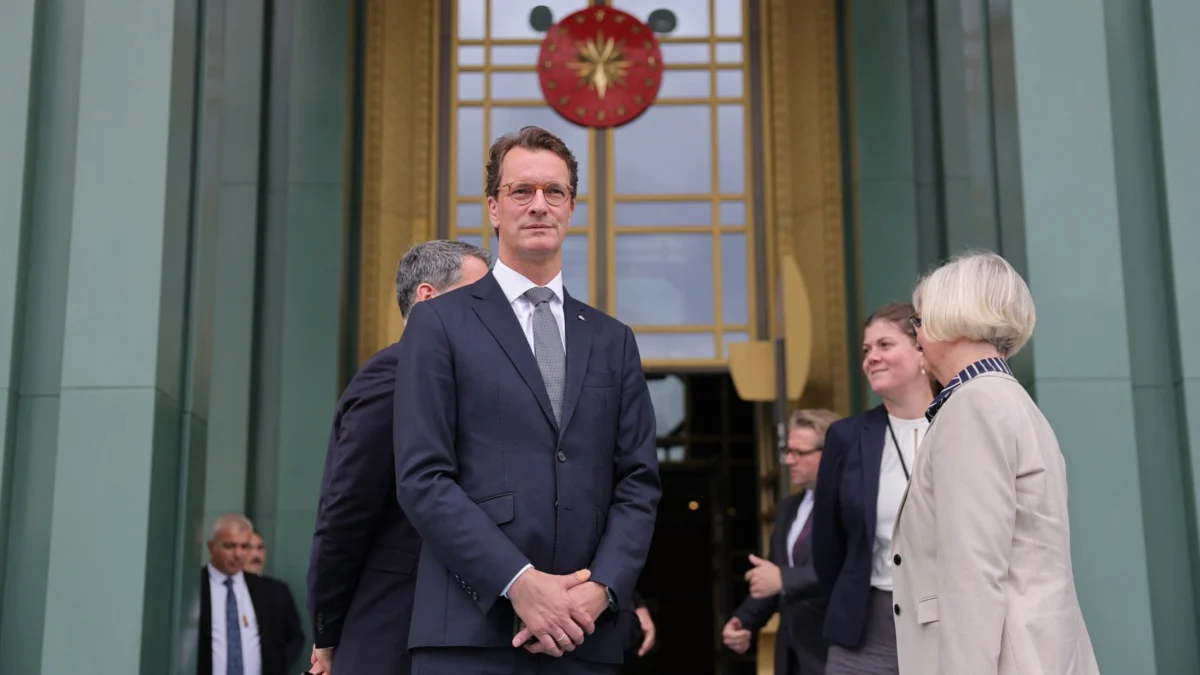
North Rhine-Westphalia’s Minister-President Hendrik Wüst has embarked on a significant three-day journey to Ankara and Istanbul, a trip that is increasingly being interpreted not merely as a regional diplomatic endeavor, but as a calculated move to bolster his profile on the national and international stage. The extensive delegation accompanying Wüst, comprising prominent business leaders and a substantial media contingent, underscores the strategic importance of this visit, fueling speculation about his potential future role within the Christian Democratic Union (CDU) and, by extension, on the federal level as a contender for the chancellorship.
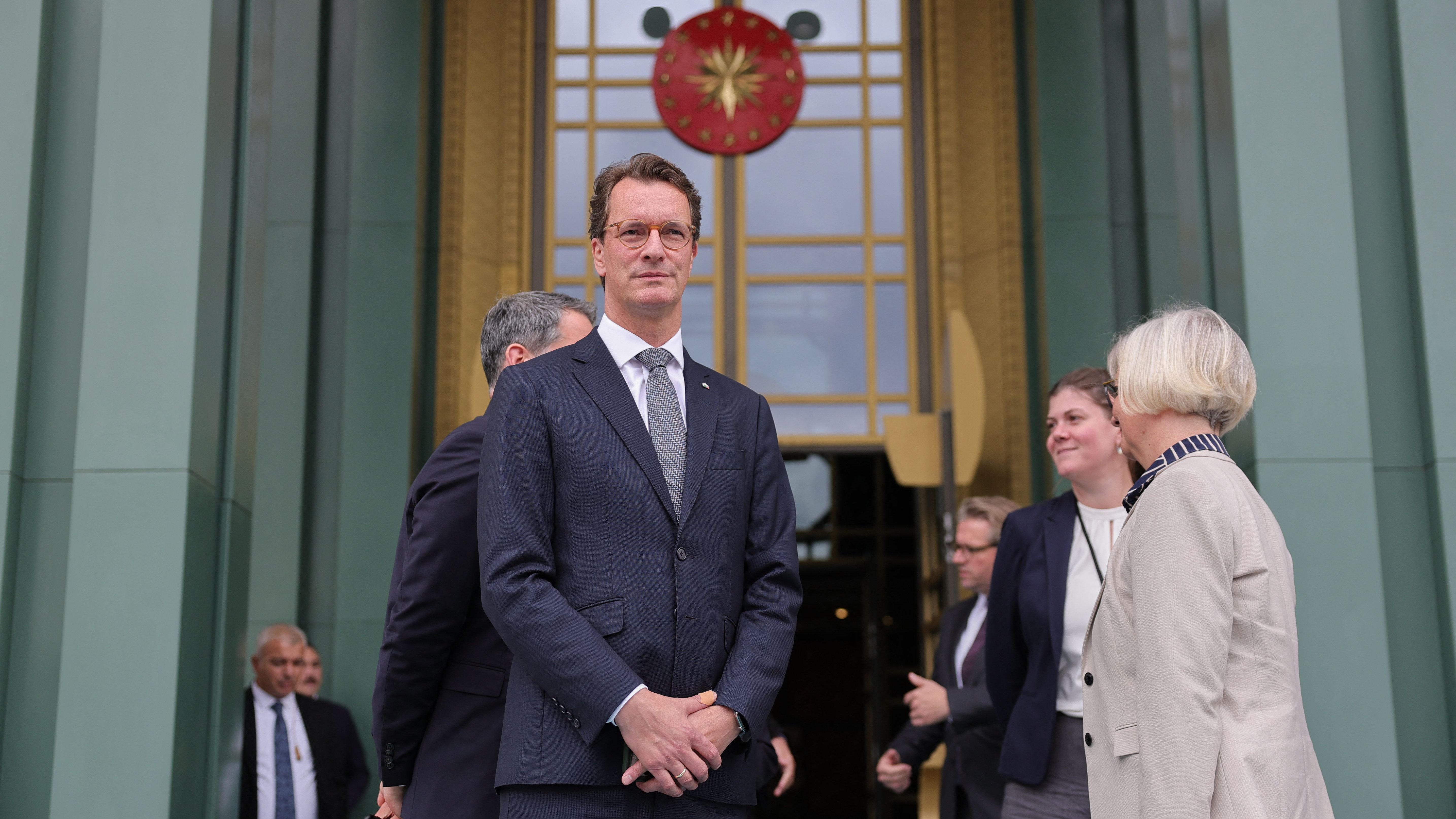
The Diplomatic Offensive in Turkey
Wüst’s visit to Turkey, a nation of considerable geopolitical and economic importance to Germany, places him directly in the international arena, a domain typically reserved for federal ministers and the Chancellor. The choice of Turkey as a destination is noteworthy. The country is navigating complex internal political dynamics and plays a crucial role in regional security and migration policy. Wüst’s engagement with Turkish President Recep Tayyip Erdoğan, including a reportedly extended meeting at the presidential palace, signifies a high level of diplomatic engagement. While Wüst traveled on a commercial flight, a detail that contrasts with the use of government aircraft by federal officials, the substantive nature of the discussions and the size of his delegation suggest a deliberate effort to demonstrate his capacity for handling foreign policy matters.
The Turkish President’s willingness to meet with Wüst underscores the recognition of the North Rhine-Westphalian leader’s growing influence. Erdoğan’s reception of Wüst, even if protocol placed the German politician slightly to the side in official photographs, is a significant gesture. This meeting, reportedly lasting around 50 minutes and exceeding its scheduled duration, indicates a mutual interest in dialogue on issues that transcend bilateral relations and touch upon broader European and global concerns. The presence of key figures from German industry, such as Carsten Knobel, CEO of Henkel, and Lionel Souque, CEO of Rewe, highlights the economic dimension of the trip, aiming to strengthen trade ties and explore investment opportunities. Germany remains Turkey’s largest trading partner, and economic cooperation is a vital component of their bilateral relationship. In 2023, German exports to Turkey amounted to approximately €29.3 billion, while Turkish exports to Germany reached around €24.6 billion, demonstrating the scale of this interdependence.

Fueling the Kanzler-Debate
The timing and nature of Wüst’s trip have inevitably intensified the ongoing discussion surrounding the leadership within the CDU. With current party leader Friedrich Merz facing scrutiny and internal debate regarding his effectiveness, any prominent CDU politician undertaking high-profile international engagements is bound to be seen through the lens of potential succession. Wüst, as the Minister-President of Germany’s most populous state, holds a significant position within the party hierarchy. His proactive approach to foreign policy, demonstrated by this extensive trip, can be interpreted as an attempt to showcase his readiness for higher office and to project an image of statesmanship.
The perception that Wüst is "demonstrating that he can also be an "Auslandskanzler" (foreign minister-chancellor)" is a central theme driving this narrative. This phrase captures the essence of his perceived strategy: to prove his competence and gravitas on an international stage, thereby positioning himself as a credible alternative for federal leadership. The CDU, a major opposition party in Germany, is keenly aware of the need to present a strong and united front. Leadership questions are therefore a constant undercurrent in party discourse. Wüst’s calculated moves, including this well-publicized trip, are seen by many as strategic steps in a longer game for political ascendancy.
Background and Context
The political landscape in Germany is complex, with the federal government facing numerous challenges, including economic headwinds, energy policy debates, and international security concerns. Within the CDU, there has been an ongoing discussion about the party’s direction and leadership since its electoral defeat in 2021. Friedrich Merz, who took over as party leader in January 2022, has been tasked with rebuilding the CDU’s electoral strength and preparing it for a potential return to power. However, his leadership has not been without its critics, and various figures within the party are seen as potential successors.
Hendrik Wüst, aged 48, has been the Minister-President of North Rhine-Westphalia since October 2021. He is known for his pragmatic approach and has managed to maintain relatively high approval ratings in his state. His political background includes experience in the state parliament and as State Minister for Transport. His current role as head of Germany’s most industrialized and populous state provides him with a significant platform and a considerable base of support.

Turkey, under President Erdoğan, has undergone significant political and economic transformations in recent years. Its relationship with European Union countries, including Germany, has been characterized by periods of cooperation and tension. Key issues often include trade, security, migration, and human rights. Germany, with its large Turkish diaspora, has a particular interest in maintaining stable relations with Ankara. Wüst’s visit can be seen as an effort to foster dialogue and understanding on these critical fronts, while also demonstrating Germany’s continued commitment to engagement with its key international partners.
Unprecedented Protocol and Strategic Signaling
The decision to fly on a commercial airline, while seemingly a minor detail, is significant in the context of German politics. Federal ministers and the Chancellor typically utilize government aircraft, signifying their official capacity and the importance of their travel. Wüst’s choice to fly with SunExpress, a leisure airline, might be seen as a deliberate attempt to project an image of accessibility and pragmatism, or perhaps to avoid the perception of excessive state expenditure. However, the substance of his itinerary and the caliber of his delegation overshadow this logistical choice.

The "unusual protocol" surrounding his reception by President Erdoğan speaks volumes. While the exact reasons for this exceptional treatment are subject to interpretation, it suggests that Erdoğan views Wüst not just as a regional leader, but as a potential future figurehead of German federal policy. This perception could be influenced by Wüst’s public statements, his party affiliation, and his growing visibility. For Wüst, such a reception is a strategic coup, providing him with invaluable international exposure and a tangible demonstration of his diplomatic capabilities.
The approximately 50-minute meeting with Erdoğan is a substantial amount of time for a head of state to dedicate to a visiting regional politician. This suggests that the topics discussed were of mutual importance. These could have ranged from economic cooperation, energy security, and the ongoing war in Ukraine to regional stability and migration issues. Turkey’s strategic position as a bridge between Europe and Asia, and its complex relationships with neighboring countries, makes it a crucial player in global affairs. Wüst’s ability to engage effectively on these multifaceted issues would be a key indicator of his suitability for higher federal responsibilities.

Broader Implications and Future Prospects
Wüst’s foreign policy excursion is more than just a diplomatic visit; it is a carefully orchestrated political maneuver. By engaging directly with a significant global leader and navigating complex international issues, he is attempting to broaden his appeal beyond his regional base and present himself as a national statesman. This strategy, if successful, could significantly enhance his standing within the CDU and among the broader electorate.
The implications for the CDU are considerable. A strong performance by Wüst in Turkey could galvanize support for his leadership aspirations and provide a much-needed boost to the party’s image. Conversely, any missteps or perceived lack of substance could have a detrimental effect. The media coverage surrounding his trip will play a crucial role in shaping public perception.

The visit also highlights a broader trend in German politics, where regional leaders are increasingly taking on roles that extend beyond their immediate administrative responsibilities. As the federal government grapples with domestic and international challenges, the CDU, like other major parties, is likely to be looking for figures who can project confidence and competence on a global scale. Hendrik Wüst, through his ambitious trip to Turkey, is making a clear statement of intent, positioning himself as a serious contender in the evolving political landscape of Germany. His success will depend not only on the outcomes of his diplomatic engagements but also on how effectively he can translate this international experience into domestic political capital.
