

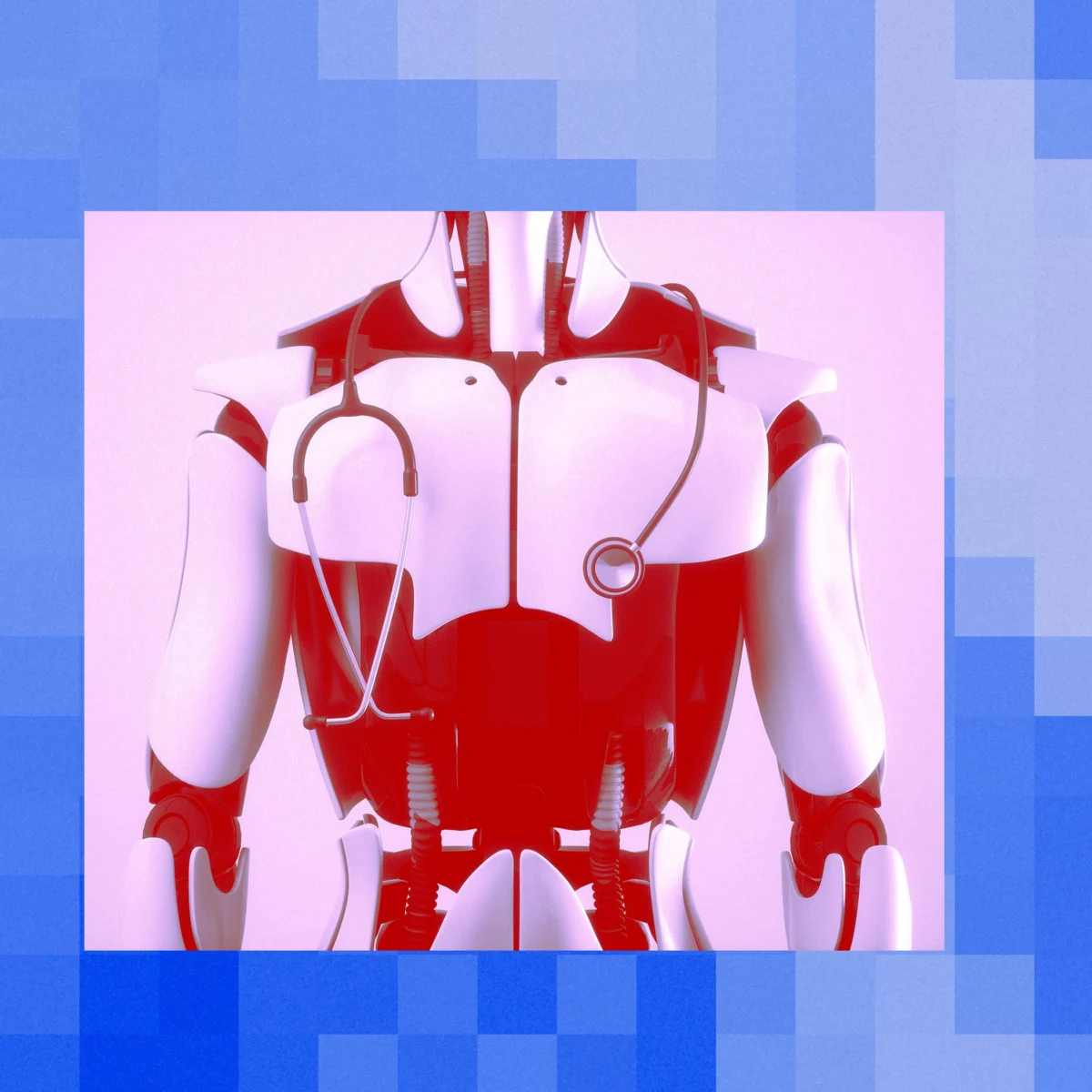
A recent, provocative article published in the Journal of the American Medical Association (JAMA) posits a future where artificial intelligence, operating autonomously, will not only match but surpass human physicians and even AI-assisted doctors in delivering optimal medical care. The research, spearheaded by prominent figures like medical ethicist Ezekiel Emanuel and venture capitalist Vinod Khosla, challenges the prevailing notion of a collaborative AI-human medical future, suggesting instead that pure AI may soon represent the zenith of healthcare. This assertion, presented not as a question but a definitive conclusion, has ignited a vigorous debate within the medical community, raising profound questions about the future role of human clinicians.
The Genesis of a Bold Prediction
The foundational premise of the JAMA article, titled "Will Autonomous AI Exceed AI-Physicians as the Best Medical Care?", is that AI alone is poised to deliver superior patient outcomes. The authors meticulously reviewed all published research on AI in medicine from January 1, 2024, to the present. Their analysis leads them to conclude that AI is rapidly approaching a critical inflection point where it will independently excel in five fundamental medical tasks: taking medical histories, establishing diagnoses, identifying necessary diagnostic tests, prescribing treatments, and managing chronic diseases. In essence, the core functions of "doctoring" are presented as increasingly within the sole purview of artificial intelligence.
A particularly striking and controversial assertion from the authors is that "humans in the loop degrade AI performance." This suggests a paradigm shift where the presence of a human clinician could, paradoxically, hinder the efficacy of AI-driven medical interventions. This perspective implies that for maximum accuracy and efficiency, the hands-off approach, allowing AI to operate without human oversight, may become the preferred modality for achieving the best possible patient care.
Ezekiel Emanuel, a renowned oncologist and Chair of the Department of Medical Ethics and Health Policy at the University of Pennsylvania, admits his initial skepticism regarding AI’s capacity to perform core medical functions. He recalls numerous discussions with Vinod Khosla throughout the 2010s, where the venture capitalist consistently predicted AI would handle 85% of physician duties by 2035. Khosla, a long-time advocate for AI in healthcare, had published articles such as "Doctors or Algorithms?" in TechCrunch in 2012 and a more extensive treatise in 2016, both exploring the potential displacement of human doctors by algorithmic decision-making. Emanuel, at the time, dismissed these ideas as improbable, citing the inherent complexity of medical practice.
The turning point for Emanuel, he explains, came approximately a year prior to the article’s publication, when he reviewed galleys of Robert Wachter’s book, A Giant Leap. Wachter, Chief of Medicine at the University of California, San Francisco (UCSF), envisioned a tiered healthcare system where premium care would involve AI-doctor collaboration, while a more accessible "economy class" of care would rely predominantly on AI. This perspective prompted Emanuel to reconsider Khosla’s long-held views. The daunting question then emerged: "If AI takes over, what’s left for doctors to do?" This question became the impetus for the collaborative research effort.
The Collaborative Research Effort and its Findings
To validate this premise, Emanuel partnered with Vinod Khosla. Vinod Khosla suggested his son, Neal Khosla, who leads Curai Health, an AI-driven healthcare company, join the research team. Neal Khosla’s company utilizes AI to treat patients, employing a staff of doctors to manage more complex cases and prescribe medications, a model that highlights the evolving landscape of AI-human integration in healthcare. The research paper transparently discloses potential conflicts of interest, including Vinod Khosla’s investments in AI healthcare companies and Emanuel’s various grants and consultancy roles.
The co-authors embarked on a comprehensive review of AI medicine literature published from January 2024 to the present. Their analysis identified a growing body of evidence suggesting that a "superior autonomous AI" could surpass human physicians aided by AI by as early as 2030. While acknowledging the potentially "unsettling" nature of this prediction, they deemed it "probable" based on the trajectory of current research and development.
Industry Reactions and Counterarguments
The implications of this prediction have naturally drawn strong reactions from key stakeholders. John Whyte, CEO of the American Medical Association (AMA), represents a significant portion of the medical professionals who might be impacted by such a shift. Whyte has voiced reservations about the JAMA article’s findings, pointing to methodological concerns. He noted that some of the studies reviewed are simulations rather than rigorous, blinded experiments, and that not all evidence uniformly supports the article’s bold conclusion.
Specifically, Whyte referenced a February 2026 Nature article that indicated real-world patient interactions with large language models often prove ineffective for accessing their full expertise. Patients, the study suggested, struggle to formulate questions and engage in meaningful dialogue with AI to obtain accurate and comprehensive medical guidance. Whyte expressed strong disagreement with the idea of removing physicians from the clinical loop, stating, "The AMA does see the potential in these tools, but they have to be utilized in the context of a care plan that’s governed by a physician."
Emanuel, in response to these criticisms, defended the authors’ cautious approach to their conclusions. He highlighted the rapid pace of AI development, emphasizing that "It’s been less than four years since ChatGPT was introduced… We’re making a prediction for four years from now. You don’t think that [AI is] going to be way more advanced than a doctor?" This argument underscores the exponential growth curve of AI capabilities, suggesting that current limitations may be quickly overcome.
Robert Wachter, whose work was cited and arguably countered by the JAMA article, has also weighed in. While initially positioning AI-only treatment as a potential "economy class" option, Wachter concedes that the JAMA authors’ core argument holds significant weight. He acknowledges that while AI and human doctors working together are currently superior, this synergy might not remain the optimal model indefinitely. "The argument they’re making is important," Wachter stated, adding, "AI is good, and right now AI and humans together are better. But that can no longer be chiseled into a tablet. There will be times when humans will muck up the performance."
However, Wachter remains a staunch advocate for the irreplaceable human element in medicine. He emphasizes that AI may never replicate the empathy and nuanced communication required for delivering difficult news or guiding patients through complex treatment decisions. He invokes what he terms the "doorman fallacy" to illustrate his point. Just as doormen in luxury buildings perform a multitude of tasks beyond simply opening doors – accepting packages, caring for pets, and offering a listening ear – Wachter believes physicians will evolve to encompass a broader set of valuable, non-diagnostic functions. "We’re going to find a version of the doorman fallacy for doctors," he posited. "I can imagine a world where a doctor accepts the AI diagnosis but also performs a lot of other functions that have value."
The Specter of "De-skilling" and the Future of Medical Training
A significant concern raised by the article and echoed by medical professionals is the potential for "de-skilling" among physicians. As AI becomes increasingly proficient in diagnosis and treatment planning, there is a risk that future generations of doctors may not develop the same depth of clinical judgment and diagnostic acumen. The reliance on AI for immediate answers could diminish the perceived necessity of years of rigorous training in traditional diagnostic methods.
This concern is particularly pertinent to medical education. Whyte of the AMA acknowledges this challenge: "A lot of medical schools and residency programs are debating whether physicians in their training can utilize these tools, because if you’ve never learned how to take a medical history and do a physical, how will you ever learn?" Conversely, there is an argument that deliberately ignoring such a powerful and effective tool could itself be considered a form of malpractice.
Vinod Khosla suggests that while surgical and emergency room roles might persist for human doctors in the short term, their expertise and judgment in other areas could become largely redundant. He even proposes that physicians might serve as "debaters" with AI to further refine and improve these systems. Neal Khosla anticipates regulatory advancements that will eventually permit AI to prescribe medications, signaling a further erosion of traditional physician responsibilities.
Broader Societal Implications
The implications of AI’s ascent in medicine extend far beyond the healthcare sector, raising fundamental questions about the future of human labor and societal value. The scenario depicted in the JAMA article, where AI autonomously handles complex diagnostic and treatment tasks, evokes comparisons to fictional portrayals of medical genius, such as the character Dr. House. In such a future, the unique human qualities of empathy, intuition, and high-level emotional intelligence might become the primary differentiators of human clinicians. However, even these roles could be threatened as AI evolves.
The debate over AI in medicine mirrors broader societal anxieties about automation and its impact on employment. Bill Gates, in a recent commentary on AI, suggested that society might need to actively designate certain tasks as "human-reserved" to mitigate widespread economic disruption and social unrest. This could involve roles like AI-assisted patient counseling on how to interpret AI-generated prognoses. The challenge lies in justifying such "make-work" jobs to corporate entities focused on efficiency and profitability.
Ultimately, the JAMA article presents a stark, albeit potentially prescient, vision of the future of healthcare. It challenges the established order and forces a reckoning with the transformative power of artificial intelligence. As AI continues its relentless march of progress, the question of what remains for human physicians, and by extension, for humans in general, becomes increasingly urgent. The promise of first-class medical advice, just a click away, may come at a profound cost to the traditional roles and perceived value of human expertise.
