

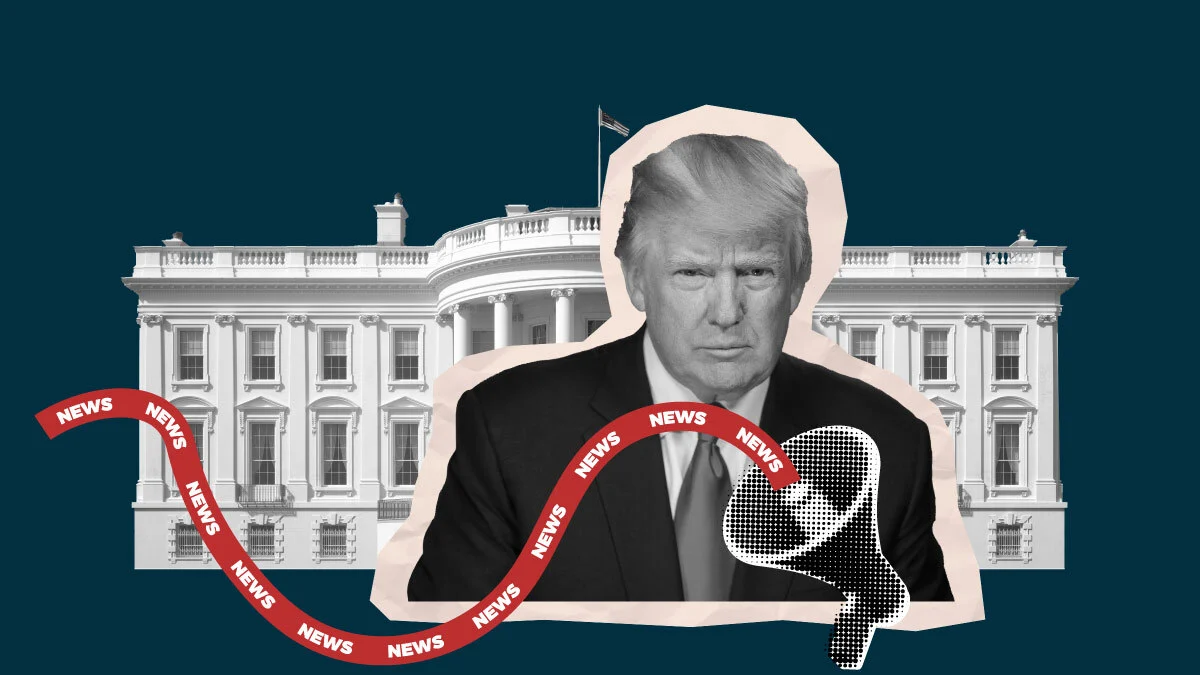
President Donald Trump has officially established a White House committee to investigate Federal Reserve Governor Lisa Cook regarding allegations of mortgage fraud, representing a significant escalation in the administration’s efforts to remove her from the central bank “for cause.” The move, formalized through a presidential memorandum posted on the White House website, marks a pivotal moment in the ongoing friction between the executive branch and the Federal Reserve, testing the legal and structural boundaries of an institution designed by Congress to operate with a high degree of independence.
The presidential memorandum asserts that the executive’s primary responsibility is to ensure that federal laws are faithfully executed. In the document, President Trump emphasized that his role necessitates the dismissal of subordinates who fail to maintain standards of truthfulness and legal compliance. By establishing this committee, the administration is seeking to build a formal record that would justify the removal of a Fed governor—a process that is historically rare and legally complex.
Composition and Mandate of the Investigative Committee
The newly formed committee is composed of high-ranking officials from across the federal government, signaling the administration’s intent to conduct a multi-faceted review of Governor Cook’s personal financial disclosures and history. The panel includes the Assistant to the President for Economic Policy, the Chairman of the Equal Employment Opportunity Commission (EEOC), and the Director of the Office of Government Ethics (OGE).
The specific mandate of the committee is to determine whether Governor Cook made false statements in connection with one or more mortgage instruments. Under federal law, making false statements on loan applications is a serious offense, and the memorandum argues that such conduct, if proven, would meet the "for cause" threshold required to remove a member of the Federal Reserve Board of Governors before their 14-year term expires.
The investigative process is designed to include inter-agency cooperation. The White House has indicated that the panel will consult with the Department of Justice (DOJ) and other executive branch departments to review existing evidence and potentially uncover new documentation. To satisfy due process requirements, the White House has scheduled an in-person hearing for November 5, providing Governor Cook with an opportunity to address the allegations. Additionally, she has been granted until November 10 to submit a formal written statement for the committee’s consideration.
Origins of the Allegations and the Role of the FHFA
The allegations against Governor Cook originated from referrals made by Bill Pulte, the Director of the Federal Housing Finance Agency (FHFA). Pulte has alleged that Cook falsified bank documents to secure more favorable terms on mortgage loans. Specifically, the claims suggest that Cook identified certain properties as primary residences to benefit from lower interest rates and smaller down payment requirements, when the properties were allegedly intended for use as investment or secondary residences.
In response to these referrals, the Department of Justice launched a preliminary investigation last year. It is important to note that while the DOJ has opened a probe, Governor Cook has not been charged with any crime. The White House, however, has argued that the standard for administrative removal “for cause” is not strictly tied to a criminal conviction. In a letter sent earlier this year, reportedly signed by Deputy Chief of Staff Dan Scavino, the administration argued that "gross negligence" and a lack of "trustworthiness" are sufficient grounds for removal, regardless of whether the conduct results in a formal indictment.
The Legal Landscape: Supreme Court Precedent and Fed Independence
The establishment of this committee follows a landmark Supreme Court ruling in late June that clarified the president’s authority over the Federal Reserve. In a 5-4 decision, the Court ruled that while the president cannot remove Fed governors at will, they can be ousted "for cause." Chief Justice John Roberts, writing for the majority, emphasized that any such removal must be accompanied by notice and an opportunity for the official to respond to the allegations.
This ruling was seen as a dual victory for both the White House and proponents of central bank independence. While it affirmed that the Fed is not entirely insulated from executive oversight in cases of misconduct, it also reinforced the necessity of a rigorous, transparent process to prevent political whims from dictating the leadership of the nation’s monetary policy. The current committee and the scheduled November hearings appear to be a direct response to the procedural requirements laid out by the Supreme Court.
Governor Cook’s Career and the Political Context of Her Appointment
Lisa Cook’s tenure at the Federal Reserve has been characterized by both historic significance and intense political scrutiny. She is the first Black woman to serve on the Board of Governors, bringing a background in international economics and a distinguished academic career at Michigan State University. Her confirmation in 2022 was one of the most contentious in recent history, resulting in a 50-50 split in the Senate. The deadlock was only broken by then-Vice President Kamala Harris, who cast the deciding vote to secure Cook’s seat.
Since joining the Board, Cook has been a consistent voice in the Fed’s deliberations on interest rates and inflation. Her legal team has vigorously denied the mortgage fraud allegations, labeling them "baseless" and "politically motivated." They contend that the administration’s focus on her personal financial history is an attempt to exert influence over the Federal Reserve’s rate-setting decisions, which have profound implications for the global economy.
Supporting Data: The Impact of Mortgage Misrepresentation
The crux of the investigation centers on the financial advantages gained through "primary residence" mortgage designations. According to data from the mortgage industry, interest rates for primary residences are typically 0.50% to 1.00% lower than those for investment properties. Furthermore, down payment requirements for primary homes can be as low as 3% to 5%, whereas investment properties often require 20% to 25% down.
The White House argues that if a high-ranking official overseeing the nation’s financial system misrepresented facts to gain these advantages, it constitutes a fundamental breach of ethics. Critics of the investigation, however, point out that such discrepancies are often the result of clerical errors or changing life circumstances rather than intentional fraud, and that the scrutiny applied to Cook is disproportionate compared to other federal appointees.
Comparative Context: Presidential Records and Public Scrutiny
The investigation into Governor Cook has also brought renewed attention to President Trump’s own history with mortgage instruments. A report published in December 2025 by ProPublica highlighted that in the early 1990s, Trump signed mortgages for two neighboring homes in Palm Beach, Florida, affirming that the properties would serve as his principal residence. At the time, Trump was a legal resident of New York.
While the White House has dismissed comparisons between the President’s private business dealings decades ago and a sitting Fed governor’s current disclosures, the ProPublica report has become a point of contention for Cook’s supporters. They argue that the administration is applying a standard of "trustworthiness" to Cook that has not been consistently applied elsewhere, further fueling claims of political interference.
Broader Implications for Central Bank Autonomy
The outcome of this committee’s investigation could have far-reaching consequences for the structure of the American government. The Federal Reserve was designed by the Federal Reserve Act of 1913 to be a "long-horizon" institution, with 14-year terms for governors to ensure they are not pressured by the four-year election cycles of the presidency.
If Governor Cook is successfully removed, it would set a precedent that a president can use administrative investigations into personal conduct to bypass the traditional independence of the Fed. Economists warn that any perceived loss of Fed independence could lead to market volatility, as investors may begin to fear that monetary policy is being driven by political objectives rather than economic data.
As the November 5 hearing approaches, the financial world will be watching closely. The committee’s findings will likely be subject to further legal challenges, potentially returning to the Supreme Court to define exactly what constitutes "cause" for the removal of one of the world’s most powerful economic regulators. For now, the Federal Reserve remains in a state of unprecedented tension with the White House, a situation that challenges the very foundations of the U.S. financial regulatory framework.
