

SHANGHAI – American businesses operating in China have reported a significant rebound in confidence, moving away from record low levels, according to a comprehensive survey released on Thursday. This shift in sentiment appears to be directly linked to the recent trade truce between Washington and Beijing, which has demonstrably reduced uncertainty surrounding tariffs and export controls that have plagued bilateral economic relations for years. While the easing of these high-level tensions is a welcome development, the survey also reveals a critical evolution in the challenges faced by these companies: domestic competition has now surpassed the bilateral US-China dynamic as the primary concern for their operations and future growth.
The findings of the survey, conducted by a prominent international business association with a substantial presence in China, paint a nuanced picture of the current operating environment. For months, the specter of escalating trade wars, targeted sanctions, and stringent export restrictions had cast a long shadow over foreign investment and business planning in the world’s second-largest economy. The tentative agreement reached between the two superpowers, however, has offered a much-needed respite, allowing businesses to recalibrate their strategies and invest with a greater degree of predictability. This reduction in geopolitical friction has not only boosted immediate confidence but also signaled a potential for renewed engagement and collaboration.

Background: A Period of Heightened Uncertainty
The period leading up to this survey was marked by unprecedented volatility in US-China economic relations. Starting in 2018, the Trump administration initiated a series of escalating tariffs on Chinese goods, which were met with retaliatory measures from Beijing. This tit-for-tat tariff exchange, coupled with restrictions on technology transfers and increased scrutiny of Chinese investments in the US and vice-versa, created a climate of deep uncertainty. American companies in China found themselves caught in the crossfire, facing higher costs for imported components, reduced access to certain technologies, and a growing risk of disruption to their supply chains.
Export controls, in particular, became a significant point of contention. The US government imposed sanctions on several Chinese technology companies, citing national security concerns, which had ripple effects across various sectors. This led to American firms reassessing their reliance on Chinese suppliers and, conversely, Chinese companies exploring alternatives to US technology. The broader geopolitical rivalry between the two nations also fueled concerns about the long-term stability of the business environment, prompting many companies to consider diversification strategies and even relocation of manufacturing facilities.

The Trade Truce: A Catalyst for Renewed Confidence
The recent trade truce, while not a complete resolution of all underlying issues, has been instrumental in calming these fears. Details of the truce, which reportedly involve a rollback of certain tariffs and a commitment to continued dialogue on contentious issues, have been cautiously welcomed by the business community. The immediate impact has been a discernible reduction in the perceived risk associated with operating in China.
"The easing of tariff uncertainties has provided a critical breathing room for our members," stated a spokesperson for the business association that conducted the survey. "Businesses can now plan with a greater degree of certainty regarding their cost structures and market access. This has undoubtedly contributed to the improved sentiment we are seeing."

The survey data indicates that a significant percentage of American companies reported an increase in their confidence levels, with a notable decrease in those reporting "low" or "very low" confidence. This sentiment is particularly pronounced among sectors that were heavily impacted by tariffs and export controls, such as manufacturing, technology, and automotive.
Emergence of Domestic Competition as the Foremost Challenge
Despite the positive shift in outlook regarding bilateral tensions, the survey highlights a compelling new dominant concern for American businesses: the intensifying competition from domestic Chinese companies. This trend is not entirely new, but its ascendancy to the top of the list of challenges signifies a maturation of the Chinese economy and its indigenous innovation capabilities.

For years, foreign companies enjoyed a significant technological and operational advantage in many sectors within China. However, this gap has been steadily narrowing. Chinese firms, fueled by substantial government support, a rapidly growing domestic market, and a burgeoning talent pool, have become increasingly sophisticated and competitive. They are no longer simply imitators but are now actively innovating and developing their own proprietary technologies and business models.
The survey points to several key areas where domestic competition is proving particularly challenging:
- Price Sensitivity: As Chinese companies scale up production and optimize their supply chains, they are increasingly able to offer competitive pricing, putting pressure on foreign firms that may have higher overheads or legacy cost structures.
- Local Market Understanding: Domestic players possess an unparalleled understanding of Chinese consumer preferences, regulatory nuances, and distribution channels. This allows them to tailor their products and services more effectively to the local market.
- Innovation and R&D: Chinese companies are investing heavily in research and development, leading to rapid advancements in areas such as artificial intelligence, electric vehicles, renewable energy, and digital technologies. This is challenging the long-held technological edge of many foreign firms.
- Government Support: While not always explicit, domestic companies often benefit from preferential policies, access to capital, and a more streamlined regulatory environment, which can create an uneven playing field.
"While we are grateful for the de-escalation of US-China trade disputes, the reality on the ground is that the competitive landscape is shifting dramatically," commented a senior executive from a US-based manufacturing firm in Shanghai. "We are seeing formidable Chinese competitors emerge across nearly every sector, and their agility and deep understanding of the local market are formidable."

Supporting Data and Analysis
The survey, which polled over 500 American companies across various industries and regions in China, revealed that 65% of respondents now identify "domestic competition" as their top concern, compared to just 40% in the previous year’s survey. In contrast, "US-China bilateral tensions" dropped to second place, cited by 55% of respondents, down from 75% in the prior survey.
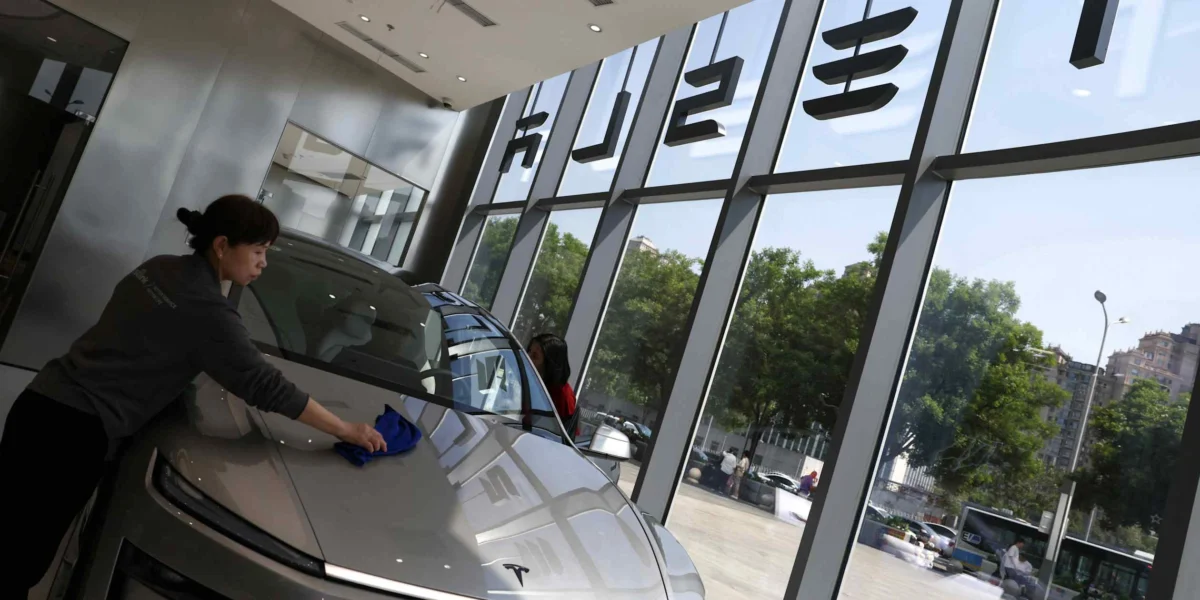
This shift is particularly evident in sectors like e-commerce, consumer electronics, and automotive. For instance, the electric vehicle market, exemplified by the image of a Tesla being cleaned in Beijing, is a prime battleground. While Tesla has established a strong presence and brand recognition, it faces intense competition from rapidly growing Chinese EV manufacturers such as BYD, NIO, and Xpeng, which are not only innovating rapidly but also benefiting from strong government incentives and deep local market integration.

The analysis of these findings suggests a fundamental transformation in China’s economic development. The country is moving beyond its role as a low-cost manufacturing hub to become a significant global player in innovation and advanced industries. This necessitates a strategic recalibration for foreign businesses, requiring them to move beyond simply serving the Chinese market and to actively compete within it.
Implications for Future Business Strategy
The evolving challenges presented by domestic competition have significant implications for the future strategies of American businesses in China. A successful approach will likely involve:

- Increased Localization: Companies will need to further localize their operations, including R&D, manufacturing, and management, to better understand and respond to local market dynamics and consumer preferences.
- Enhanced Innovation: A greater focus on innovation tailored to the Chinese market, potentially through joint ventures or dedicated R&D centers, will be crucial to stay ahead of domestic rivals.
- Strategic Partnerships: Collaborating with Chinese companies through joint ventures, alliances, or strategic investments could provide access to local expertise, distribution networks, and technological capabilities.
- Agility and Adaptability: The ability to quickly adapt to changing market conditions, regulatory shifts, and competitive pressures will be paramount.
- Focus on Value Proposition: Beyond price, foreign companies will need to emphasize their unique value propositions, whether through superior quality, advanced technology, brand reputation, or customer service.
Official Responses and Broader Context
While the survey directly reflects the sentiment of American businesses, it is important to consider the broader context of China’s economic policies and its relationship with foreign investment. Chinese authorities have consistently expressed a commitment to opening up the economy and creating a fair business environment for all. However, the rise of domestic champions is also a deliberate outcome of China’s long-term industrial policy, aimed at fostering self-sufficiency and global competitiveness.
The US government, while pleased with the de-escalation of trade tensions, will likely continue to monitor the competitive landscape for American companies, particularly in strategic technology sectors. The emphasis may shift from broad tariff measures to more targeted approaches addressing specific issues such as intellectual property protection, market access, and fair competition.

The survey’s findings underscore a critical juncture for US-China economic relations. While the immediate relief from bilateral trade friction is a positive development, the long-term success of American businesses in China will increasingly depend on their ability to navigate and thrive within an intensely competitive domestic market. The era of foreign companies largely dominating the Chinese landscape is giving way to a new reality where success is earned through strategic adaptation, innovation, and a deep understanding of the evolving Chinese economic engine. The transition from worrying about tariffs to outmaneuvering local rivals marks a significant, and potentially defining, chapter in the ongoing story of global commerce.
