

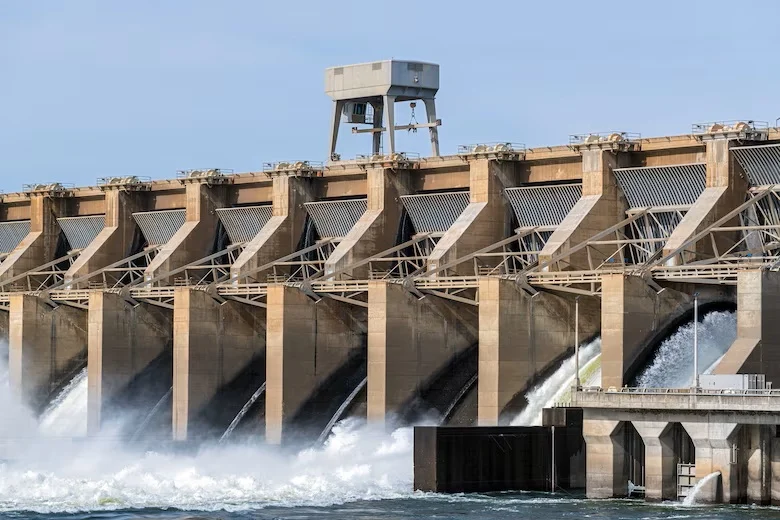
The U.S. Department of Energy (DOE) has officially released the fifth edition of the Hydropower Market Report, a comprehensive analysis authored by researchers at the Oak Ridge National Laboratory (ORNL) that underscores a period of "steady growth" and strategic modernization within the nation’s hydropower sector. This landmark report serves as the definitive benchmark for the industry, synthesizing vast amounts of data from public and commercial registries alongside proprietary DOE research to provide a granular view of the American hydropower and pumped storage hydropower (PSH) landscape. As the United States intensifies its transition toward a carbon-neutral power grid, the findings highlight the enduring importance of water-based energy as both a foundational baseload resource and a critical tool for long-term energy storage.
The 2026 update provides a detailed look at the fleet’s evolution over the past fifteen years, revealing that between 2010 and 2025, the U.S. hydropower fleet expanded to include 2,258 active plants. This growth has brought the total domestic generating capacity to 80.55 gigawatts (GW), representing an addition of 2.1 GW to the national energy mix during this period. Currently, hydropower accounts for 5.6% of the total electricity generated across the United States. While wind and solar have seen rapid deployment, the report emphasizes that hydropower remains a pillar of reliability, offering unique black-start capabilities and grid stabilization services that are essential for integrating more intermittent renewable sources.
The Resurgence of Pumped Storage Hydropower
One of the most significant highlights of the 2026 report is the dominant role of Pumped Storage Hydropower (PSH) in the national storage portfolio. Often described as "giant water batteries," PSH facilities move water between two reservoirs at different elevations to store and generate power. The report notes that the U.S. PSH fleet, consisting of 41 specialized plants, has reached a total generating capacity of 22.23 GW. More impressively, its total storage capacity is now estimated at 553 gigawatt-hours (GWh).
This figure represents a staggering 82.1% of all utility-scale energy storage capacity in the United States. Despite the rapid rise of lithium-ion battery installations, PSH remains the primary solution for long-duration energy storage. The report indicates that the sector added 1.7 GW of capacity through facility upgrades alone, demonstrating that existing infrastructure can be significantly optimized without the need for entirely new dam constructions. The ability of PSH to provide high-capacity, multi-hour storage is increasingly viewed by grid operators as a "secret weapon" for managing the variability of the modern energy landscape.
Regulatory Trends and the Relicensing Milestone
The year 2025 emerged as a pivotal moment for the industry’s regulatory environment. According to ORNL researchers, 21 hydropower facilities successfully received relicenses in 2025—the highest number of approvals in a single year since 2005. This surge in relicensing is a testament to the industry’s commitment to long-term operations, as these licenses often grant the right to generate power for the next 30 to 50 years.
However, the report does not shy away from the complexities of the regulatory process. At the close of 2025, 200 hydropower and PSH projects, representing 18.5 GW of capacity (or roughly 18% of the total installed U.S. capacity), were entangled in the relicensing process. The data reveals a median relicensing timeframe of six years, a duration that many industry stakeholders have cited as a barrier to rapid modernization.
In response to these timelines, the Federal Energy Regulatory Commission (FERC) took proactive steps between 2025 and 2026 to streamline permitting processes. These reforms are specifically targeted at hydropower projects with minimal environmental impact, such as those involving the addition of generation to existing non-powered dams or closed-loop pumped storage systems that do not interact with sensitive river ecosystems.
Economic Indicators and International Trade Dynamics
Beyond domestic generation, the report sheds light on the United States’ role in the global energy economy. Between 2010 and 2024, the U.S. solidified its position as the fifth-largest exporter of hydraulic turbines worldwide. This highlights a robust domestic manufacturing sector capable of competing on a global scale.
The economic data from the 2023–2025 period signals a significant "rebound" for the industry. During this window, U.S. exports of hydraulic turbines averaged $52 million annually, while imports averaged $58 million. These figures represent a 25% increase in exports and a 32% increase in imports compared to the 2020–2022 average. DOE analysts attribute this uptick to the easing of pandemic-related restrictions and the resolution of global supply chain bottlenecks that had previously stalled refurbishment and upgrade investments. The increase in trade activity suggests that plant owners are once again moving forward with capital-intensive projects to replace aging equipment with modern, high-efficiency turbines.
A Look at the Development Pipeline: Retrofitting Non-Powered Dams
The future of U.S. hydropower growth appears to lie not in the construction of new large-scale dams, but in the "smart" utilization of existing infrastructure. The ORNL report found 128 hydropower projects currently in the development pipeline with a combined capacity of 1.4 GW. Of these, six projects totaling 14 MW are already under construction.
A critical finding for environmental advocates and energy planners alike is that 92% of the potential hydropower capacity increase in the pipeline is derived from retrofitting non-powered dams (NPDs). The U.S. has thousands of existing dams—built for irrigation, flood control, or recreation—that do not currently produce electricity. Converting these structures into power-generating assets is seen as a low-impact way to expand the renewable energy footprint. Furthermore, the owners of 33 operational hydropower facilities are currently planning or constructing capacity additions that will add another 669 MW to the grid through efficiency gains and unit expansions.
Global Context and Long-Term Implications
On a global scale, hydropower continues to be the workhorse of the renewable energy transition. The report notes that hydropower and PSH together accounted for 15% of the world’s total electricity generation capacity in 2025. This global perspective underscores the reliability and longevity of the technology compared to newer, more volatile energy markets.
Domestically, the interest in PSH is reaching a fever pitch. At the start of 2024, there were 74 PSH projects in various stages of the development pipeline. Of these, 68 projects (totaling 59 GW of potential capacity) are actively pursuing the FERC permitting process. Notably, four of these projects have already secured their FERC licenses, and three others are being considered under jurisdictions that do not require FERC oversight. If even a fraction of this 59 GW pipeline reaches fruition, it would more than double the nation’s current PSH capacity, fundamentally transforming the U.S. energy storage landscape.
Analysis of Challenges and Strategic Outlook
While the 2026 Hydropower Market Report paints a picture of steady progress, it also highlights the structural challenges facing the sector. The median age of the U.S. hydropower fleet is over 60 years, necessitating a massive wave of reinvestment to ensure safety and efficiency. The "rebound" in turbine trade is a positive sign, but the 18.5 GW of capacity currently in the relicensing queue suggests that policy remains a bottleneck.
The shift toward retrofitting non-powered dams and expanding closed-loop PSH reflects an industry that is adapting to modern environmental sensibilities. By avoiding the ecological disruption associated with new river impoundments, the hydropower sector is positioning itself as a "greener" partner to wind and solar.
Industry experts suggest that the "steady growth" described by the DOE is also a result of legislative support from the Bipartisan Infrastructure Law and the Inflation Reduction Act, which provided billions of dollars in incentive payments for maintaining and enhancing hydroelectric dams. These federal investments are designed to ensure that hydropower continues to provide a flexible "backbone" for the grid as coal and gas plants are decommissioned.
As the U.S. moves toward the latter half of the decade, the data from the Oak Ridge National Laboratory suggests that hydropower is entering a new era of technological sophistication. No longer viewed as a static 20th-century technology, the sector is evolving into a high-tech, storage-heavy component of a modern, resilient, and decarbonized American power system. The 2026 report serves as a reminder that in the race to net-zero, the nation’s oldest renewable resource remains one of its most indispensable assets.
