

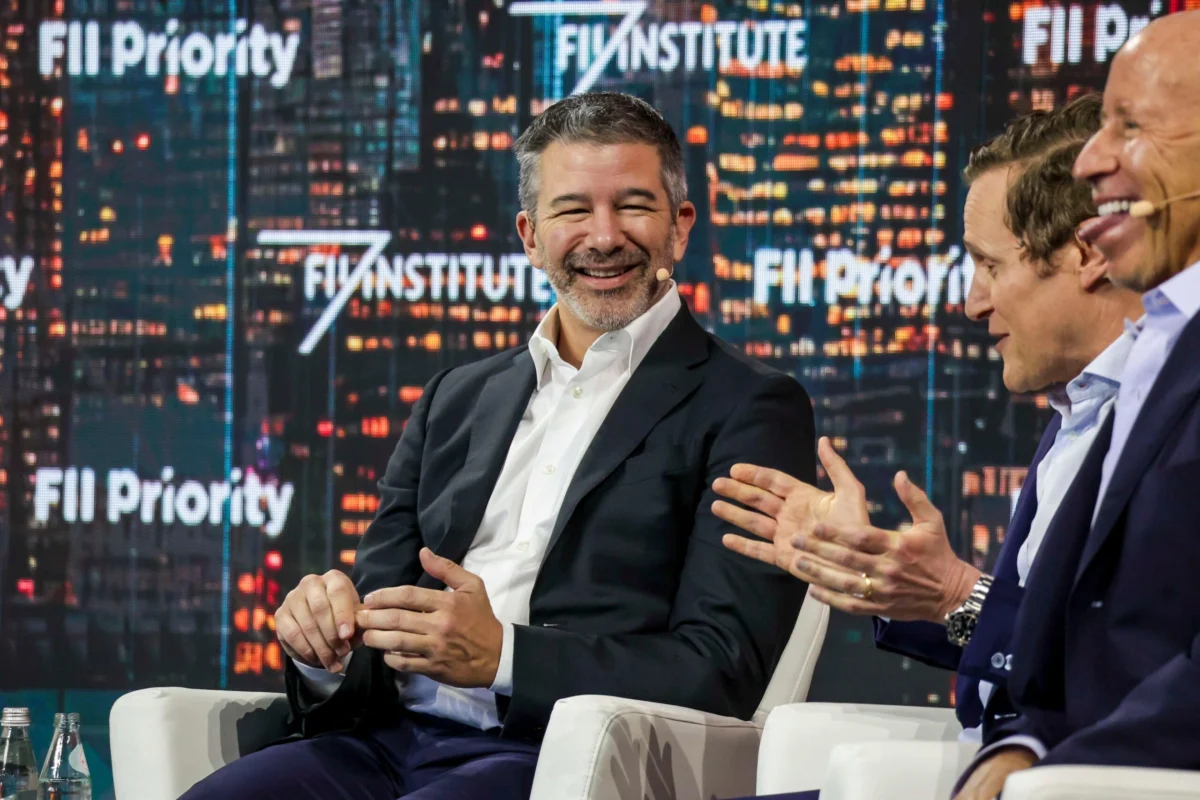
The autonomous vehicle industry is poised for a significant shake-up as Travis Kalanick’s latest venture, Atoms, reportedly prepares for a substantial hiring spree and strategic acquisitions aimed at establishing itself as a major contender in the burgeoning robotaxi sector. This aggressive expansion follows a staggering $1.7 billion funding round earlier this summer, led by venture capital giant Andreessen Horowitz (a16z), and is further bolstered by a $100 million investment from Kalanick’s former company, Uber, which is also in talks to potentially integrate Atoms’ robotaxi technology into its vast ride-hailing network. The Financial Times recently shed light on these previously undisclosed details, offering the clearest indication yet of the ambitious scope of Kalanick’s "unfinished business" in autonomous transportation.
The Genesis of Atoms and Kalanick’s Autonomous Ambitions
Travis Kalanick, the controversial co-founder and former CEO of Uber, has long harbored aspirations in the autonomous vehicle space. His tenure at Uber saw the company make significant, albeit tumultuous, strides in developing self-driving technology. Uber’s Advanced Technologies Group (ATG) was once a cornerstone of its long-term vision, aiming to reduce operational costs and enhance service efficiency by replacing human drivers with autonomous systems. However, this journey was fraught with challenges, including high development costs, technological hurdles, and a high-profile lawsuit with Waymo (Alphabet’s self-driving unit) over alleged intellectual property theft involving Anthony Levandowski, a former Google engineer who joined Uber.
Kalanick’s departure from Uber in 2017 marked a temporary hiatus from the direct operational leadership of a major tech firm, but his entrepreneurial drive remained undimmed. He subsequently founded CloudKitchens, a real estate and software company focused on ghost kitchens, before quietly launching Atoms. The company’s initial focus was largely shrouded in secrecy, with Kalanick only vaguely describing its mission, leaving industry observers to speculate about its true intentions. The recent revelations, however, connect Atoms directly to Kalanick’s past endeavors and underscore a renewed, more focused assault on the autonomous vehicle market.
A Mega-Funding Round Paves the Way
The announcement of a $1.7 billion funding round in July 2026 sent ripples through the tech and venture capital communities. Led by Andreessen Horowitz, a firm known for its early and impactful investments in disruptive technologies, the mega-round immediately positioned Atoms as a serious player, despite the lack of explicit details about its product or strategy. Such a substantial capital injection is not merely a vote of confidence; it provides Atoms with an enormous war chest to fund the intensive research and development, talent acquisition, and potential mergers and acquisitions necessary to compete in the capital-intensive autonomous vehicle sector.
Andreessen Horowitz’s involvement is particularly noteworthy. The firm’s partners often conduct extensive due diligence and have a track record of backing visionary founders with ambitious goals. Their commitment signals a belief in Kalanick’s ability to execute on a grand scale and a conviction in the long-term viability and profitability of Atoms’ yet-to-be-fully-unveiled technology. For Kalanick, securing such a significant investment from a top-tier firm like a16z validates his post-Uber entrepreneurial journey and grants him the resources to pursue his vision without the immediate pressures of public markets or the intense scrutiny that often accompanied his leadership at Uber.
Strategic Expansion: Hiring Spree and Acquisitions
The Financial Times report indicates that Atoms is not merely sitting on its massive capital but is actively deploying it to build a formidable presence. The planned hiring spree suggests a rapid scaling of its engineering, research, and operational teams. Developing advanced autonomous vehicle technology requires a diverse array of highly specialized talent, including AI researchers, robotics engineers, sensor fusion experts, software developers, and safety engineers. Attracting top talent in this competitive field will be crucial for Atoms to accelerate its development timeline and overcome the complex technical challenges inherent in self-driving systems.

Beyond organic growth through hiring, Atoms is also reportedly eyeing strategic acquisitions. The autonomous vehicle industry has seen numerous consolidations and partnerships as companies seek to acquire complementary technologies, intellectual property, and talent. For Atoms, acquisitions could provide shortcuts to market entry, allowing it to integrate proven technologies or absorb specialized teams that have already made progress in specific areas of autonomous driving. This strategy aligns with the "move fast and break things" ethos often associated with Kalanick, albeit now with the immense financial backing to execute on such an aggressive M&A strategy.
The Robotaxi Focus and Uber’s Re-engagement
While sources emphasize that robotaxis do not represent the entirety of Atoms’ plans, this sector appears to be a primary focus, aligning perfectly with Kalanick’s previous endeavors and the concept of "unfinished business." The robotaxi market is projected to grow exponentially, with analysts forecasting it to reach hundreds of billions of dollars globally within the next decade. Major players like Waymo, Cruise, and Zoox are already testing and deploying limited commercial services in select cities, demonstrating the immense potential for disruption in urban mobility.
The most intriguing aspect of the FT report is the revelation of discussions between Atoms and Uber regarding the potential use of Atoms’ robotaxi technology. This marks a significant re-engagement between Kalanick and his former company, albeit in a different capacity. Uber has a complex history with autonomous vehicles. After divesting its ATG unit to Aurora in 2020 (and taking a stake in Aurora), Uber shifted its strategy to a partnership model. It has since forged alliances with a long list of autonomous vehicle companies, including Waymo, Motional, Argo AI (before its shutdown), and Aurora, to integrate their self-driving cars onto its platform.
Uber’s $100 million investment in Atoms, previously confirmed by TechCrunch, further solidifies this potential partnership. For Uber, investing in and potentially utilizing Atoms’ technology could provide a strategic hedge, diversifying its autonomous vehicle partners and potentially offering a more tailored solution given Kalanick’s deep understanding of Uber’s operational needs and market dynamics. For Atoms, a partnership with Uber would provide immediate access to a vast ride-hailing network and millions of potential customers, accelerating its path to commercialization and offering a powerful distribution channel that many AV startups struggle to secure.
The Anthony Levandowski Connection
Further reinforcing Atoms’ strategic direction in autonomous driving is its earlier acquisition of Pronto, an autonomous mining startup. What makes this acquisition particularly salient is Pronto’s leadership by Anthony Levandowski, a figure deeply intertwined with the history of autonomous vehicles at Google and Uber. Levandowski, a pioneer in self-driving technology, was at the center of a highly publicized legal battle between Waymo and Uber, where he was accused of stealing trade secrets. He was subsequently convicted and sentenced to 18 months in prison, though later pardoned by President Donald Trump.
Despite the controversy surrounding his past, Levandowski’s technical acumen and experience in developing self-driving systems are undeniable. His involvement, through Pronto’s acquisition, brings critical talent and potentially valuable intellectual property into Atoms. This move highlights Kalanick’s pragmatic approach to talent acquisition, prioritizing expertise and capability, even if it comes with a complex historical narrative. Pronto’s focus on off-road autonomous applications, such as mining, could also suggest that Atoms’ broader strategy might encompass more than just urban robotaxis, potentially exploring other commercial or industrial applications of its autonomous technology. However, the direct expertise in self-driving systems that Levandowski and his team bring is invaluable for a company aiming for robotaxi dominance.
Broader Market Implications and Competitive Landscape
The entry of a well-funded and aggressively expanding Atoms, led by a figure as impactful as Travis Kalanick, has significant implications for the autonomous vehicle industry. The sector is characterized by intense competition, high capital requirements, and a challenging regulatory environment. Existing players like Waymo (backed by Alphabet), Cruise (majority-owned by GM), Motional (Hyundai and Aptiv joint venture), and Aurora (backed by Amazon and Sequoia, and having acquired Uber ATG) have invested billions over many years.

Atoms’ strategy appears to be one of rapid acceleration, leveraging Kalanick’s proven ability to scale disruptive businesses. Its substantial funding round allows it to bypass some of the earlier fundraising challenges faced by other startups. The focus on robotaxis places it in direct competition with established leaders, but its potential partnership with Uber could offer a unique advantage in terms of market access and demand generation.
The industry has also seen its share of setbacks, including the recent shutdown of Argo AI, which had significant backing from Ford and Volkswagen. This highlights the extreme difficulty and financial risk involved in bringing fully autonomous technology to market safely and at scale. Atoms will face these same technical, safety, and regulatory hurdles, but with Kalanick’s leadership, known for its audacious vision and relentless execution, it is likely to pursue an aggressive timeline.
Furthermore, Kalanick’s history with Uber means he intimately understands the economics and operational complexities of ride-hailing. This insight could allow Atoms to develop a robotaxi solution that is not only technologically advanced but also commercially viable and seamlessly integrated into existing mobility services. The "unfinished business" likely refers to realizing the full potential of autonomous vehicles in urban mobility, a vision Kalanick championed at Uber but was unable to fully realize during his tenure.
The Road Ahead for Atoms
Atoms is embarking on an ambitious journey in one of the most technologically challenging and potentially transformative industries. The coming months and years will reveal more about the specifics of its technology, its operational footprint, and the extent of its collaboration with Uber. Success will hinge on its ability to attract and retain top talent, overcome formidable technical obstacles, navigate complex regulatory frameworks, and ultimately demonstrate a safe, reliable, and scalable autonomous driving solution.
The re-emergence of Travis Kalanick at the forefront of the autonomous vehicle industry, armed with substantial capital and a clear strategic direction, signals a new chapter in the race for self-driving dominance. With Uber’s investment and potential partnership, Atoms is not just another startup; it is a formidable new entrant poised to redefine the competitive dynamics of autonomous transportation and potentially fulfill Kalanick’s long-held vision for the future of mobility. The industry watches with keen interest as this well-funded and strategically positioned venture moves closer to unveiling its full capabilities and challenging the status quo.
