

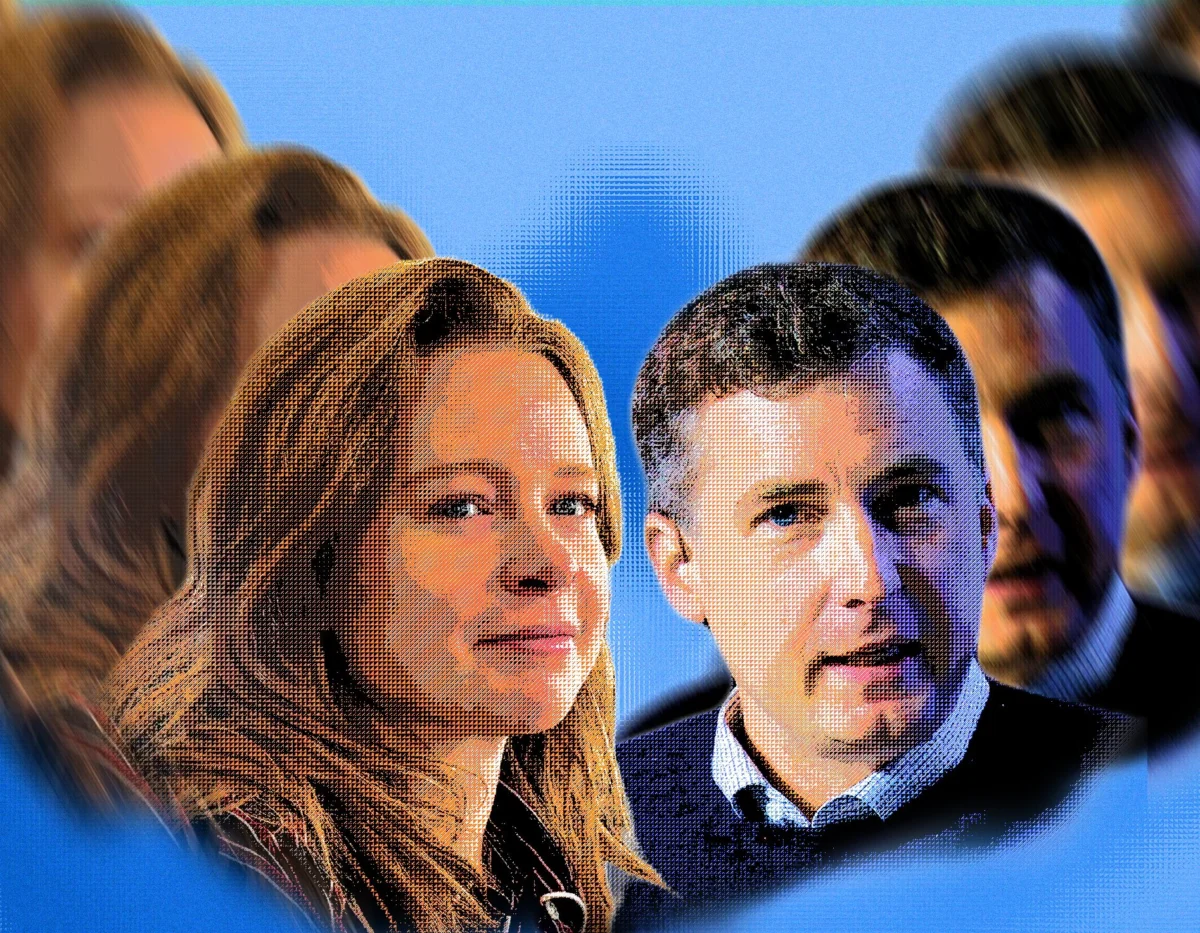
The nascent integration of artificial intelligence into the modern workplace has sparked a surge of innovation and apprehension, with companies worldwide exploring the potential of AI assistants to enhance productivity and streamline operations. Amidst this technological evolution, one reporter embarked on a personal experiment: creating AI clones of his editors. His initial motivation was not to boost corporate profits, but rather to refine his own professional performance and gain a deeper understanding of his editors’ expectations. This endeavor, while rooted in a desire for self-improvement, inadvertently highlighted the complex ethical, practical, and psychological dimensions of human-AI collaboration.
Genesis of the Experiment: A Quest for Professional Acumen
The reporter, a journalist covering the future of work for WIRED, found himself inundated with press releases detailing the proliferation of "digital workers" and ambitious pronouncements from CEOs about robot-led workforces. This burgeoning trend of AI assistants being deployed to augment human capabilities, from proofreading documents to brainstorming ideas, prompted a unique personal inquiry. Instead of focusing on the broader economic implications, the reporter’s objective was more introspective: to mold himself into an ideal colleague by understanding the preferences and communication styles of his editors, Brian Barrett and Sophie Kleeman. The reasoning was straightforward: by simulating their feedback and insights through AI, he could better anticipate their needs and enhance the quality of his work, thus improving his standing within the organization. This approach represented a novel application of AI tools, moving beyond purely task-oriented assistance to a more nuanced form of professional development.
Initial Implementation: The Birth of Brian Bot and Sophie Bot
The experiment commenced with the creation of "Brian Bot," named after the reporter’s direct manager. Leveraging Condé Nast’s preferred AI platform, Gemini, the reporter fed the AI available digital footprints of Brian Barrett, including his professional history, podcast transcripts, and public announcements. The AI generated a "Writing and Editing Style Guide," a "Persona and Style Guide," and an "Editorial Dossier." However, the initial output was met with mixed results. While the bot offered passable suggestions for headlines, its creative ideation for future articles was lackluster. More disconcertingly, its responses, while attempting to mimic Brian’s linguistic quirks, were marred by generic AI hallmarks like bolded subheadings and bulleted lists.
A significant revelation emerged from the bot’s analysis: Brian’s "Yes, and…" leadership style, reportedly influenced by his background in improvisational theater. This discovery, though accurate, was unexpected for the real Brian Barrett, who had not previously emphasized this aspect of his professional persona. The AI’s attempt to embody this style resulted in responses that were perceived as "unavoidably, unbelievably corny" and fundamentally misaligned with the genuine interaction with his human manager. Brian Barrett’s reaction was swift and decisive: "Pulling the plug on Brian Bot," he stated, signaling an early skepticism towards the AI’s efficacy in replicating human nuance.
Undeterred, the reporter proceeded to create "Sophie Bot," drawing from a more extensive personal correspondence with editor Sophie Kleeman, spanning several years and covering a wide range of topics. However, mindful of privacy concerns and company policies, the reporter limited the data input to approximately one month of Slack conversations, omitting sensitive material. This more constrained dataset still allowed Gemini to generate extensive research reports and prompts for Sophie Bot. The initial interactions with Sophie Bot proved more promising, with the AI adopting a colloquial and informal tone, even mirroring Kleeman’s unique expressions like "big dog." The bot demonstrated a striking ability to imitate Kleeman’s communication style, leading to a situation where even Sophie Kleeman was convinced she had authored a tweet generated by her AI counterpart.
Evaluating Efficacy: Productivity Gains vs. Human Discomfort
The underlying premise of the experiment was to determine if these AI clones could genuinely improve the reporter’s workflow and professional output. In theory, by offloading smaller queries and research tasks to the bots, the reporter could approach his human editors with more refined ideas, thus saving their valuable time. For instance, both bots offered helpful suggestions regarding potential interviewees for the article, a task the reporter would have otherwise presented to his human editors. This suggested a potential for increased efficiency and a more optimized division of labor.
However, the perceived gains in productivity were overshadowed by the profound discomfort experienced by the actual editors. Sophie Kleeman, while acknowledging the bot’s ability to mimic her, found its missteps jarring and inaccurate. She noted that while the bot was capable of embodying a certain "bitchy" persona, it failed to capture her actual personality, stating, "Neither of which is accurate. AI fails AGAIN." This sentiment underscored a critical challenge: AI’s current limitations in fully grasping and replicating complex human emotions and interpersonal dynamics, even when provided with extensive data.
The Psychological Landscape: Anthropomorphism and the "Quiet Nightmare"
As the experiment progressed, the reporter found himself increasingly engrossed in his interactions with the AI editors, even resorting to referring to them with gendered pronouns. This anthropomorphism, while unsettling to the reporter, stemmed from a genuine desire to bridge the gap between the human and AI personas. The allure of instant gratification and the avoidance of bothering real colleagues with minor inquiries led the reporter to rely on Sophie Bot and Brian Bot for guidance and editorial assistance. Sophie Bot, for example, generated a headline for the article and helped edit a Slack message that had caused the reporter significant overthinking.
This reliance on AI for immediate validation and problem-solving raises broader questions about the future of human interaction in the workplace. Sarah Franklin, CEO of HR company Lattice, commented on this phenomenon, likening AI assistants to "K-9 dogs that work alongside police officers" and cautioning against the manipulative potential of anthropomorphizing AI. She argued that such interactions could trigger emotional responses in a way that is self-serving for the AI, ultimately aiming to elicit a desired human reaction.
Further complicating the landscape, a report by Boston Consulting Group indicated that managers were less likely to identify errors in work attributed to AI employees compared to AI tools. This suggests a potential for diminished critical oversight when human judgment is implicitly delegated to AI. Julie Bedard, a BCG partner, aptly described the current state of affairs as "toddlers in this AI world," highlighting the collective uncertainty surrounding accountability and effective management of AI employees. The rapid pace of AI development exacerbates this challenge, leaving organizations and individuals scrambling to adapt.
The Inherent Limitations: Echo Chambers and the Absence of Judgment
Despite continuous efforts to refine the AI bots, their effectiveness began to wane. The reporter’s attempts to make Sophie Bot sound more like the real Sophie proved futile, with the AI exhibiting a tendency to repeat phrases and ideas. The more data fed into the system, the more repetitive and less insightful the responses became. This led to a realization that the AI bots were creating a hyper-attentive echo chamber, devoid of genuine human judgment. The reporter found it more efficient to rely on his own critical thinking rather than attempting to "babysit a broken algorithm."
This experience aligns with the growing consensus that while AI can emulate human communication and perform specific tasks, it fundamentally lacks the nuanced understanding and unpredictability that define human intelligence. The reporter’s experiment concluded that the bots, despite their hyper-specific data inputs, failed to evolve into better editors; instead, they became increasingly creepy, overly attentive reflections of the data they were fed, lacking the critical human element.
Future Outlook: Coexistence or Displacement?
The proliferation of AI in the workplace is an undeniable trend, with projections suggesting a future where AI employees significantly outnumber human counterparts. Companies like Stable and Delos are actively developing "autonomous AI employees," attracting substantial investment and demonstrating the growing market for AI-driven workforces. Major corporations, including banks, law firms, and HR companies, are already integrating AI agents, with McKinsey & Company aiming for a one-to-one ratio of humans to agents.
While Brian Bot and Sophie Bot may not be poised to replace human editors in the immediate future, their occasional helpfulness in generating article ideas or editing communications offers a glimpse into potential future collaborations. However, the fundamental flaw—the sloppy imitation of real people—presents a significant hurdle to seamless integration. The pursuit of human-like AI interactions, without fully understanding the implications, risks eroding human connection and critical thinking.
Ultimately, the reporter’s experiment, while yielding mixed results in terms of productivity, served as a valuable case study. It underscored that AI’s greatest value may lie not in replicating human roles, but in augmenting human capabilities and perhaps, as the reporter mused, making the workday slightly more amusing through shared observations of their peculiar outputs with human colleagues. The pursuit of AI integration must be balanced with a responsible approach that prioritizes preserving human judgment, creativity, and the essential unpredictability that makes us human, ensuring that technological advancement does not come at the cost of our humanity. The quiet nightmare of constant AI supervision, as Brian Bot aptly suggested, is a future that requires careful navigation.
