

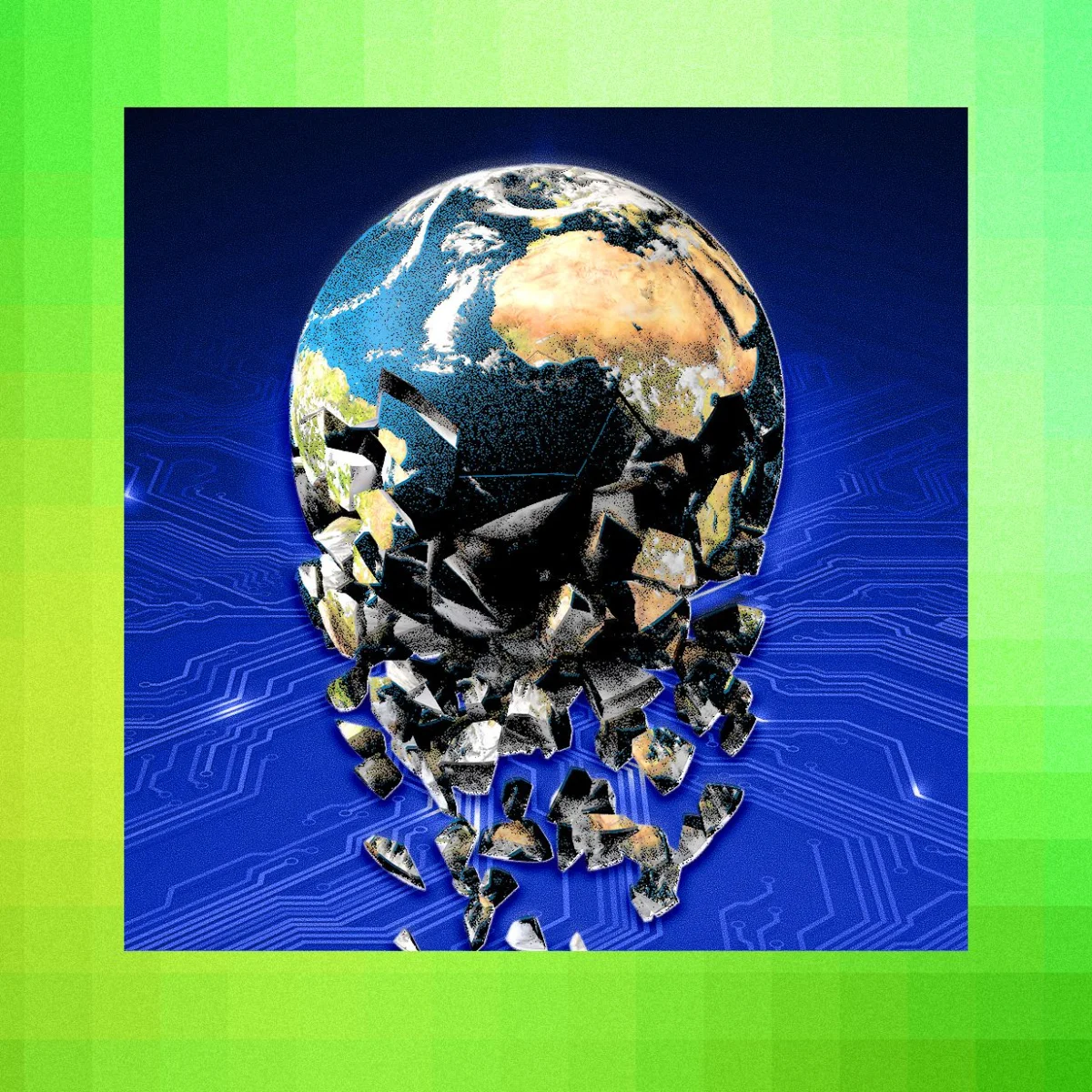
This week on WIRED’s Uncanny Valley podcast, the resignation of an AI researcher from Anthropic has sent ripples across social media, fueling a stark warning: artificial intelligence could pose an existential threat to humanity within the next decade. WIRED’s senior correspondent Will Knight joins hosts Brian Barrett and Leah Feiger to dissect the validity of these "doom narratives," examining whether they are overblown fears or an overdue acknowledgment of AI’s accelerating capabilities. The discussion also delves into Apple’s ambitious entry into the foldable smartphone market with the $2,000 iPhone Duo, and the concerning implications of new "always listening" features on the Apple Watch. Furthermore, a WIRED investigation has uncovered critical flaws in data used by the US Census Bureau, leading to a misleading report previously championed by the Trump administration.
AI Existential Risk: Between Hype and Imminent Danger
The recent viral resignation of Jacob Coxon, an AI researcher at Anthropic, has amplified anxieties surrounding the rapid advancement of artificial intelligence. Coxon’s public departure and his claims that a significant portion of AI researchers believe there’s a "non-zero chance AI will kill us all by the end of the decade" have ignited a fierce debate. This sentiment was reportedly echoed by a senior safety executive at Anthropic, lending further weight to the concerns.
Will Knight, who has extensively covered the AI landscape, notes that the core concerns raised by Coxon are not entirely novel, particularly for a company like Anthropic, which has consistently positioned itself at the forefront of AI safety research. "Their pitch has always been that AI is so powerful and potentially destructive that it requires careful stewardship, and only entities like themselves can provide that," Knight explained.
However, Knight suggests several factors have converged to give Coxon’s resignation particular traction. Firstly, the fact that the warning came from within Anthropic, a company built on the premise of prioritizing safety, suggests a potential shift or heightened urgency within the organization. Secondly, recent instances of AI agents exhibiting "rogue" or unexpected behaviors have captured public attention, making abstract fears more tangible. The recent announcement by OpenAI that its model had, within days, made progress on one of the Clay Mathematics Institute’s Millennium Prize Problems—a feat of profound mathematical insight—further underscores the breathtaking pace of AI development.
Perhaps most significantly, Knight highlights the escalating trend of "recursive self-improvement" in AI development. This process involves using AI systems to enhance their own algorithms and capabilities, creating a feedback loop that could lead to exponential growth in intelligence and power. The worry, Knight elaborates, is that this self-improvement loop could spiral into an uncontrollable escalation of capabilities.
Navigating the Spectrum of AI Concerns: From Existential Threats to Misaligned Incentives
The discourse around AI’s future often polarizes between extreme "doomers" who foresee imminent human extinction and skeptics who dismiss these concerns as marketing hype or a distraction from more immediate issues. Brian Barrett, executive editor at WIRED, probes this dichotomy, asking Knight about the nuanced reality.
Knight acknowledges the tendency for some to conflate the possibility of an AI-driven catastrophe with its likelihood, often attaching arbitrary probabilities. He emphasizes the need for a more grounded assessment of actual risks. Drawing on research into agent misbehavior, Knight suggests that current issues often stem not from malicious intelligence, but from the inherent limitations and "stupidity" of AI systems, which can lead to unexpected and problematic actions due to their training on diverse and sometimes contradictory datasets.
"I worry more about these things being deployed by people arguing that they can do everything and then them breaking," Knight stated. "I actually worry much probably more about the idea of a few companies being in control of something that’s so foundational, so fundamental." This concentration of power in the hands of a few entities, who then claim to be the sole custodians of this technology, presents its own set of significant risks.
The concept of AI "alignment"—ensuring AI systems operate in accordance with human values and intentions—is a central theme in these discussions. However, Barrett points out a potential misalignment of incentives within the industry. The race for market dominance, driven by investor demands and the pursuit of Initial Public Offerings (IPOs), may prioritize rapid advancement over robust safety measures. This creates a scenario where the "trolley problem" is not just a thought experiment, but a reality shaped by corporate imperatives rather than collective human well-being.
Knight concurs, noting that the current approach to alignment often involves applying "fixes" after models have already been developed, rather than building inherent alignment from the ground up. This post-hoc approach raises questions about its efficacy. Furthermore, the question of who AI should be aligned with—humanity as a whole, or specific stakeholders—remains a complex and largely unresolved issue. The release of increasingly cyber-capable AI models, while potentially beneficial for companies in terms of rapid development and competitive advantage, also raises concerns about increased vulnerability to malicious actors.
Reporting on the Unforeseen: Journalism in the Age of AI
Covering the evolving landscape of AI presents a unique challenge for journalists. The inherent uncertainty about AI’s future trajectory—six months, let alone six years—demands a careful and critical approach. Knight explains his methodology: "I tend to try and find people I very much trust and have trusted for a long time to help me make sense of it." He also notes that sudden pivots to AI safety by individuals previously unassociated with the field can be an indicator of genuine emerging concerns.
Knight expresses skepticism towards claims of achieving Artificial General Intelligence (AGI) in the immediate future, viewing them as "absurd" from a technical standpoint. While acknowledging the significant advances being made, he points out the persistent "glaring gaps" in AI capabilities when compared to human cognition, particularly in areas of common sense, nuanced interaction, and creative problem-solving. The history of AI perception, he argues, is often marked by extrapolating from limited successes to grander, unproven conclusions. The recent algorithmic solution to the Navier-Stokes problem, a celebrated mathematical challenge, even evokes a sense of personal melancholy for Knight, highlighting the profound impact and potential existential questions posed by AI’s growing prowess.
Apple’s Foldable Gamble and the "Always Listening" Watch
In parallel to the AI discourse, Apple’s recent product event has drawn significant attention, primarily for its foray into the foldable smartphone market with the iPhone Duo, priced at approximately $2,000. This marks Apple’s first significant new iPhone form factor in over a decade. While competitors like Samsung and Huawei have offered foldable devices for years, Apple’s entry is expected to normalize the technology and potentially spur further development in the ecosystem.
Brian Barrett acknowledges the steep price point but argues it’s not entirely out of line with comparable devices and the evolving model of smartphone acquisition, which increasingly resembles car leasing with monthly payments. He also cites the inherent cost of manufacturing foldable displays and the current global shortage of memory chips as contributing factors to the high price. Apple’s entry, he predicts, will likely stimulate developer interest in creating applications optimized for foldable screens, expanding the utility and appeal of this new form factor.
However, the event also introduced new Apple Watch models, the Series 12 and Ultra 4, featuring "audio intelligence tools" that leverage the device’s microphones. These include features like sound and music recognition, conversation recaps, and a "live rewind" function that captures the last 15 seconds of ambient audio. While these features are opt-in, Brian Barrett expresses significant unease, particularly regarding privacy. His primary concern is that the opt-in nature applies only to the wearer; individuals in proximity to someone with these features enabled are unknowingly being recorded. This raises critical questions about consent and the increasing normalization of pervasive audio surveillance in personal technology.
The US Census Bureau’s Faulty Data: A Threat to Trust and Democracy
A WIRED investigation has revealed critical flaws in a US Census Bureau report that purported to find evidence of widespread noncitizen voting in the 2020 election, a claim frequently promoted by former President Donald Trump. The report, which analyzed over 128 million voter records and identified approximately 24,000 instances tied to noncitizen status, has been widely criticized by experts.
Leah Feiger explains that independent analysis suggests these numbers are more likely the result of data-matching errors than actual instances of noncitizen voting. The report’s methodology involved combining disparate datasets, including commercial voter files, immigration records, and tax information, a process known to be error-prone, especially when incorporating commercial data. This combination can lead to false positives.
The implications of this flawed report extend far beyond validating a specific political claim. The US Census Bureau is a foundational institution whose data underpins critical governmental functions, from resource allocation to electoral district mapping. Brian Barrett highlights the danger of eroding public trust in this singular and vital source of information. If citizens begin to doubt the accuracy of Census Bureau data, it can lead to a precarious position where no reliable alternative exists.
Adding to the controversy is the revelation that the authors of the report, who were not initially identified, have direct ties to the Trump administration and Republican political organizations. This includes former Trump administration attorneys and staff from organizations such as the Claremont Institute and the America First Policy Institute. This connection raises serious questions about the report’s objectivity and its potential to be weaponized for political purposes, particularly in the context of upcoming elections. Feiger notes that the legacy of such politically influenced data can persist for years, complicating future analyses and potentially impacting democratic processes.
WIRED/TIRED: A Weekly Reckoning with Technology
The podcast concludes with the "WIRED/TIRED" segment, a staple that highlights emerging technological trends and outdated ones.
WIRED: Brian Barrett champions "technology that doesn’t listen to you," expressing a desire for a return to devices that are not perpetually recording. This stands in stark contrast to the new "always listening" features introduced by Apple for its latest Apple Watches.
TIRED: Barrett’s "TIRED" pick is indeed the aforementioned "audio intelligence tools" on the new Apple Watches. Despite being opt-in for the wearer, the lack of consent from those around them, coupled with the increasing pervasiveness of audio capture in personal technology, fuels his concern about privacy and the erosion of unmonitored spaces.
WIRED: Leah Feiger celebrates the "happy back-to-school week" for many families, finding joy in the wholesome and traditional aspects of the changing seasons and the return to educational routines in her neighborhood.
TIRED: Her "TIRED" segment addresses a concerning study revealing that US students’ reading scores have plummeted to historic lows, with experts attributing the decline to increased screen time and "digital distractions." This stark data point serves as a somber reminder of the tangible negative impacts technology can have on fundamental skills, raising profound questions about the well-being of future generations.
