

The real estate industry is currently navigating a period of profound structural transformation, characterized by shifting regulatory landscapes, evolving commission structures, and a tightening housing market. At the center of this transition is the fundamental relationship between real estate brokerages and their affiliated agents. Historically, the industry has often operated on a high-volume recruitment model, frequently prioritizing quantity over quality. However, emerging data and industry analysis suggest that the traditional sink-or-swim approach is increasingly unsustainable. Industry experts, including Derek Carlson, president and managing broker of Realty ONE Group MVP, argue that brokers who treat education and mentorship as discretionary costs rather than essential investments are compromising their long-term stability. This shift in perspective moves the brokerage model away from a mere administrative platform toward a robust developmental ecosystem designed to mitigate agent churn and stabilize revenue streams.
The Economic Consequences of Agent Churn
The financial health of a real estate brokerage is inextricably linked to the productivity and retention of its agents. According to historical data from the National Association of Realtors (NAR), approximately 87% of all new real estate agents leave the industry within their first five years. This high rate of attrition represents a significant economic drain on brokerages. When a broker adopts what is often termed the Broker A approach—providing technical licensing support but little practical guidance—they effectively outsource the agent’s professional development to a process of trial and error.
In this environment, agents frequently lack the confidence and practical experience necessary to navigate complex transactions. The resulting failure rate leads to a cycle of constant recruitment and onboarding, which incurs high administrative and marketing costs. Furthermore, high churn rates prevent the establishment of a stable, experienced workforce capable of generating repeat business and referrals. In contrast, the Broker B model, which prioritizes structured mentorship, seeks to compress the learning curve. By providing the tools and psychological support necessary for early success, these brokerages report higher retention rates and more consistent transaction volumes, even during market downturns.
A Chronology of Industry Shifts and Educational Needs
The need for structured mentorship has evolved through several distinct phases over the last two decades. In the pre-2008 era, high demand often masked the deficiencies in agent training. The subsequent housing market collapse highlighted the vulnerability of inexperienced agents who lacked the skills to manage distressed sales and complex financing. Following the market recovery, the rise of digital technology and the democratization of property data forced a change in the agent’s value proposition. No longer mere "gatekeepers" of information, agents were required to become expert advisors.
The current era, defined by the 2024 NAR settlement and subsequent changes to buyer agency agreements, has intensified the need for high-level technical training. Agents are now required to articulate their value more clearly and negotiate compensation directly with clients. This regulatory shift has created a widening gap between agents who have received comprehensive mentorship and those who have been left to interpret new rules independently. The timeline of these events suggests that the industry is moving toward a professionalization standard where the "hobbyist" agent is increasingly marginalized in favor of the highly trained specialist.
The Three Pillars of a Robust Support System
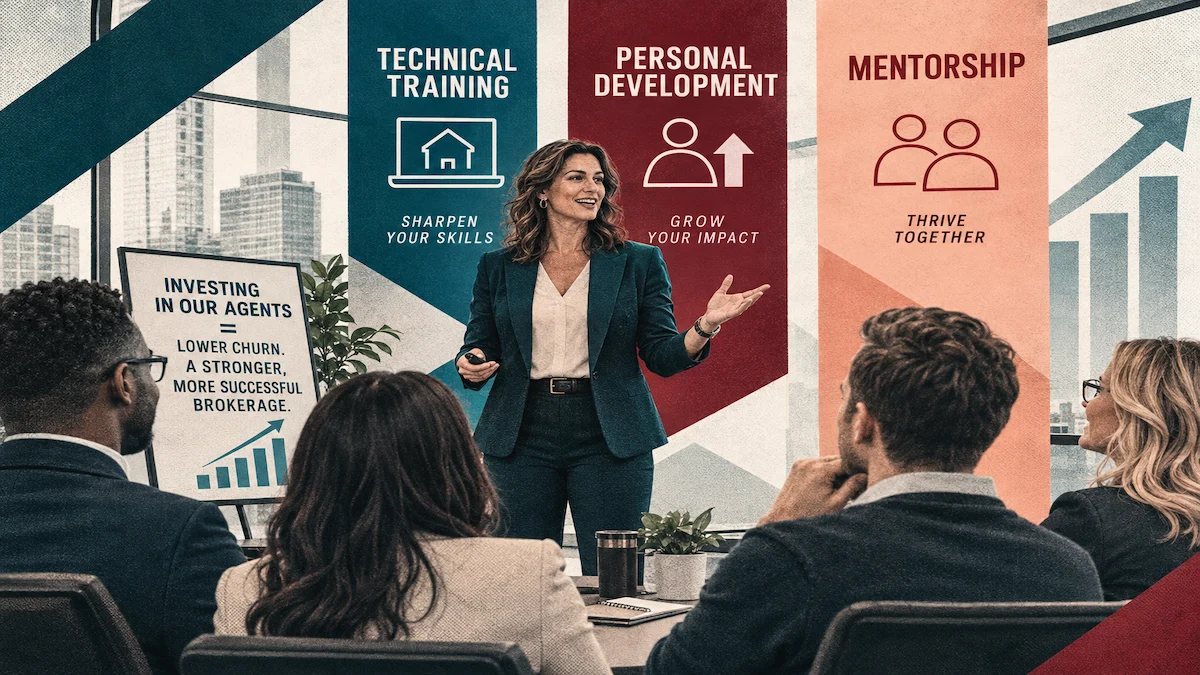
To effectively support agents without incurring prohibitive costs, industry leaders advocate for a modular support system. This framework is typically divided into three core categories: technical training, personal development, and active mentorship.
Technical Training and Knowledge Management
Technical training serves as the foundation of an agent’s competency. While licensing courses cover legal requirements and basic ethics, they rarely address the day-to-day mechanics of lead generation, contract negotiation, or market analysis. The modern approach to technical training involves the creation of a "living" knowledge base.
Successful brokerages are increasingly utilizing a hybrid model of education. This begins with a foundational library of industry-standard texts and internal documentation tailored to the specific local market. To maximize efficiency, many brokers are now recording their training sessions. By creating a digital repository of "perfect" versions of technical lectures, brokers can automate the informational aspect of training while focusing their live interactions on high-value Q&A sessions and case study reviews. This model ensures that as laws, regulations, and market statistics change, the training material can be updated systematically, providing agents with the most current data available.
Personal Development and Psychological Resilience
Real estate is a high-rejection industry that requires significant psychological resilience. The inclusion of personal development in a brokerage’s support system is often cited as a key differentiator in agent retention. This area of training focuses on mindset, discipline, and time management—skills that are essential for independent contractors who must manage their own schedules and emotional well-being.
Industry leaders often point to the work of experts in performance psychology and leadership as essential curriculum components. For example, the principles of discipline and accountability popularized by figures like Jocko Willink or the motivational frameworks of Tony Robbins are frequently integrated into brokerage training programs. Derek Carlson, who oversaw the growth of a brokerage producing over $2 billion in transactions and managed a rapid expansion to over 1,100 agents, emphasizes that personal development is not merely about motivation; it is about building the "MVP" mindset necessary to survive significant industry challenges, including legal battles and market volatility.
Structured Mentorship and Incentive Alignment
Mentorship is perhaps the most critical, yet most difficult, element to implement effectively. It requires a significant investment of time from the broker or from top-producing agents. The challenge lies in creating an incentive structure that encourages experienced agents to share their knowledge without feeling that they are training their future competition.
To solve this, many brokerages have adopted a commission-split model for mentorship. Under this arrangement, a senior agent (mentor) assists a junior agent (mentee) on their first few transactions in exchange for a percentage of the commission. This aligns the interests of both parties: the mentor is compensated for their time and expertise, while the mentee receives hands-on guidance that reduces the risk of errors and improves the client experience. This system also fosters a culture of collaboration rather than internal competition, which has been shown to improve overall brokerage morale and brand reputation.
Industry Implications and the NAR Settlement Context
The broader implications of the mentorship-first model are particularly relevant in light of recent legal and regulatory challenges facing the real estate industry. The National Association of Realtors recently navigated significant class-action lawsuits regarding commission transparency and antitrust concerns. These legal pressures have placed a premium on agent professionalism.
Industry analysts suggest that in a post-settlement environment, agents who cannot demonstrate a high level of expertise and professional value will likely be phased out by consumers who are now more scrutinized regarding the costs of representation. Brokerages that have invested in rigorous training and mentorship programs are better positioned to defend their value proposition. From a risk management perspective, well-trained agents are also less likely to commit errors that could lead to litigation, thereby protecting the brokerage’s errors and omissions (E&O) insurance standing and overall legal health.
Data-Driven Outcomes of Mentorship
The data supporting the investment in mentorship is compelling. Studies on corporate mentorship programs across various industries indicate that employees who receive mentorship are promoted five times more often than those who do not. In the specific context of real estate, brokerages that implement formal training programs report:
- Reduced Onboarding Time: New agents reach their first transaction 30-50% faster than those in sink-or-swim environments.
- Higher Per-Agent Productivity: Mentored agents typically close more units per year due to better lead conversion skills and more effective time management.
- Stabilized Revenue: A brokerage with a high percentage of "top producers" created through internal training is less vulnerable to the departure of a single high-performing agent.
- Lower Recruitment Costs: A reputation for excellence in training serves as a powerful recruiting tool, attracting high-quality candidates and reducing the need for expensive external headhunting.
Conclusion: The Shift from Cost to Investment
The evolution of the real estate market necessitates a fundamental rethink of the broker-agent relationship. The historical tendency to view education and mentorship as a "cost" to be minimized is being replaced by a recognition that these elements are the primary drivers of brokerage value. As the industry becomes more complex and consumer expectations rise, the ability of a brokerage to develop its own talent will be the primary factor distinguishing market leaders from those who struggle with churn and volatility.
For leaders like Derek Carlson, the success of Realty ONE Group MVP—which scaled to over 1,100 agents in less than a year—serves as a case study for the effectiveness of a support-heavy model. By building a system "brick by brick," prioritizing technical mastery, and fostering a culture of mentorship, brokerages can create a resilient business model that benefits agents, clients, and the long-term health of the real estate industry. The move toward a more educational and supportive environment is not merely a trend; it is a necessary adaptation to a more transparent, competitive, and professionalized marketplace.
