

The American housing affordability conversation has long been characterized by a significant structural blind spot, focusing almost exclusively on the barriers to entry while ignoring the financial volatility of homeownership itself. For the better part of a century, legislative efforts and public discourse have centered on down payments, mortgage interest rates, inventory shortages, and the expansion of the housing supply. While these initiatives have historically succeeded in moving the needle on national homeownership rates, they operate under a singular design logic: once a citizen is "in the door," the primary objective of housing policy has been achieved. However, emerging economic data and recent homeowner sentiment surveys suggest that this "entry-only" focus is failing to address a growing crisis of sustainability for those who have already achieved the traditional American Dream.
As the Low-Income Housing Tax Credit (LIHTC) approaches its 40th anniversary, the limitations of this traditional playbook are becoming increasingly apparent. While the LIHTC remains one of the most consequential affordable housing programs in United States history, its primary metric of success remains the number of units produced and the number of families placed. Almost no institutional attention is paid to the financial trajectory of these households in the years following their move-in date. A comprehensive survey of 1,000 homeowners conducted in mid-2026 by Hometap revealed a startling disillusionment: fewer than 20% of respondents believe that homeownership has fully delivered on its promise of financial security and stability. This sentiment highlights a burgeoning policy gap that risks turning the "foundation" of homeownership into a financial burden for millions of American households.
A Century of Entry-Focused Legislation: The Historical Context
The current state of American housing policy is the result of a multi-generational effort to democratize property ownership. A chronological review of federal interventions reveals a consistent pattern of lowering hurdles for prospective buyers. The Homestead Act of 1862 set the precedent by providing land grants to Western settlers, effectively establishing the federal government’s role in promoting property ownership as a tool for national stability. This was followed in the mid-20th century by the GI Bill, which revolutionized the mortgage market by providing government-backed low-interest loans to veterans, creating the modern suburban landscape.
The 1960s and 70s brought a shift toward civil rights and consumer protection with the Fair Housing Act, aimed at eliminating systemic discrimination in the market. More recently, the Housing and Economic Recovery Act of 2008 (HERA) and the modern Reforming Our Abandoned and Disused (ROAD) Act have continued this trajectory, focusing on market stabilization and expanding access for first-time buyers. These laws have been undeniably successful in one metric: the U.S. homeownership rate currently stands at approximately 65%.
However, the common thread across these historic milestones is their focus on the "front door." These policies were designed to facilitate the acquisition of an asset, but they lacked mechanisms to protect homeowners against the compounding costs of maintaining that asset over decades. As a result, the financial reality of "staying in" has been allowed to deteriorate, largely outside the view of federal and state regulators who continue to measure success through closing dates and new construction permits.
The Hidden Costs of Ownership: A Data-Driven Analysis
While policymakers debate the nuances of supply-side economics, a parallel affordability crisis has been quietly building within the existing housing stock. The conventional wisdom that rising home values are an unalloyed benefit for homeowners is being challenged by the reality of non-discretionary expenses. For many, a more valuable home has simply translated into higher overhead without a corresponding increase in liquid income.
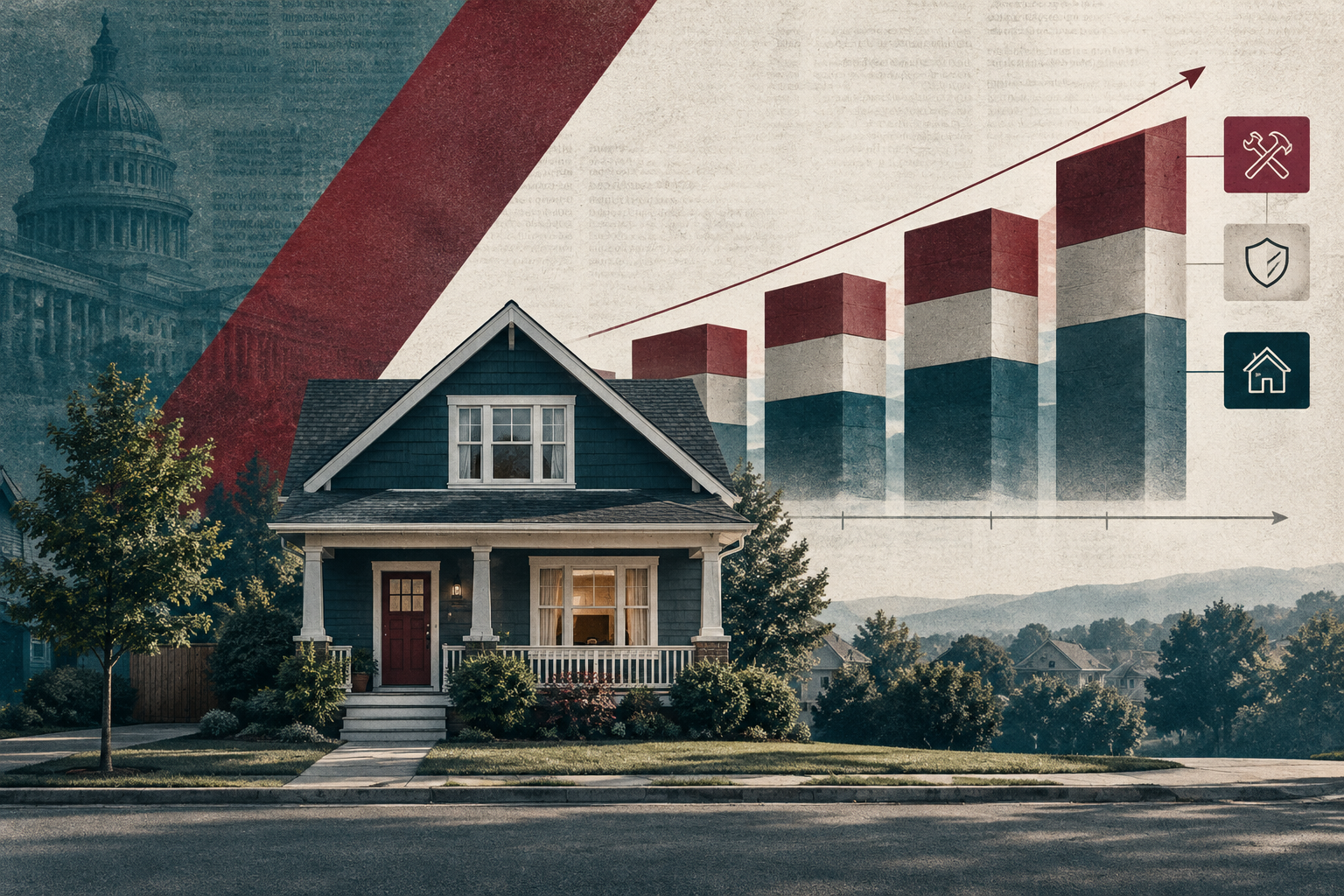
The data regarding these "stay-in" costs is stark. Property taxes across the United States have surged by nearly 30% since 2019, driven by the rapid appreciation of home values during the post-pandemic housing boom. In many jurisdictions, these tax increases have far outpaced wage growth, forcing homeowners on fixed or modest incomes into difficult trade-offs. Simultaneously, the homeowners insurance market has entered a period of extreme volatility. Premiums rose by an average of 24% between 2021 and 2024—double the rate of general inflation—as insurers grapple with increased climate risks and rising reconstruction costs.
Furthermore, the physical cost of maintaining the aging American housing stock is reaching unprecedented levels. Annual spending on home maintenance and repairs is projected to hit $518 billion by the end of 2026. These are not optional entry costs; they are the essential requirements for preserving the safety and value of the home. When these costs are aggregated, it becomes clear that the "cost of staying" is rising at a trajectory that threatens the long-term viability of homeownership for a significant portion of the population.
The Sentiment Gap and the Political Fallout
The disconnect between official economic indicators and the lived experience of homeowners is creating a profound sense of financial anxiety. Recent polling indicates that 63.2% of homeowners now report feeling stressed by the ongoing costs of owning their home, a sharp increase from 55% only a year prior. This anxiety is increasingly influencing the political landscape. Approximately 77% of homeowners state that a candidate’s specific plan to reduce the ongoing costs of homeownership—such as insurance and tax reform—would significantly influence their vote.
Despite this, there is a pervasive sense of skepticism regarding the government’s ability to intervene effectively. Only 26% of surveyed homeowners believe that any political candidate can actually lower their monthly or annual housing-related expenses, while 71% expect their costs to continue rising regardless of election outcomes. This "expectation of insolvency" suggests a breakdown in the social contract that once framed homeownership as a predictable path to the middle class.
The Equity Paradox: Wealth Without Liquidity
One of the most complex challenges facing the modern homeowner is the "equity paradox." Collectively, Americans hold nearly $35 trillion in housing equity, yet this wealth is largely inaccessible. The current interest rate environment has created a "rate-lock" effect: approximately 80.3% of mortgaged homeowners currently hold a rate below 6%. For these individuals, traditional methods of accessing equity, such as cash-out refinances or Home Equity Lines of Credit (HELOCs), would trigger a massive increase in their primary mortgage rate, making the cost of capital prohibitively expensive.
The traditional financial framework for equity extraction is also proving insufficient for the modern workforce. In 2024, 35% of applications for equity extraction were denied, often because the applicants did not meet the rigid debt-to-income or W-2 income requirements established in a previous economic era. For the self-employed, the gig worker, or the retiree, the $35 trillion in equity is effectively "dead capital"—wealth that exists on paper but cannot be used to pay for the rising taxes, insurance, and maintenance costs that the property itself generates.
Structural Recommendations for the Next Era of Housing Policy
To address this crisis, housing policy must evolve beyond the "entry" stage and focus on the sustainability of the "stay." Industry experts and economists have identified three critical areas where legislative intervention is most needed: property tax reform, insurance market stabilization, and modernized equity access.
In terms of property taxes, policymakers are encouraged to explore "circuit breaker" programs. These mechanisms provide targeted tax relief when a homeowner’s tax bill exceeds a certain percentage of their income, ensuring that rising property values do not inadvertently tax long-term residents out of their neighborhoods. Additionally, levy limits that prevent property taxes from rising faster than the rate of inflation could provide the predictability that modern homeowners lack.
The insurance crisis requires a more aggressive regulatory and incentive-based approach. States are currently seeing insurers exit high-risk markets entirely, leaving homeowners with fewer options and higher prices. Policy solutions could include incentives for homeowners to invest in mitigation—such as storm-resistant roofing or modernized electrical systems—which in turn reduces the risk profile for insurers and stabilizes premiums.
Finally, the regulatory framework governing home equity must be modernized. The existing system was built for a borrower with a stable, single-source income in a low-rate environment. Today’s homeowners are often income-variable and rate-locked. There is a growing demand for alternative financial products that allow homeowners to access their equity without taking on additional monthly payments or sacrificing their low-interest first mortgages. Currently, 87% of homeowners express a desire for such alternatives, yet the regulatory path for these products remains fragmented and underdeveloped.
Implications for the Future of the American Dream
The transition from a policy of "getting in" to a policy of "staying in" represents a fundamental shift in how the United States views its housing market. If the current trends of rising non-discretionary costs and equity illiquidity continue, the traditional role of the home as a wealth-building tool will be fundamentally compromised. Instead of a foundation for financial growth, the home risks becoming a primary source of financial depletion.
The historical focus on entry was necessary to build the American middle class, but it is no longer sufficient to maintain it. As the housing market enters a period of sustained high valuations and volatile carrying costs, the definition of "affordable housing" must expand. It can no longer just mean a home that is affordable to buy; it must mean a home that is affordable to keep. Washington’s next great housing challenge will not be found at the front door, but in the bills that arrive in the mailbox every month for the people already inside.
