

Seventy years ago last summer, a pivotal gathering took place at Dartmouth College, a summer workshop that planted the seeds for a field that would fundamentally reshape human civilization. Among the attendees was John McCarthy, a young computer scientist who proposed a name for this nascent discipline: "artificial intelligence." This term, intended to encapsulate the ambitious quest to imbue machines with humanlike cognitive abilities, has since become ubiquitous, a cornerstone of modern discourse, science, and industry. The sheer volume of academic literature dedicated to it—over 7.4 million results on Google Scholar—underscores its profound influence. Yet, in a startling development, the very nomenclature of this transformative field has become a subject of presidential decree.
The Presidential Edict: A Shift in Terminology
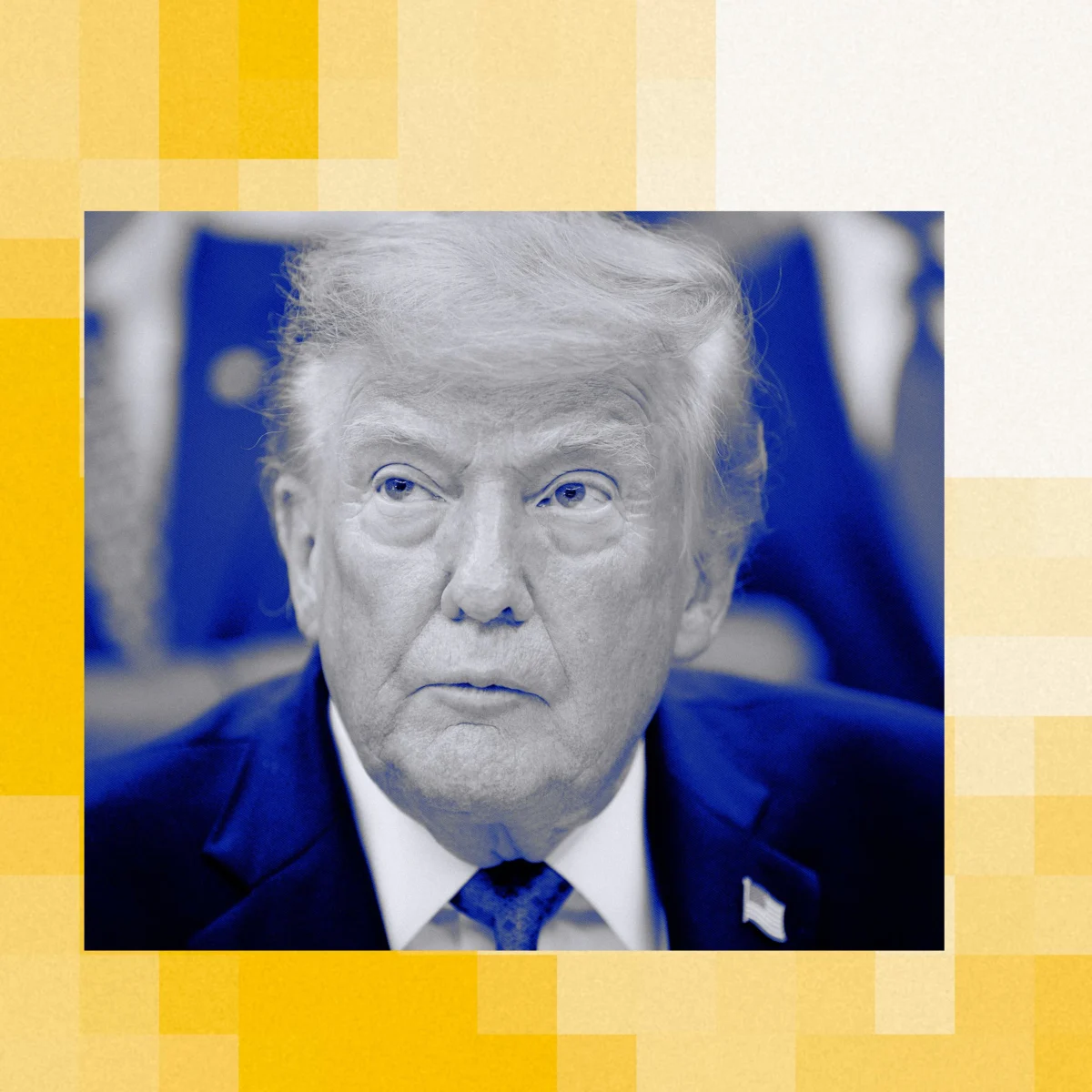
In a move that has sent ripples through the technology sector and academic circles, President Donald J. Trump, during a White House lunch with leading figures in artificial intelligence, issued an executive order mandating a change in terminology. Effective immediately, the term "artificial intelligence" is to be replaced with "Super Intelligence" within government discourse. The president’s stated rationale, articulated both in a prior United Nations speech and at the subsequent press conference, centers on the perceived inaccuracy of the word "artificial." He argued that "artificial" suggests something fake, whereas the intelligence exhibited by advanced machines is, in his view, not counterfeit. This directive implicitly calls for adoption by the private sector, signaling an expectation that companies and researchers will align their language with this new official designation.
This sudden rebranding of an entire scientific and industrial domain, a field that has captivated imaginations and driven innovation for decades, has been met with a complex mix of reactions, ranging from bewildered acquiescence to sharp criticism. The decision, appearing to stem from a personal distaste for the existing terminology, has raised questions about the motivations behind such a significant semantic shift and its potential consequences.
A Historical Context: The Genesis of AI and the Rise of Superintelligence
The Dartmouth Workshop of 1956 is widely recognized as the birthplace of artificial intelligence as a formal field of study. Visionaries like McCarthy, Marvin Minsky, Nathaniel Rochester, and Claude Shannon convened with the explicit aim of exploring how machines could simulate aspects of human learning and intelligence. Their proposal to the Rockefeller Foundation outlined the goal of making "significant advances in the following areas: natural language, neural nets, computability, abstraction, and creativity." The term "artificial intelligence" was chosen to distinguish this new field from existing branches of mathematics and engineering, and to highlight the unique challenge of replicating cognitive functions.
Over the subsequent decades, AI research progressed through periods of intense optimism and subsequent "AI winters," characterized by funding cuts and diminished progress. However, advancements in computing power, algorithms, and data availability have fueled a resurgence, leading to breakthroughs in areas such as machine learning, natural language processing, and computer vision. This progress has culminated in the development of increasingly sophisticated systems, some of which are beginning to exhibit capabilities that many would associate with "superintelligence"—intelligence that far surpasses that of the brightest human minds. The concept of "superintelligence" itself was popularized by philosopher Nick Bostrom in his influential 2014 book, where he defined it as "any intellect that greatly exceeds the cognitive performance of humans in virtually all domains of interest."
The Executive Order: A Bold Semantic Maneuver
The executive order, dated September 23rd, effectively declares "artificial intelligence" a verboten coinage within the federal government. The shift to "Super Intelligence" is intended to reflect a more accurate portrayal of the advanced capabilities of these systems, according to the administration. This move is not merely a cosmetic change; it carries implications for how these technologies will be discussed, regulated, and understood by the public and policymakers alike.
The president’s rationale, emphasizing the non-fake nature of machine intelligence, draws a parallel to his broader skepticism of information he deems "fake news." This suggests a potential underlying concern that the "artificial" label might be used to delegitimize or dismiss the genuine achievements of AI development. However, critics argue that the term "artificial" was never intended to imply fakery but rather to denote an origin distinct from biological intelligence.
Industry Leaders’ Response: A Test of Loyalty?
The gathering at the White House brought together many of the most prominent figures in the AI landscape, including Jeff Bezos (Amazon), Jensen Huang (Nvidia), Dario Amodei (Anthropic), Mark Zuckerberg (Meta), Sundar Pichai (Google), Greg Brockman (OpenAI), Alex Karp (Palantir), and Elon Musk (xAI). According to reports, none of these leaders publicly dissented from the president’s proposal to rename the field. This collective silence has been interpreted by some observers as a pragmatic capitulation to presidential authority, a "loyalty test" that prioritized avoiding presidential ire over defending a foundational term.
Jacob Weisberg, author of "Profiles in Cowardice: A Study of Collaboration in the Trump Era," suggests that such instances highlight a pattern where powerful individuals may compromise their principles to curry favor or avoid retribution. He posits that a united front, where the industry collectively pushed back on the name change while agreeing to other regulatory discussions, might have presented a more formidable opposition. The absence of a unified refusal, however, has allowed the president to claim broad endorsement for his semantic initiative.
The Implications of the Name Change
The implications of this mandated name change are multifaceted. From a scientific perspective, the term "Super Intelligence" carries a specific connotation—that of intelligence vastly exceeding human capabilities. As Nick Bostrom explained, the original term "AI" encompassed a much broader spectrum of systems, from simple spam filters and spell checkers to more complex algorithms. Applying "Super Intelligence" to these less advanced applications could lead to confusion and an overestimation of current technological capabilities.
Moreover, the shift in terminology could influence public perception and regulatory approaches. A term like "Super Intelligence" might evoke greater apprehension and a stronger demand for stringent oversight, potentially accelerating discussions around existential risks associated with advanced AI. Conversely, it could also be used to dismiss concerns about current AI systems by framing them as not yet reaching the threshold of "superintelligence."
Corporate Reactions and Future Outlook
When queried about their intentions to adopt the new terminology, major AI companies like Google, Microsoft, Anthropic, Meta, Amazon, OpenAI, and xAI have remained largely silent. While some executives, like Microsoft CEO Satya Nadella, have previously expressed preferences for alternative terms like "different intelligence," their companies continue to widely use "AI" in their branding and communications. Meta’s establishment of a "Superintelligence Lab" and its continued use of "Meta AI" products further illustrate the complex and often contradictory landscape of corporate responses.
The prevailing expectation among observers is that these companies will likely implement the minimum necessary changes to comply with the executive order, aiming to navigate the situation with minimal disruption until a potential shift in administration. The possibility that some executives might welcome a rebranding of "AI" due to its increasingly negative connotations in public discourse cannot be entirely dismissed, though the replacement term, "Super Intelligence," is arguably more formidable and potentially alarming.
The Core of the Disagreement: "Artificial" vs. "Fake"
The president’s insistence that "artificial" implies "fake" represents a fundamental misunderstanding or deliberate misinterpretation of the term’s scientific origin. John McCarthy coined "artificial intelligence" in 1956 to denote intelligence that is created by humans, as opposed to naturally occurring biological intelligence. The term was intended to be descriptive, not pejorative. In reality, the output of many AI systems is so sophisticated that it is often indistinguishable from human-generated content, a fact that underscores the very "realness" of machine intelligence, not its falsity. The push for clear labeling and watermarking of AI-generated content, a measure that could genuinely address concerns about deception, seems to have been overshadowed by this semantic decree.
Conclusion: A Matter of Substance Over Semantics?
The renaming of artificial intelligence to "Super Intelligence" by presidential fiat is a stark illustration of how political power can intersect with technological discourse. While the president frames it as a correction of terminology, critics view it as an exercise of authority that bypasses established scientific consensus and the deep-seated identity of a field. The subdued response from industry leaders raises critical questions about corporate integrity and collective action in the face of perceived presidential pressure.
Ultimately, the debate over nomenclature, while seemingly trivial, touches upon profound issues of scientific definition, public perception, and the responsible development of powerful technologies. As the field of AI continues its rapid evolution, the challenge lies not just in managing its technical capabilities but also in fostering a clear and accurate understanding of its nature and implications, a task made more complex by the introduction of a new, and potentially more unsettling, label. The long-term impact of this semantic shift will likely depend on how consistently it is applied and whether it truly reflects a deeper understanding of the technologies it purports to describe, or simply another instance of a political maneuver.
