

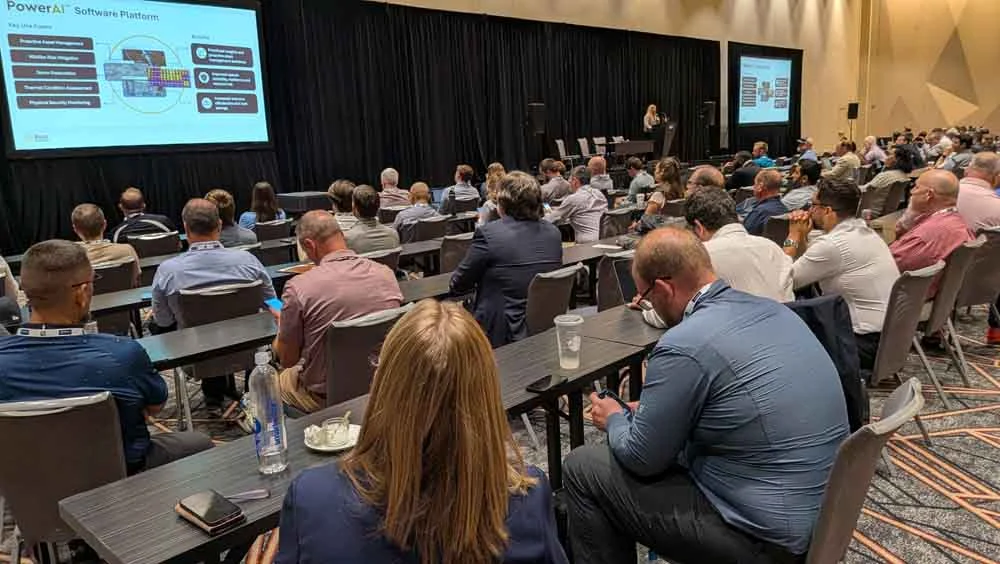
The utility industry is currently navigating a period of unprecedented transformation as the intersection of climate change, aging infrastructure, and shifting regulatory demands creates a high-stakes environment for grid operators. At the recent Wildfire & Resiliency Strategy Summit, held during the DTECH Reliability & Resiliency event, industry leaders, technology innovators, and regulatory experts gathered to address the mounting pressure on utilities to improve grid durability while maintaining ratepayer affordability. The central consensus of the summit was clear: traditional reactive models of emergency response are no longer sufficient in an era where "once-in-a-century" weather events have become annual occurrences.
The Shifting Landscape of Utility Risk and Responsibility
For decades, wildfire risk was largely perceived as a regional issue localized to the Western United States. However, changing weather patterns and prolonged droughts have expanded the threat to the Midwest, the Southeast, and the Atlantic coast. This geographic expansion has forced a nationwide reevaluation of how utilities manage their assets and interact with the environment. Grace Zarzecki of LiveEO opened the summit by emphasizing that the complexity of modern wildfire threats necessitates a new level of cross-industry collaboration. Zarzecki noted that while regional characteristics differ, the fundamental challenges of vegetation management, asset degradation, and ignition prevention are universal.
The necessity for this collaboration is underscored by the growing population within the Wildland-Urban Interface (WUI)—the zone of transition between unoccupied land and human development. As residential and commercial developments push further into forested and high-risk areas, the potential for utility-related ignitions to result in catastrophic loss of life and property increases exponentially. This shift has moved wildfire mitigation from a technical operational task to a core component of corporate governance and societal responsibility.
Transitioning from Reactive Response to Proactive Mitigation
A primary theme throughout the summit was the transition from "firefighting" to "fire prevention" through data-informed risk mitigation. Adi Ranade of Rhizome provided a critical framework for this shift, identifying fire as a unique natural hazard due to its shared societal risk and its potential for existential financial exposure. Unlike a hurricane or an earthquake, where the utility is primarily a victim of the event, a wildfire can be sparked by utility equipment, leading to massive liability and legal challenges.

To combat this, utilities are increasingly adopting a "layered defense" strategy. This involves combining high-level forecasting with granular, localized data analytics to weigh the probability of ignition against the potential downstream impacts. By analyzing 100-meter segments of line, as demonstrated by Public Service Company of New Mexico (PNM), utilities can identify exactly where a failure is most likely to occur and where a fire, if started, would do the most damage. This allows for the surgical application of mitigation tactics such as:
- Covered Conductors: Replacing bare wires with insulated ones to prevent sparks from contact with branches or birds.
- Strategic Undergrounding: Burying lines in high-risk corridors where overhead maintenance is unsustainable.
- Enhanced Situational Awareness: Deploying IoT sensors and weather stations to monitor real-time conditions.
The Role of Artificial Intelligence and Visual Analytics
As utilities manage tens of thousands of miles of distribution and transmission lines, manual inspection has become a logistical bottleneck. Kaitlyn Albertoli of Buzz Solutions detailed how AI-driven visual platforms are revolutionizing asset management. Using AEP Texas as a case study—which manages over 44,000 miles of lines in high-risk zones—Albertoli explained how the integration of drone imagery, thermal data, and Geographic Information Systems (GIS) can compress inspection cycles.
By 2027, AEP Texas aims to move from a traditional five-year inspection cycle to an annual cycle. This is made possible by machine learning algorithms that can scan thousands of images in minutes, identifying rusted bolts, frayed wires, or encroaching vegetation with higher accuracy than a human inspector. This "human-in-the-loop" model allows field crews to stop searching for problems and start fixing them, prioritizing high-risk defects that could lead to an ignition during a high-wind event.
Financial Optimization and the "Cost of Resilience"
The financial reality of grid hardening remains a significant hurdle. Jeremy Tabet of PNM and Holly Eagleston of FireScape addressed the challenge of balancing necessary upgrades with "rate pressure"—the need to keep electricity costs manageable for consumers. While undergrounding all lines would virtually eliminate ignition risk, the cost is prohibitive for most utilities.
The solution lies in optimization algorithms that maximize "risk reduction per dollar spent." By using FireScape to simulate fire-spread scenarios, PNM can identify the "middle ground"—investing in targeted undergrounding and equipment upgrades where they provide the most protection. This data-driven justification is becoming essential for regulatory compliance. Currently, regulators in at least 15 states mandate formal Wildfire Mitigation Plans (WMPs). These plans require utilities to provide empirical evidence that their capital expenditures are effectively reducing risk, moving away from "blanket" upgrades toward precision engineering.

Humanizing the Response: Customer Trust and Communication
The technical side of grid resilience is only half the battle; the other half is public perception. Dave Bunge of ComEd and Paolo Paruccini of 4Liberty discussed the critical need for transparent, customer-centric communication during crises. When a utility implements a Public Safety Power Shutoff (PSPS) or experiences a major storm-related outage, the lack of information can lead to public hostility and a breakdown of trust.
ComEd has addressed this by overhauling its restoration timelines. Moving away from delayed post-damage estimates, the utility now issues restoration benchmarks within two hours of peak outages using historical data and predictive machine learning. Furthermore, Bunge highlighted the importance of "humanizing" the utility through social media and direct engagement. By showing the faces of the crews working in hazardous conditions and explaining the "why" behind operational decisions, utilities can transform the narrative from one of failure to one of shared resilience.
Intelligent Vegetation Management and Asset Health
Vegetation contact remains one of the leading causes of utility-ignited fires. Traditional "cycle-based" trimming—where trees are cut every few years regardless of their actual growth—is being replaced by "condition-based" management. Andreas Naujoks and Eve Egdmann of LiveEO illustrated how satellite-driven vegetation data can identify specific spans of wire where trees are growing faster than expected or where diseased trees are at risk of falling.
This hyper-local intelligence allows forestry teams to move beyond broad schedules and instead target "hazard trees" before they become a problem. When fused with asset health metrics—such as the age and condition of the poles—utilities can create a "Digital Twin" of their entire network. This digital model allows operators to run "what-if" scenarios, predicting how the grid will respond to specific wind speeds or temperature fluctuations.
Centralized Governance and the East Coast Perspective
A significant takeaway from the summit was that wildfire risk is no longer a "siloed" issue for Western utilities. Jason Hawkins of Dominion Energy and Mona Fazel of Danovo Energy Solutions shared insights from the Mid-Atlantic region. Dominion Energy, which operates across Virginia and the Carolinas, is facing rapid system growth driven by the expansion of data centers in Northern Virginia.

Dominion has moved toward a unified enterprise framework, breaking down silos between transmission, distribution, and forestry teams. This centralized governance ensures that wildfire resilience is baked into every aspect of the organization, from long-term capital planning to daily field operations. Hawkins noted that even in regions where wildfire has not historically been a primary concern, the changing climate makes proactive planning essential. Waiting for a disaster to occur before developing a mitigation plan is no longer a viable strategy.
Conclusion: The Road to 2027 and Beyond
The Wildfire & Resiliency Strategy Summit served as a stark reminder that the utility industry is in a race against time. As extreme weather events increase in frequency and intensity, the gap between "standard" operations and "resilient" operations is widening. The integration of AI, satellite imagery, and advanced data analytics is no longer a luxury but a necessity for survival in a complex risk environment.
Looking forward to DTECH 2027, the focus of the industry will likely shift from the adoption of these technologies to the scaling of these solutions. The goal is a grid that is not only "hardened" against physical threats but also "intelligent" enough to adapt to changing conditions in real-time. By fostering a culture of transparency, collaboration, and data-driven decision-making, utilities can meet the dual challenge of protecting the environment and providing the reliable, affordable energy that modern society requires. The insights shared at this summit provide a roadmap for an industry that must evolve as quickly as the climate it operates within.
