

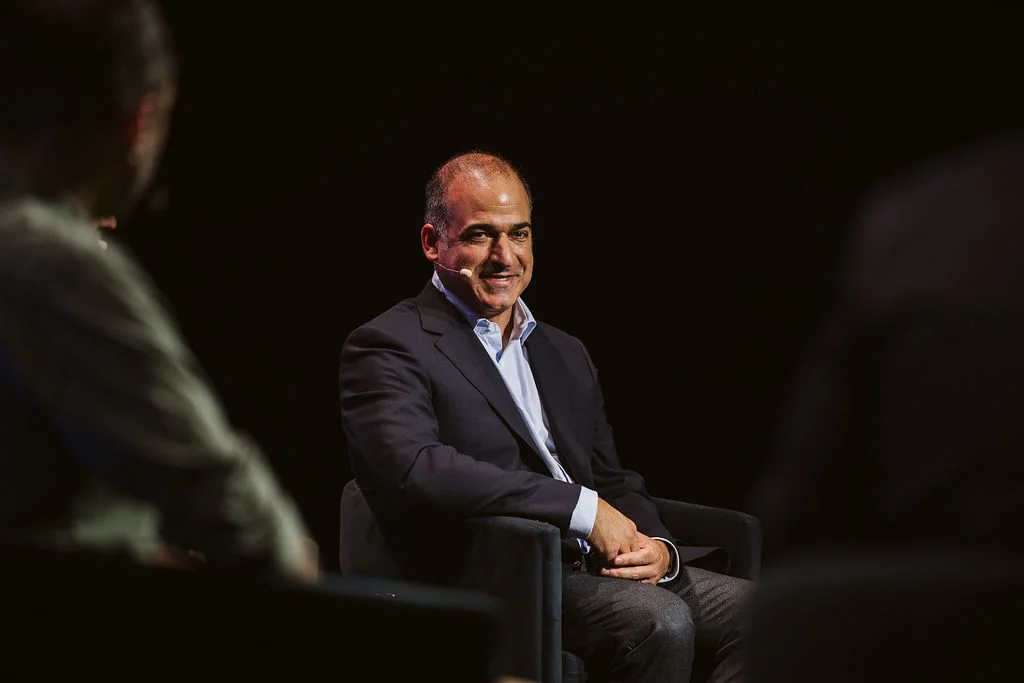
This past week, during a panel discussion at the All In conference, I delved into the enigmatic realm of AI world models, a frontier of artificial intelligence that remains one of its most mysterious and least transparent corners. The conversation underscored a fascinating paradox: despite attracting significant buzz and substantial venture capital, the leading players in this space, notably Yann LeCun’s AMI Labs and Fei-Fei Li’s World Labs, exhibit a striking lack of concrete commercialization efforts, ranking low on what might be termed "the trying-to-make-money scale." This phenomenon points to a deeper strategic rationale, one rooted in the intense competition and high stakes characteristic of foundational AI research.
Understanding World Models: The Foundation of Spatial Intelligence
At their conceptual core, world models aim to automate spatial intelligence—the ability for an AI system to understand, navigate, and interact with the physical world in a way analogous to human cognition. This involves creating a comprehensive, internal representation of an environment, allowing the AI to predict outcomes, plan actions, and adapt to changing circumstances. Unlike large language models (LLMs) that primarily process and generate text based on statistical patterns, world models are designed to grasp the causal relationships and physical laws governing three-dimensional space. This ambition is not new; AI researchers have long sought to imbue machines with common sense and a robust understanding of reality, a challenge that has historically proven far more complex than symbolic reasoning or pattern recognition.
The field draws inspiration from cognitive neuroscience, where "world models" refer to the brain’s internal simulations of reality, enabling prediction and decision-making. For AI, this translates into building systems that can infer object properties, predict trajectories, simulate interactions, and even generate novel environments. The potential applications are vast and transformative, ranging from highly advanced robotics and more complex self-driving systems to interactive video generation and entirely new forms of media creation. It represents a paradigm shift from AI that merely processes information to AI that understands and manipulates reality.
The Landscape of Innovation: Leading Labs and Their Vision
The current prominence of world models is largely driven by the work of luminaries like Yann LeCun, a Turing Award laureate and one of the "godfathers of AI," and Fei-Fei Li, a pioneering figure in computer vision. LeCun’s AMI Labs and Li’s World Labs have emerged as central figures, attracting considerable investment and public interest. Yann LeCun’s extensive background in convolutional neural networks (CNNs), which revolutionized image recognition, provides AMI Labs with a deep foundation in spatial data processing. His long-standing advocacy for energy-based models and self-supervised learning aligns perfectly with the principles underlying robust world models. Similarly, Fei-Fei Li, renowned for her pivotal role in creating ImageNet, a dataset that propelled the deep learning revolution in computer vision, brings an unparalleled understanding of how machines perceive and categorize visual information to World Labs. Her current focus on spatial intelligence underscores a belief that true AI generalizability requires a grasp of the physical world beyond mere pattern recognition.
While specific funding figures for these private labs are often undisclosed, the general trend in foundational AI research indicates investments soaring into the hundreds of millions, if not billions, for promising ventures. Major venture capital firms are keenly aware of the potential for world models to unlock the next generation of AI capabilities, beyond the current limitations of LLMs. This significant capital influx allows these labs to pursue long-term, high-risk, high-reward research without immediate pressure for profitability. The "trying-to-make-money scale" becomes less relevant in this early, exploratory phase, where the primary objective is to achieve fundamental breakthroughs that could redefine industries. The timeline for such deep technological innovation often spans years, if not decades, before mature products can be brought to market.
Commercialization Conundrum: Promises Versus Products
Despite the immense potential, the path to commercialization for world models remains shrouded in ambiguity. During the All In panel, my attempt to elicit concrete product timelines or applications from Michael Rabbat, a co-founder of AMI Labs and the company’s VP of World Models, was met with a polite but firm evasion. "We’ll talk about it when we’re ready to talk about it," Rabbat stated, a sentiment he later reiterated via email, clarifying, "We’re still in a research and building phase, so we’re not talking publicly about any product plans or timeline."
This caginess, while understandable for a company less than a year old, appears to be endemic across the entire world-modeling landscape. World Labs’ "Marble" platform, arguably one of the more developed offerings, provides compelling demonstrations ranging from sophisticated media creation—such as building explorable environments for video games and generating advanced CGI effects—to robotics use cases. However, these demonstrations often highlight capabilities rather than showcasing readily deployable, commercialized products with clear market fit and revenue streams. The distinction between a compelling tech demo and a scalable, profitable product is a crucial one, particularly in cutting-edge AI where the underlying research is still rapidly evolving. The transition from proof-of-concept to widespread adoption often involves overcoming significant engineering challenges, developing robust infrastructure, and identifying specific, high-value problem sets that the technology can solve economically.
The Veil of Secrecy: A Strategic Imperative
The pervasive secrecy extends beyond the core labs to their critical suppliers. Alex de Vigan, CEO of Physicl, a data supplier integral to the burgeoning world model business, expressed his frustration on the sidelines of the conference. While Physicl’s specialized data is clearly valuable to its clients, de Vigan admitted to being largely in the dark about the exact nature of their end products. "I wish they would tell us more. We could build more useful data if we knew what they were working on," he lamented. This anecdote highlights a fascinating dynamic in the AI supply chain, where the strategic imperative of client secrecy impacts even their closest collaborators, potentially hindering optimal resource allocation and collaborative innovation.
This widespread opaqueness is not merely incidental; it is a deliberate and strategic maneuver, often referred to by fans of science fiction author Cixin Liu as a "dark forest scenario." In this hypothesis, if you don’t know who else is in the "woods" (the competitive landscape), it’s best not to attract attention by revealing your position or capabilities. For foundational AI research, this means guarding intellectual property, delaying the emergence of direct competition, and maintaining strategic ambiguity for as long as possible.
The reasons are multifaceted:
- Protecting Competitive Advantage: In a race for potentially transformative technologies, early disclosure can give rivals a roadmap, allowing them to pivot their research or poaching key talent.
- Delaying "Cloning": Once a clear path to market or a specific killer application is identified, other well-funded labs—including established tech giants like Google, Meta, or Microsoft, as well as emerging "neolabs" and even formidable competitors like OpenAI and Anthropic—could quickly mobilize resources to replicate or surpass the innovation.
- Maintaining Focus: Premature announcements can create external pressure or divert internal resources towards defending a perceived market position rather than focusing on core research and development.
- Strategic Flexibility: Keeping options open allows labs to explore multiple promising avenues without committing to a single one that might later prove suboptimal.
This strategy is particularly relevant in an era of abundant AI funding. While easy fundraising empowers a lab to pursue ambitious, long-term goals under the radar, the same capital availability also fuels numerous potential rivals. The longer a lab can cultivate its unique capabilities in stealth, the greater its chance of building an insurmountable lead or a proprietary "moat" before the inevitable competition emerges.
Unpacking Potential: Diverse Applications of World Model Technology
The mystery surrounding world models is partly due to their extraordinary versatility. A simple definition posits them as navigable maps of the world, akin to the AI models that power existing self-driving cars. However, the underlying modeling approach is far more profound. The same spatial intelligence that enables a Waymo vehicle to navigate complex urban traffic could empower a humanoid robot to perform intricate tasks in a dynamic environment, like carrying boxes in a warehouse or assisting in surgical procedures. It could also transform a few minutes of video footage into an explorable, interactive digital environment for gaming, virtual reality, or cinematic production.
AMI Labs, for instance, has already indicated exploratory ventures across a broad spectrum of industries, including manufacturing, biomedicine, robotics, and even AI software for medical professionals through its Nabia partnership. This wide-ranging exploration reflects the foundational nature of world models; their ability to understand and predict physical reality has implications for nearly any domain where interaction with the physical world is critical. While it’s highly improbable that AMI will pursue all these avenues simultaneously, the early experimentation across diverse sectors suggests a deliberate strategy to identify the most impactful and scalable applications. The challenge lies in distilling this broad potential into one or two highly focused, viable business models that can drive commercial success. The current approach seems to be one of broad exploratory research, funded by patient capital, to pinpoint the killer app that will ultimately justify the extensive investment.
The Economics of Ambiguity: Fundraising and Competitive Dynamics
The current climate of "easy fundraising" for AI initiatives plays a dual role in this strategic ambiguity. On one hand, it provides the necessary capital for these labs to undertake ambitious, long-term research without the immediate pressure of quarterly earnings or product launches. This freedom allows for genuine scientific exploration and the development of truly foundational technologies. According to PitchBook data, global venture capital investment in AI companies reached unprecedented levels in recent years, demonstrating investor confidence in the sector’s long-term potential, even for projects with distant commercialization horizons.
On the other hand, this same financial abundance means that competitors can also secure substantial funding. Once a clear path to market or a disruptive application becomes evident, the floodgates of competition are likely to open. Established tech giants with immense resources, alongside other well-funded AI startups and research institutions, will swiftly enter the fray. Companies like OpenAI and Anthropic, already leaders in large language models, possess the talent and capital to pivot or expand into world models if a compelling market opportunity materializes. This dynamic reinforces the "dark forest" strategy: delay revealing your specific target application for as long as possible to maximize the head start and build a defensible technological moat. The cost of being second to market in a truly revolutionary AI domain could be prohibitive, making strategic silence a paramount competitive advantage.
Looking Ahead: Implications for AI’s Future
The secretive development of AI world models holds profound implications for the future trajectory of artificial intelligence. If successful, these technologies promise to move AI beyond pattern recognition and language processing into a deeper, more intuitive understanding of the physical universe. This could accelerate the development of truly autonomous systems, capable of navigating and manipulating complex environments with human-like dexterity and foresight. From advanced humanoid robots that seamlessly integrate into human society to self-driving vehicles that achieve Level 5 autonomy in all conditions, the potential societal impact is immense.
However, this secretive approach also raises questions about the balance between proprietary development and open scientific collaboration. While strategic silence can foster competitive advantage, it can also slow the collective progress of the field and potentially delay the identification and mitigation of ethical challenges inherent in building increasingly autonomous and intelligent systems. The ethical considerations around AI with robust spatial intelligence—such as accountability in autonomous decision-making, the potential for misuse, and the impact on human labor—are critical discussions that require broad engagement.
As venture capital continues to pour into foundational AI, the "dark forest" strategy is likely to persist, shaping an ecosystem where groundbreaking innovations are cultivated in stealth. The world awaits the moment when these labs are "ready to talk about it," a moment that promises to unveil technologies poised to redefine our interaction with the physical and digital worlds, marking a new era in the quest for artificial intelligence that truly understands the world around us. The anticipation is palpable, for what emerges from these hidden labs could very well reshape the industries of tomorrow and fundamentally alter the capabilities of AI.
