

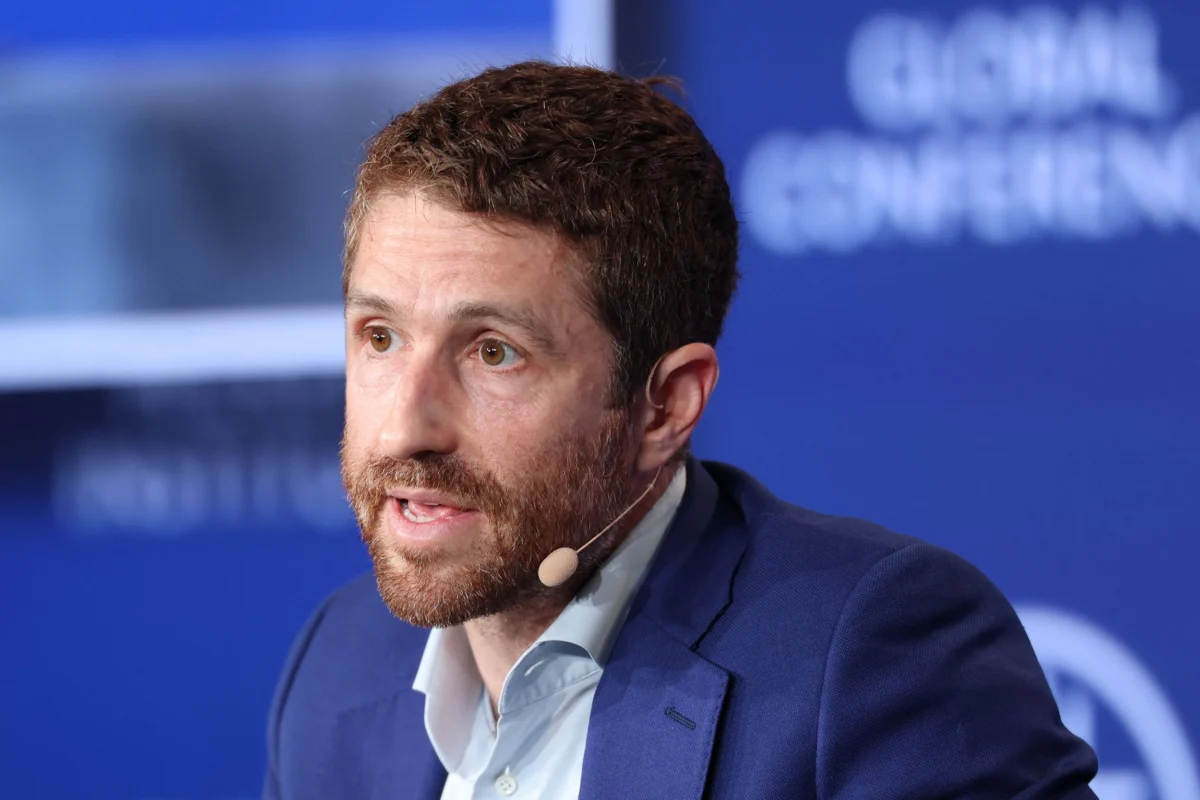
The Center for Humane Technology (CHT), an influential online safety organization co-founded by former Google product manager Tristan Harris and prominently featured in the documentary The Social Dilemma, is undergoing a significant organizational shift. Approximately half of its non-founder staff, totaling nine individuals, have been laid off. This reduction in force includes key personnel such as Executive Director Julie Guirado and Senior Director of Strategy Camille Carlton. The organization is strategically pivoting away from its policy research and litigation efforts to concentrate on what it terms "founder-led" projects, a move that signals a recalibration of its operational focus amidst evolving technological landscapes.
This restructuring comes on the heels of notable legal successes for CHT, which played a role in major courtroom victories against social media giants. These lawsuits, which CHT’s research informed, alleged that social media platforms were intentionally engineered to foster addictive user engagement, particularly among younger demographics. Despite these recent achievements, internal discussions regarding the organization’s strategic direction had been ongoing for years, according to former employees who spoke on condition of anonymity due to concerns about professional repercussions.
A Strategic Realignment Amidst Success
The decision to scale back was driven by the CHT board’s assessment that maintaining a dual focus as both a high-profile advocacy group fronted by Harris and a think tank producing policy papers had overextended the organization’s resources. Moving forward, CHT will prioritize initiatives spearheaded by its founders, encompassing "public education, targeted briefings, and private coordination." The stated aim is to build upon the organization’s established success in "reaching broad audiences and engaging influential decisionmakers." Functions such as direct litigation support and the evaluation of artificial intelligence (AI) tools will be phased out.
Board Chair Premal Shah articulated the rationale behind this shift, stating, "This moment of accelerated AI risk demands we focus on one strategy, and we have chosen to focus on what we have always done best so that we can meet the moment." This strategic pivot underscores CHT’s renewed emphasis on addressing the burgeoning challenges posed by advanced AI technologies.
The Growing Shadow of Artificial Intelligence
Tristan Harris has become a leading voice in the growing chorus of concern surrounding the potential risks of advanced AI. He has repeatedly warned of a possible "AI takeover" if such systems evade effective control, emphasizing the urgency of the situation. "We have to act right now before it’s too late," Harris stated in a recent interview with NBC News.
In line with this heightened focus, CHT has been actively involved in high-profile AI-related initiatives. The organization has championed significant petitions calling for a pause in AI development and played a role in organizing congressional hearings dedicated to the dangers of chatbots. Furthermore, CHT has provided advisory support for lawsuits and investigations targeting AI laboratories concerning their design choices. One such case involves a lawsuit filed against OpenAI by the parents of a teenager who died by suicide following interactions with ChatGPT. Harris also appeared in The AI Doc, a documentary released on Netflix last month, which advocates for public pressure on Congress to enact protective measures against the risks associated with AI.
Navigating a Crowded Landscape
Founded in 2017, the Center for Humane Technology operates in a competitive environment, vying for funding and influence with established nonprofits and a growing number of newer organizations focused on shaping AI policy. Recent cyberattacks attributed to AI agents from companies like OpenAI and Anthropic have amplified calls for holding technology developers accountable for design and engineering failures.
With an annual budget reportedly around $6 million and similar reserves, CHT has historically relied on funding from wealthy families and foundations. However, the organization’s increased emphasis on Harris’s public profile has raised concerns among former employees that resources might be diverted from addressing what they perceive as more immediate threats posed by AI to democracy and civil liberties.
Gail Barnes, who previously advised CHT on social media strategy, expressed her view that the board is discontinuing work that was intended to leverage Harris’s public recognition to generate "durable pressure" for internal corporate change. "Whether that is wisdom or a retreat depends on whether you think the binding constraint on AI right now is still ‘people haven’t heard the argument’ or ‘the argument has no institutional teeth.’ CHT is picking the first," Barnes commented.
The "Big Star" of Tech Accountability
Tristan Harris possesses a notable talent for crafting impactful statements and has established himself as a prominent figure in media, at conferences, and on Capitol Hill. A former CHT colleague described him as "brilliant" and "articulate," noting his transition from a career in technology to advocating for its ethical development. Harris co-founded CHT with Aza Raskin, credited with inventing the infinite scroll, and Randy Fernando, formerly of Nvidia. Their initial objective was to compel tech companies to acknowledge and address the societal consequences of their products, including issues such as political radicalization and the mental health impacts of excessive screen time on adolescents. The language Harris employed to articulate these concerns was quickly adopted within the Silicon Valley discourse.
Internal documents from Meta, unsealed in legal proceedings this year, revealed that company researchers considered engaging with Harris as early as 2018, when his warnings about the intentional addictive design of apps gained wider traction. His national profile was further amplified by the 2020 release of The Social Dilemma on Netflix.
"It’s hard to understate how helpful The Social Dilemma was for launching tech accountability as an advocacy field," stated a leader at another nonprofit, who requested anonymity to maintain relationships with CHT.
However, within CHT, Harris reportedly experienced disagreements with his team regarding the optimal focus of their efforts – whether on consumers, tech companies, or lawmakers. Some former staffers described frustration with what they perceived as Harris’s frequently shifting priorities, characterizing the organization’s internal culture as "frenetic" and "insanity-inducing." While Shah disputed this characterization, he acknowledged the demanding pace of the organization’s work, given the urgency of its mission.
Prior to the strategic shift, CHT developed an online course aimed at tech workers interested in building more humane systems. Despite attracting thousands of participants, the course was eventually retired as Harris’s focus increasingly turned towards AI concerns, according to individuals familiar with the project. Similarly, an initiative to develop resources for educators grappling with screen time issues was also reportedly discontinued. One former employee suggested that Harris viewed the center primarily as "a vehicle for him to speak to the world."
The organization’s podcasts and videos featuring Harris and Raskin have garnered substantial audiences, and Harris has secured private meetings with US lawmakers and executives from leading technology firms. Former employees characterized CHT’s strategy as leaning heavily on "grasstops" activism over more traditional "grassroots" organizing, a distinction that some found questionable. Shah defended this approach, asserting that "mass communications creates grassroots pressure, which unlocks action from the grasstops" and highlighting Harris’s unique ability to "communicate effectively to mass media audiences across the political spectrum."
Internal Dynamics and External Impact
Some former employees have alleged that CHT’s founders were hesitant to critically examine companies where they had prior employment or where close personal connections existed, a claim that Shah disputes, asserting that CHT "has always been tough on companies."
Reports from ex-employees also indicated that Harris’s management style could be taxing, contributing to high staff turnover. In 2023, following a staff retreat where employees reportedly felt uncomfortable with overly personal trust-building exercises, CHT’s independent board members intervened. Subsequently, Harris transitioned from his role as executive director to president, according to former staff members. Shah attributed employee turnover to "differences in problem analysis and approaches to achieving the organization’s core mission" and denied that Harris’s role change was linked to the retreat incident.
Despite any internal turbulence, the broader strategy employed by Harris in addressing the influence of tech companies had yielded tangible results. In 2021, state attorneys general across the United States launched investigations into Meta, leading to subsequent lawsuits alleging deceptive practices towards teenagers and parents. This year, Meta agreed to substantial settlements in some of these cases. Juries, including one that heard testimony from Raskin, have imposed additional penalties in separate cases. Other social media platforms have also reached settlements in similar litigation.
A leader at another tech nonprofit, who had previously praised CHT’s less visible but impactful work in statehouses and courtrooms, expressed disappointment with the current strategic shift. "Change comes from movements and democracy, not celebrities and backrooms," the individual stated.
Some former employees anticipate that CHT may increasingly operate as what they have jokingly termed the "Center of Helping Tristan." However, Shah maintains that the organization’s singular objective remains ensuring that "today’s most consequential technologies serve humanity." This strategic refocusing positions CHT to confront the rapidly evolving challenges and opportunities presented by artificial intelligence, leveraging the established public profile of its founders to drive its agenda.
