

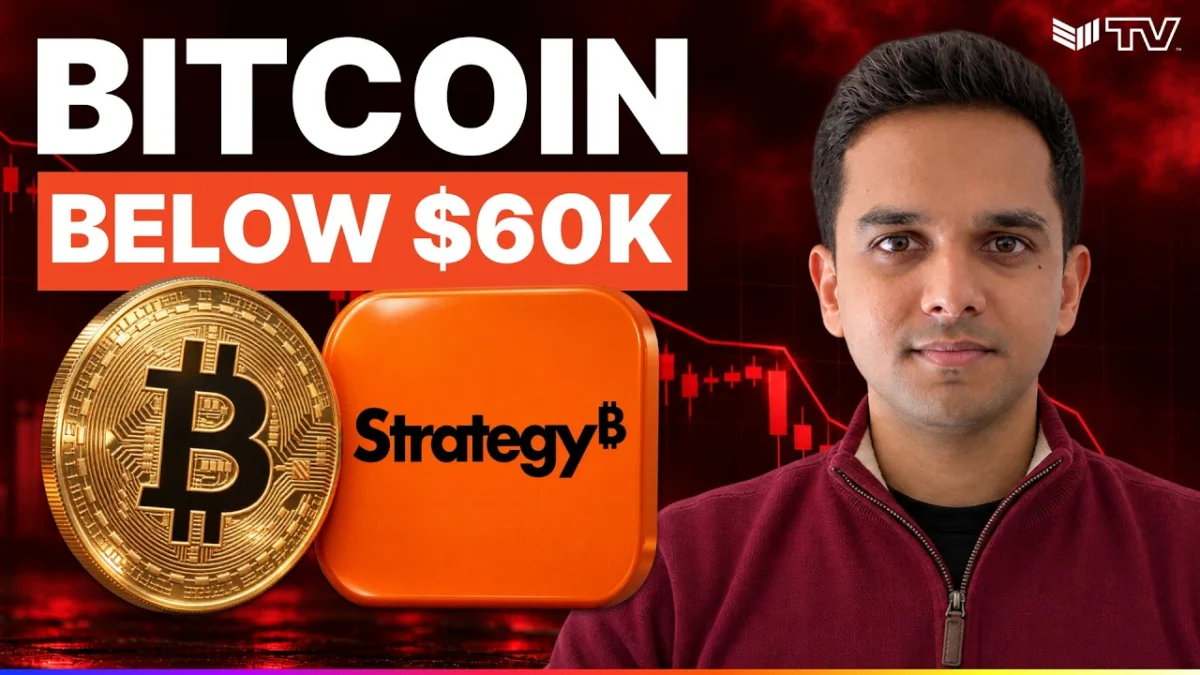
Chaitanya "CJ" Jain, the Head of Investor Relations at Strategy, appeared on Bitcoin Magazine TV to discuss the current market conditions for Bitcoin, which is trading below Strategy’s average cost basis. Jain identified the recent Anthropic initial public offering (IPO) as a significant negative catalyst for Bitcoin over the preceding weeks, attributing a discernible shift in investor sentiment. He posited that risk-on investors have been actively rotating capital into the artificial intelligence (AI) sector, thereby drawing funds away from digital assets like Bitcoin. However, Jain expressed an expectation that this trend of rotation will reverse, asserting that the more profound and enduring catalyst for Bitcoin’s resurgence will be monetary debasement. He articulated a scenario where central banks, compelled by economic pressures, will be forced to increase money printing, a development he believes will reignite widespread investor interest in Bitcoin.
Market Dynamics: Bitcoin Under Pressure as AI Sector Captures Investor Attention
The cryptocurrency market has experienced a notable downturn in recent weeks, with Bitcoin, the flagship digital asset, trading below the average cost basis of institutional investor Strategy. This performance has prompted analysis from key figures within the investment community, seeking to understand the underlying drivers of this market movement. Chaitanya "CJ" Jain, Head of Investor Relations at Strategy, offered his perspective on Bitcoin Magazine TV, highlighting a clear shift in investor capital allocation.
Jain pinpointed the recent initial public offering (IPO) of Anthropic, a prominent artificial intelligence company, as a primary driver behind this rotation. He explained that the fervor surrounding AI advancements and the potential for substantial returns in this sector have attracted significant investment. This "risk-on" sentiment, characterized by a willingness to invest in higher-growth, potentially higher-risk assets, has seen capital flow away from more established, albeit volatile, assets like Bitcoin.
"The Anthropic IPO has been the clear negative catalyst for Bitcoin over the last couple of weeks," Jain stated during his appearance. "We’ve observed a distinct rotation out of digital assets and into the AI trade, as investors seek to capitalize on the perceived growth opportunities within that sector."
This phenomenon is not entirely unprecedented in financial markets. Periods of intense speculative interest in a particular sector often lead to capital reallocation from other asset classes. The rapid advancements and transformative potential attributed to AI have created a compelling narrative for many investors, drawing parallels to previous technological revolutions.
The Anthropic IPO: A Catalyst for Capital Flight?
The IPO of Anthropic, a leading AI safety and research company, has been a significant event in the financial world. Valued at billions of dollars, its public offering has generated substantial excitement and investment. Companies like Anthropic are at the forefront of developing advanced AI models, which are seen as having the potential to revolutionize numerous industries.
The timing of Anthropic’s IPO coincided with a period of increased volatility in the cryptocurrency markets. Jain’s analysis suggests that the allure of the AI sector, amplified by the successful public debut of a major player like Anthropic, provided a strong incentive for investors to rebalance their portfolios. This rotation can be understood as a strategic move by some investors to diversify their holdings and capture potential gains in a sector experiencing a surge of innovation and investor enthusiasm.
However, Jain also cautioned against viewing this as a permanent shift. He articulated a belief that the current market dynamics are driven by a temporary trend, and that fundamental economic factors will ultimately reassert their influence on Bitcoin’s trajectory.
Monetary Debasement: The Enduring Catalyst for Bitcoin
While the AI sector’s current appeal is a notable short-term factor, Jain emphasized that the most powerful and long-term catalyst for Bitcoin remains monetary debasement. This refers to the erosion of the purchasing power of fiat currencies, typically driven by inflationary policies and excessive money printing by central banks.
Jain’s thesis is rooted in the inherent properties of Bitcoin as a scarce and decentralized digital asset. In an environment where traditional currencies are losing value, investors often seek alternative stores of value that are less susceptible to inflationary pressures. Bitcoin, with its capped supply of 21 million coins, is often seen as a potential hedge against inflation.
"We expect that rotation to reverse," Jain asserted. "And the bigger catalyst will be monetary debasement. When central banks are forced to print, and they will be forced to print more in the future due to economic pressures, everyone will chase Bitcoin again."
This perspective aligns with a long-standing narrative among Bitcoin proponents who view the asset as a digital form of gold – a hedge against currency devaluation and systemic financial instability. The history of fiat currencies is replete with examples of significant inflation and devaluation, leading investors to seek assets that can preserve their wealth.
The current global economic landscape, marked by high levels of sovereign debt and ongoing geopolitical uncertainties, could increase the likelihood of central banks resorting to quantitative easing and other measures that expand the money supply. Should this occur, Jain’s prediction of a renewed surge in demand for Bitcoin could well materialize.
Strategy’s Position and Investor Confidence
Jain’s comments also shed light on Strategy’s own investment approach and confidence in Bitcoin, even amidst current market headwinds. The fact that Bitcoin is trading below Strategy’s average cost basis suggests that the firm may be holding a significant position acquired at higher price levels. However, Jain’s optimistic outlook indicates a conviction in Bitcoin’s long-term value proposition.
The mention of Strategy holding STRC (likely referring to MicroStrategy, a company with a significant Bitcoin treasury) at 12% and undertaking substantial buybacks further underscores the firm’s commitment to digital assets. These actions suggest a belief in the underlying value of these holdings and a willingness to capitalize on market dips to strengthen their positions.
The Role of SALT Lending: Supporting Bitcoin Holders
The appearance of Chaitanya "CJ" Jain on Bitcoin Magazine TV was also supported by a sponsorship from SALT Lending, a company that offers lending against Bitcoin collateral. The advertisement highlighted their services, encouraging Bitcoin holders not to sell their assets but to leverage them through loans.
SALT Lending’s proposition to BMTV viewers, offering loans from 6.99% APR with no credit checks, origination fees, or prepayment fees, is designed to appeal to individuals who may be facing liquidity needs but wish to retain their Bitcoin holdings. This service is particularly relevant in a market where investors might be hesitant to sell during a downturn, opting instead to borrow against their assets.
The advertisement also notes SALT’s history as the "original Bitcoin-backed lender, lending against BTC since 2016," underscoring their established presence and experience in the market. This historical context is important for building trust and credibility with potential borrowers.
The terms and conditions associated with SALT loans, including the disclaimer that borrowing against collateral involves risk and that digital currency is not legal tender or FDIC/SIPC insured, are crucial disclosures for prospective clients. This ensures transparency and adherence to regulatory expectations.
Broader Implications and Future Outlook
Jain’s analysis provides a nuanced perspective on the current state of the Bitcoin market. By identifying both short-term catalysts (AI sector rotation) and long-term drivers (monetary debasement), he offers a framework for understanding Bitcoin’s price action.
The potential for a reversal in the AI trade, coupled with the persistent global economic concerns that could lead to increased monetary debasement, suggests that Bitcoin may be poised for a recovery. Investors who believe in Bitcoin’s role as a store of value and a hedge against inflation will likely be watching these developments closely.
Furthermore, the strategic decisions of institutional investors like Strategy, including their continued investment and buyback programs, can serve as indicators of broader market sentiment and confidence in Bitcoin’s future.
The disclaimer provided by Bitcoin Magazine TV is also a critical component of such discussions, emphasizing that the views expressed are those of the participants and do not constitute financial advice. This highlights the speculative nature of cryptocurrency investments and the importance of independent due diligence.
As the market continues to evolve, the interplay between technological innovation, investor sentiment, and macroeconomic forces will shape the trajectory of Bitcoin and the broader digital asset landscape. Chaitanya Jain’s insights offer a valuable perspective for navigating these complex dynamics.
