

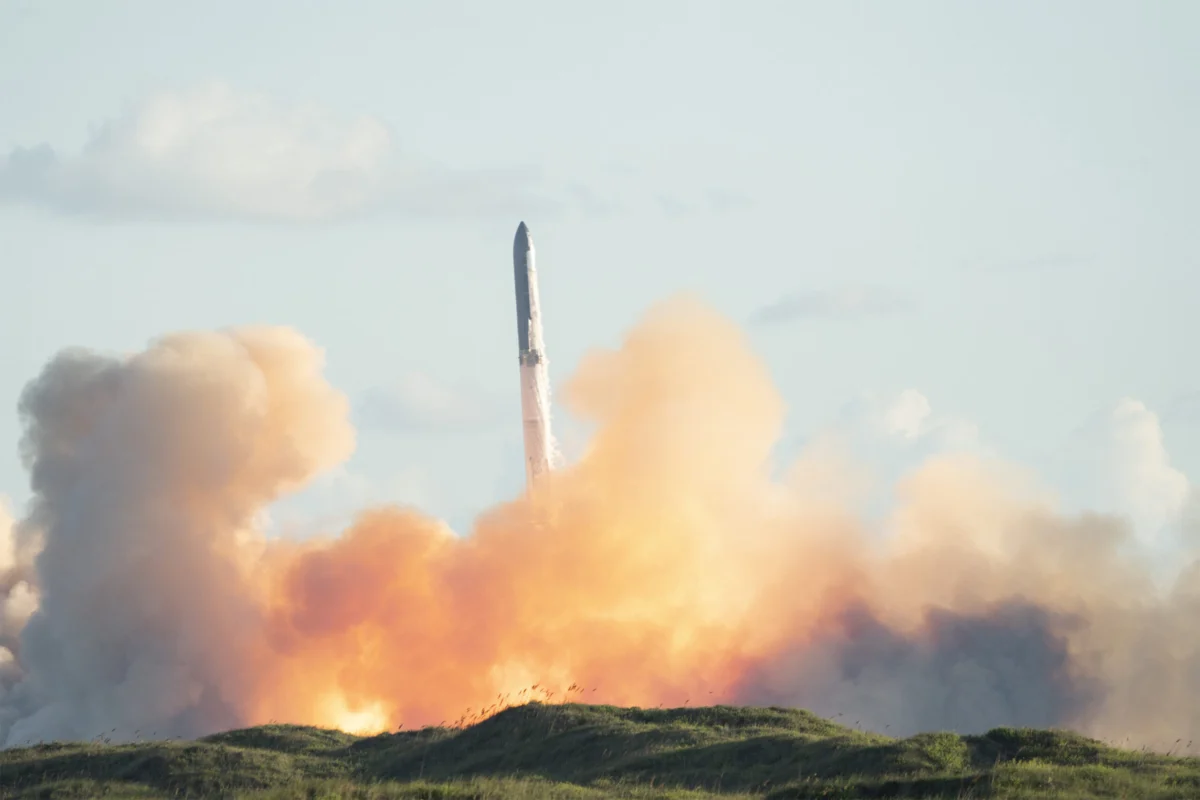
The critical test launch is meticulously scheduled for September 22, opening with a 75-minute launch window that commences at 7:15 a.m. Central Time (CT) from SpaceX’s Starbase facility near Boca Chica, Texas. This flight carries dual objectives of immense strategic importance: not only will it attempt to place the Starship upper stage into Earth’s orbit for the very first time, but it will also simultaneously deploy the initial tranche of 26 advanced V3 Starlink satellites into the burgeoning constellation designed to provide global broadband internet access. This dual-purpose mission underscores SpaceX’s integrated strategy, where the development of its next-generation launch vehicle is directly intertwined with the expansion of its primary revenue-generating satellite internet service.
The Road to Orbit: A Pivotal Test for Starship
Achieving Earth orbit for the Starship upper stage is a monumental engineering challenge and a non-negotiable prerequisite for all of Starship’s future applications, from lunar landings to Martian colonization. The vehicle, a fully reusable two-stage rocket, consists of the Super Heavy booster and the Starship upper stage. Standing approximately 120 meters (394 feet) tall when stacked, Starship is the largest and most powerful rocket ever built, designed to lift over 100 metric tons (220,000 pounds) to low Earth orbit once fully operational and reusable. Its propulsion system relies on SpaceX’s advanced Raptor engines, which burn cryogenic liquid methane and liquid oxygen, a choice driven by its potential for in-situ resource utilization on other celestial bodies.
The deployment of 26 V3 Starlink satellites is particularly noteworthy. These third-generation satellites are significantly more advanced than their predecessors, featuring enhanced throughput, improved phased-array antennas, and the ability to utilize inter-satellite laser links for faster data transmission across the network. Their successful deployment will not only expand the Starlink network’s capacity and coverage but also represent a critical financial milestone for SpaceX. If successful, this mission will be the first Starship launch to generate revenue for SpaceX’s launch division. While this revenue is internal, originating from another division of the company (Starlink), it nonetheless demonstrates Starship’s capability to perform operational missions and contribute to the company’s economic viability, a crucial step following the company’s recent strategic shift.
Starship’s Ambitious Journey: A Chronology of Development and Previous Flights
The journey to Flight 14 has been characterized by SpaceX’s aggressive, iterative development philosophy, often dubbed "build, test, fail, fix, repeat." This approach has seen numerous prototypes of the Starship upper stage undergo high-altitude flight tests, known as "hopper flights," at Starbase. These tests, starting with prototypes like SN8, SN9, SN10, SN11, and SN15, focused on validating crucial maneuvers such as the aerodynamic belly-flop descent and the flip-and-landing burn. While many of these tests culminated in spectacular explosions, each provided invaluable data that informed subsequent design improvements. SN15, for instance, achieved a successful landing in May 2021, marking a significant step forward in proving the upper stage’s atmospheric re-entry and landing capabilities.
The path to orbital flight has been more arduous. The first integrated orbital flight test of Starship and Super Heavy occurred in April 2023. While the massive rocket successfully cleared the launch tower, it experienced multiple engine failures during ascent and lost altitude before the flight termination system (FTS) was activated, leading to its destruction over the Gulf of Mexico. Lessons from this flight led to extensive modifications, including a reinforced launch pad and hot-staging separation mechanism. The second integrated orbital flight test in November 2023 saw improved performance, with the Super Heavy booster successfully executing the hot-staging maneuver, where the Starship’s engines ignite before separating from the booster. However, the booster subsequently experienced an anomaly and was terminated, while the Starship upper stage continued its flight for several minutes before the FTS was triggered.
Flight 13, which took place in July of this year, served as a crucial precursor to the upcoming orbital attempt. This sub-orbital mission marked the first time SpaceX successfully deployed V3 Starlink satellites using Starship. Although these satellites were not intended to reach a stable orbit and subsequently burned up in Earth’s atmosphere after approximately 20 minutes, the deployment itself confirmed Starship’s capability to dispense payloads effectively. The flight, however, was not without its challenges. The Super Heavy booster struggled to properly re-light its engines after separating from the Starship upper stage, leading to another booster failure. Conversely, the upper stage performed remarkably well, executing a smooth flight through a simulated landing profile in the Indian Ocean. Notably, the upper stage did not explode upon tipping into the water, allowing SpaceX to recover it and tow it back to its Texas headquarters. This recovery provided an unprecedented opportunity for engineers to inspect a flight-tested Starship heat shield and airframe, yielding critical data for further refinements.
Engineering Challenges and Iterative Design: Modifications for Flight 14
SpaceX’s commitment to rapid iteration is evident in the modifications implemented for Flight 14. Based on the data gathered from Flight 13, engineers have made "several modifications" to both the hardware and software of the Super Heavy booster. These changes are specifically designed to "address issues seen on the previous flight," primarily the recurring problem with engine re-ignition after separation. Ensuring the booster’s reliable operation and return is paramount for Starship’s full reusability goals, which envision the booster performing a propulsive landing back at the launch site, potentially caught by the giant arms of the launch tower.
Furthermore, the recovered Starship upper stage from Flight 13 offered invaluable insights into the performance of its advanced heat shield. Composed of hexagonal ceramic tiles, the heat shield is designed to protect the vehicle during the extreme temperatures of atmospheric re-entry. Post-flight analysis of the recovered stage has led to "additional changes" to the heat shield design, aiming to enhance its robustness and reliability for future orbital re-entries. This direct feedback loop from actual flight hardware is a cornerstone of SpaceX’s engineering philosophy, allowing for rapid, data-driven improvements.
While the ultimate vision for Starship involves catching both the Super Heavy booster and the Starship upper stage directly with the launch tower’s "Mechazilla" arms, SpaceX founder and CEO Elon Musk recently tempered expectations for Flight 14. He confirmed that the company would not attempt to catch the Super Heavy booster this time, nor would it attempt to catch the Starship upper stage. Musk stated that attempting such a complex maneuver at this stage, particularly with the upper stage, would risk "too big a setback" if an explosion occurred. The current priority remains achieving a stable orbital insertion and proving the Starship upper stage’s flight dynamics in that environment. This pragmatic decision highlights the company’s focus on sequential risk reduction, prioritizing the most critical milestones before attempting even more complex recovery procedures.
Starship’s Strategic Role: Starlink, Falcon Retirement, and Beyond
The success of Starship is intrinsically linked to several of SpaceX’s long-term strategic objectives. The deployment of V3 Starlink satellites is a crucial component of the Starlink network’s expansion. With thousands of satellites already in orbit, Starlink aims to provide high-speed, low-latency internet globally, particularly to underserved rural and remote areas. The V3 satellites are essential for increasing the network’s capacity and efficiency, making the service more competitive and profitable. The ability of Starship to deploy a larger number of these advanced satellites per launch compared to the Falcon 9 will significantly accelerate the constellation’s build-out and operational effectiveness.
Beyond Starlink, Starship is envisioned as the successor to SpaceX’s highly successful Falcon 9 and Falcon Heavy rockets. Elon Musk has repeatedly stated his intention to retire the workhorse Falcon family once Starship is "flying reliably several times per week." This transition is driven by a desire to consolidate "scarce SpaceX engineering and production resources" onto a single, fully reusable platform. The economies of scale and operational efficiencies gained from focusing solely on Starship are expected to be immense, drastically reducing launch costs and increasing launch cadence. The company has invested billions of dollars into the Starship program, a testament to its belief in the vehicle’s transformative potential.
Furthermore, Starship plays a central role in humanity’s return to the Moon and the ambitious goal of colonizing Mars. NASA selected Starship as the Human Landing System (HLS) for its Artemis program, tasked with returning astronauts to the lunar surface. For this contract, Starship must demonstrate its ability to reach lunar orbit, perform in-space refueling, and execute a soft landing on the Moon. Achieving Earth orbit in Flight 14 is the foundational step toward fulfilling these critical requirements for NASA, directly impacting the timeline and feasibility of the Artemis missions.
Broader Implications: Reshaping the Future of Space Exploration and Commerce
A successful orbital flight and subsequent reliable operation of Starship would have profound implications for the entire space industry and beyond. The sheer scale and potential reusability of Starship promise to drastically reduce the cost of access to space, potentially by orders of magnitude. Current estimates for Starship’s operational cost per launch, once fully reusable, are projected to be significantly lower than even the Falcon 9, which already holds the record for the lowest commercial launch costs. This cost reduction would open up entirely new possibilities for scientific research, space manufacturing, space tourism, and the deployment of vast satellite constellations for various purposes.
The ability to routinely launch over 100 tons to orbit would enable the construction of large-scale infrastructure in space, such as orbital fuel depots, advanced space stations, and even lunar or Martian bases. It could also accelerate the development of point-to-point terrestrial travel, allowing rapid transport of passengers and cargo across the globe in under an hour.
From a competitive standpoint, Starship’s success would further cement SpaceX’s dominance in the global launch market, placing immense pressure on traditional aerospace companies and other commercial launch providers. Competitors are already scrambling to develop their own next-generation reusable rockets, but Starship’s ambitious design and rapid development pace set a high bar.
Finally, the 14th test flight holds significant financial implications for SpaceX, especially after its recent transition to a publicly traded company in June, following what was reported as the largest IPO in history. The company made massive launch cadence promises during its IPO process, contingent on Starship’s rapid development and reusability. Delivering on these promises, starting with orbital capability and progressing towards full, rapid reusability, is crucial for investor confidence and the long-term valuation of the company.
As the world watches the countdown to September 22, the stakes for SpaceX and the future of space exploration have rarely been higher. Flight 14 is not merely another test; it is a critical inflection point, a potential leap forward that could redefine humanity’s relationship with space and unlock unprecedented opportunities for scientific discovery, economic growth, and the pursuit of interplanetary ambitions.
