

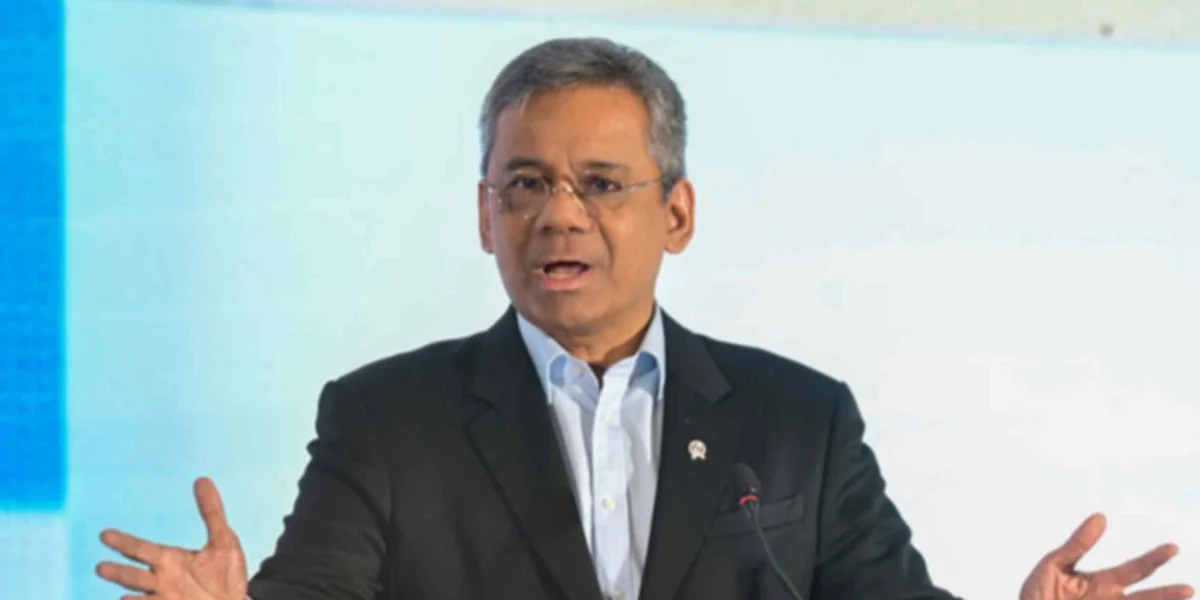
In a swift and unexpected move that has sent ripples through Indonesia’s economic and political circles, President Prabowo Subianto has dismissed Finance Minister Purbaya Yudhi Sadewa and appointed his long-serving deputy, Suahasil Nazara, to the pivotal role. The reshuffle, announced on Monday, September 14, 2026, marks a significant shift in the leadership of the nation’s treasury and comes at a critical juncture for the Indonesian economy, which is navigating global economic uncertainties and domestic developmental aspirations.
The announcement, made late in the afternoon Jakarta time, has caught many by surprise, particularly given that Purbaya Yudhi Sadewa had been at the helm of the Finance Ministry since 2019, overseeing a period of both growth and considerable challenges for Southeast Asia’s largest economy. The specific reasons behind Sadewa’s dismissal have not been officially disclosed, fueling a flurry of speculation among economic analysts and political observers. However, such high-level cabinet changes in Indonesia, while not entirely uncommon, often signal a divergence in policy direction or a response to perceived performance issues.

Suahasil Nazara, the newly appointed Finance Minister, brings a wealth of experience to the position. An economist by training, Nazara has served as the Vice Finance Minister since 2019, working closely with his predecessor. This continuity in the deputy role suggests a deep understanding of the ministry’s operations, ongoing projects, and strategic priorities. His tenure as deputy has seen him involved in key policy formulation and implementation, including tax reforms, budget management, and efforts to attract foreign investment. His familiarity with the ministry’s internal workings is expected to facilitate a smoother transition, minimizing any immediate disruption to the government’s fiscal agenda.
A Shift in Economic Stewardship: The Significance of the Appointment
The appointment of Suahasil Nazara is seen by many as a move towards stability and continuity, albeit with a potentially refined approach to economic management. Nazara’s academic background as an economist from the University of Indonesia, coupled with his extensive experience within the Ministry of Finance, positions him as a technocrat with a deep understanding of fiscal policy. His previous roles have included serving as the Head of the Fiscal Policy Agency (BKF) within the Ministry of Finance, a testament to his analytical capabilities and his influence on the government’s economic discourse.

The Indonesian economy has been on a steady growth trajectory in recent years, with projected GDP growth rates often hovering around the 5% mark. However, the nation, like many others globally, faces headwinds including persistent inflation, rising global interest rates, and geopolitical uncertainties that impact trade and investment. President Subianto’s administration has outlined ambitious development goals, including infrastructure development, digital transformation, and the transition towards a green economy. The Finance Minister plays a crucial role in securing the necessary funding for these initiatives and ensuring fiscal prudence.
Nazara’s elevation to the top finance post suggests that President Subianto may be seeking to leverage his deputy’s established expertise to navigate these complex economic landscapes. His understanding of the intricate budgetary processes and his relationships with international financial institutions will be vital in maintaining investor confidence and securing funding for the government’s development agenda.
Timeline of Events and Background Context

The announcement of the cabinet reshuffle on Monday, September 14, 2026, occurred several months into President Subianto’s term, a period typically characterized by the consolidation of power and the fine-tuning of the administration’s economic and policy teams. While specific triggers for Purbaya Yudhi Sadewa’s removal are not public, such decisions are often the result of a confluence of factors, including performance evaluations, policy disagreements, or a strategic realignment of the cabinet to better address emerging national priorities.
Purbaya Yudhi Sadewa, an economist and academic, was appointed as Finance Minister in 2019, inheriting a mandate to manage Indonesia’s fiscal affairs during a period of significant global economic shifts. His tenure saw the government navigate the unprecedented challenges posed by the COVID-19 pandemic, implementing substantial stimulus packages and managing a considerable increase in public debt. He was also instrumental in advocating for tax reforms aimed at broadening the tax base and enhancing compliance.
Suahasil Nazara, as Vice Finance Minister since 2019, has been an integral part of the ministry’s leadership team under Sadewa. His consistent presence in this role signifies his trusted position within the ministry and his alignment with the broader economic strategies of the administration. His promotion indicates a belief by President Subianto that Nazara possesses the necessary skills and vision to lead the ministry forward.

Supporting Data and Economic Indicators
To understand the context of this reshuffle, it is pertinent to examine key economic indicators that have shaped Indonesia’s fiscal landscape. As of the third quarter of 2026, Indonesia’s GDP growth has shown resilience, consistently hovering around the 5.2% mark, a figure that remains strong in the global context. However, inflation has been a persistent concern, with the Consumer Price Index (CPI) experiencing a year-on-year increase of approximately 3.5% in August 2026, necessitating careful monetary and fiscal policy coordination.
Government debt, while manageable, has seen an increase in recent years, standing at approximately 40% of GDP. The Subianto administration has emphasized fiscal consolidation and debt reduction as long-term objectives, alongside ambitious spending plans for infrastructure and social programs. The effectiveness of the Finance Minister in balancing these competing priorities is crucial for maintaining macroeconomic stability and investor confidence.

Foreign direct investment (FDI) has also been a key focus, with the government actively seeking to attract capital to fuel economic growth and job creation. The ability of the Finance Minister to create a conducive investment climate, through clear fiscal policies and regulatory frameworks, directly impacts the nation’s economic performance.
Official Responses and Inferred Reactions
While no official statements from Purbaya Yudhi Sadewa have been released immediately following his dismissal, the typical protocol in such situations involves a period of quiet reflection. His supporters within the political and economic spheres are likely to express their appreciation for his service and contributions during his tenure.

The President’s office, in a brief statement confirming the reshuffle, lauded Nazara’s capabilities and expressed confidence in his ability to steer the nation’s finances. “Mr. Suahasil Nazara’s extensive experience and deep understanding of Indonesia’s economic landscape make him an ideal choice to lead the Ministry of Finance at this crucial time,” the statement read, underscoring the administration’s focus on economic stability and growth.
Reactions from the business community and financial markets are expected to be closely monitored. Investors often react to significant cabinet changes, particularly in key ministries like Finance, based on their perception of policy continuity and potential shifts. Analysts from major financial institutions have begun to weigh in, with many pointing to Nazara’s technocratic background as a positive sign for market stability. However, some may express concerns about the abrupt nature of the change and the potential for a shift in policy emphasis.
The Indonesian rupiah’s performance in the days following the announcement will be a key indicator of market sentiment. Similarly, stock market indices will likely reflect investor reactions to the news.

Broader Impact and Implications
The appointment of Suahasil Nazara as Indonesia’s new Finance Minister carries significant implications for the country’s economic trajectory. His immediate challenge will be to maintain the confidence of domestic and international markets, assuring them that the government’s commitment to fiscal discipline and economic growth remains unwavering.
One of the key areas Nazara will likely focus on is the implementation of the national budget for the upcoming fiscal year. This includes allocating resources for President Subianto’s flagship development projects, managing public debt, and addressing inflationary pressures. His approach to tax policy and revenue generation will also be closely scrutinized, as will his efforts to streamline bureaucratic processes and enhance the efficiency of government spending.

Furthermore, Nazara will be instrumental in Indonesia’s engagement with international financial bodies such as the International Monetary Fund (IMF) and the World Bank. His ability to effectively negotiate and secure international financing will be critical for supporting the nation’s development agenda.
The reshuffle also presents an opportunity for a potential recalibration of economic policies, although the emphasis on continuity suggests that a radical departure from existing strategies is unlikely. Nazara’s background as a technocrat might lead to a more data-driven and evidence-based approach to policy formulation.
In the coming weeks and months, the effectiveness of Suahasil Nazara in his new role will be a crucial determinant of Indonesia’s economic performance and its ability to achieve its ambitious development goals in a challenging global environment. The focus will now shift to his policy pronouncements, his strategic priorities, and his ability to navigate the complex interplay of domestic economic imperatives and international economic forces. The swiftness of this change underscores President Subianto’s proactive approach to governance and his commitment to ensuring that his administration is equipped with the best possible talent to lead the nation’s economic future.
