

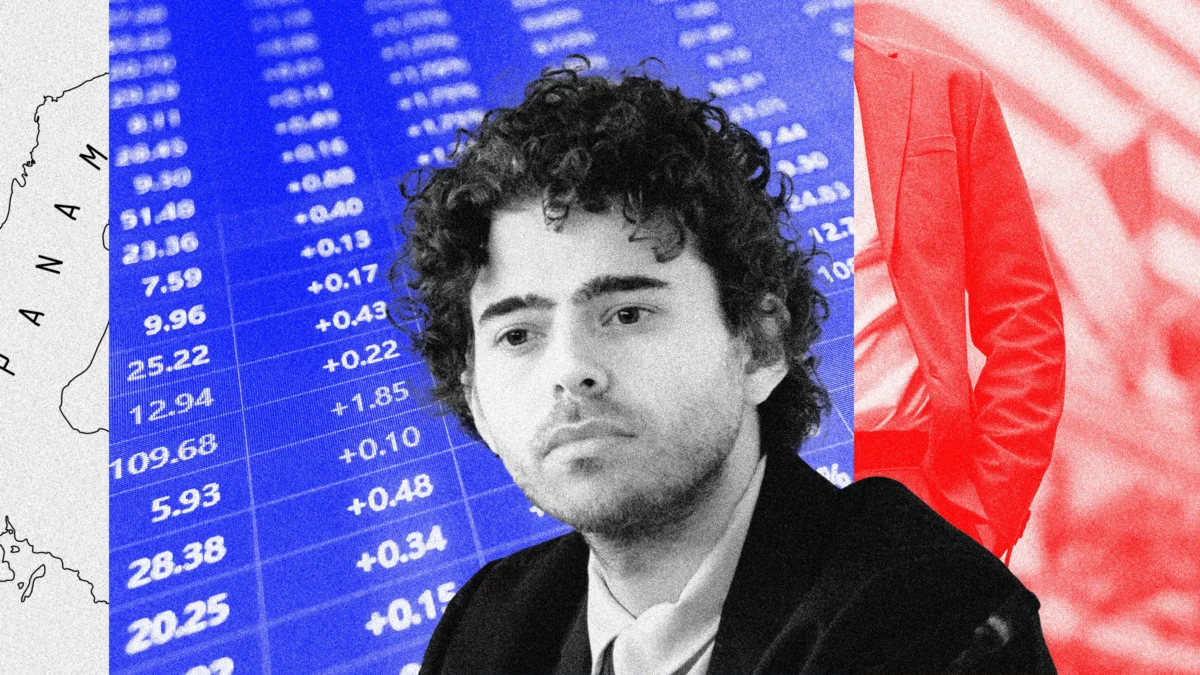
The labyrinthine operations of Polymarket, a prominent prediction market, have once again come under scrutiny, this time focusing on its Panamanian subsidiary, Adventure One QSS. While Polymarket has been no stranger to controversy – with allegations ranging from insider trading by a U.S. Special Forces soldier and a Google employee to the dramatic FBI raid on CEO Shayne Coplan’s apartment – a significant oddity has persisted: the apparent operation of this offshore entity from within the United States. This revelation, detailed in previous reporting and further explored here, raises critical questions about the company’s compliance with a 2022 settlement with federal regulators and the true nature of its corporate structure.
The Regulatory Reckoning of 2022
Polymarket’s complex setup stems from a pivotal moment in 2022 when federal regulators declared the platform was operating as an unlicensed derivatives exchange. This led to a significant crackdown, effectively barring Polymarket from serving U.S.-based customers and imposing a substantial $1.4 million fine on Blockratize, a corporate entity associated with the company. The settlement mandated that Blockratize "wind down" any markets violating the Commodity Exchange Act (CEA) and cease other violations of Commodity Futures Trading Commission (CFTC) regulations.
In response to this regulatory action, Polymarket established Adventure One QSS, a corporate entity based in Panama. The stated purpose of this offshore entity was to assume operational responsibilities for Polymarket’s primary platform, thereby circumventing the ban on serving U.S. customers directly. Concurrently, a separate U.S.-based entity, Polymarket US, was established in 2025, overseen by QCX LLC, to legally cater to the American market. This dual-entity structure was intended to create a clear separation and ensure compliance with the federal mandate.
Unraveling the Panamanian Connection: A U.S. Footprint
Despite the clear intent to establish an offshore operational base in Panama, investigations have revealed a striking discrepancy. Former Polymarket employees have indicated that a number of Adventure One QSS staffers were, in fact, residing and working within the United States, including from the company’s Manhattan-based headquarters. These individuals, according to former staff, did not travel to Panama, report to any personnel in Panama, or interact with colleagues based in the Central American nation. Instead, they allege that the Adventure One QSS workforce was distributed across various countries, with a significant presence in the U.S.
This situation presents a potential conflict with the spirit, if not the letter, of the 2022 settlement. Former CFTC officials have emphasized the significance of the geographical location of operational staff. "We would have really liked to know that the people purportedly in Panama weren’t actually in Panama," one former CFTC lawyer stated, highlighting that such knowledge would have been highly relevant to the agency’s oversight and assessment of the settlement’s adherence.
Corporate Structure and Personnel: A Tangled Web
The initial incorporation papers for Adventure One QSS, filed in 2021, did list Panamanian residents. Among them was Mario Ernesto García de Paredes, a lawyer identified as the company’s "resident agent." Diana Muñoz was briefly listed as the company president before being succeeded by Polymarket CEO Shayne Coplan, who is based in New York. Omar Camargo, also appearing to be based in Panama, was listed as secretary. However, the subsequent operational reality, as described by former employees, paints a different picture. Muñoz and Camargo have prior business connections, having been listed as executives in securities filings for the Internet Art Foundation. Attempts by WIRED to reach García de Paredes, Muñoz, and Camargo for clarification on their roles and the company’s operations were unsuccessful.
The arrangement suggests a potential blurring of lines between the offshore entity and its U.S.-based operations. While the Blockratize entity focuses on the newer, U.S.-licensed platform, marketing, and other core business functions, the Adventure One QSS team, despite its offshore designation, was reportedly tasked with critical aspects of the offshore platform’s development and maintenance. Former employees have expressed confusion regarding the rationale behind this compartmentalized structure, noting that "there was no barrier" in practice between the corporate arms.
Panama as a Haven: Tax Advantages and Privacy
Incorporating in Panama is a common strategy for multinational businesses. The country offers an attractive tax system, robust privacy laws, and a streamlined registration process, making it a popular choice for companies seeking to optimize their financial structures and maintain a degree of discretion. However, in Polymarket’s case, the establishment of Adventure One QSS was directly precipitated by its settlement agreement with the CFTC, indicating a regulatory motivation rather than purely strategic financial planning.
Joseph Konizeski, former chief trial attorney in the CFTC’s division of enforcement, outlined the steps necessary for a company to legitimately move its operations offshore to comply with such a settlement. This would typically involve hiring new staff in the offshore jurisdiction, relocating corporate infrastructure, and ceasing to accept funds from U.S. customers. The presence of Adventure One QSS staff working from the U.S. appears to contradict these fundamental requirements.
Regulatory Scrutiny and Shifting Sands
The CFTC has declined to comment on Adventure One QSS’s structure and whether it fully satisfies the terms of the 2022 agreement. Polymarket has also not provided comment. Crucially, the CFTC has not formally accused Adventure One QSS of any wrongdoing. It remains uncertain how the agency would view the current operational setup, with employees of a Panamanian entity working from New York. Todd Phillips, an expert in financial services regulation, described the arrangement as "odd, even if it is legal."
Historically, the CFTC has taken action against companies that claimed to operate offshore but were, in reality, functioning from within the United States. A 2021 complaint against WorldWideMarkets, a foreign exchange company incorporated in the British Virgin Islands, alleged that it was operating from an office in New Jersey. More recently, in 2023, the government pursued a landmark case against the cryptocurrency giant Binance and its founder, Changpeng Zhao, for operating an illegal digital assets derivative exchange and violating anti-money-laundering regulations.
However, the regulatory landscape has seen shifts. Following a May 2025 staff letter that altered the agency’s approach to foreign futures and cross-border swap rules, the CFTC dropped an investigation into Polymarket in July 2025 without bringing charges. This represented a departure from prior stances and suggested a potentially friendlier regulatory environment for decentralized finance platforms and prediction markets.
New Investigations and Renewed Concerns
Despite the apparent easing of regulatory pressure, recent developments suggest renewed scrutiny. A Wall Street Journal investigation into Polymarket’s affiliate marketing practices, which detailed how the company created replica websites for influencers to post simulated winning bets, has ignited significant backlash. This reporting has prompted calls for a federal probe into the company’s advertising methods. In the wake of this exposé, Polymarket announced plans to audit its active promotional content.
Simultaneously, the Wall Street Journal reported that the CFTC is investigating Polymarket. Sources familiar with the matter have confirmed to WIRED that this investigation is indeed ongoing. According to Jack Murphy, a former CFTC enforcement trial attorney, the current administration’s Enforcement Division is prioritizing investigations involving intentional misconduct and focusing on the protection of retail traders. "An investigation into deceptive marketing practices, like those that have been alleged in relation to Polymarket, would be very much in line with those priorities," Murphy stated. This suggests that the new investigation may be more narrowly focused than previous inquiries, potentially targeting the company’s marketing and advertising strategies rather than solely its operational structure.
The ongoing investigations, coupled with the persistent questions surrounding the operational locus of Adventure One QSS, underscore the complex and often opaque nature of the prediction market industry. As regulators continue to navigate the evolving digital finance landscape, Polymarket’s intricate corporate structure and its adherence to past settlements will likely remain under a watchful eye. The implications of these developments could shape future regulatory approaches to offshore entities operating with a significant U.S. footprint and influence the broader acceptance and oversight of prediction markets within the global financial ecosystem.
