

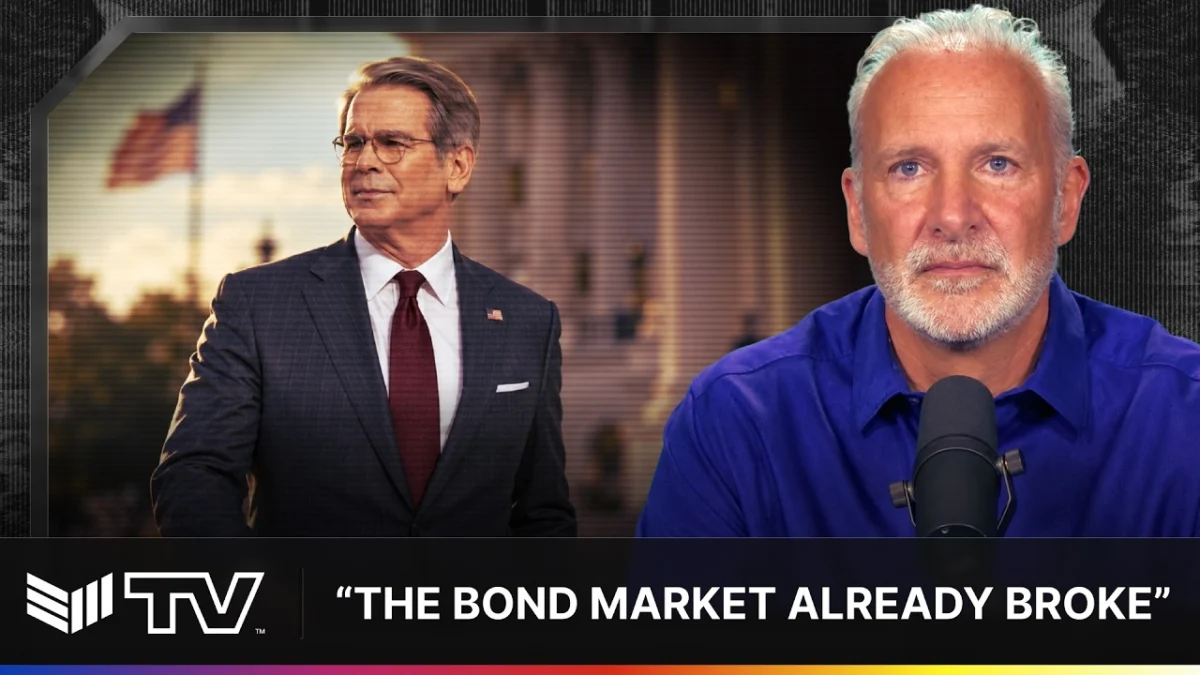
Renowned economist and gold advocate Peter Schiff asserted in a recent discussion that the widely discussed "bond market break" is a mischaracterization, arguing that the actual systemic breakdown occurred in 2020. Since then, he contends, the market has been undergoing a protracted and deteriorating "slow unwind." This perspective was articulated during an extensive conversation with Grace Remington and Sean Hagan, where Schiff delved into a complex interplay of macroeconomic forces, including rising Treasury yields, the Federal Reserve’s anticipated monetary policy decisions, the erosion of the U.S. dollar’s purchasing power, and a notable shift by central banks towards gold reserves.
Schiff’s analysis extends to the cryptocurrency market, particularly Bitcoin. He posits that a potential stock market selloff, exacerbated by persistently higher interest rates, would have profoundly negative repercussions for Bitcoin and the broader digital asset ecosystem. Furthermore, he suggests that the political landscape in Washington has already shifted against cryptocurrencies, diminishing their potential for widespread adoption or regulatory favor. The dialogue culminated in a robust debate between Schiff and the hosts regarding the fundamental backing, or lack thereof, of Bitcoin.
The Genesis of the Bond Market Crisis: A 2020 Turning Point
Schiff’s central thesis is that the current anxieties surrounding the bond market are symptoms of a deeper, pre-existing condition that manifested in 2020. He points to the unprecedented fiscal and monetary stimulus unleashed in response to the COVID-19 pandemic as the catalyst for this fundamental shift. The deluge of liquidity injected into the financial system by central banks globally, coupled with massive government spending, created an environment where the value of debt instruments began to be systematically devalued.
"The bond market didn’t break recently; it broke in 2020," Schiff stated, emphasizing that the subsequent market movements are merely the drawn-out consequences of that initial shock. He elaborated that the prolonged period of ultra-low interest rates and quantitative easing distorted price discovery mechanisms within the bond market, leading to an unsustainable accumulation of debt and an overreliance on central bank intervention. The "slow unwind" he describes is characterized by the gradual realization of these underlying imbalances, manifesting as increased volatility and a fundamental re-evaluation of risk in fixed-income assets.
The Long Shadow of the Treasury Bear Market
The duration and depth of the current Treasury bear market are subjects of intense speculation. Schiff suggests that the market has a significant way to go before finding a stable footing, especially if the underlying economic fundamentals are not addressed. He draws parallels to historical periods of high inflation and fiscal profligacy, noting that such episodes often lead to prolonged periods of pain for bondholders.
Historically, Treasury markets have experienced significant downturns, particularly during periods of rising inflation and tightening monetary policy. For instance, the early 1980s saw a sharp rise in yields as the Federal Reserve under Paul Volcker aggressively combatted inflation. The current environment, while different in its origins, shares similarities in terms of the challenge faced by central banks in taming price pressures without triggering a severe economic contraction. The sheer volume of outstanding Treasury debt, now exceeding $34 trillion, amplifies the potential impact of any significant yield increases.
Schiff’s Prescriptions for Inflation Control
When asked about his proposed solutions for effectively bringing inflation down, Schiff articulated a strategy centered on fiscal austerity and a return to sound monetary principles. He advocates for substantial government spending cuts, a significant reduction in the national debt, and a dismantling of what he perceives as the Federal Reserve’s inflationary policies.
"To truly bring inflation down, you need to stop the printing presses and shrink the government," Schiff argued. He believes that the current approach, which often involves a delicate balancing act between controlling inflation and avoiding recession, is inherently flawed. His prescription involves a more direct and aggressive approach, even if it entails short-term economic pain. This contrasts sharply with the Fed’s current dual mandate of price stability and maximum employment, which often leads to a more gradual and measured policy response.
The Unacknowledged Recession and Dollar Devaluation
Schiff expressed skepticism about the official narratives surrounding economic health, particularly regarding the prospect of a recession. He believes that while policymakers may seek to avoid acknowledging it, the economy is already grappling with recessionary pressures, exacerbated by the consequences of higher interest rates and reduced consumer spending power.
"We are likely already in the early stages of a recession that nobody wants to admit," he stated, attributing this to the combined effects of inflation eroding purchasing power and the rising cost of borrowing. He suggests that the aggressive rate hikes, while intended to curb inflation, are inevitably choking off economic activity. This perspective challenges the prevailing economic data that often paints a more optimistic picture, highlighting the divergence in interpretation between different economic schools of thought.
The conversation also touched upon the potential for a dollar crisis. Schiff pointed to the diminishing purchasing power of the U.S. dollar as a significant concern, suggesting that a loss of confidence in the currency could trigger a rapid devaluation. He cited historical precedents where fiat currencies have faced significant challenges when their underlying value is perceived to be eroding due to excessive money printing and fiscal irresponsibility.
Fed’s Rate Decisions and Market Expectations
The Federal Reserve’s future interest rate decisions are a focal point of Schiff’s analysis. He discussed the prevailing market sentiment regarding potential rate hikes and the possibility of unexpected moves by Fed officials, such as Christopher Waller. However, Schiff remains largely unimpressed by the Fed’s actions, characterizing any rate hikes as "cosmetic" and lacking genuine credibility.
"These are not hikes that are going to fundamentally change the trajectory of inflation or the value of the dollar," he argued, suggesting that the Fed is trapped in a cycle of responding to market pressures rather than addressing the root causes of inflation. He believes the central bank’s credibility has been severely damaged by its past actions and that its current policies are insufficient to restore confidence in the U.S. currency or the broader financial system. The market’s reaction to Fed pronouncements, often characterized by volatility, underscores the ongoing uncertainty and the challenges faced by policymakers in navigating complex economic conditions.
The Divergence: Gold’s Ascent vs. Bitcoin’s Stagnation
A striking element of Schiff’s commentary involved the stark contrast between the performance of gold and Bitcoin. He highlighted that while gold has seen significant price appreciation, reaching new all-time highs in nominal terms, Bitcoin has lagged considerably, trading significantly below its peak valuations. This divergence, in Schiff’s view, underscores the fundamental differences between a historically recognized store of value and a relatively new, speculative digital asset.
"Gold has run to $2,500 an ounce, while Bitcoin is still down 70% from its highs," Schiff noted, framing this as evidence of gold’s enduring appeal as a safe-haven asset during times of economic uncertainty and currency debasement. He posited that investors are turning to gold as a hedge against inflation and geopolitical risks, a trend that has historically been a reliable indicator of investor sentiment.
Bitcoin’s Valuation in Gold and the 2021 Peak
Schiff further elaborated on his view that Bitcoin may have already experienced its peak valuation, particularly when measured in gold. He presented the argument that Bitcoin’s meteoric rise was largely a speculative bubble, fueled by easy money policies and a narrative of digital scarcity. As monetary conditions have tightened and economic realities have set in, he believes that Bitcoin’s intrinsic value is being re-evaluated, leading to its current underperformance relative to gold.
His analysis suggests that the narrative of Bitcoin as a digital gold alternative is faltering, especially when considering its volatility and lack of tangible backing. He contends that the true test for Bitcoin lies in its ability to maintain value during periods of economic stress, a test it has, in his opinion, failed to pass when compared to gold. The idea that Bitcoin peaked in 2021, as Schiff suggests, positions it as a fleeting phenomenon rather than a lasting store of value.
The Fundamental Question: What Backs Bitcoin?
The conversation culminated in a direct confrontation with the hosts on the foundational question of what backs Bitcoin. Schiff remains a staunch critic of Bitcoin’s lack of inherent value, contrasting it with tangible assets like gold. He questions the sustainability of an asset whose value is derived solely from market sentiment and the belief of its holders, rather than from any underlying physical commodity or productive capacity.
"What actually backs Bitcoin?" Schiff repeatedly queried, challenging proponents to provide a concrete answer beyond market consensus. He draws a distinction between tokenized gold, which represents ownership of a physical commodity, and Bitcoin, which he views as a purely digital construct with no intrinsic backing. This fundamental difference, in Schiff’s view, is the reason for gold’s resilience and Bitcoin’s volatility, highlighting the enduring importance of tangible assets in a sound financial system.
The debate underscores the ongoing ideological divide between proponents of traditional finance and advocates of digital assets. While Bitcoin supporters point to its decentralized nature, scarcity, and potential as a future medium of exchange, critics like Schiff emphasize its speculative nature, volatility, and lack of established historical precedent as a store of value. The outcome of this debate, and the long-term performance of both gold and Bitcoin, will likely continue to be shaped by macroeconomic conditions, regulatory developments, and evolving investor perceptions.
Disclaimer: The views and opinions expressed in this article are those of the economist Peter Schiff as reported in a news context and do not necessarily reflect the official policy or position of Bitcoin Magazine, or any affiliated entities. This content is provided for informational and educational purposes only and should not be construed as investment, legal, tax, or accounting advice. Nothing contained in this article constitutes a solicitation, recommendation, endorsement, or offer to buy or sell any securities or financial instruments. Readers should consult their own advisors before making financial or business decisions.
