

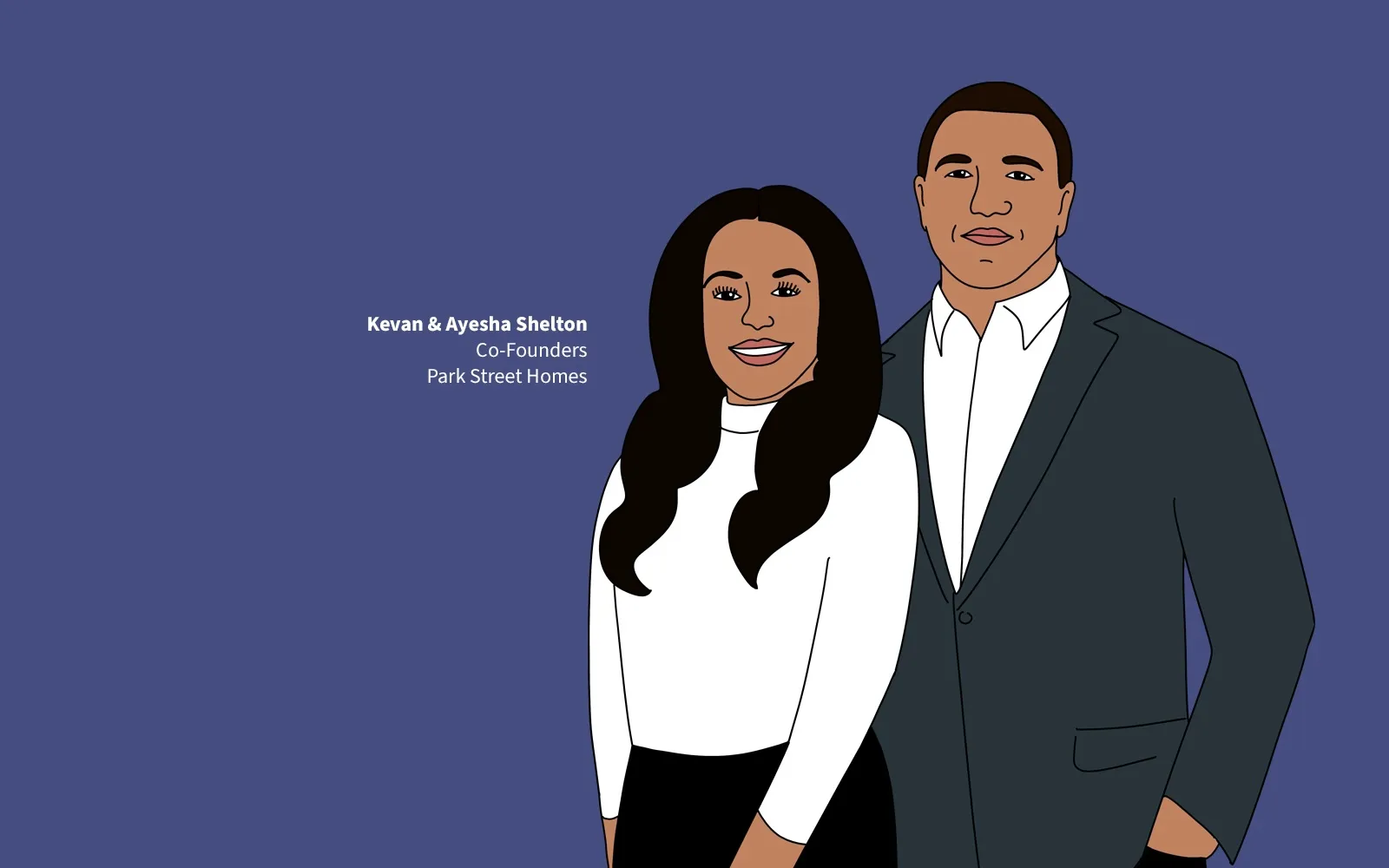
Houston-based homebuilder Park Street Homes, under the leadership of founders Kevan and Ayesha Shelton, is fundamentally challenging the traditional definition of industrial scale within the residential construction sector. While the industry has long associated "scale" with sprawling master-planned communities, thousands of contiguous lots, and the dominance of national production giants, the Sheltons are proving that an alternative model—one rooted in the surgical precision of urban infill—can be equally potent and far more resilient in a volatile economic climate. By applying the rigorous discipline of production homebuilding to fragmented, established urban neighborhoods, Park Street Homes is preparing for a significant national expansion, targeting 15 new markets and initiating a strategic capital raise to fuel its next phase of growth.
The company’s thesis rests on the intersection of two seemingly contradictory forces: the efficiency of standardized production and the intimacy of hyper-local design. Historically, large-scale production builders have avoided urban cores due to the complexities of aging infrastructure, varied zoning requirements, and the necessity of managing small, non-contiguous parcels of land. Park Street Homes, however, views these challenges as a competitive moat. By mastering the art of "reflective design"—a process that adapts the exterior aesthetics of a home to the historical and cultural context of a neighborhood while maintaining a standardized interior floor plan—the company has created a repeatable system for revitalizing urban centers without sacrificing the speed and cost-savings of traditional production models.
The Evolution of the Park Street Model: A Decade of Proof
The journey of Park Street Homes began a decade ago in Houston, a city known for its lack of traditional zoning and its vast, diverse urban landscape. The Sheltons spent this period refining an operating system that could navigate the unique frictions of the urban core. Unlike suburban developers who start with a "blank slate" of hundreds of acres, Park Street Homes operates in environments where history and community sentiment are already deeply entrenched.
Between 2014 and 2022, the company successfully demonstrated that urban infill does not have to be a boutique, one-off endeavor. By standardizing their "inside-the-walls" construction processes, they achieved a level of "first-time-right" velocity typically reserved for suburban subdivisions. This period of proof was essential, as it allowed the company to build a track record of profitability and community acceptance. As the market shifted in late 2022, characterized by rising interest rates and a sudden cooling of pandemic-era demand, Park Street Homes found itself uniquely positioned. While other builders struggled with over-extended land positions in outlying suburbs, Park Street’s focus on affordability and urban density aligned with the shifting priorities of the modern homebuyer.
The Economics of Urban Infill and Production Discipline
The financial logic of Park Street Homes’ expansion is predicated on the current state of the U.S. housing market. According to recent data from the National Association of Home Builders (NAHB) and various housing economists, the United States faces a housing deficit ranging from 4 million to 7 million units. This shortage is most acute in urban centers where "missing middle" housing—attainable, single-family homes or small multi-unit developments—is in high demand but low supply.
Park Street Homes leverages several economic advantages that differ from the conventional production model:
- Fragmented Land Acquisition: Large national builders require massive land tracts to justify their overhead. Park Street can acquire "nuisance" lots—individual parcels or small clusters that are too small for the giants but perfect for a disciplined infill player.
- Predictable Pricing and Visibility: Kevan Shelton notes that the company establishes the economics of its projects 12 to 24 months before delivery. By securing land and designing for specific price points well in advance, they mitigate the risks of short-term market volatility.
- Infrastructure as Trust: In established neighborhoods, the physical infrastructure (roads, sewers, utilities) is often already in place, though it may require upgrades. More importantly, the "social infrastructure" is present. Park Street views community trust as a form of operating capital. By engaging with residents and local leaders, they reduce the friction of entitlements and neighborhood opposition, which are often the most significant "hidden costs" in urban development.
A Two-Handed Strategy for National Expansion
As Park Street Homes looks toward its next chapter, the company is engaging with major investment banking partners to facilitate a significant capital raise. The expansion strategy is described by Kevan Shelton as "two-handed." This involves pairing financial capital with strategic partnerships. Ideally, Park Street aims to collaborate with established homebuilding partners who already possess operational footprints in their target markets but lack the specific expertise required for successful urban infill.
The list of 15 potential expansion targets includes cities like Birmingham, Dallas, and other high-growth metros across the Sun Belt and Midwest. The goal is not to replicate the massive overhead of a national builder, but to port the "Park Street Operating System" into new geographies. This system includes their reflective design library, their purchasing protocols, and their community engagement playbook.
This approach offers a blueprint for how the broader homebuilding industry might handle consolidation. Rather than a large builder simply buying a smaller one to acquire its lot count, a partnership with Park Street allows a larger entity to unlock value in urban submarkets that were previously considered "unworkable" due to their complexity.
Trust as a Defense Against Market Fragility
In the current high-interest-rate environment, where the average 30-year fixed mortgage rate has hovered between 6.5% and 7.5% over the past year, demand has become increasingly fragile. Homebuyers are no longer rushing into contracts; they require "convincing," as Shelton puts it. This is where Park Street’s focus on "place" provides a marketing advantage.
For many buyers, the appeal of an urban neighborhood—proximity to jobs, transit, and culture—is a more compelling value proposition than a distant suburban lot, especially when the home itself is designed to feel like a natural part of the streetscape. By meeting the market "where it is," specifically in the realm of affordability, Park Street has avoided the trap of building luxury products that the current workforce cannot afford.
The company’s commitment to "reflective design" ensures that they are not perceived as gentrifiers dropping alien structures into historic areas. Instead, they are seen as partners in neighborhood revitalization. This distinction is critical for long-term sustainability. When a builder has the "permission" of the community to operate, the speed of development increases, and the cost of customer acquisition decreases.
Broader Industry Implications and the Path Forward
The rise of Park Street Homes is part of a broader trend identified in the HousingWire "Built For This" series, which highlights companies that have optimized their operations to thrive without the tailwinds of low interest rates. Like National Home Corp., which uses a land-light model for attainability, and StyleCraft Builders, which focuses on operational fundamentals, Park Street Homes is a testament to the power of precision.
The implications for the industry are significant. If Park Street successfully scales its model across 15 markets, it will provide a repeatable framework for addressing the urban housing shortage. It suggests that the future of homebuilding may not lie in the endless expansion of the suburban fringe, but in the sophisticated densification of our existing cities.
However, the challenge for the Sheltons will be maintaining the "intimacy" of their model as they grow. The very things that make Park Street successful—local knowledge, specific architectural cues, and personal relationships with city leaders—are the hardest things to standardize. The success of their expansion will depend on their ability to hire and train local teams who can execute the Park Street "playbook" while remaining sensitive to the nuances of each specific block and borough.
As Kevan Shelton prepares to present his vision at the upcoming HousingWire Homebuilder Summit in Dallas this October, the industry will be watching closely. Park Street Homes is not just building houses; it is attempting to build a new category of homebuilder—one that possesses the muscle of a national corporation and the soul of a neighborhood craftsman. In a market that offers little outside help, Park Street’s strategy of knowing exactly what they can do that others cannot—and then figuring out how to do more of it—may be the most viable path to growth in the modern era.
