

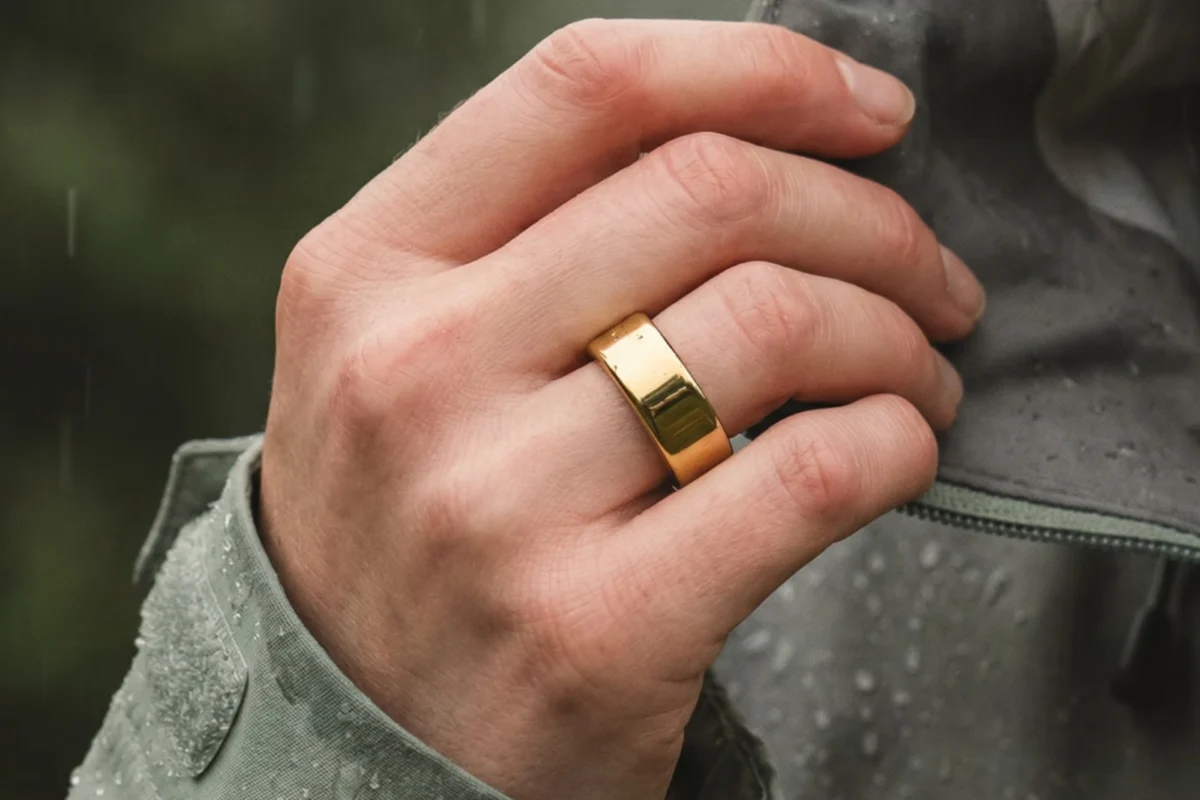
Smart ring industry leader Oura has escalated its ongoing legal battle with Indian rival Ultrahuman, filing a new lawsuit aimed at blocking the sale of Ultrahuman’s redesigned Ring Pro in the United States. This latest legal maneuver comes just months after the Bengaluru-based startup successfully navigated a previous import ban, re-entering the American market with its updated device. The case, lodged in a federal court in Texas, marks another chapter in Oura’s assertive strategy to protect its intellectual property, which has seen it pursue patent infringement claims against a growing list of competitors, including tech giants like Samsung and other emerging players such as RingConn, Circular, and Zepp Health.
The Latest Legal Challenge: Allegations and Demands
Filed on a recent Thursday, Oura’s complaint specifically targets Ultrahuman’s Ring Pro, alleging infringement of two of its patents. These patents, identified as D804,471 and 12,769,363, cover critical aspects of Oura’s smart ring technology, encompassing both the aesthetic design and the intricate internal components, including its specialized battery and advanced sensor systems. Oura is not only seeking unspecified monetary damages for past infringements but also a permanent injunction, a powerful legal remedy that, if granted, would effectively halt Ultrahuman’s ability to manufacture, import, and sell the Ring Pro in the U.S. market.
The timing and nature of this lawsuit are particularly noteworthy. One of the patents cited, 12,769,363, was issued to Oura on October 20, a mere two days before the company filed this lawsuit. This rapid deployment of a newly granted patent into litigation underscores Oura’s aggressive approach to intellectual property enforcement and its commitment to leveraging its patent portfolio to maintain its market position. The patent describes a sophisticated smart-ring design integrating internal components such as a curved battery, a specialized circuit board, magnets, and various sensors—elements central to the functionality of modern smart rings.
In a strategic move, Oura has also named Texas-based electronics manufacturer SVTronics as a co-defendant in the lawsuit. The complaint posits that SVTronics manufactures the Ring Pro at its facility in Plano, Texas, allegedly under the direct instruction and control of Ultrahuman. By including SVTronics, Oura aims to broaden the scope of its legal action, asserting that both companies are jointly infringing its patents through the entire chain of production, importation, and sale of the device within the U.S.
A History of Litigation: Oura’s Enforcement Strategy
This latest lawsuit is not an isolated incident but rather a continuation of a pattern established by Oura to safeguard its pioneering position in the smart ring market. The company has consistently demonstrated a willingness to engage in protracted legal battles to defend its intellectual property, viewing its extensive patent portfolio as a critical asset.
The dispute between Oura and Ultrahuman dates back to 2023, when Oura first initiated legal action against the Indian startup over its earlier product, the Ring Air. This initial device had played a significant role in Ultrahuman’s emergence and brand recognition within the U.S. market. Oura then pursued a separate, equally impactful case before the U.S. International Trade Commission (ITC) in 2024. The ITC, an independent federal agency that oversees trade and intellectual property issues, ultimately ruled in Oura’s favor in August of last year. This landmark decision led to an import ban on Ultrahuman’s Ring Air, effectively forcing the company to withdraw its product from the American market.
Oura’s legal strategy extends beyond Ultrahuman. The company has actively pursued patent infringement claims against several other burgeoning smart ring manufacturers. Notable cases include those against Samsung, whose anticipated Galaxy Ring has drawn Oura’s scrutiny; RingConn, a prominent competitor; Circular, a French startup; and Zepp Health, a global leader in smart wearables. These disputes highlight the fiercely competitive nature of the smart ring sector and Oura’s resolve to assert its dominance. Interestingly, some of these past legal conflicts have culminated in licensing agreements, with companies like RingConn and Circular opting to pay royalties to Oura. These multi-year patent licensing agreements allow them to continue selling their products in the U.S., illustrating a pathway for coexistence that involves financial compensation for Oura’s innovation.
Ultrahuman’s Resilience and Redesign
Following the ITC-imposed import ban on its Ring Air, Ultrahuman embarked on a significant engineering and design effort to create a compliant alternative. This culminated in the launch of its redesigned Ring Pro in February. The startup’s diligence paid off when, in March, it received a favorable ruling from U.S. Customs and Border Protection (CBP). This crucial decision cleared the way for Ultrahuman’s triumphant return to the U.S. market, signaling a temporary reprieve and a testament to the company’s commitment to overcoming regulatory hurdles.
However, Oura contends that the CBP ruling was narrowly focused, covering only the specific patent involved in the earlier ITC dispute. According to Oura, this ruling does not extend to the two new patents cited in its latest lawsuit. "Ultrahuman has a history of copying Oura’s innovations, as demonstrated by the 2025 ITC ruling against the company," an Oura spokesperson stated to TechCrunch. "Ultrahuman introduced a redesigned ring but failed to address continued infringement of Oura’s patents, seeking instead to capitalize on our innovation and the market leadership we have built." The spokesperson further elaborated in the filing, "To protect its patent rights, Oura is now forced to file this complaint of patent infringement."
In response to these renewed allegations, Ultrahuman co-founder and CEO Mohit Kumar expressed confidence in the Ring Pro and vowed to vigorously defend against the new claims. "Oura has now chosen to assert different patents, including one that issued just two days before this lawsuit was filed," Kumar told TechCrunch. "We will address these claims through the appropriate legal process and will defend our position vigorously. There is no court order affecting Ring Pro, and it remains available to customers in the U.S." Kumar’s statement highlights Ultrahuman’s intent to fight the legal battle, emphasizing that, for now, the Ring Pro remains accessible to American consumers.
Industry Landscape and Market Dynamics
The escalating patent disputes unfold against a backdrop of robust growth in the smart ring market. Research firm IDC projects that global shipments of smart rings will increase by 12.8% this year, reaching an estimated 4.9 million units. This upward trajectory is expected to continue, with shipments anticipated to hit approximately 6.3 million units by 2030. This growth is driven by increasing consumer interest in discrete, comfortable wearable technology that offers continuous health and fitness monitoring without the bulk of smartwatches. Smart rings typically track metrics such as sleep quality, heart rate variability, activity levels, and body temperature, providing users with actionable insights into their well-being.
While Oura has established itself as a leading innovator and a dominant player in this nascent but rapidly expanding category, Ultrahuman is among a growing cohort of competitors vying for market share. These rivals are introducing diverse features, price points, and design philosophies, aiming to capture different segments of the burgeoning market. The competition is not just about technology but also about intellectual property, as Oura’s aggressive legal strategy demonstrates. The outcome of these patent wars could significantly shape the competitive landscape, potentially consolidating power around key patent holders or fostering innovation through licensing and collaboration.
Financial Context and Corporate Strategies
The legal maneuvers also intersect with significant corporate developments for both companies. Just weeks prior to filing this latest lawsuit, Oura made headlines by shelving its highly anticipated $2.2 billion initial public offering (IPO). The company cited "uncertainty" in the market as the primary reason for postponing its public debut. While the exact nature of this uncertainty was not fully detailed, broader economic conditions, investor sentiment, and potentially even ongoing legal challenges could contribute to such a decision. Despite the IPO delay, Oura has continued to innovate, recently introducing new fitness metrics that enable users to track how various workouts influence their cardiovascular health, reinforcing its commitment to product development.
Meanwhile, Ultrahuman demonstrated its strong investor confidence in September, successfully raising $70 million in a funding round that included prominent investors such as Qualcomm Ventures and Labcorp. This substantial investment valued the startup at approximately $365 million, providing significant capital to fuel its expansion and, crucially, to fund its legal defense against Oura. Furthermore, Ultrahuman is actively collaborating with Qualcomm on developing a new generation of smart rings. This partnership aims to enhance the device’s capabilities, allowing it to run more software directly on the hardware. The strategic vision extends beyond traditional health and fitness tracking, exploring new frontiers such as AI interactions and gaming functionalities within the compact form factor of a smart ring. This push towards greater on-device intelligence could represent a significant leap in smart ring technology, differentiating Ultrahuman from competitors and potentially opening new avenues for intellectual property development.
Implications for the Smart Ring Market
This ongoing patent dispute carries significant implications for the broader smart ring market. For consumers, it could lead to fluctuations in product availability, potentially limiting choices or driving up costs if licensing fees become a substantial component of product pricing. The legal uncertainty might also slow down innovation if smaller players are deterred from entering the market or forced to allocate significant resources to legal defense rather than research and development.
For Oura, a successful outcome in this lawsuit would reinforce its position as a dominant innovator and intellectual property holder, potentially deterring future infringers. It would validate its aggressive patent enforcement strategy as a means to protect its market leadership and substantial investments in R&D. However, a prolonged and costly legal battle could also divert resources and attention away from product development and market expansion, especially given its recent IPO postponement.
For Ultrahuman, the outcome will be pivotal. A favorable ruling would validate its redesigned product and its capacity to innovate within the boundaries of existing intellectual property, allowing it to solidify its presence in the U.S. market and capitalize on its recent funding. Conversely, an adverse decision, particularly a permanent injunction, would be a major setback, forcing the company to once again re-evaluate its U.S. strategy and potentially incur substantial financial penalties. The inclusion of SVTronics as a defendant also sends a strong message to manufacturers who produce devices for companies embroiled in patent disputes, highlighting the potential for broader liability.
Looking Ahead
The smart ring market is poised for continued expansion, driven by advancements in sensor technology, miniaturization, and growing consumer demand for personalized health insights. Oura’s persistent legal actions underscore the high stakes involved in this rapidly evolving sector. As new players emerge and existing ones innovate, the landscape of intellectual property will continue to be a critical battleground. The outcome of this specific lawsuit between Oura and Ultrahuman will undoubtedly set precedents and influence the strategies of other companies operating within the smart wearable space, shaping the future of innovation, competition, and market access for years to come. The industry will be closely watching as these two companies navigate the complexities of patent law, each striving to secure its foothold in a market brimming with potential.
