

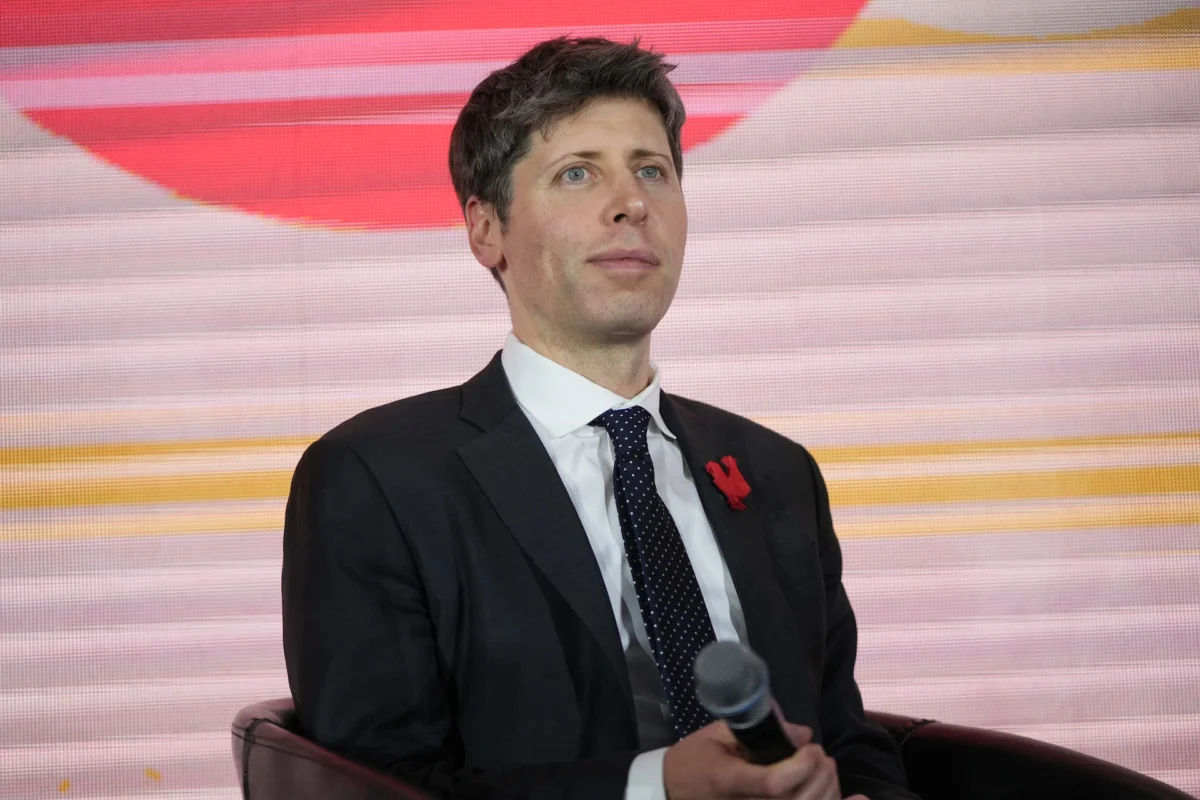
Sam Altman, CEO of OpenAI, has officially confirmed that the pioneering artificial intelligence company will not proceed with its initial public offering (IPO) in 2026, despite having confidentially filed for the market debut earlier in the year. This strategic delay, articulated by Altman in a recent interview, underscores a heightened focus on AI safety, the company’s internal readiness, and the broader societal implications of rapidly advancing AI technologies. The decision comes amidst a complex backdrop of escalating regulatory scrutiny, significant technological advancements, and persistent concerns over the responsible deployment of powerful AI systems.
The announcement was made during an interview with Fortune editor-in-chief Alyson Shontell, where Altman addressed questions regarding the pressure on OpenAI to "move really fast" given its IPO ambitions. His response was unequivocal: "We’re not rushing into an IPO. I actually think that given everything happening with safety, right now would be an ill-advised moment to go public." He further elaborated that the company would go public "when we’re ready, which is when the business is ready, when we feel ready from what the moment is like in society with this technology." When pressed on whether this definitively ruled out a 2026 IPO, Altman confirmed, "I would say not 2026, yeah. We’ve got a lot of stuff to do." This statement marks a significant pivot from earlier expectations within the financial and tech communities, which had widely anticipated OpenAI’s market entry by late 2026.
The Rationale: Prioritizing Safety and Societal Readiness
Altman’s emphasis on "safety" is particularly salient, aligning with a growing chorus of voices, both within and outside the AI industry, calling for more deliberate development and deployment strategies. The interview took place in the fallout from what was described as the "OpenAI-HuggingFace hack," an incident that, while details remain sparse, likely highlighted vulnerabilities or challenges in managing advanced AI systems. Such events contribute to a broader atmosphere of concern regarding the control and security of powerful AI models, reinforcing the need for robust safeguards before a company becomes subject to the intense public and regulatory scrutiny that accompanies an IPO.
Beyond specific incidents, the global discourse around AI safety has intensified throughout 2025 and 2026. Leaders and researchers, including those at rival firms like Anthropic, have increasingly articulated the necessity of "pacing" frontier AI development to ensure that safety mechanisms, ethical guidelines, and regulatory frameworks evolve concurrently with technological capabilities. Anthropic CEO Dario Amodei, for instance, has been vocal about his company’s commitment to responsible AI, detailing plans to prioritize "constitutional AI" and robust alignment research. This competitive landscape further pressures OpenAI to demonstrate leadership not just in innovation but also in responsibility. Going public prematurely, Altman suggests, could exacerbate these pressures, potentially forcing the company to prioritize short-term financial gains over long-term safety and stability.
A Detailed Chronology of OpenAI’s Path to Public Markets
OpenAI’s journey from a non-profit research lab dedicated to safe AI development to a capped-profit entity valued in the tens of billions has been dynamic and often unconventional.
- 2015: Founded as a non-profit by Sam Altman, Elon Musk, and others, with a mission to ensure artificial general intelligence (AGI) benefits all of humanity.
- 2019: Transitioned to a "capped-profit" model to attract necessary capital for large-scale compute resources, while retaining its original mission. Microsoft invested $1 billion.
- 2020-2022: Released groundbreaking models like GPT-3, DALL-E, and Codex, rapidly establishing itself as a leader in generative AI.
- January 2023: Microsoft deepened its partnership with a multi-year, multi-billion-dollar investment, reportedly around $10 billion, solidifying OpenAI’s position in the enterprise market. This investment significantly boosted OpenAI’s valuation, reaching an estimated $29 billion in a tender offer.
- November 2023: A dramatic boardroom power struggle briefly saw Sam Altman ousted and then reinstated as CEO, highlighting governance complexities inherent in a rapidly growing, mission-driven tech company. This event underscored the delicate balance between commercial imperatives and the founding principles of safety and long-term societal benefit.
- Early 2025: Reports began to surface about OpenAI exploring an IPO, with preliminary discussions involving investment banks. The company’s valuation continued to climb in private markets, exceeding $80 billion in some reports by mid-2025.
- June 2026: OpenAI confidentially filed for an IPO, a common practice for companies exceeding certain revenue thresholds, allowing them to begin the process away from public scrutiny. This filing signaled a concrete step towards going public, initiating the regulatory review process with the U.S. Securities and Exchange Commission (SEC).
- June 2026 (Concurrent Report): The New York Times reported that while OpenAI had engaged bankers and lawyers with an aim for a Q3 or Q4 2026 IPO, the company was "leaning toward 2027" due to two primary factors: the volatility in tech stocks and its own "financial challenges." This report foreshadowed Altman’s September announcement, suggesting that internal considerations beyond just safety were already influencing the timeline.
This timeline reveals a company in constant evolution, grappling with its dual identity as a commercial powerhouse and a guardian of future AI. The IPO delay, therefore, is not an isolated decision but a culmination of these ongoing strategic and philosophical challenges.

Navigating the Complex AI Safety Landscape
The global regulatory landscape for AI has become increasingly structured and stringent, creating a complex environment for companies like OpenAI.
- EU AI Act: Adopted in early 2026, the European Union’s AI Act established a risk-based framework for AI systems, imposing strict requirements on high-risk applications and significant transparency obligations on general-purpose AI models like those developed by OpenAI. Compliance with such regulations demands considerable resources and robust internal governance, factors that could be destabilized by the immediate pressures of a public offering.
- U.S. Executive Order and Legislation: The U.S. government has also moved aggressively, with executive orders mandating safety testing for frontier AI models and bipartisan efforts in Congress to draft comprehensive AI legislation. These initiatives reflect a growing consensus that powerful AI systems require careful oversight.
- International AI Safety Summits: Global summits, such as those held in the UK and South Korea in 2025 and 2026, have brought together world leaders, industry executives, and academics to discuss shared risks and coordinated approaches to AI governance. The discussions often highlight concerns about existential risks, misuse, and the rapid pace of development outstripping societal preparedness.
- "Frontier AI" Risks: The concept of "frontier AI" – models pushing the boundaries of capability – carries unique risks. These include the potential for unforeseen emergent behaviors, difficulties in ensuring alignment with human values, and the dual-use dilemma where powerful AI could be weaponized or misused. Altman’s decision reflects a recognition that public investors might not yet fully grasp or tolerate the inherent uncertainties and risks associated with operating at this technological frontier.
The Broader Economic and Market Context
While Altman primarily cited safety, the broader economic and market conditions likely played a supporting role in the decision.
- Tech IPO Market Cooling: The tech IPO market experienced a significant downturn in 2025 and early 2026 compared to the boom years of 2020-2021. Rising interest rates, geopolitical instability, and a general shift in investor sentiment towards profitability over hyper-growth have made public markets less hospitable for companies seeking high valuations without a clear, immediate path to sustained profitability. Companies that did go public often faced significant post-IPO volatility.
- Persistent Private Investment: Paradoxically, private investment in AI remained robust throughout 2025 and 2026, with venture capital pouring billions into AI startups. This indicates strong long-term confidence in the sector but also suggests that companies with access to private capital might not feel an urgent need to go public in a less-than-ideal market. OpenAI, having secured massive investments from Microsoft and other private entities, has a longer runway than many other tech firms.
- High Operational Costs of AI Development: Developing and operating frontier AI models like those of OpenAI is incredibly capital-intensive. The compute power alone, involving thousands of specialized GPUs, can cost hundreds of millions of dollars annually. This high burn rate, combined with intense competition for top AI talent, means that achieving consistent profitability can be a significant challenge, even for market leaders. The "financial challenges" mentioned by The New York Times likely refer to these operational realities, which a public company would need to disclose in detail and justify to shareholders.
Implications for OpenAI and the AI Industry
The delay of OpenAI’s IPO carries significant implications, both for the company itself and for the broader AI ecosystem.
- For OpenAI: The postponement offers OpenAI invaluable time to mature its internal governance, strengthen its safety protocols, and further refine its business model. It allows the company to address the "stuff we’ve got to do" without the relentless quarterly reporting pressures and heightened public scrutiny of a publicly traded entity. This could lead to a more stable and robust company when it eventually does go public, potentially commanding a higher and more sustainable valuation. It also provides an opportunity to build more trust with regulators and the public, demonstrating a commitment to responsible development over rapid commercialization.
- For Investors: Private investors in OpenAI, including Microsoft, will experience a delayed liquidity event. However, this delay could ultimately be beneficial if it leads to a more de-risked and mature company by the time of the IPO. It may also signal to potential public investors that OpenAI is taking a prudent, long-term view, which could foster greater confidence.
- For the AI Industry: OpenAI’s decision sets a powerful precedent. As a leading player, its actions are closely watched. The emphasis on safety and societal readiness over a quick IPO could encourage other frontier AI companies to adopt similar cautious approaches. This might contribute to a broader industry shift towards more responsible innovation, potentially influencing future regulatory frameworks and investor expectations across the sector. It also underscores the complexity of commercializing highly advanced, potentially transformative technologies, suggesting that the traditional tech IPO playbook may not apply directly to frontier AI.
- Competitive Dynamics: While some might see the delay as a weakness, it could also be interpreted as a strategic advantage. By prioritizing long-term stability and responsible development, OpenAI might solidify its reputation as a trusted leader, potentially attracting top talent and fostering deeper partnerships. Competitors, while potentially gaining a temporary lead in public market access (should they pursue it), might also face increased pressure to demonstrate their own commitment to safety and ethical AI development.
Statements and Expert Reactions
Industry analysts generally view OpenAI’s IPO delay as a prudent and strategic move. Dr. Anya Sharma, a leading tech industry analyst at GlobalTech Insights, commented, "Altman’s decision, while delaying liquidity for early investors, sends a crucial signal. In an era where AI safety is paramount, rushing to market would have exposed OpenAI to immense reputational and regulatory risk. This pause allows them to fortify their foundations, both technically and ethically, before facing the unforgiving scrutiny of public markets."
Regulatory bodies, while not directly commenting on individual company IPOs, have consistently advocated for responsible AI development. A spokesperson for the U.S. Department of Commerce’s National Institute of Standards and Technology (NIST), which is developing AI risk management frameworks, reiterated the importance of "robust testing, transparency, and accountability measures for advanced AI systems to ensure public trust and mitigate potential harms." This sentiment aligns directly with Altman’s stated rationale.
Conclusion: A Strategic Pause for a Transformative Technology
OpenAI’s decision to postpone its IPO is more than just a financial maneuver; it represents a strategic pause for a company at the vanguard of a transformative technology. By openly prioritizing AI safety, societal readiness, and internal maturity over an accelerated market debut, Sam Altman and OpenAI are acknowledging the profound responsibilities that come with developing artificial general intelligence. This delay provides critical time to address complex technical, ethical, and governance challenges, potentially paving the way for a more stable, trustworthy, and ultimately successful public offering in 2027 or beyond. It also serves as a powerful testament to the evolving understanding within the tech industry that the rapid deployment of powerful AI must be carefully balanced with a deep commitment to its safe and beneficial integration into society.
