

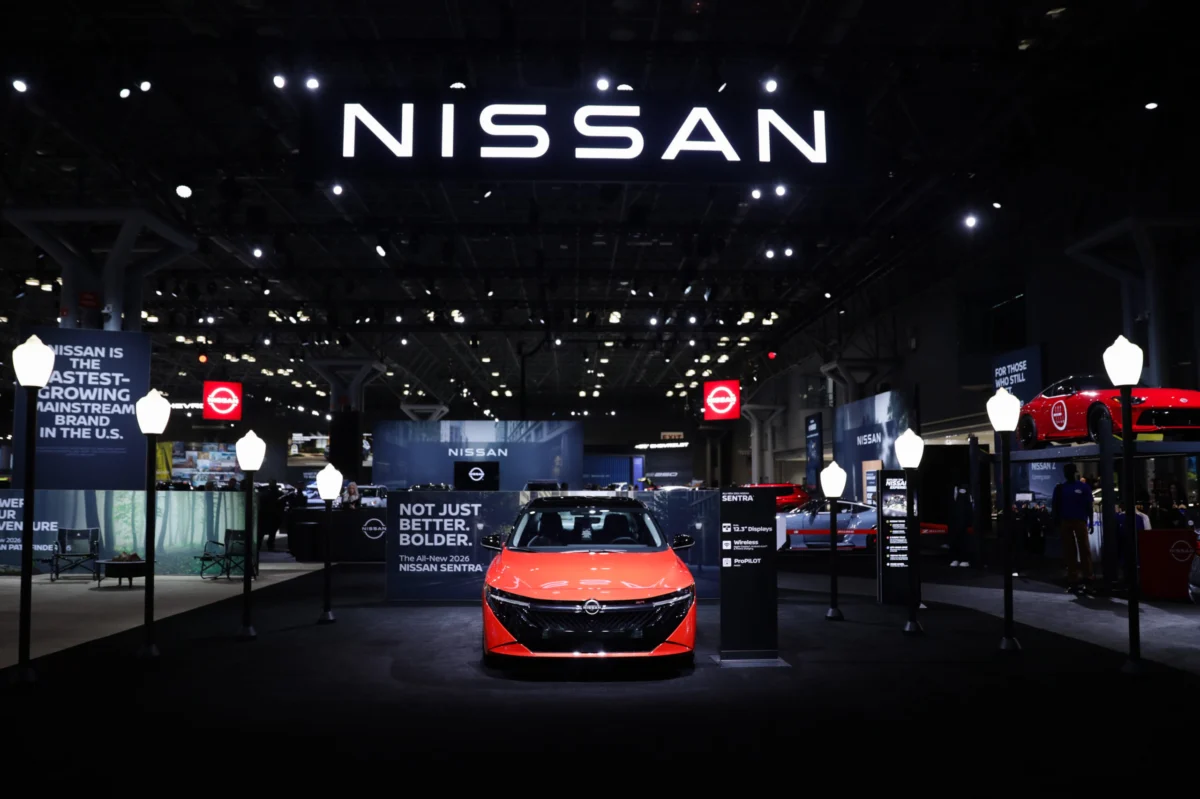
Nissan Motor Co. is poised for a significant expansion of its manufacturing footprint in the United States, aiming to nearly double its annual domestic vehicle production to one million units. This ambitious undertaking is intrinsically linked to the launch of the highly anticipated 2027 Rogue crossover, particularly its innovative new e-Power hybrid model, which the Japanese automaker views as a pivotal offering for the American consumer market. The strategic pivot underscores Nissan’s commitment to localized production, job creation, and a renewed focus on hybrid technology to bolster its market position in a rapidly evolving automotive landscape.
Expanding Domestic Manufacturing and Job Creation
The core of Nissan’s U.S. expansion strategy involves maximizing the output of its existing assembly plants. Christian Meunier, chairman of Nissan Americas, articulated the company’s immediate plans, stating, "We’re now maxing out the production capacity in the U.S. The next step is going to be three shifts, and I’m pretty optimistic that with the launch of the new Rogue that is happening in the next couple months, we’ll be able to do that pretty quickly with the launch of the hybrid." This move to implement a third production shift at its facilities is a direct response to anticipated demand for the 2027 Rogue and a broader strategy to localize manufacturing.
Nissan currently operates two major manufacturing hubs in the U.S. Its sprawling 6 million-square-foot assembly plant in Smyrna, Tennessee, is a cornerstone of its North American operations, producing the popular Rogue alongside other Nissan and Infiniti crossovers on a two-shift schedule. Additionally, the company maintains another substantial manufacturing plant in Canton, Mississippi, responsible for assembling the Nissan Altima sedan and Frontier midsize pickup truck. The addition of a third shift across these facilities is projected to create hundreds, if not thousands, of new jobs, providing a significant economic boost to the regions and aligning with national priorities for increased domestic production and employment in the U.S. auto industry. This initiative resonates particularly with political sentiments that advocate for greater "Made in America" manufacturing, a focus that has gained prominence in recent years.
While U.S. manufacturing of the hybrid version of the 2027 Rogue is slated to commence next year, following the spring production launch of the traditional gas engine model at the Tennessee plant, Nissan has a transitional plan. To ensure the e-Power hybrid reaches the market expeditiously and contributes to an ongoing global turnaround plan, Meunier confirmed that Nissan will initially import these vehicles from Japan. This temporary measure will allow Nissan to capitalize on early market demand and build momentum before full domestic production scales up.
The goal of reaching one million units annually from the current nearly 487,000 units produced in 2025 signifies an aggressive growth trajectory. Nissan has set an ambitious target to produce 80% of the vehicles it sells in the U.S. domestically by 2030. Despite this significant increase in production targets, Meunier clarified that the company does not foresee the need for a brand-new plant in the immediate future. "I think we’re very well equipped to succeed without major investment and a new factory and everything else. Maybe after 2030," he remarked, indicating a cautious yet optimistic approach to future infrastructure investments beyond the current five-year horizon.
The 2027 Rogue e-Power: A Hybrid Reimagined for the American Market
Central to Nissan’s renewed strategy is the 2027 Rogue with its innovative "e-Power" technology, officially revealed for the U.S. market. This marks the debut of a series hybrid system of its kind for American consumers, representing a significant technological leap for the brand. Unlike conventional parallel hybrids where both the engine and electric motor can directly power the wheels, or plug-in hybrids that require external charging, Nissan’s e-Power operates uniquely.
The "e-Power" system functions as a series hybrid, meaning the gasoline engine does not directly propel the vehicle’s wheels. Instead, the internal combustion engine acts solely as a generator, producing electricity to power the vehicle’s electric motors, which then exclusively drive the wheels. This architecture provides an EV-like driving experience with instant torque and quiet operation, without the need for an external charging infrastructure. It shares conceptual similarities with emerging extended-range electric vehicles (EREVs) but differentiates itself by featuring a smaller battery and foregoing a charging plug, offering a compelling blend of electric propulsion and gasoline convenience. This design aims to mitigate range anxiety often associated with battery electric vehicles (BEVs) while delivering superior fuel efficiency compared to traditional gasoline-powered cars.
For Christian Meunier, the development and launch of the Rogue hybrid, alongside the resurrection of the Xterra off-road SUV, were top priorities upon his return to Nissan in January 2025, after a four-and-a-half-year tenure with Jeep. His influence is evident in the accelerated timeline for the Rogue hybrid’s U.S. introduction, having pulled ahead its development twice to meet market demand.
The Rogue holds immense strategic importance for Nissan, consistently ranking as a sales leader for the company in the U.S. It operates within the fiercely competitive small crossover segment, vying for market share against formidable rivals such as the Toyota RAV4 and Honda CR-V, both of which boast established and best-selling hybrid options. Meunier is confident that the e-Power hybrid will be a crucial differentiator. "The hybrid power that we’re launching on Rogue is going to really be the boost to our performance," Meunier stated, acknowledging the previous challenge of growing sales without a hybrid offering in a market increasingly embracing electrified powertrains. He further highlighted the growing popularity of hybrids, emphasizing the timing of Nissan’s entry.
Nissan’s aggressive positioning of the Rogue e-Power is directly against the benchmark Toyota RAV4. Meunier even suggested unconventional sales strategies, such as allowing potential customers to test drive both the Rogue e-Power and the RAV4 at Nissan dealerships, a testament to the company’s belief in its new technology and its willingness to challenge traditional dealership norms.
Context: The Hybrid Resurgence and Nissan’s Turnaround Journey
The renewed emphasis on hybrid technology, particularly the e-Power system, comes at a significant juncture for the automotive industry. Following a period where many automakers, including Nissan, invested billions in all-electric vehicles, the market has seen a recent slowdown in BEV adoption. This shift is attributed to a confluence of factors, including infrastructure concerns, higher purchase costs, waning regulatory support in some regions, and fluctuating consumer demand. This has led to substantial financial losses for some manufacturers in their EV divisions.
Nissan’s e-Power is positioned as a pragmatic solution, offering a compelling alternative to both pure BEVs and conventional hybrids for U.S. consumers. It addresses concerns about range and charging infrastructure while delivering the efficiency benefits of electrification. This strategy is particularly pertinent given the backdrop of inflated fuel prices, which have been exacerbated by geopolitical events such as the Iran war. Meunier believes this innovative approach will significantly alter public perception of the brand. "It’s going to make people look at Nissan with different eyes," he asserted, anticipating that the hybrid offering will attract a new segment of customers who previously might not have considered Nissan.
This strategic pivot is an integral part of Nissan’s broader global turnaround plan, "Nissan NEXT," initiated in the wake of significant financial challenges and leadership turmoil in the late 2010s. The comprehensive strategy aims to streamline the company’s automobile lineup by divesting from low-performing models, optimizing production efficiency, and integrating advanced technologies such as artificial intelligence across its operations. Under this revitalized strategy, Nissan targets achieving one million vehicle sales for its Nissan brand in both the U.S. and China by the 2030 financial year, alongside growing its annual sales volume in Japan to 550,000 cars within the same timeframe.
For the U.S. market, Meunier expressed satisfaction with the progress made since his return to the automaker. After several years of declining sales and market share erosion, Nissan’s U.S. sales figures through the first half of the year showed a robust increase of approximately 10%. This performance stands in stark contrast to the broader industry trend, which, according to Cox Automotive reports, experienced a roughly 3% decline during the same period. This indicates that Nissan’s initial turnaround efforts in the U.S. are beginning to yield positive results. "I think the next few months are going to be pretty good. Pretty tough, but pretty good," Meunier remarked, anticipating a strong finish to the calendar year in December, buoyed by the momentum of new product launches and an optimized sales strategy.
Broader Impact and Implications
Nissan’s aggressive push to increase U.S. production and lead with innovative hybrid technology carries significant implications for various stakeholders. Economically, the addition of thousands of manufacturing jobs across Tennessee and Mississippi will stimulate local economies through increased wages, spending, and associated service sector growth. This aligns with broader national efforts to bolster the U.S. manufacturing base and reduce reliance on overseas production, a sentiment often echoed by political leaders.
For the automotive industry at large, Nissan’s strategy highlights the ongoing re-evaluation of powertrain technologies. While BEVs remain a long-term goal for many, the immediate market reality suggests a strong and growing appetite for hybrids. Nissan’s e-Power, with its unique series hybrid architecture, offers a distinct value proposition that could influence future hybrid designs across the industry, potentially accelerating the development of similar "range-extended electric" concepts that bridge the gap between traditional combustion and full electrification.
Competitors like Toyota and Honda, established leaders in the hybrid SUV segment, will undoubtedly monitor the Rogue e-Power’s performance closely. Nissan’s willingness to directly challenge these stalwarts, even suggesting cross-brand test drives, indicates a newfound confidence and aggressive market posture. Industry analysts generally view this move as a well-timed strategic pivot, leveraging Nissan’s manufacturing capabilities and technological innovation to capitalize on current market trends and consumer preferences. The focus on a proven segment leader like the Rogue, combined with a differentiated hybrid technology, positions Nissan for significant growth and a stronger competitive stance in the coming years.
Looking ahead, Nissan’s 2030 targets for domestic production and sales underscore a long-term commitment to the U.S. market as a critical pillar of its global operations. The measured approach to plant expansion, prioritizing optimization of existing assets before considering new construction, reflects a disciplined financial strategy aimed at sustainable growth. As the automotive landscape continues to evolve, Nissan’s bold steps with the 2027 Rogue e-Power and its expanded U.S. production capabilities will be a defining factor in its journey back to a position of strength and leadership in the global automotive arena.
