

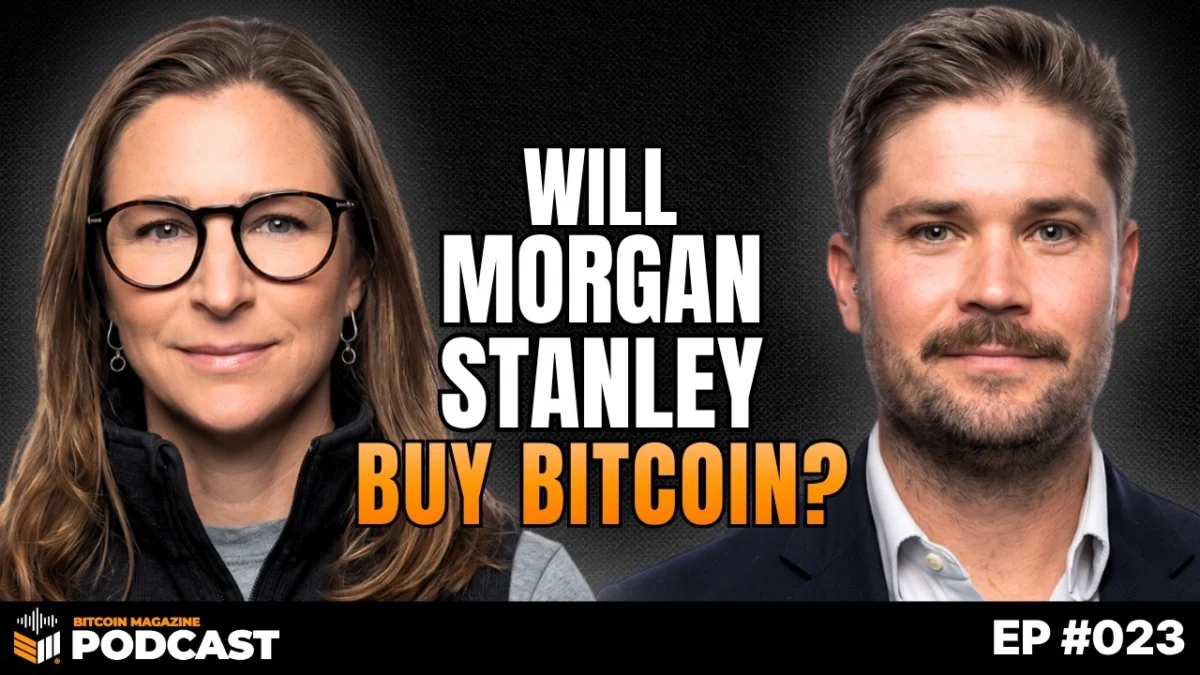
Morgan Stanley, a titan of global finance, has marked a significant milestone as the first globally systemically important bank (G-SIB) to launch a spot Bitcoin Exchange Traded Product (ETP). This groundbreaking product, introduced in April, has rapidly garnered substantial investor interest, surpassing the $600 million AUM (Assets Under Management) mark within months of its debut. In an in-depth discussion with Spencer Nichols, host of Bitcoin Magazine’s insightful broadcast, Amy Oldenburg, Head of Digital Assets at Morgan Stanley, provided a comprehensive overview of the strategic thinking behind this landmark offering, its competitive pricing, and the evolving landscape of digital asset allocation for institutional investors.
The conversation delved into the intricate process of bringing such a product to market, a complex endeavor given the regulatory scrutiny and inherent volatility associated with cryptocurrencies. Oldenburg detailed how Morgan Stanley navigated these challenges, emphasizing a client-centric approach that prioritizes education and robust risk management. The ETP’s success underscores a growing institutional appetite for regulated exposure to Bitcoin, a sentiment previously viewed with skepticism by many traditional financial institutions.
A Pioneering Entry into the Spot Bitcoin Market
Morgan Stanley’s decision to enter the spot Bitcoin ETP market was not merely a reactive move but a carefully considered strategic initiative. As a G-SIB, the bank’s involvement signals a profound shift in the perception and acceptance of digital assets within the mainstream financial ecosystem. The ETP structure offers investors a familiar and regulated avenue to gain exposure to Bitcoin, sidestepping the complexities and security concerns associated with direct custody of the cryptocurrency.
The rapid accumulation of over $600 million in AUM within a short timeframe is a testament to the pent-up demand from Morgan Stanley’s extensive client base. This demand has been fueled by a combination of factors, including the increasing institutional adoption of Bitcoin as a potential inflation hedge and a store of value, alongside the growing maturity of the regulatory framework surrounding digital assets in key jurisdictions. The launch followed a period of intense speculation and anticipation after the U.S. Securities and Exchange Commission (SEC) approved several spot Bitcoin ETFs in January 2024, paving the way for traditional asset managers to offer such products.
Strategic Pricing and Client Accessibility
A particularly noteworthy aspect of Morgan Stanley’s ETP is its pricing strategy. Oldenburg revealed that the product was deliberately priced below that of competing spot Bitcoin ETFs. This aggressive pricing suggests a strategic intent to capture market share and attract a broad range of investors by offering a more cost-effective entry point into Bitcoin exposure. While specific fee structures for ETPs can vary, a lower expense ratio can significantly impact long-term returns, making it an attractive proposition for both retail and institutional investors seeking to allocate capital to Bitcoin.
The discussion also touched upon the hurdles that still exist between clients and their initial Bitcoin allocation. Despite the availability of regulated products, Oldenburg highlighted the ongoing need for comprehensive client education. Morgan Stanley’s approach emphasizes understanding the risk profile of each investor, the unique characteristics of Bitcoin as an asset class, and the importance of diversification. The firm’s internal frameworks aim to ensure that clients are making informed decisions, aligning their digital asset investments with their broader financial goals and risk tolerance.
The 0%-4% Allocation Framework and the "Digital Gold" Thesis
A core element of Morgan Stanley’s digital asset strategy, as articulated by Oldenburg, is its flexible allocation framework, ranging from 0% to 4% across three distinct investor risk profiles. This nuanced approach acknowledges that a one-size-fits-all strategy is inappropriate for a nascent and volatile asset class like Bitcoin.
- Conservative Investors: May receive an allocation closer to the 0% end of the spectrum, focusing on limited, experimental exposure.
- Moderate Investors: Could be allocated a slightly larger percentage, balancing potential upside with managed risk.
- Aggressive Investors: May see allocations reaching the higher end of the 4% range, reflecting a greater capacity for risk and a more conviction-driven approach.
This framework is underpinned by the evolving narrative of Bitcoin as "digital gold." Oldenburg elaborated on this thesis, drawing parallels between Bitcoin and traditional gold as a store of value and a hedge against inflation and currency debasement. However, she also underscored the key differences, particularly Bitcoin’s digital nature, its scarcity enforced by code, and its potential for greater portability and divisibility. The "digital gold" analogy, while powerful, is not a perfect one, and Morgan Stanley’s approach appears to acknowledge this by advocating for a measured allocation rather than a wholesale replacement of traditional assets.
Bitcoin vs. Gold: A Divergent Allocation Strategy
The conversation took an interesting turn when Oldenburg addressed why Morgan Stanley has no equivalent gold allocation within this specific framework, despite its traditional role as a safe-haven asset. This absence suggests a distinct strategic view on how Bitcoin and gold function within an investment portfolio. While gold has a long-established history and a deeply ingrained perception as a store of value, its physical nature and historical price movements differ significantly from Bitcoin’s digital characteristics and its more recent, albeit volatile, trajectory.
Morgan Stanley’s framework appears to treat Bitcoin as a distinct asset class with its own set of correlations and risk-return profiles, rather than a direct substitute for gold. This differentiation is crucial for sophisticated portfolio construction, allowing for a more precise management of risk and return. The firm’s research likely plays a significant role in informing these allocation decisions, providing clients with data-driven insights into Bitcoin’s potential role in diversifying portfolios.
Correlation Regimes and Volatility Management
The discussion extended to the concept of correlation regimes, a critical factor in portfolio diversification. Oldenburg touched upon how Bitcoin’s correlation with traditional assets, such as high-beta technology stocks, can fluctuate. Understanding these dynamic correlations is essential for managing portfolio volatility. Bitcoin’s price movements have historically shown periods of both high and low correlation with equities, as well as with other commodities.
The firm’s analysis likely considers these varying correlation regimes to advise clients on how Bitcoin might behave under different market conditions. This is particularly relevant for the 0%-4% allocation, as even a small allocation can have a disproportionate impact on overall portfolio volatility if not managed strategically. The "Digital Gold 2.0" concept, as alluded to, suggests an evolution of the traditional gold narrative, embracing Bitcoin’s unique attributes while aiming for similar store-of-value properties.
Bitcoin on Morgan Stanley’s Own Balance Sheet?
A provocative question raised was whether Bitcoin could eventually find its way onto Morgan Stanley’s own balance sheet. This is a significant consideration, as it would represent a profound level of institutional acceptance and commitment to the asset class. While Oldenburg did not provide a definitive "yes" or "no," her response indicated that such a move would be subject to rigorous internal analysis, including considerations of market structure, quantum risk (the potential impact of large transactions on market liquidity), and the development of robust client trust.
The inclusion of Bitcoin on a bank’s balance sheet would require a comprehensive understanding of its underlying technology, its regulatory standing, and its long-term viability. It would also necessitate sophisticated risk management frameworks to handle the inherent volatility. The fact that the question was even raised and discussed openly by a senior executive signals the increasing seriousness with which major financial institutions are evaluating digital assets.
Institutional Market Structure and Client Trust
Oldenburg also emphasized the importance of institutional market structure and client trust in the adoption of digital assets. For a bank like Morgan Stanley, ensuring the integrity of the market, the security of transactions, and the transparency of operations is paramount. The firm’s involvement in the spot Bitcoin ETP market is indicative of its commitment to building this trust. By offering a regulated product through established channels, they aim to provide clients with a sense of security and confidence that might be lacking in more direct, less regulated forms of crypto engagement.
The conversation also touched upon the long-term implications of tokenization, stablecoins, and the ongoing evolution of Morgan Stanley’s research into these areas. These are all critical components of the broader digital asset ecosystem that are likely to shape the future of finance. As the financial industry continues to grapple with the potential and the challenges of blockchain technology and digital currencies, Morgan Stanley’s proactive approach, exemplified by its pioneering spot Bitcoin ETP, positions it as a key player in this transformative era.
The disclaimer accompanying the broadcast is crucial, reminding viewers that the discussion is for informational and educational purposes and does not constitute investment advice. This reflects the responsible approach that established financial institutions must take when engaging with a volatile and evolving asset class like Bitcoin. The views expressed are those of the participants and do not necessarily represent the official stance of the entities they represent, underscoring the dynamic and often personal nature of these discussions within the institutional finance world.
