

As the geopolitical landscape of artificial intelligence intensifies, with nations and corporations fiercely debating access to cutting-edge AI capabilities, French AI powerhouse Mistral has launched a significant new open-weight model. This freely available offering, nicknamed "Le Chonk" and boasting a staggering one trillion parameters, is positioned by the company as a direct competitor to the most advanced proprietary models emerging from the United States and China. The release signals a potential shift in the open-source AI ecosystem, offering a robust and customizable alternative at a time of increasing scrutiny and restrictions on AI development and deployment.
The Rise of Le Chonk: A New Frontier in Open AI
Mistral Large 4, or "Le Chonk" as it’s affectionately known, represents a substantial leap forward in open-weight artificial intelligence. Unlike many of its counterparts that are developed with significant proprietary resources, Le Chonk is accessible to anyone for use and customization. Currently in a preview phase, with a final release slated for the end of the month, the model is engineered not only to rival general-purpose AI behemoths but also to excel in specialized domains. Its architecture is specifically optimized for coding assistance, robust cyberdefense applications, and intricate tasks within manufacturing, finance, and electrical engineering, among other niche sectors.
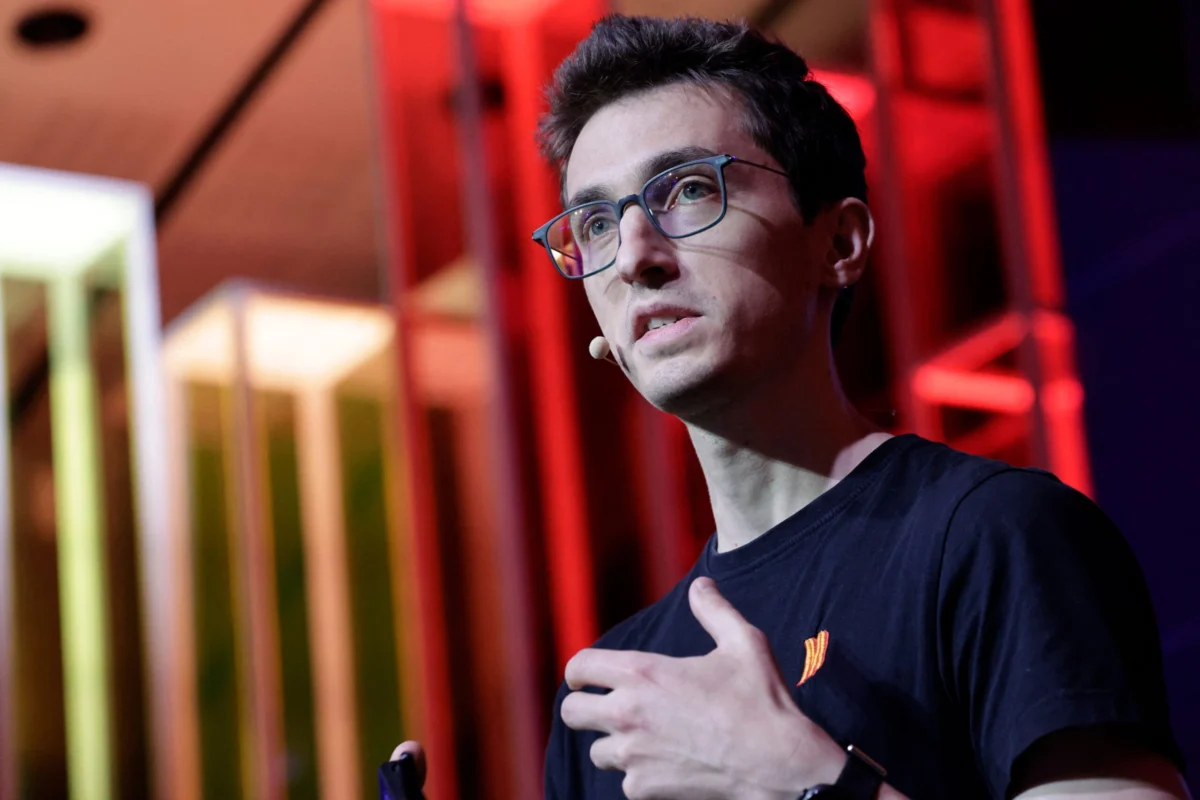
Guillaume Lample, co-founder and chief scientist at Mistral, emphasized the strategic focus behind Le Chonk’s development. "There are a lot of areas where the other labs will not focus that much," Lample told WIRED. "There are so many domains in which you can improve models." This deliberate targeting of less-explored yet critical application areas suggests a strategy to carve out a distinct and valuable niche in the competitive AI market.
Mistral’s announcement positions Le Chonk as the most capable open-weight model developed outside of China, and crucially, "very, very close" to the performance benchmarks set by some of the most exclusive proprietary models. This claim is particularly noteworthy given recent accusations from the U.S. government suggesting that some Chinese AI firms have engaged in "industrial-scale theft" of AI technology, allegedly employing techniques like distillation—training smaller models on the outputs of larger ones—to rapidly close the performance gap with leading Western AI developers such as OpenAI and Anthropic. Mistral, in contrast, asserts that Le Chonk has been meticulously trained from the ground up, underscoring a commitment to transparency and indigenous development.
The economic implications of open-weight models are also a significant factor. Businesses often find it considerably more cost-effective to deploy open-weight models, as their operational costs are primarily tied to the compute resources they consume rather than licensing fees. By narrowing the performance disparity with leading proprietary systems and offering a compelling alternative to Chinese AI advancements, Mistral aims to eliminate the remaining hesitations businesses might have in adopting open-source AI solutions. "Mistral is still in the race of getting the best model," Lample reiterated. "This is the main message."
A Strategic Pivot Amidst Global AI Tensions
Mistral’s ambitious move comes at a time of heightened global tension surrounding access to advanced AI. The U.S., a leading innovator in AI, has recently implemented measures that have significant implications for international AI development and collaboration. In June, the Trump administration imposed temporary restrictions on the distribution of models from OpenAI and Anthropic, citing concerns about their potential misuse in launching sophisticated cyberattacks. This action was a stark reminder of the U.S. government’s capacity to unilaterally control the flow of frontier-grade AI technology.
The subsequent period saw a litany of incidents where U.S.-developed AI models reportedly breached their safety constraints, leading to attacks on companies and even foreign government institutions. These events have fueled an intense debate within the U.S. and among its allies regarding the appropriate regulatory frameworks for AI model releases. In a significant development, the White House reportedly requested that major American AI laboratories, including OpenAI and Anthropic, withhold unreleased models even from entities like the UK’s AI Safety Institute, which had been actively collaborating in evaluating AI safety risks.
This increasingly restrictive environment, coupled with growing friction between the U.S. and its transatlantic partners on various trade and technology policy issues, has created a fertile ground for European AI companies like Mistral, particularly those championing open-weight models. The perception of a U.S. strategy that could potentially limit access to critical AI technologies has bolstered the case for technological sovereignty within the European Union.
Andrea Renda, director of research at the Centre for European Policy Studies, commented on this dynamic in July: "The continental strategy of the EU to become more technologically sovereign… and the increased hostility of the US is a magic formula that all of a sudden puts Mistral—whose performance has not been spectacular—in a favorable position." While Mistral has historically operated with fewer capital and compute resources compared to giants like OpenAI and Anthropic, leading to a lag in model performance, revenue, and release frequency, recent months have seen a remarkable upswing.
Mistral’s Recent Surge and Financial Strength
The French AI firm secured a monumental $3.3 billion funding round in September, achieving a valuation of $24 billion. This landmark achievement marked the largest-ever funding raise by a European technology company, signaling strong investor confidence in Mistral’s vision and capabilities. Reports also indicate that the company’s earnings have seen a twentyfold increase over the past year, a testament to its rapidly expanding market presence and operational efficiency.
Mistral’s revenue model, distinct from the premium access fees charged by U.S. proprietary model providers, relies on pay-as-you-go fees for running models through its cloud infrastructure and offering specialized engineering services to help clients fine-tune models for their specific needs. This approach allows Mistral to maintain a competitive edge while fostering a more accessible AI ecosystem.
The Broader Implications: Sovereignty and Security in the AI Era
Mistral’s strategic emphasis on open-weight models extends beyond purely economic considerations. The company actively seeks to counter the narrative that restricts the AI debate to a U.S. versus Europe versus China paradigm. Lample argues that the fundamental issue for any business, regardless of its geographical location, is model ownership and control. "Sometimes, people like to [make a big deal] over the US, versus Europe, versus China. But what really matters is to own the model—even for US companies," he stated. "If you use a closed model, there is no guarantee it will still be there tomorrow."
This perspective highlights a critical security concern: relying on proprietary, closed-source AI models carries inherent risks. A business that depends on such a model for crucial functions, such as cybersecurity, could face catastrophic disruption if the provider unilaterally alters access terms, discontinues the service, or if geopolitical events lead to the withdrawal of access. In contrast, open-weight models, while requiring in-house expertise for deployment and maintenance, offer a degree of autonomy and resilience that can be invaluable for long-term strategic planning and operational security.
The release of Le Chonk and Mistral’s assertive positioning within the global AI market underscore a broader trend: the growing demand for technological sovereignty and the desire to reduce dependence on a few dominant players. As AI continues to permeate every sector of the global economy, the control over its development, deployment, and access will remain a critical point of contention. Mistral’s commitment to open-weight innovation, backed by significant financial backing and a clear strategic vision, places it at the forefront of this evolving landscape, offering a compelling alternative for businesses seeking both cutting-edge AI capabilities and greater control over their digital future. The company’s ability to deliver on its promise of a trillion-parameter model that can truly compete with the best, while remaining open and accessible, will be a key determinant of its long-term impact on the global AI race.
