

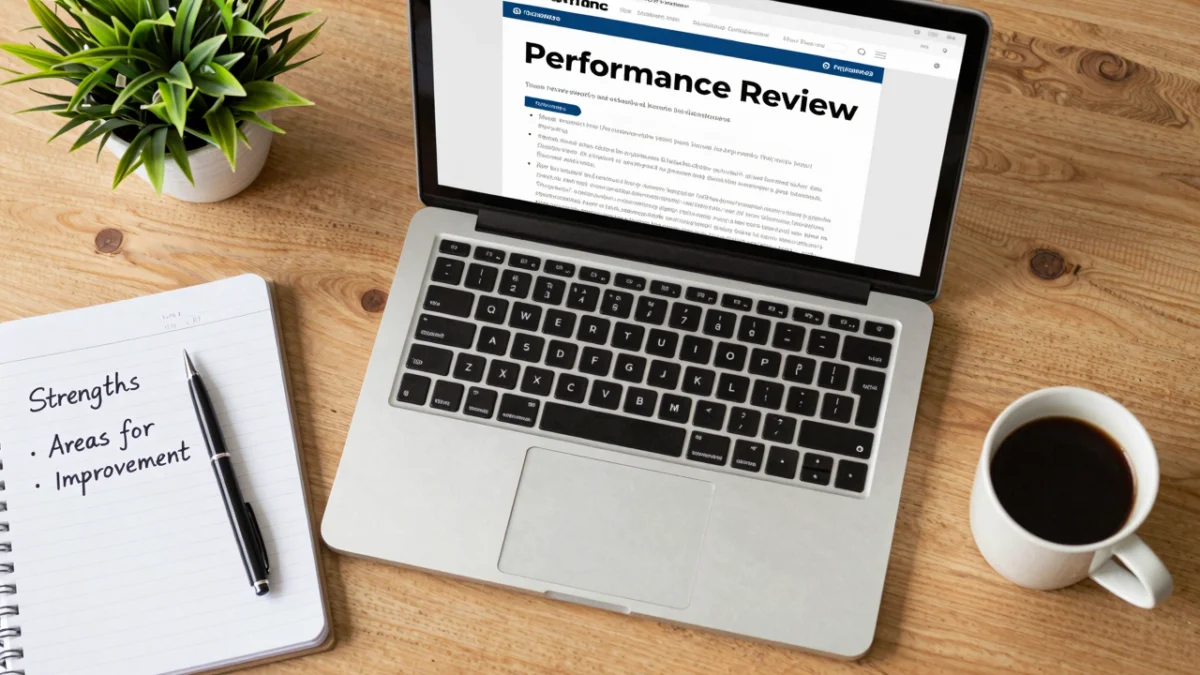
The traditional annual performance review, once a dreaded ritual of corporate bureaucracy, is undergoing a radical transformation as organizations prioritize agility, employee retention, and measurable growth. In the contemporary labor market, where talent mobility is high and skills gaps are widening, the ability of a manager to provide clear, actionable, and constructive feedback has emerged as a critical driver of organizational success. Industry data suggests that the shift from static, retrospective evaluations to dynamic, forward-looking development conversations can significantly impact the bottom line. According to recent studies, companies that implement effective, regular feedback mechanisms see an average performance increase of 39%, while also experiencing higher rates of employee engagement and reduced turnover.

To navigate this transition, organizations are moving beyond simple checklists and adopting comprehensive performance management systems that emphasize clarity, data-driven insights, and psychological safety. The goal is no longer merely to document past behavior for the sake of compensation adjustments, but to foster an environment of continuous improvement where employees feel empowered to align their personal development with the strategic objectives of the company.
The Evolution of Performance Management: A Chronology of Change
The methodology behind employee evaluations has evolved significantly over the last several decades, reflecting broader shifts in management philosophy and economic conditions. Understanding this timeline provides essential context for why modern "best practices" have moved toward continuous dialogue.

In the mid-20th century, performance management was largely administrative and top-down. The 1950s and 60s saw the rise of "Management by Objectives" (MBO), which focused heavily on output but often ignored the developmental needs of the individual. By the 1980s, many Fortune 500 companies adopted "forced ranking" systems—popularly known as "rank and yank"—where employees were graded on a bell curve and the bottom tier was systematically terminated. This era created a culture of internal competition rather than collaboration.
The early 2000s marked a turning point as organizational psychologists began to highlight the demotivating effects of infrequent, high-stakes reviews. By 2012, major corporations like Adobe and Juniper Networks began grabbing headlines by scrapping annual reviews entirely in favor of "check-ins." This trend accelerated through the 2020 pandemic, as the rise of remote and hybrid work necessitated more frequent, digital-first communication. Today, the focus has landed squarely on the "Continuous Feedback Model," which integrates real-time data and ongoing mentorship into the daily workflow.

Establishing the Framework: Clear Expectations and Measurable Goals
The foundation of any successful performance evaluation is the establishment of clear, measurable expectations long before the review meeting takes place. Ambiguity is the primary enemy of productivity; when employees are uncertain of their roles or how their success is measured, accountability diminishes.
Experts suggest that managers should utilize the SMART (Specific, Measurable, Achievable, Relevant, Time-bound) framework to define goals. These goals must be explicitly communicated and documented within a staff appraisal system to ensure a shared understanding. When expectations are transparent, the review becomes a factual assessment of progress rather than a subjective debate. Furthermore, these individual metrics should be directly linked to the organization’s broader objectives, helping employees see the "big picture" impact of their daily tasks.

Regularly revisiting these metrics is also vital. In a fast-paced business environment, a goal set in January may be obsolete by June. Managers who adjust performance expectations in real-time ensure that evaluations remain relevant and that employees are not being held to outdated standards.
The Data-Driven Review: Preparation and Evidence
A constructive performance review requires more than just a manager’s intuition; it requires a robust collection of data to ensure fairness and minimize bias. Preparation for a review should begin weeks in advance, gathering input from multiple sources to create a 360-degree view of the employee’s contributions.

Key data points to collect include:
- Quantitative Metrics: Sales figures, project completion rates, billable hours, or error rates.
- Qualitative Input: Feedback from peers, direct reports, and cross-functional collaborators. This provides insight into soft skills such as teamwork, leadership, and communication.
- Self-Assessments: Allowing the employee to document their own achievements and challenges ensures they feel heard and provides the manager with a perspective on the employee’s self-awareness.
- Professional Development History: Tracking completed training modules and certifications to identify areas where the employee has successfully expanded their skillset.
By grounding the conversation in evidence, managers can move away from "vague generalities" and toward "specific instances." This approach fosters trust, as the employee can see that the evaluation is based on observable behaviors and objective outcomes rather than personal feelings.

Creating a Constructive Atmosphere and Psychological Safety
The psychological environment in which feedback is delivered is just as important as the content of the feedback itself. If an employee feels threatened or defensive, their ability to process and act on information is severely compromised. Creating a "constructive atmosphere" involves fostering psychological safety—a term popularized by Harvard Professor Amy Edmondson—where employees feel safe to take risks and admit mistakes without fear of punishment.
Managers can build this safety by practicing active listening. This involves fully concentrating on the speaker, acknowledging their points, and paraphrasing their responses to ensure understanding. Using phrases like "Help me understand your perspective on this project" or "What obstacles did you face?" invites the employee into a partnership rather than a confrontation.

The focus should remain on "future growth" rather than "past failures." While it is necessary to address areas for improvement, these should be framed as opportunities for development. A balanced approach—highlighting three strengths for every one area of improvement—can help maintain employee morale while still providing the necessary critiques to drive progress.
The Power of Specificity: Enhancing Feedback Clarity
One of the most common pitfalls in performance management is the use of "hollow feedback." Telling an employee they need to be a "better team player" provides no roadmap for change. Instead, effective managers use specific examples to illustrate their points.

For instance, rather than saying "Your communication needs work," a manager might say, "In last Tuesday’s client meeting, you didn’t provide the updated budget figures when asked, which led to a delay in the approval process. In the future, please ensure all financial documents are reviewed and ready 24 hours before the call." This level of specificity removes ambiguity and provides a clear behavioral target for the employee.
Research into workplace dynamics indicates that clear communication of expectations, backed by concrete instances, significantly reduces workplace anxiety and builds a stronger working relationship between management and staff. It also allows the employee to see the direct impact of their actions on the team’s overall success.

Institutionalizing Continuous Feedback and Managerial Training
The shift from annual reviews to continuous feedback requires more than just a change in policy; it requires a change in culture. Organizations must invest in training their managers to deliver feedback effectively. Many managers are promoted because of their technical expertise, not necessarily their people management skills. Without proper training in conflict resolution, coaching, and empathetic communication, even the best-intentioned feedback sessions can go awry.
Training programs should focus on:

- The Art of the Check-In: Teaching managers how to conduct brief, impactful monthly or quarterly meetings that focus on immediate hurdles and short-term wins.
- Bias Mitigation: Helping managers recognize and correct for unconscious biases, such as recency bias (focusing only on the last month) or halo effects (allowing one positive trait to overshadow areas for improvement).
- Coaching vs. Directing: Moving managers away from simply giving orders and toward asking reflective questions that help employees find their own solutions.
Furthermore, the use of performance management software can facilitate this process by providing a centralized platform for real-time feedback, goal tracking, and peer recognition. When feedback becomes a "low-stakes" daily occurrence, the formal review becomes a natural summary of an ongoing conversation rather than a stressful surprise.
Analysis of Broader Implications: The Bottom Line of Better Feedback
The implications of mastering performance evaluations extend far beyond the HR department. In an era often defined by "The Great Reshuffle" and "Quiet Quitting," the quality of the manager-employee relationship is the primary determinant of talent retention. Employees who receive regular, meaningful feedback are nearly three times more likely to be engaged at work.

From a financial perspective, the cost of replacing an employee can range from one-half to two times the employee’s annual salary. By fostering a culture of development and open dialogue, organizations can drastically reduce these turnover costs. Moreover, a robust feedback culture creates a more "agile" workforce. When employees are constantly learning and adjusting based on actionable feedback, the organization as a whole becomes more capable of pivoting in response to market changes.
In conclusion, effective performance evaluation is not a one-time event but a continuous cycle of setting expectations, gathering data, and engaging in transparent, two-way communication. By moving away from outdated, punitive models and embracing a growth-oriented approach, organizations can unlock the full potential of their human capital, driving both individual career satisfaction and long-term corporate success. The future of performance management lies in the ability to turn every evaluation into a launchpad for future achievement.
