

A powerful magnitude 7.1 earthquake struck southwestern Japan’s Kumamoto prefecture around 4:27 p.m. on Tuesday, unleashing destructive tremors and triggering a cascade of critical emergencies. The quake, originating beneath the southern main island of Kyushu at a shallow depth of approximately 16 kilometers, registered the maximum intensity of 7 on Japan’s seismic scale. This marks the first time the country has experienced such a severe seismic event since the Noto Peninsula earthquake on New Year’s Day 2024, underscoring the significant threat posed by this latest seismic activity.
The Japan Meteorological Agency (JMA) issued a stark warning following the initial jolt, advising that strong aftershocks could persist for approximately one week, with particular concern focused on the immediate two to three days. This prolonged period of seismic instability amplifies the challenges faced by rescue efforts and the affected population.
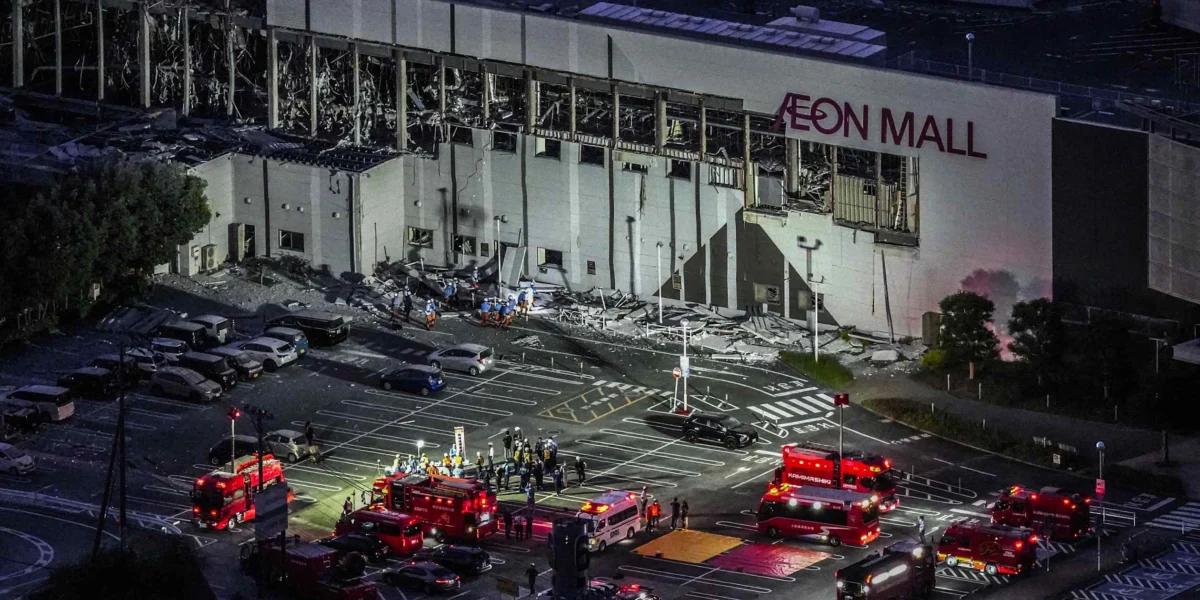
Tragically, the earthquake’s immediate aftermath was marked by a devastating explosion at Aeon Mall Kumamoto in Kashima. According to the Fire and Disaster Management Agency, a section of the mall’s second floor collapsed, trapping numerous individuals within the rubble. Emergency crews initiated rapid rescue operations, successfully extricating eight people from the hazardous conditions. However, the incident resulted in the confirmation of two fatalities and one case of cardiopulmonary arrest, highlighting the immediate and life-threatening consequences of the seismic event.
As of 5 p.m. on Tuesday, preliminary reports from the Kumamoto prefectural police painted a grim picture of the widespread damage. Twelve houses had collapsed, four individuals were confirmed trapped inside their homes, and two separate fires had broken out within the prefecture. These figures represent only the initial assessments, with the full extent of the destruction expected to become clearer in the ensuing hours and days.
Prime Minister Sanae Takaichi, addressing the nation on Wednesday, provided an updated casualty count, stating that the number of confirmed deaths attributed to the earthquake had risen to 13. This figure includes individuals whose direct link to the disaster was still under investigation, indicating a fluid and evolving situation. The Prime Minister’s statement underscored the gravity of the situation and the government’s commitment to coordinating relief efforts.
Personal accounts from the affected region paint a vivid picture of the chaos and fear experienced during the earthquake. Kentaro Hirai, deputy general manager of manufacturing planning at Hirai Group, a company operating a bento and prepared-food chain in Kumamoto city, recounted his harrowing experience from the company’s headquarters. He described being rendered "stunned and unable to think" by the sudden, violent shaking. Screens within the headquarters toppled in rapid succession, and several lights flickered and extinguished, plunging parts of the building into darkness.
A particularly poignant account came from a colleague of Hirai’s, who hailed from Myanmar. The colleague, visibly terrified, contacted Hirai expressing profound distress. With his phone battery rapidly depleting to just 10% and essential services like gas and electricity cut off, he was left feeling utterly helpless and uncertain about his next steps. This personal testimony underscores the multifaceted challenges faced by individuals, particularly those who may be more vulnerable or isolated in times of crisis.
The immediate aftermath also witnessed a surge of desperate activity in local stores as residents scrambled to secure essential supplies. The urgency was so palpable that many individuals resorted to purchasing items that had fallen to the floor, prioritizing immediate needs over aesthetic concerns. Reports indicated that in stores that sustained significant damage, bottled drinking water sold out within a mere hour, illustrating the rapid depletion of vital resources and the widespread anxiety gripping the community.
Timeline of Events and Immediate Response
The unfolding crisis began with the initial seismic event at 4:27 p.m. on Tuesday, a tremor so powerful it registered a maximum intensity of 7 on Japan’s seismic scale. This classification signifies extreme shaking, capable of causing widespread destruction to buildings and infrastructure. The earthquake’s epicenter was pinpointed beneath the southern part of Kyushu, at a relatively shallow depth of 16 kilometers, a factor that often contributes to more intense ground shaking.
Within minutes of the main shock, the devastating explosion occurred at Aeon Mall Kumamoto in Kashima. This incident, likely a consequence of structural damage to gas lines or other pressurized systems within the building, resulted in the partial collapse of the second floor and immediate casualties. Fire and disaster management agencies were immediately dispatched to the scene, prioritizing the rescue of those trapped.
Simultaneously, emergency services began assessing the broader damage across Kumamoto prefecture. By 5 p.m. on Tuesday, police had confirmed a significant number of collapsed houses, reports of people trapped in their homes, and multiple fires. This indicates a widespread and indiscriminate impact of the earthquake, affecting both residential and commercial areas.
As night fell on Tuesday, rescue and assessment efforts continued under challenging conditions. The threat of aftershocks loomed large, complicating operations and increasing the risk to first responders. The government’s emergency response mechanisms were activated, with Prime Minister Takaichi’s office reportedly coordinating efforts to provide aid and support to the affected regions.
Wednesday morning brought a grim update on the human toll. Prime Minister Takaichi’s announcement of 13 confirmed deaths highlighted the escalating tragedy. The inclusion of individuals whose connection to the disaster was still being investigated suggests that the final death toll may be higher. The focus on Wednesday would have shifted towards more comprehensive damage assessments, the provision of emergency shelter and supplies, and the ongoing search for survivors.
Supporting Data and Context: Japan’s Seismic Landscape
Japan is one of the most seismically active countries in the world, situated on the Pacific Ring of Fire, a horseshoe-shaped zone of intense seismic and volcanic activity that encircles the Pacific Ocean. The country experiences an average of 1,500 earthquakes annually, with a significant portion being strong enough to be felt. This constant seismic threat has driven the development of some of the most advanced earthquake-resistant building codes and early warning systems globally.
The Japan Meteorological Agency’s seismic intensity scale, which ranges from 0 to 7, categorizes the observed effects of an earthquake. An intensity of 7 signifies catastrophic shaking, where even structures designed to withstand earthquakes may collapse. The fact that the Kumamoto earthquake reached this level underscores its exceptional power. The Noto Peninsula earthquake on New Year’s Day 2024, which also registered an intensity of 7, serves as a stark reminder of Japan’s ongoing vulnerability to seismic events. That earthquake, while impactful, occurred in a region with a different demographic and infrastructure profile compared to Kumamoto.
The shallow depth of the Kumamoto earthquake (16 kilometers) is a critical factor contributing to its destructive potential. Shallower earthquakes tend to release their energy closer to the surface, resulting in more intense ground motion and greater damage. The JMA’s warning about persistent aftershocks is standard procedure following major earthquakes. These aftershocks can continue for weeks or months and, while generally less powerful than the main shock, can still cause significant additional damage to already weakened structures and pose a continuous threat to life.
Official Responses and Broader Implications
The Japanese government, under Prime Minister Takaichi, has mobilized its resources to address the crisis. The immediate focus has been on search and rescue operations, providing emergency medical assistance, and ensuring the supply of essential goods like food, water, and shelter to displaced residents. The Japan Self-Defense Forces are typically deployed in such situations to assist with logistical support, transportation, and emergency relief efforts.
The Ministry of Land, Infrastructure, Transport and Tourism (MLIT) would be tasked with assessing and repairing damaged infrastructure, including roads, bridges, and public transportation networks. The Ministry of Health, Labour and Welfare would be coordinating the provision of medical care and psychological support to the affected population.
The economic implications of such a devastating earthquake are significant. Kumamoto prefecture is a vital industrial hub, particularly known for its manufacturing sector, including automotive and electronics production. Damage to factories, disruption of supply chains, and potential relocation of businesses could have a ripple effect on the national economy. The Aeon Mall incident, a major retail complex, highlights the impact on commerce and local economies.
Furthermore, the psychological impact on the survivors cannot be overstated. The trauma of experiencing such a violent event, coupled with loss of life, property, and displacement, requires long-term support and rehabilitation efforts. The experiences of individuals like Kentaro Hirai’s colleague from Myanmar serve as a reminder of the diverse needs of the affected population, including linguistic and cultural considerations in relief efforts.
The repeated occurrence of high-intensity earthquakes in Japan reinforces the critical importance of continuous investment in disaster preparedness, resilient infrastructure, and public education on earthquake safety. While Japan leads the world in many aspects of seismic safety, each event presents new challenges and opportunities for learning and improvement. The resilience of the Japanese people, coupled with robust government response, will be crucial in navigating the recovery and rebuilding process in Kumamoto. The coming days and weeks will be critical in assessing the full extent of the damage and implementing effective strategies for long-term recovery and reconstruction.
