

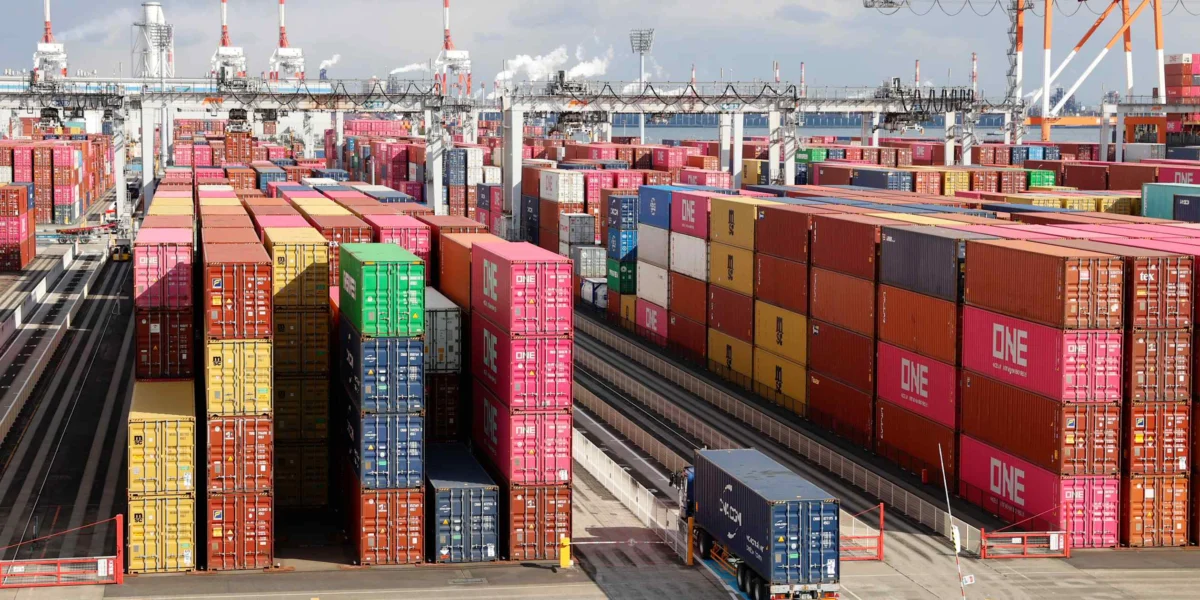
Japan’s economy continued to grapple with a trade deficit in August, marking the fourth consecutive month of imbalance, as a significant surge in imports outpaced a steady increase in exports, according to official data released on Wednesday. The nation’s trade figures paint a complex picture of economic activity, highlighting both the resilience of its export-oriented industries, particularly the crucial semiconductor sector, and the mounting pressure from rising import costs.
August Trade Deficit Deepens as Imports Outpace Exports
The Ministry of Finance reported that Japan’s overall trade deficit for August stood at ¥525.5 billion (approximately $3.5 billion USD, using an approximate exchange rate of ¥150 to $1 USD for illustrative purposes), a figure that underscores the ongoing challenges in achieving a positive trade balance. This deficit, while a concern for policymakers, was somewhat mitigated by a substantial 19.3% year-on-year increase in exports, which reached ¥9,050.7 billion ($60.3 billion USD). However, this export buoyancy was not enough to offset a more pronounced rise in imports, which climbed 12.0% to ¥9,576.2 billion ($63.8 billion USD).

The primary driver behind the robust export performance was the strong demand for chip-related products, a sector that has seen a resurgence globally as the world grapples with a shortage of advanced semiconductors. This surge in demand reflects the ongoing digital transformation across various industries, from automotive and consumer electronics to artificial intelligence and cloud computing. Japan’s advanced manufacturing capabilities in producing specialized materials, equipment, and components essential for semiconductor fabrication have positioned it to benefit from this global trend.
The increase in imports, on the other hand, was largely attributed to higher costs of energy resources and raw materials. Global commodity prices, particularly for oil and natural gas, have remained volatile, influenced by geopolitical tensions and supply chain disruptions. While the depreciation of the Japanese yen in recent periods has historically made imports more expensive, the underlying global price pressures have also contributed significantly to the increased value of goods entering the country. This dual effect of a weaker yen and elevated global prices creates a double burden on Japan’s import bill.
A Look at the Chronology of Japan’s Trade Balance
Japan’s trade balance has been a subject of close observation throughout the past year. Following a period of relative stability, the nation began to experience a series of trade deficits starting in April of the current year.

- April: Japan recorded its first trade deficit in over two years, a signal of shifting economic dynamics.
- May: The deficit persisted, raising concerns about the sustainability of export-driven growth in the face of rising import costs.
- June: The trend continued, with imports consistently outstripping exports, prompting closer scrutiny of the underlying economic factors.
- July: The trade deficit widened, indicating persistent pressures on the nation’s trade account.
- August: The latest data confirms the continuation of this trend, with a deficit of ¥525.5 billion, though the robust export growth offers a glimmer of hope.
This recurring deficit pattern contrasts with Japan’s historical role as a major trade surplus nation, a status it held for decades. The shift is attributed to a confluence of factors, including the global energy price shock following geopolitical events, the sustained depreciation of the yen, and structural changes in global supply chains.
Semiconductor Exports: A Pillar of Strength
The export figures for August reveal a particularly strong performance in the semiconductor-related sector. This segment of Japan’s manufacturing industry, which includes advanced materials, precision equipment, and specialized chemicals crucial for chip production, has been a consistent performer. The 19.3% overall export growth was significantly bolstered by these high-value goods.
Data from the Japan Semiconductor Manufacturers Association (JSMA) indicated a sustained increase in orders for semiconductor manufacturing equipment and materials throughout the year. This trend is a direct reflection of global investments in expanding semiconductor production capacity, driven by the burgeoning demand for advanced technologies. Companies like Tokyo Electron, Screen Holdings, and Shin-Etsu Chemical, key players in the semiconductor supply chain, have reported strong order books and robust sales figures.

The global shortage of semiconductors, particularly for advanced nodes used in high-performance computing and AI applications, has created an unprecedented demand. Japan, with its long-standing expertise in producing high-purity chemicals, photolithography equipment, and other critical components, is well-positioned to capitalize on this demand. The government has also been actively supporting the domestic semiconductor industry through subsidies and policy initiatives to attract foreign investment and bolster domestic production capabilities, exemplified by the large-scale investment by TSMC in Kyushu.
Imports: A Tale of Energy and Weakening Yen
While exports showed resilience, the import side of the equation continued to present challenges. The 12.0% increase in imports was largely driven by higher costs for energy resources, including crude oil and liquefied natural gas (LNG). Global energy markets have remained volatile, with supply concerns and geopolitical factors influencing price fluctuations. Japan, heavily reliant on imports for its energy needs, is particularly vulnerable to these global price swings.
The continued depreciation of the Japanese yen has also played a significant role in inflating the cost of imports. A weaker yen makes imported goods more expensive for Japanese consumers and businesses. This has a cascading effect, contributing to inflationary pressures within the domestic economy and squeezing profit margins for companies that rely on imported raw materials or components.

According to the Bank of Japan’s recent assessment, the yen has experienced a notable weakening against major currencies like the US dollar and the Euro over the past year. This has made it more costly for Japanese firms to procure essential resources and has also impacted the purchasing power of Japanese households. The interplay between global commodity prices and currency fluctuations has created a challenging environment for managing import costs.
Official Reactions and Analysis
The Ministry of Finance, in its release of the trade data, acknowledged the mixed nature of the figures. While emphasizing the positive growth in exports, particularly in strategic sectors like semiconductors, officials also highlighted the need to monitor the persistent trade deficit and its implications for the broader economy.
"The robust performance of our export sector, especially in high-tech areas, is a testament to the competitiveness of Japanese industries," stated a spokesperson for the Ministry of Finance. "However, the sustained increase in imports, driven by global price pressures and currency movements, requires careful management. We are closely monitoring the situation to ensure economic stability and competitiveness."

Economists and analysts have offered varied perspectives on the implications of the ongoing trade deficit. Some view it as a temporary imbalance, arguing that the strength of the semiconductor sector and potential future export growth in other areas will eventually lead to a surplus. Others express concern about the long-term sustainability of a persistent deficit, particularly if it leads to increased foreign debt or a weakening of the yen, which could further exacerbate inflationary pressures.
"The dual impact of rising import costs and a weaker yen is a significant headwind for the Japanese economy," commented Dr. Kenji Tanaka, a senior economist at a leading financial research institute. "While the export sector, particularly semiconductors, is performing admirably, it cannot single-handedly absorb the increased cost of energy and raw materials. Policymakers will need to carefully consider measures to address both import cost pressures and support domestic demand."
Broader Economic Implications and Future Outlook
The persistent trade deficit has several broader economic implications for Japan. Firstly, it can put downward pressure on the Japanese yen, potentially leading to further currency depreciation. While a weaker yen can boost exports, it also makes imports more expensive, contributing to inflation and reducing the purchasing power of consumers.

Secondly, a sustained trade deficit can impact Japan’s current account balance, which includes not only trade in goods and services but also income from investments and transfers. A significant deficit in the trade of goods can, if not offset by surpluses in other areas, lead to a contraction of the current account surplus, which has historically been a source of Japan’s external strength.
Looking ahead, the outlook for Japan’s trade balance remains contingent on several factors. The global demand for semiconductors is expected to remain strong, providing a continued boost to Japanese exports. However, the trajectory of global energy prices and the future movement of the yen will be critical determinants of the import bill. Geopolitical stability and the pace of global economic recovery will also play a significant role in shaping Japan’s trade performance.
The Japanese government is likely to continue its focus on bolstering the competitiveness of its export industries, particularly in strategic sectors like semiconductors and advanced manufacturing. Efforts to diversify import sources and enhance energy efficiency may also be prioritized to mitigate the impact of rising import costs. The coming months will be crucial in determining whether Japan can navigate these complex economic currents and return to a sustained trade surplus. The resilience of its export-oriented industries, coupled with effective economic policies, will be key to its success.
