

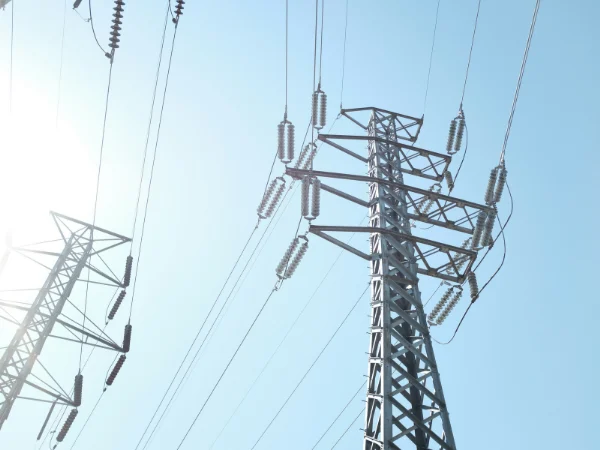
The rapid expansion of artificial intelligence has precipitated a historic surge in electricity demand, forcing a collision between the high-speed growth of the technology sector and the traditional, multi-year timelines of utility infrastructure development. Hyperscalers racing to bring massive AI data centers online are frequently met with a significant bottleneck: the inability of the U.S. power grid to accommodate new, gigawatt-scale loads without extensive physical upgrades. In response to this crisis, Google has selected Camus Energy as a cornerstone participant in its Google for Startups Accelerator: AI for Energy program. The initiative aims to deploy software-based solutions that allow data centers to bypass the "all-or-nothing" approach to grid access, potentially shaving years off the time required to bring new compute capacity online.
The Infrastructure Bottleneck and the Speed-to-Power Crisis
As generative AI models become increasingly sophisticated, the hardware required to train and run them—primarily high-performance GPUs—has driven data center power requirements to unprecedented levels. A typical traditional data center might require 10 to 50 megawatts (MW) of power; however, new AI-focused facilities are frequently requesting 100 MW to over 1,000 MW. This scale of demand often exceeds the capacity of existing local substations and transmission lines.
Under current regulatory and technical frameworks, connecting a new large-scale load to the grid requires an interconnection study and, often, significant "poles and wires" construction. According to data from the Lawrence Berkeley National Laboratory, the average wait time for projects in interconnection queues across the United States has risen to over five years. For hyperscalers, where "time is money," these delays have led some to explore on-site, behind-the-meter generation solutions, including natural gas turbines and small modular reactors. However, utility service remains the preferred long-term solution for the majority of operators due to reliability and cost-efficiency.
Camus Energy, based in California, addresses this bottleneck through its FlexConnect software. The platform utilizes flexible operating limits within existing infrastructure to manage how and when a data center draws power. By allowing a facility to connect under a "flexible" agreement—where the load may be throttled during rare periods of extreme grid stress—utilities can grant access to the grid without waiting for decades-old infrastructure to be physically replaced.
The Google for Startups Accelerator: AI for Energy
Recognizing that AI itself may provide the tools necessary to manage the energy demands it creates, Google launched its 10-week accelerator program on September 8, 2026. The program, which concludes on November 12, 2026, selected 28 energy-focused startups globally, with 12 based in North America. The curriculum is designed to bridge the gap between innovative clean-tech firms and the massive utility and investment networks required to scale their solutions.
The program focuses on three primary pillars: grid modernization, demand flexibility, and clean-tech infrastructure. For Camus Energy, the accelerator provides a platform to refine FlexConnect and demonstrate its efficacy to major utility partners, including Duke Energy, Edison International, and Pacific Gas and Electric (PG&E). These utilities are currently grappling with the dual challenge of meeting AI demand while maintaining grid stability and hitting decarbonization targets.
Chronology of the Grid-AI Integration Effort
The integration of AI into grid management has moved through several distinct phases over the last decade, culminating in the current push for flexible interconnection:
- 2015–2020: The Efficiency Era: Hyperscalers focused on Power Usage Effectiveness (PUE) within the data center, optimizing cooling and server efficiency.
- 2021–2024: The Renewable Surge: Companies committed to 24/7 carbon-free energy (CFE), leading to massive investments in wind, solar, and battery storage.
- 2024–2025: The Interconnection Crisis: The explosion of AI demand outpaced the physical capacity of the grid, leading to the "speed-to-power" conversation and the emergence of software-defined grid management.
- 2026: The Orchestration Era: Programs like the Google for Startups Accelerator mark the transition toward active, software-based orchestration of large-scale loads to protect grid reliability without physical expansion.
Technical Analysis of Flexible Operating Envelopes
The core of Camus Energy’s FlexConnect technology lies in the concept of "operating envelopes." Traditionally, a utility grants a data center a "firm" connection, meaning the grid must be capable of providing 100% of the requested power 100% of the time, even during the hottest day of the year or during equipment failures elsewhere on the system.
FlexConnect changes this paradigm by splitting the power request into "firm" and "conditional" components. David Bailey, a veteran software engineer at Camus Energy with two decades of experience at Google and Amazon, explains that the software monitors the grid in real-time, combining utility data with weather forecasts and machine learning to predict periods of peak demand.

"FlexConnect communicates an ‘operating envelope’ to the data center that helps them comply with their commitment," Bailey noted. This allows the data center to plan its operations—either by utilizing on-site battery storage, deferring non-critical compute jobs (such as model training that is not time-sensitive), or adjusting cooling loads. This software-based orchestration ensures that the local grid remains stable and affordable for all users while still allowing the hyperscaler to access the majority of its needed power years ahead of schedule.
Supporting Data: The Scale of the Challenge
The urgency of these solutions is underscored by projections from the Electric Power Research Institute (EPRI), which suggests that data centers could consume up to 9% of total U.S. electricity generation by 2030, nearly double their current share.
- Interconnection Wait Times: In major hubs like Northern Virginia (Data Center Alley), wait times for new high-voltage connections have occasionally been quoted at 4 to 7 years.
- Cost Savings: Implementing software-based flexible access can reduce the need for immediate capital expenditures (CapEx) on substations, which can cost between $15 million and $50 million per site.
- Grid Capacity Utilization: Most U.S. distribution and transmission lines operate at less than 50% of their thermal capacity for over 90% of the year. Flexible interconnection seeks to utilize this "latent" capacity.
Official Responses and Industry Perspectives
The selection of Camus Energy for the Google program has drawn praise from both the tech and utility sectors. Astrid Atkinson, CEO and co-founder of Camus Energy, emphasized that the program allows hyperscalers to move past the "all-or-nothing" approach. Atkinson, who previously led site reliability engineering at Google, brings a unique perspective on how large-scale compute fleets can be managed as flexible grid assets.
Utility providers such as Duke Energy and PG&E are participating in demonstrations of the FlexConnect technology. For these utilities, the benefit is twofold: they can onboard large, high-revenue customers more quickly, and they gain better visibility into how these massive loads behave, which is critical for long-term planning.
David Bailey highlights that the collaboration is not merely about speed, but about environmental responsibility. By utilizing existing grid infrastructure more efficiently, companies can avoid the construction of "peaker" plants—typically gas-fired turbines that are carbon-intensive and only used during times of high demand.
Broader Impact and Implications for the Global Energy System
The success of flexible interconnection for data centers could serve as a blueprint for other heavy industries, such as green hydrogen production and large-scale electric vehicle (EV) fleet charging. If the "operating envelope" model becomes standard, it could fundamentally change the relationship between the utility and the industrial consumer, moving from a passive provider-customer dynamic to an active, coordinated partnership.
Furthermore, the Google for Startups Accelerator highlights a broader trend: the "virtuous cycle" of AI and energy. While AI is a significant consumer of power, it is also becoming the primary tool for managing the complexity of a modern, decentralized grid. By processing millions of data points from smart meters, weather sensors, and grid hardware, AI-driven platforms like Camus Energy’s can provide the "reliable, scalable intelligence" necessary to keep the lights on in a carbon-free future.
Conclusion and Future Outlook
As the Google for Startups Accelerator: AI for Energy continues through November 2026, the focus will remain on proving that these software solutions are "utility-grade"—meaning they are as reliable as the physical wires they supplement. For Camus Energy, the goal is to establish FlexConnect as a first-class solution for grid reliability across the United States.
The 12 North American startups selected for the program—ranging from grid analytics firms to demand-response specialists—represent a new vanguard in the energy transition. Their success will likely determine whether the U.S. can maintain its lead in the AI revolution without compromising the stability or sustainability of its national power grid. In the "speed-to-power" race, the winner may not be the one who builds the most wires, but the one who writes the most efficient code.
