

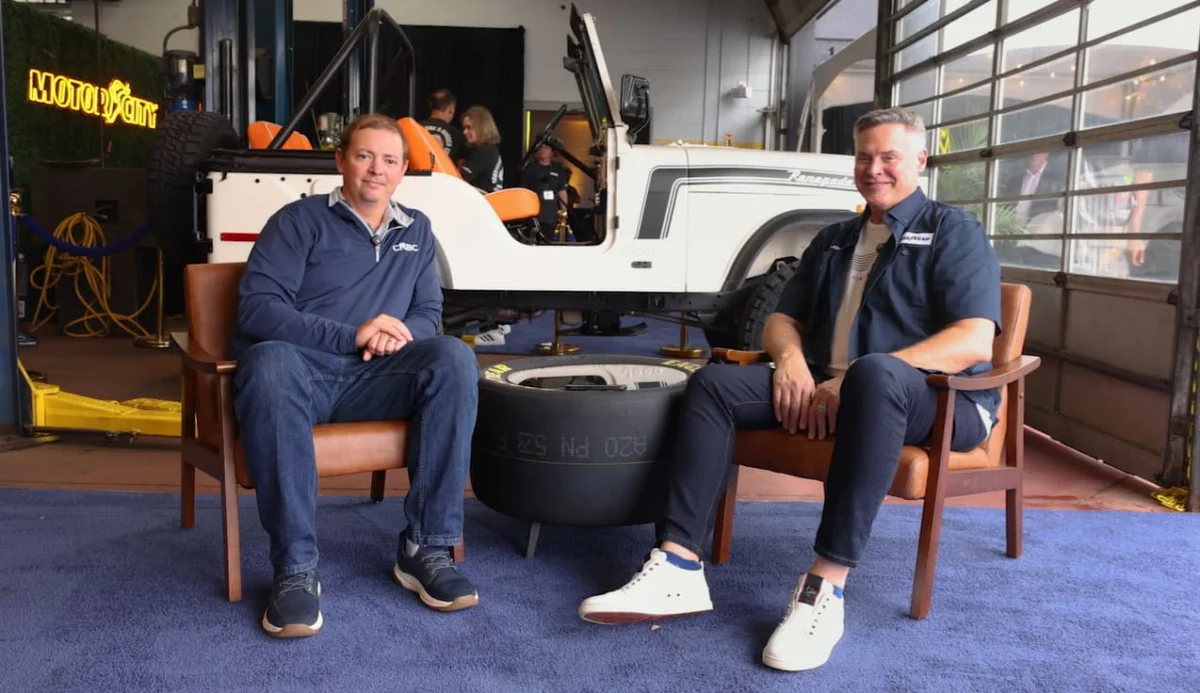
DETROIT – In a bold demonstration of its ongoing transformation, Goodyear Tire & Rubber Co. recently unveiled its "Motor City Garage" concept retail store in Detroit, a symbolic move signaling CEO Mark Stewart’s determination to modernize the venerable tire manufacturer’s image and financial performance. The launch, strategically timed with the annual Woodward Dream Cruise, offered a glimpse into a revitalized customer experience, even as the company grapples with significant financial pressures, including substantial debt, quarterly losses, and persistent market challenges.
A New Retail Experience for the Motor City
The exterior of the revamped Detroit tire shop now features a freshly painted black facade, emblazoned with "Motor City" flanking Goodyear’s iconic winged foot logo. This aesthetic overhaul represents more than just a cosmetic upgrade; it’s a tangible manifestation of Stewart’s vision to make the historically utilitarian and often perceived "dirty business" of tire service more appealing to consumers. Inside, despite the lingering scent of rubber and oil and the familiar sounds of tire changes, the waiting room pulsed with music from a DJ, creating an atmosphere designed to be more inviting and less intimidating for customers. The private event, attended by industry figures and media, underscored Goodyear’s commitment to enhancing the customer journey, aligning with broader efforts to elevate its brand perception.
The choice of Detroit, the heart of the American automotive industry, and the timing alongside the Woodward Dream Cruise, a colossal annual car festival drawing hundreds of thousands of enthusiasts to a 16-mile stretch of Woodward Avenue, was deliberate. It provided an unparalleled opportunity for Goodyear to connect with a vast audience of car owners and enthusiasts, showcasing its commitment to innovation and customer engagement in a high-profile setting. The company further amplified its presence with a rare double-blimp appearance, accompanied by smaller "mini blimps," effectively transforming its aerial ambassadors into dynamic marketing tools at a pivotal moment.
Goodyear Forward: A Strategic Overhaul Underway
At the core of Goodyear’s current trajectory is the "Goodyear Forward" turnaround plan, initiated in response to activist investor Elliott Investment Management revealing a significant stake in the company in 2023. Elliott’s engagement led to the appointment of three new Goodyear board members and prompted a comprehensive strategic and operational review. While the plan was already in motion when Mark Stewart, formerly of Chrysler parent Stellantis, took the helm as CEO in January 2024, he has since imprinted his leadership, deepening its scope with aggressive cost-cutting measures and strategic reorientation.
Stewart, often seen in an unbuttoned navy blue Goodyear technician shirt, symbolizes a hands-on approach to transforming the company. He articulated the plan’s purpose during an interview at the Detroit shop: "We have made so much progress, and when you think about it from the standpoint of the Goodyear Forward program, it was really to get our feet back on the ground towards being the iconic company that we always were." The plan initially targeted a two-year horizon, concluding last year, but its critical initiatives have been extended as Stewart and his executive team continue to chart the future course for the 128-year-old Akron, Ohio-based company. The CEO stated, "At the right time, we will announce that. We continue to press ahead to the next challenges and make sure we get the business in the right space."
Navigating Formidable Financial Headwinds
Despite the strategic ambition and operational shifts, Goodyear’s financial statements reveal a company in the throes of a challenging transformation. The company has been "burning cash" as it restructures, refinances, and works to pay down years of accumulated debt. Capital expenditures were approximately $2 billion combined in 2024 and 2025, with expectations of a further $725 million this year, reflecting significant investments in its operational overhaul. At the end of the second quarter, Goodyear’s debt remained stubbornly above $7 billion.
The financial strain is evident in recent performance metrics. Through the first half of the year, Goodyear reported a net loss of $453 million, with an operating income of $131 million, translating to a meager 1.6% operating margin. A key target under the Goodyear Forward plan was to achieve a 10% operating margin by the end of last year. However, the company fell short, reporting 8.5% in the fourth quarter, leaving the double-digit margin as an outstanding, critical goal. Stewart acknowledged the imperative, stating, "We’re working on getting to that double-digit margin, and we’re working on meaningfully generating cash flow. It’s been a long time since Goodyear’s done that. That we absolutely must do." The company anticipates its cash burn to persist into 2027, albeit at a moderated pace.
Market Challenges and Global Competition

Goodyear’s financial performance is not solely attributable to internal restructuring but also to a complex interplay of external market forces. Since Stewart’s appointment in January 2024, Goodyear’s shares have declined by over 50%, despite the company hitting many of its operational milestones. Stewart is candid about the challenges, citing "geopolitical headwinds," "raw material indexes," and the lingering "hangover from the tariff environment." He also pointed to the expansion of cheaper Chinese products and the cost advantages enjoyed by overseas manufacturers.
Goodyear’s raw material costs are expected to remain relatively flat year-over-year, but the company faces a projected $200 million headwind in the second half of the year, primarily due to escalating commodity costs linked to the ongoing conflict in the Middle East. Argus analyst Bill Selesky, in an August 17 investor note, succinctly summarized the multifaceted difficulties: "Goodyear has faced many big challenges over the past few years, ranging from slower consumer (and commercial) demand, to rising raw material costs, to higher capital expenditures (capex), to low-priced Asian imports (into the U.S.), and, more recently, to trade and tariff legislation. It hasn’t been easy for Goodyear." Analyst consensus, compiled by FactSet, rates Goodyear as a "hold" with an average price target of $7.60, reflecting the cautious outlook for the company’s stock, which closed recently at $6.35, down 27% year-to-date.
Strategic Shift: Premium Tires and Operational Efficiency
A cornerstone of Stewart’s adaptation of the Goodyear Forward plan is a strategic pivot towards the premium tire segment. This involves divesting non-core assets, such as the Dunlop brand, to streamline the portfolio and focus resources on higher-margin products. This year alone, Goodyear plans to launch over 1,600 new products, a significant majority of which are concentrated in these more lucrative, higher-end segments.
This strategic shift is a direct response to intense global competition. Non-U.S. brands, particularly those from Asia like Japan’s Sumitomo and Yokohama, have aggressively expanded their global footprint, offering cheaper products in lower-end segments. Stewart emphasized Goodyear’s refusal to compete at the very bottom of the market: "We are not going to compete against a $6 or $10 converted tire. That’s not who we are as Goodyear," referring to the manufacturing cost required to transform raw materials into a finished tire. This highlights a deliberate choice to differentiate through quality, innovation, and brand value rather than engaging in a race to the bottom on price.
Operational efficiency is another critical component of the turnaround. The planned closure of a plant in Fayetteville, North Carolina, next year, though a difficult decision, is projected to significantly improve the Americas segment’s operating income by $270 million annually. Stewart acknowledged the gravity of such decisions: "We had to take a very difficult decision, but a necessary one to announce the closure of our Fayetteville, North Carolina facility. We absolutely didn’t take that lightly, but we just didn’t have a pathway to be competitive out of that facility."
Regional Performance and The Power of the Blimp
While Goodyear’s U.S. operations have been a primary drag on its financials, the company’s Asia-Pacific region stands out as a bright spot. In the second quarter, this segment reported an operating income of $63 million, achieving an impressive 12.7% operating margin, demonstrating the potential for strong performance in certain markets despite global challenges. This regional success offers a model and motivation for improving performance in other key markets.
Beyond financial restructuring and product strategy, the Goodyear Forward plan places renewed emphasis on marketing and advertising to reconnect with consumers and reinforce the brand’s enduring legacy. A significant, and highly visible, part of this strategy involves leveraging the company’s iconic Goodyear blimps. These aerial giants, which have served as mobile advertisements for over a century, are now being actively integrated into a modern marketing framework.
Stewart noted, "The blimp team and the marketing team have really embraced it. So we do a lot of activation around the blimp to literally sell tires." The company is utilizing social media platforms to promote its airships and their direct connection to tire sales, even launching "buy to fly" campaigns that offer tire retailers and consumers the chance to win flights aboard the blimps. This initiative seeks to transform the blimps from mere brand symbols into active sales drivers, embodying Stewart’s philosophy: "We’ve always made the tires worth bragging about. We’re just reminding people now, and that ties into our marketing and advertising as well."
In conclusion, Goodyear Tire & Rubber Co. is undergoing a profound transformation under Mark Stewart’s leadership. From revitalizing its retail footprint with concepts like the "Motor City Garage" to a strategic pivot towards premium products and aggressive cost-cutting, the company is systematically addressing its long-standing challenges. While significant financial headwinds and intense global competition persist, the "Goodyear Forward" plan represents a determined effort to restore the company’s iconic status, improve its financial health, and secure its position in an evolving global tire market. The journey is arduous, but the strategic direction is clear: to be a leader in quality, innovation, and customer experience, rather than merely competing on price.
