

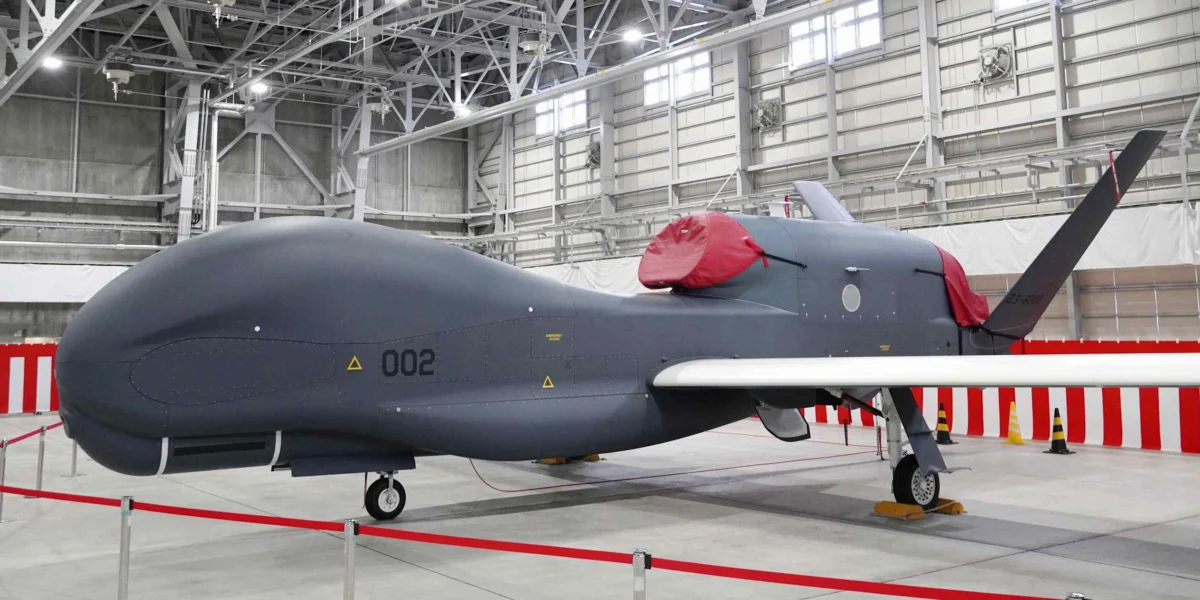
TOKYO – The Japan Air Self-Defense Force (JASDF) confirmed on Tuesday, September 15, 2026, that one of its RQ-4 Global Hawk unmanned reconnaissance aircraft lost communication and is presumed to have crashed off the coast of Tottori Prefecture in western Japan. The incident occurred during a routine operational sortie, prompting an immediate search and rescue operation and raising questions about the operational integrity of Japan’s advanced surveillance capabilities.
The JASDF announced the loss of contact at approximately 16:10 JST, with the aircraft going offline while operating in airspace over the Sea of Japan. While a formal crash confirmation is pending the recovery of wreckage, the sustained loss of communication and absence of any further telemetry data strongly suggest a catastrophic event. The exact cause of the communication breakdown remains under investigation, but initial assessments are not ruling out any possibilities, including mechanical failure, environmental factors, or external interference.
This incident marks a significant setback for Japan’s strategic surveillance program, which heavily relies on the high-altitude, long-endurance capabilities of the Global Hawk fleet. The RQ-4, manufactured by Northrop Grumman, is designed for broad-area maritime surveillance, intelligence gathering, and reconnaissance missions, providing critical situational awareness over vast oceanic territories. Japan acquired these advanced drones to bolster its defense posture in the increasingly complex Indo-Pacific region, particularly in monitoring activities within its vast exclusive economic zone and in response to regional security challenges.
Chronology of the Incident
The events leading up to the confirmed loss of communication began on Tuesday afternoon. The Global Hawk, designated for a specific reconnaissance mission, departed from its operational base. Details regarding the precise nature and objective of the mission have not been fully disclosed by the JASDF, citing security protocols.
- Early Afternoon, September 15, 2026: The RQ-4 Global Hawk begins its assigned operational sortie.
- Approximately 16:00 JST: Ground control stations begin to register anomalies in communication with the aircraft.
- 16:10 JST: JASDF officially confirms a complete loss of communication with the Global Hawk drone.
- 16:10 JST onwards: Search and rescue assets are immediately mobilized. Maritime Self-Defense Force (MSDF) vessels and aircraft, along with the Japan Coast Guard, are dispatched to the presumed crash area off the Tottori coast.
- 17:00 JST (estimated): Initial reports from search teams indicate no immediate visual confirmation of wreckage, but the search area is being systematically covered.
- 18:00 JST: The JASDF issues a public statement acknowledging the loss of communication and the presumption of a crash.
- 20:04 JST: The article is updated to reflect the ongoing search and investigation.
The JASDF has not provided specific details about the operational altitude or flight path of the drone at the time of the incident, citing ongoing investigations. However, Global Hawks typically operate at altitudes exceeding 60,000 feet, allowing them to cover extensive areas without being detected by most conventional air defense systems. This high operational ceiling also means that any potential debris field could be dispersed over a significant area, complicating recovery efforts.
Background: Japan’s Global Hawk Fleet and Strategic Importance
Japan’s acquisition of the RQ-4 Global Hawk marked a significant enhancement of its intelligence, surveillance, and reconnaissance (ISR) capabilities. The decision to procure these drones was driven by several strategic imperatives:
- Regional Security Environment: The increasing assertiveness of China in the East China Sea and the persistent threats from North Korea necessitate continuous monitoring of maritime activities, missile developments, and potential incursions. The Global Hawk provides an unparalleled ability to gather intelligence on these evolving threats.
- Vast Maritime Domain: Japan is an island nation with an expansive exclusive economic zone (EEZ), which covers a vast amount of ocean. The Global Hawk’s endurance and wide-area coverage are crucial for monitoring fishing activities, illegal operations, and potential military movements within this immense territory.
- Technological Advancement: The integration of the Global Hawk represents Japan’s commitment to leveraging cutting-edge technology in its defense strategy, aiming to maintain a qualitative edge in regional security.
Japan currently operates a fleet of three RQ-4 Block 30I Global Hawk drones, acquired through a foreign military sales agreement with the United States. These aircraft are based at the JASDF’s Misawa Air Base in Aomori Prefecture, northern Japan. The drones are equipped with advanced sensor suites, including synthetic aperture radar (SAR) and electro-optical/infrared (EO/IR) sensors, allowing them to penetrate cloud cover and operate effectively in various weather conditions.
The operational deployment of the Global Hawk has been instrumental in Japan’s efforts to enhance its maritime domain awareness. They have been frequently utilized for monitoring Chinese naval movements in the East China Sea, including the Miyako Strait, and for tracking North Korean missile launches and related activities. The loss of even one unit from such a limited and specialized fleet represents a considerable blow to its operational capacity.
Official Responses and Investigation
The Ministry of Defense and the JASDF have stated that all efforts are being concentrated on the search and recovery operation. A spokesperson for the Ministry of Defense commented, "Our primary concern at this moment is to locate the aircraft and determine the circumstances surrounding the loss of communication. We are working closely with all relevant agencies to conduct a thorough investigation."
While official statements have been cautious, the incident is likely to trigger a comprehensive review of the Global Hawk’s operational procedures, maintenance protocols, and communication systems. The JASDF will undoubtedly be scrutinizing flight logs, sensor data, and any available communication records leading up to the loss of contact.
The United States, as the manufacturer and primary operator of the Global Hawk, may also be involved in the investigation, offering technical expertise and support. The close defense relationship between Japan and the U.S. often includes collaborative efforts in investigating aviation incidents involving advanced military hardware.
Potential Implications and Analysis
The presumed crash of the Global Hawk drone carries several significant implications for Japan’s defense posture and its broader strategic objectives:
- Operational Gaps: The temporary or permanent loss of an operational Global Hawk will create a gap in Japan’s high-altitude surveillance capabilities. This could necessitate increased reliance on other ISR assets, such as P-3C Orion maritime patrol aircraft, E-2D Advanced Hawkeye airborne early warning and control aircraft, or potentially increasing the tempo of operations for its remaining Global Hawks.
- Technological Scrutiny: The incident will inevitably lead to heightened scrutiny of the reliability and robustness of the Global Hawk system, particularly in the challenging operational environment of the Indo-Pacific. While the Global Hawk has a generally strong safety record, any loss raises questions about the technology’s vulnerability to unforeseen issues.
- Economic and Financial Impact: The Global Hawk is an extremely expensive platform, with each aircraft costing hundreds of millions of dollars. The loss of a drone represents a substantial financial investment lost, and the cost of any recovery operations, investigations, and potential replacements will add to this burden.
- Public Perception and Confidence: While the public may not have direct visibility into the daily operations of the Global Hawk, such incidents can subtly impact perceptions of military preparedness and the effectiveness of advanced defense technologies.
- Future Procurement and Modernization: Depending on the cause of the incident and the findings of the investigation, this event could influence future decisions regarding the procurement of similar unmanned systems or the upgrade of existing platforms. Japan has also been exploring the development of its own indigenous unmanned aerial vehicles (UAVs) for various roles, and this incident might accelerate those efforts.
The Sea of Japan, where the drone is believed to have crashed, is a strategically vital waterway that connects Japan with the Korean Peninsula and mainland Asia. It is also an area where regional military activities, including naval exercises and missile tests, are frequently observed. The Global Hawk’s role in monitoring these activities makes its operational availability crucial for maintaining regional stability and Japan’s security interests.
The JASDF is known for its high operational standards and its commitment to safety. The thoroughness of the ongoing investigation will be critical in understanding the root cause of this incident and implementing measures to prevent recurrence. The recovery of the aircraft’s flight recorders, if found, will be paramount to this process, providing invaluable data on the final moments of the flight.
As the search continues, the focus remains on locating any debris that can shed light on the cause of the incident. The outcome of the investigation will not only impact the JASDF’s operational planning but also contribute to the broader understanding of the performance and challenges associated with operating advanced unmanned aerial systems in complex geopolitical environments. The strategic importance of the Global Hawk to Japan’s defense strategy means that its operational status is closely watched, and this incident will undoubtedly be a significant point of discussion within defense circles in the coming weeks and months.
