

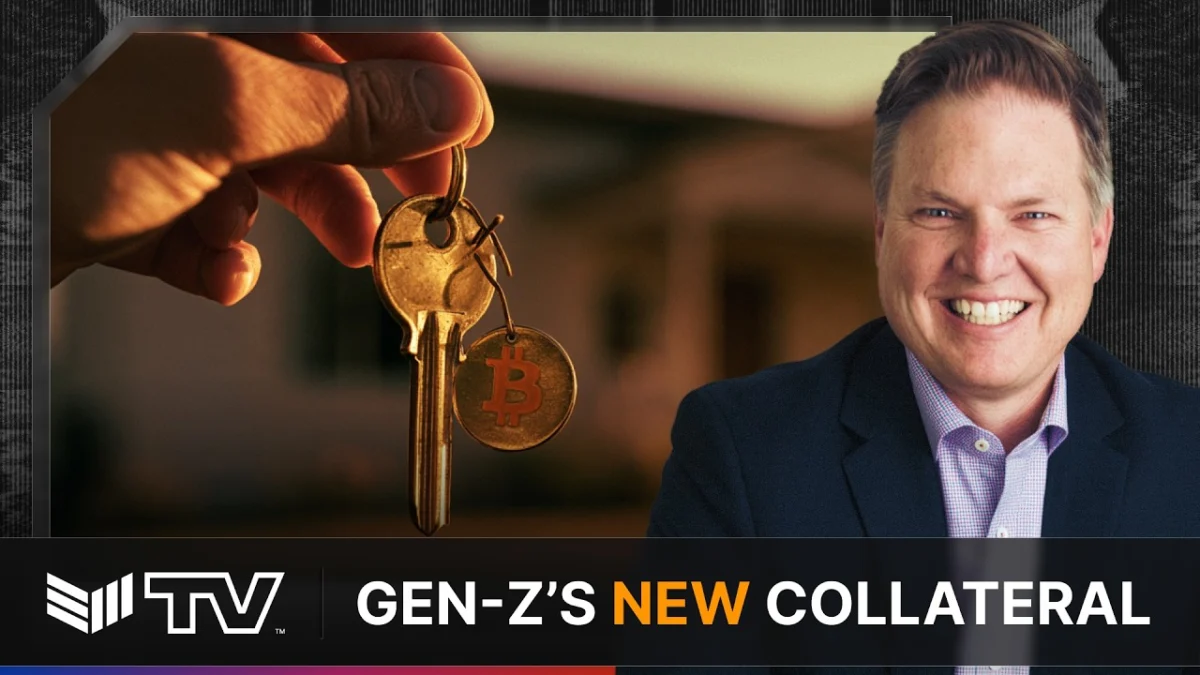
The landscape of wealth accumulation is undergoing a significant shift, particularly for Generation Z, as traditional avenues like homeownership become increasingly out of reach. With less than 5% of new homebuyers belonging to this demographic, a fundamental reevaluation of how young adults build and leverage assets is underway. Hunter Albright, representing SALT Lending, a company at the forefront of innovative financial solutions, has highlighted this critical juncture, drawing a direct connection between the escalating challenge of housing affordability and the emerging role of Bitcoin as a viable collateral asset. This paradigm shift is enabling younger generations to access significant financial leverage for major life milestones, such as down payments on homes, without the traditional necessity of liquidating their Bitcoin holdings for extended periods.
Albright’s insights, shared in a recent discussion, underscore a burgeoning trend: borrowing against Bitcoin. This method offers a compelling alternative to traditional financing, especially for those who have invested in Bitcoin and are hesitant to sell their digital assets, which they view as a long-term store of value. The conversation delves into the implications of this trend, touching upon the evolving recognition of Bitcoin by established financial entities like Fannie Mae and Freddie Mac, SALT Lending’s strategic five-year loan terms, and the practical realities of a lifestyle increasingly powered by Bitcoin as a collateral asset.
The Housing Affordability Crisis and Gen Z’s Dilemma
The stark reality for many in Generation Z is that the dream of homeownership, a cornerstone of wealth building for previous generations, is becoming an increasingly distant aspiration. Median home prices across many developed nations have outpaced wage growth significantly over the past two decades. For instance, in the United States, the median home price has seen substantial increases, while the average wage has not kept pace. This widening gap has placed homeownership firmly out of reach for a large segment of younger adults who are entering the workforce and attempting to establish financial stability.
This affordability crisis forces Gen Z to seek alternative wealth-building strategies. While traditional investments like stocks and bonds remain an option, a growing number of younger individuals have gravitated towards digital assets, with Bitcoin emerging as a dominant force. However, the challenge then becomes how to leverage these digital assets for tangible, real-world purchases, such as a down payment on a home, without sacrificing their long-term investment potential.
Bitcoin as Collateral: A New Frontier in Lending
SALT Lending is actively participating in shaping this new financial frontier by facilitating loans against Bitcoin holdings. This model allows individuals to retain ownership of their Bitcoin while using its value as collateral for a loan. The primary advantage for borrowers is the ability to access liquidity without selling their cryptocurrency. This is particularly appealing for Bitcoin holders who believe in its long-term appreciation and wish to avoid capital gains taxes associated with selling, as well as preserve their stake in what they perceive as a revolutionary financial technology.
Traditionally, securing a loan with alternative assets has been complex and often involves high-interest rates or stringent requirements. However, the increasing maturity of the cryptocurrency market and the development of specialized lending platforms like SALT are changing this narrative. Albright’s emphasis on Bitcoin as collateral addresses the core need for accessibility and flexibility for a generation that has embraced digital finance.
The Mechanics of Bitcoin-Backed Loans
The process typically involves a borrower pledging a certain amount of Bitcoin as collateral to a lender. The lender then issues a loan, often in fiat currency (like USD or EUR), based on a percentage of the Bitcoin’s market value, known as the loan-to-value (LTV) ratio. This LTV is a crucial factor, as it dictates how much can be borrowed against the collateral and also provides a buffer for the lender against price volatility.
SALT Lending’s offering of five-year loan terms represents a significant development. This extended term provides borrowers with a more manageable repayment schedule, akin to traditional mortgages, allowing them to plan their finances over a longer horizon. This contrasts with many short-term crypto-backed loans that often come with higher repayment pressures. The ability to secure a substantial loan for a down payment, with a repayment period that aligns with typical mortgage durations, directly addresses the barriers Gen Z faces in entering the housing market.
For example, if a borrower has $100,000 worth of Bitcoin and a lender offers an LTV of 50%, they could potentially borrow up to $50,000. This borrowed capital could then be used as a down payment on a property, while the original $100,000 worth of Bitcoin remains in their digital wallet, potentially appreciating in value.
Institutional Recognition: A Growing Endorsement
A key indicator of the evolving acceptance of Bitcoin as a financial asset is its increasing recognition by established financial institutions. Albright mentions the acknowledgment of Bitcoin by Fannie Mae and Freddie Mac. While this recognition may not immediately translate into direct mortgage lending backed by Bitcoin for consumers, it signifies a growing understanding and integration of digital assets within the broader financial ecosystem.
Fannie Mae and Freddie Mac, government-sponsored enterprises that play a crucial role in the U.S. housing market, are beginning to explore and develop frameworks for incorporating digital assets into their operations. This could eventually lead to more streamlined processes for mortgages involving borrowers who have utilized crypto-backed loans for down payments, or even direct integration of digital assets in the future. This institutional embrace, however gradual, lends credibility to Bitcoin as a legitimate asset class and can foster greater confidence among both borrowers and lenders.
The Practicalities of a Bitcoin-Powered Life
Albright’s discussion touches upon what a "Bitcoin-powered life" truly looks like in practice. Beyond just holding Bitcoin, it involves strategically utilizing its value to achieve life goals that were previously unattainable due to financial constraints. For Gen Z, this often means bridging the gap to homeownership.
Imagine a scenario: A young professional has diligently invested in Bitcoin over several years, accumulating a significant amount. Instead of waiting years to save a traditional down payment, they can now leverage their Bitcoin holdings through a service like SALT Lending. They secure a loan for a substantial portion of their down payment, allowing them to purchase a home much sooner. Their Bitcoin continues to be held, and they make regular loan payments. If the value of their Bitcoin increases, they have benefited from the appreciation. If it decreases, the LTV ratio provides a safety net, though they would need to be mindful of margin calls if the value drops significantly.
This approach democratizes access to significant financial instruments and empowers individuals who have adopted digital assets to participate more fully in traditional wealth-building opportunities. It represents a fusion of the decentralized ethos of cryptocurrency with the established systems of real estate and lending.
Broader Implications and Future Outlook
The trend highlighted by Hunter Albright has far-reaching implications:
- Democratization of Finance: It offers a pathway for individuals with limited traditional financial history but significant Bitcoin holdings to access capital and achieve major financial goals.
- Shift in Asset Allocation: It could lead to a more diversified approach to wealth building, where digital assets are not just held but actively used as leverage.
- Innovation in Lending: It pushes the boundaries of traditional lending, forcing established financial institutions to adapt and innovate in response to evolving consumer needs and technological advancements.
- Potential for Increased Homeownership: By alleviating the down payment barrier, Bitcoin-backed loans could contribute to increased homeownership rates among younger demographics, even in the face of high property prices.
However, several factors warrant careful consideration. The volatility of Bitcoin remains a significant risk. Borrowers must have a thorough understanding of LTV ratios, potential margin calls, and the possibility of losing their collateral if the market experiences sharp downturns. Regulatory landscapes surrounding cryptocurrency are also still evolving, which could impact the long-term stability and accessibility of such lending products.
Despite these considerations, the emergence of platforms like SALT Lending and the growing interest in Bitcoin as collateral signal a fundamental shift in how wealth is perceived and utilized. For Generation Z, grappling with unprecedented housing affordability challenges, this innovative approach may well represent a critical tool in their pursuit of financial security and long-term wealth accumulation. As the financial world continues to embrace digital transformation, the integration of cryptocurrencies into mainstream financial practices is likely to accelerate, creating new opportunities and reshaping traditional economic paradigms.
Disclaimer: The views and opinions expressed in this article are those of the participants and do not necessarily reflect the official policy or position of BTC Inc., Bitcoin Magazine, or any affiliated entities. This content is provided for informational and educational purposes only and should not be construed as investment, legal, tax, or accounting advice. Nothing contained in this article constitutes a solicitation, recommendation, endorsement, or offer to buy or sell any securities or financial instruments. Readers should consult their own advisors before making financial or business decisions.
