


Bitcoin’s remarkable journey from an experimental digital asset to a globally recognized financial instrument is once again being highlighted this St. Patrick’s Day. On March 17, 2012, the cryptocurrency was trading at a modest price of approximately $5.34. Thirteen years later, as of March 17, 2025, Bitcoin has surged to trade near $75,000, marking an astronomical expansion driven by increasing demand and its inherent scarcity. This trajectory, punctuated by dramatic price swings and evolving market dynamics, offers a compelling case study in the evolution of digital assets and their integration into the broader financial landscape.
The early years of Bitcoin were characterized by a nascent market, marked by extreme volatility and limited liquidity. In 2013, for instance, Bitcoin experienced a meteoric rise, climbing from under $50 at the beginning of the year to surpass $600 before undergoing a significant correction to below $300 by 2015. These cyclical patterns of rapid ascent followed by sharp pullbacks became a hallmark of Bitcoin’s early trading history, often deterring more risk-averse investors while attracting those with a higher tolerance for volatility.
These cycles have repeated and amplified over time, with each major rally often followed by a substantial correction. A significant milestone was reached in 2017 when Bitcoin crossed the $1,000 mark for the first time. This event triggered further acceleration, pushing prices to new all-time highs before another downturn ensued. The subsequent years saw gradual rebuilding and increasing interest, culminating in 2021, when Bitcoin’s price soared past $50,000. This period marked a pivotal shift as institutional participation began to take root, lending greater legitimacy and stability to the asset class. Although pullbacks in 2022 and 2023 tested investor conviction, the underlying long-term trend of growth remained intact, demonstrating a growing resilience in the face of market headwinds.
More recently, the market witnessed another significant surge. In late 2025, Bitcoin’s price ascended to an all-time high exceeding $125,000, a figure that would have been unimaginable to early adopters. While a subsequent pullback brought the price down to around $60,000 earlier this year (2026), this retracement is viewed by many analysts as a natural part of the market cycle, rather than a fundamental weakening of Bitcoin’s value proposition. Each of these cycles, despite their inherent turbulence, has played a crucial role in attracting new participants, refining market infrastructure, and ultimately contributing to the development of a more robust and mature asset.
A Chronology of Bitcoin’s St. Patrick’s Day Performance
To fully appreciate Bitcoin’s ascent, examining its St. Patrick’s Day price points provides a unique historical lens:
- 2012: $5.34
- 2013: $47
- 2014: $630
- 2015: $290
- 2016: $417
- 2017: $1,180
- 2018: $8,321
- 2019: $4,047
- 2020: $5,002
- 2021: $56,825
- 2022: $41,140
- 2023: $26,876
- 2024: $68,845
- 2025: $83,223 (projected based on late 2025 surge)
- 2026: $74,590 (projected based on early 2026 pullback)
This data, compiled by Bitcoin Magazine, vividly illustrates the exponential growth and inherent volatility that have defined Bitcoin’s history. The leap from a mere $5 in 2012 to over $75,000 in 2025 is a testament to its disruptive potential and the increasing global adoption it has garnered.

Growing Institutional Access Amidst Fixed Supply
One of the most transformative developments propelling Bitcoin’s recent surge is the significant expansion of institutional access. The approval and subsequent launch of spot Bitcoin Exchange-Traded Funds (ETFs) in the United States have opened a direct and regulated pathway for substantial pools of capital to enter the market. These financial products have witnessed consistent and robust inflows, with some single-day totals exceeding $500 million. This influx underscores strong demand from a diverse range of institutional players, including asset managers, pension funds, and even traditional retail brokerage accounts. The net effect is a steady accumulation of Bitcoin within regulated investment vehicles, signaling a maturation of the asset class and its acceptance by established financial institutions.
As more capital flows through these regulated channels, the available supply of Bitcoin on exchanges has demonstrably tightened. This reduced availability, coupled with sustained or increasing demand, naturally exerts upward pressure on the price. The fundamental economic principle of supply and demand is amplified by Bitcoin’s unique monetary policy.
Bitcoin’s protocol enforces a hard cap of 21 million coins, a fixed supply that cannot be increased, regardless of demand conditions. This inherent scarcity is further reinforced through programmed events known as "halvings." Halving events, occurring approximately every four years, reduce the rate at which new Bitcoins are created. The most recent halving, which took place in April 2024, cut the block reward from 6.25 BTC to 3.125 BTC per block. This effectively halves the number of new coins entering circulation each day, further exacerbating the scarcity dynamic. Historically, these supply shocks have often preceded significant upward price movements, as a reduced influx of new supply meets persistent or growing demand.
Corporate and Traditional Finance Embrace
Beyond the realm of speculative trading and institutional investment, Bitcoin has also captured the attention of corporations and policymakers, signaling a broader integration into the global economic framework. A growing number of public companies have continued to add Bitcoin to their balance sheets, increasingly viewing it as a strategic reserve asset rather than merely a speculative play.
Among the most prominent proponents of this strategy is Strategy (MSTR), a company that has actively accumulated Bitcoin under the leadership of its executive chairman, Michael Saylor. In a recent significant move, Strategy purchased an additional 22,337 Bitcoin for approximately $1.57 billion, continuing its aggressive corporate treasury strategy. This latest acquisition brings the firm’s total holdings to an impressive 761,068 Bitcoin. Strategy reported that its cumulative Bitcoin holdings were acquired for roughly $57.61 billion, at an average price of approximately $75,696 per coin. This substantial stash represents over 3.4% of Bitcoin’s fixed 21 million supply, solidifying Strategy’s position as the largest corporate holder of the digital asset. This strategy reflects a growing conviction among some corporate leaders that Bitcoin can serve as a hedge against inflation and a store of value in an increasingly uncertain economic environment.
The increasing adoption by companies like Strategy highlights a shift in how Bitcoin is perceived within the corporate world. It is moving from a fringe asset to a potential component of treasury management, akin to gold or other precious metals. This trend, if it continues to gain momentum, could lead to further demand and a more stable price environment for Bitcoin.
Evolving Market Structure and Long-Term Conviction
Bitcoin’s market structure is undergoing a significant transformation, with ownership increasingly consolidating among long-term holders, institutional investors, and corporate treasuries. This shift is gradually reducing the influence of short-term speculation and contributing to an improved overall stability, even as periodic volatility remains a characteristic of the market.
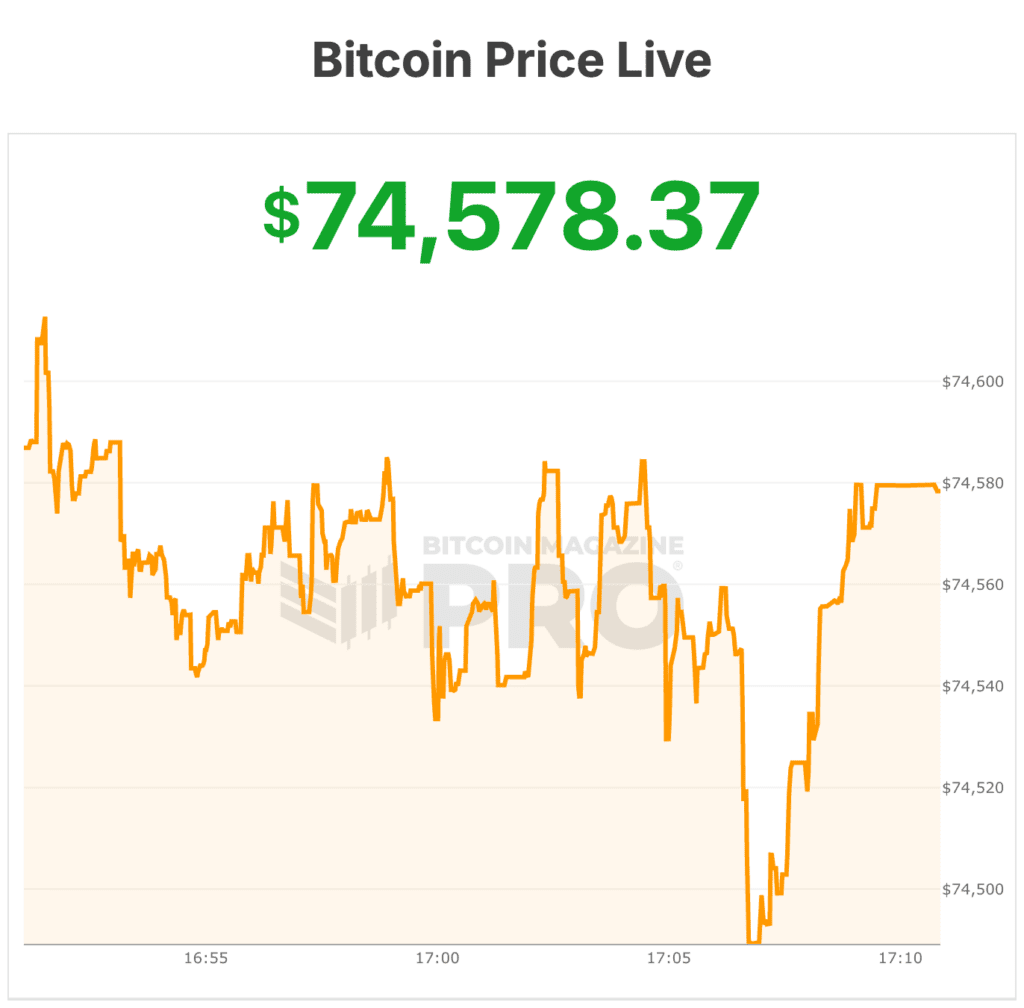
The resilience of Bitcoin has been evident through recent market turbulence. Steady institutional demand and continuous accumulation by long-term investors have provided a strong support base for prices. Analysts are observing a clear return of large-scale buyers, with substantial inflows into ETFs and robust spot market demand helping to push prices back above the $70,000 mark after periods of range-bound trading.
On-chain data further supports the narrative of institutional conviction holding firm. Despite experiencing significant drawdowns from its late 2025 peak, ETF outflows have remained relatively limited when compared to the substantial inflows seen earlier. This suggests that investors are largely maintaining their positions rather than exiting the market in large numbers. This growing base of committed capital reflects a broader trend: institutional investors entering the market today often exhibit high conviction, frequently allocating capital with a long-term perspective rather than reacting impulsively to short-term price fluctuations.
Further research underscores the expanding role of ETFs and corporate treasury strategies in reshaping Bitcoin’s ownership landscape. Institutional vehicles now account for a significant portion of the circulating supply, while a substantial percentage of Bitcoins remain inactive and held by long-term owners, reinforcing their dominant influence on market dynamics.
Simultaneously, on-chain data suggests that the market may be in a phase conducive to accumulation, historically associated with the later stages of a bear market or the early stages of a bull market. Analysts indicate that current conditions point towards continued consolidation, with long-term investors strategically positioning themselves for the anticipated next cycle of growth. This strategic accumulation by informed participants, coupled with the structural shifts towards institutional adoption, paints a picture of a maturing asset class that is increasingly integrated into the global financial system. The journey from a mere $5 on St. Patrick’s Day in 2012 to a significant financial instrument today is a powerful illustration of innovation, adaptation, and the enduring appeal of scarcity in the digital age.
This article was written by Micah Zimmerman, a news reporter for Bitcoin Magazine.
