

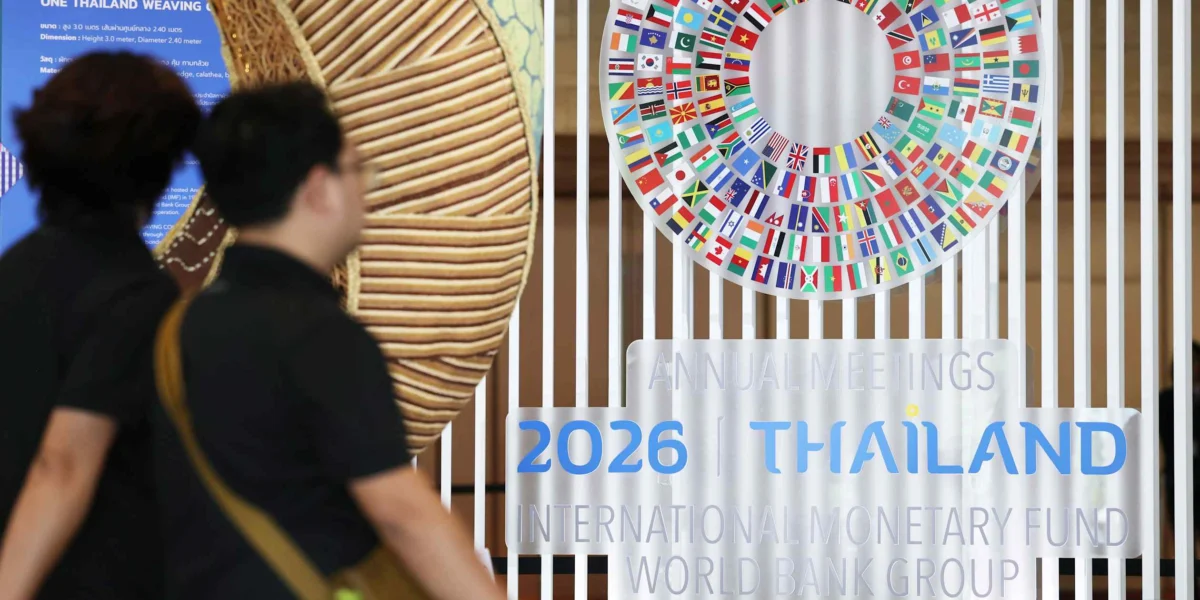
BANGKOK — Finance officials and central bankers from across the globe are converging in Bangkok this week for the highly anticipated annual meetings of the International Monetary Fund (IMF) and the World Bank, commencing Monday. The multilateral gatherings, a cornerstone of international economic dialogue, are poised to address a formidable agenda dominated by persistent inflation, the transformative potential and challenges of artificial intelligence (AI), and the escalating urgency of climate change. These discussions unfold against a backdrop of an increasingly complex and interconnected global economy, marked by geopolitical fragmentation, evolving trade dynamics, and the lingering effects of recent global shocks.
The selection of Bangkok as the host city for the 2026 meetings marks a significant return of the joint assembly to Southeast Asia, underscoring the region’s growing economic influence and its role as a critical hub for global trade and finance. This strategic choice also highlights the commitment of international financial institutions to engage with emerging markets and developing economies, fostering a more inclusive dialogue on global economic governance. The last time these pivotal meetings were held in the region was in 2009, when Singapore hosted the discussions. The 2026 event promises to be a crucial juncture for setting the course of global economic policy in the years ahead.
The Trifecta of Global Economic Concerns: Inflation, AI, and Climate
At the forefront of the delegates’ minds will be the persistent challenge of inflation, a specter that has haunted economies worldwide since the post-pandemic recovery. While some nations have seen inflation rates moderate, many remain vigilant, balancing the need to control price increases with the risk of stifling economic growth through overly aggressive monetary policy. The IMF’s latest World Economic Outlook, released in October, is expected to provide updated forecasts and detailed analyses of inflation trends across major economies. Data from the IMF’s September 2026 report indicated that global inflation, while down from its 2023 peak, was projected to remain above central bank targets for a significant portion of developed economies through 2027. The discussions will likely delve into the effectiveness of current monetary tightening cycles, the role of supply-side factors, and the potential for coordinated international responses to manage inflationary pressures without triggering widespread recessions.
The rapid advancement and integration of Artificial Intelligence into the global economy present another critical area of focus. Beyond its potential to boost productivity and innovation, AI raises profound questions about its impact on labor markets, income inequality, and the very nature of economic competitiveness. Central bankers and finance ministers will be grappling with how to harness AI’s benefits while mitigating its risks, including potential job displacement, the exacerbation of existing inequalities, and the need for new regulatory frameworks. Reports from leading technology research firms suggest that AI-driven automation could reshape a significant percentage of jobs globally within the next decade. The discussions in Bangkok are expected to explore policy recommendations for fostering responsible AI development, ensuring equitable access to its benefits, and preparing workforces for an AI-augmented future. This includes exploring the implications for education, skills development, and social safety nets.
The existential threat of climate change and the imperative for a green transition remain a central and increasingly urgent theme. The IMF and World Bank have long been at the forefront of advocating for climate action and mobilizing finance for adaptation and mitigation efforts. This year’s meetings will likely see renewed calls for increased investment in renewable energy, sustainable infrastructure, and climate-resilient development. Discussions will also focus on the financial implications of climate change, including the management of climate-related risks for financial institutions, the development of green financial instruments, and the equitable distribution of the costs and benefits of decarbonization. The latest reports from the Intergovernmental Panel on Climate Change (IPCC) have underscored the narrowing window for effective action, adding a layer of urgency to these deliberations. The delegates will be considering mechanisms to accelerate the flow of climate finance, particularly to developing countries, and exploring innovative solutions for carbon pricing and sustainable land use.
A Glimpse into the Schedule and Key Participants
The annual meetings typically span several days, featuring a packed schedule of plenary sessions, panel discussions, seminars, and bilateral meetings. High-profile figures expected to address the delegates include the Managing Director of the IMF, Kristalina Georgieva, and the President of the World Bank, Ajay Banga, alongside finance ministers and central bank governors from the G20 nations, as well as representatives from over 190 member countries. The meetings serve as a critical platform for these leaders to exchange views, forge consensus on global economic challenges, and outline strategies for collective action.
The agenda will likely include dedicated sessions on the global economic outlook, debt sustainability in low-income countries, the future of international trade, and the role of digital currencies. The IMF’s role in providing financial assistance and policy advice to member countries facing economic difficulties will also be a prominent topic, especially in light of ongoing geopolitical tensions and their impact on global supply chains and commodity prices. The recent surge in geopolitical instability in several regions has led to increased volatility in energy and food markets, exacerbating inflationary pressures and creating new vulnerabilities for developing economies.
Data Points Shaping the Discussions
Several key economic indicators and projections will undoubtedly inform the discussions in Bangkok. For instance, global growth forecasts, which have been subject to frequent revisions in recent years, will be a central point of analysis. The IMF’s projections for global GDP growth in 2027, likely to be unveiled during the meetings, will be closely scrutinized for signs of resilience or potential slowdown. Similarly, figures on global debt levels, particularly sovereign debt, are expected to be a major concern, with particular attention paid to the debt burdens of emerging market and developing economies. Data on foreign direct investment (FDI) flows and trade balances will also provide insights into the health of the global economy and the effectiveness of current economic policies.
The discourse on inflation will be heavily influenced by real-time data on consumer price indices (CPI), producer price indices (PPI), and wage growth across major economies. The effectiveness of monetary policy tools, such as interest rate hikes and quantitative tightening, will be evaluated against these metrics. In the realm of AI, discussions will be informed by data on AI investment, adoption rates across sectors, and projected impacts on productivity and employment. The World Bank’s reports on digital transformation and its economic implications will likely be a key reference point. For climate change, data on greenhouse gas emissions, global temperature rise, the economic costs of extreme weather events, and the deployment of renewable energy capacity will be central to the policy debates. International commitments to climate finance and their fulfillment will also be under scrutiny.
Reactions and Anticipated Outcomes
While official statements from delegates are typically released after the meetings, the lead-up to the Bangkok summit has seen a flurry of preparatory remarks and analyses from various stakeholders. Representatives from the private sector, civil society organizations, and academic institutions often use this period to submit policy briefs and advocate for specific agendas. It is anticipated that international credit rating agencies will be closely monitoring the outcomes of the meetings, as policy commitments and potential financial assistance packages can influence sovereign creditworthiness.
The discussions are expected to yield a series of communiqués and policy recommendations from the IMF and World Bank, outlining a roadmap for addressing the identified global economic challenges. These outcomes could include proposals for enhancing international financial stability, mobilizing private capital for sustainable development, and strengthening global cooperation on issues such as tax policy and financial regulation. The meetings may also see announcements of new lending facilities or initiatives aimed at supporting developing countries in their efforts to navigate economic headwinds and achieve sustainable growth. The success of the Bangkok meetings will ultimately be measured by the tangible progress made in fostering a more stable, inclusive, and sustainable global economic future. The convergence of global leaders in this vibrant Asian metropolis presents a critical opportunity to chart a course through the complexities of the 21st-century global economy.
