

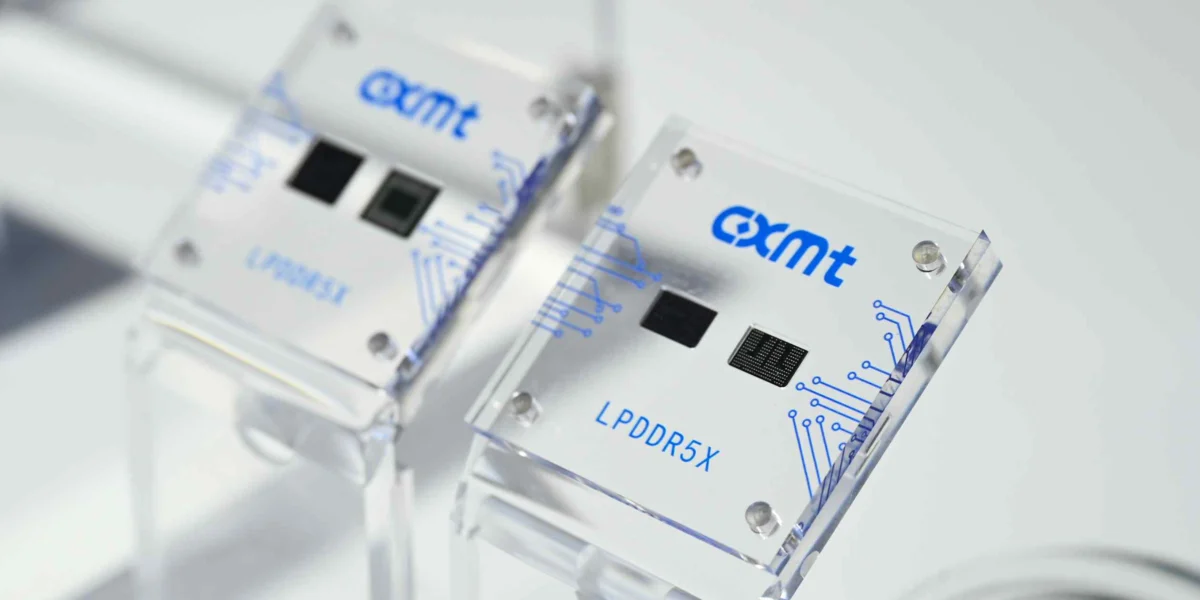
SEOUL/HONG KONG/TAIPEI/SUNNYVALE, U.S. — A significant announcement from Chinese semiconductor manufacturer CXMT regarding its development of a new high-capacity LPDDR5X memory chip has reverberated across the global technology landscape, sparking both intrigue and apprehension within the industry. The company’s assertion of being "close to the leading edge of global memory production" at the unveiling in September has ignited discussions about the evolving dynamics of the highly competitive semiconductor market, particularly in the critical area of advanced memory. While this development signals a notable stride for China’s domestic chip industry, established global leaders maintain that a multifaceted approach to competition, encompassing R&D, manufacturing scale, and ecosystem integration, will allow them to retain their technological and market advantages.
The unveiling of CXMT’s LPDDR5X chip represents a culmination of years of intensified investment and strategic focus by China on reducing its reliance on foreign-sourced advanced semiconductors. Low Power Double Data Rate 5X (LPDDR5X) is a crucial component for a wide array of high-performance electronic devices, including smartphones, tablets, laptops, and increasingly, artificial intelligence accelerators and advanced automotive systems, due to its superior speed and power efficiency compared to previous generations. This announcement, therefore, is not merely a product launch but a strategic statement of intent from a nation striving for greater technological self-sufficiency in a sector deemed vital for national security and economic competitiveness.
Background and Context: The Global Memory Market Landscape
The global memory chip market is a multi-billion dollar industry dominated by a handful of major players, primarily from South Korea, the United States, and Japan. South Korean giants Samsung Electronics and SK Hynix have historically held significant market share in DRAM (Dynamic Random-Access Memory), the type of memory where LPDDR5X is a variant. Micron Technology, a U.S.-based company, also plays a crucial role. These companies have consistently invested heavily in research and development, pushing the boundaries of memory technology in terms of density, speed, power consumption, and manufacturing processes.
China’s ambition to break into this elite group has been a long-standing objective. The nation’s domestic semiconductor industry has been steadily growing, with significant government backing and substantial investment. However, achieving parity with global leaders in cutting-edge memory technology has proven to be an arduous challenge, often hampered by complex manufacturing processes, intellectual property hurdles, and the sheer scale of investment required to compete at the forefront. CXMT’s announcement suggests a potential inflection point in this trajectory, indicating a leap forward in the company’s technological capabilities.
Chronology of Advancements and Ambitions
The journey towards this announcement has been a gradual but determined one. While specific details of CXMT’s LPDDR5X development timeline are proprietary, the broader context of China’s semiconductor push provides a framework.
- Early 2010s: China begins to significantly increase its investment in the domestic semiconductor industry, with a particular focus on memory chips, recognizing their strategic importance.
- Mid-2010s: Several Chinese companies, including CXMT (formerly known as Changxin Memory Technologies), emerge as key players in DRAM manufacturing, initially focusing on older generations of memory.
- Late 2010s – Early 2020s: Global memory technology advances rapidly with the introduction of DDR4, DDR5, and the LPDDR series. Chinese companies face increasing pressure to catch up, often relying on technology licensing or reverse engineering, while simultaneously investing in their own R&D.
- 2020s: Global geopolitical tensions and supply chain vulnerabilities highlight the risks of over-reliance on foreign chip manufacturers. This intensifies China’s resolve to bolster its domestic capabilities.
- September 2026: CXMT officially unveils its new high-capacity LPDDR5X chip, claiming it is "close to the leading edge of global memory production." This announcement is the most recent and significant development in this ongoing narrative.
Supporting Data: The Significance of LPDDR5X
The LPDDR5X standard represents a substantial upgrade over its predecessors. Key performance metrics include:
- Speed: LPDDR5X can achieve data transfer rates of up to 8.5 Gbps (gigabits per second), a significant increase over LPDDR5’s 6.4 Gbps and LPDDR4X’s 4.26 Gbps. This translates to faster application loading times, smoother multitasking, and enhanced performance in data-intensive tasks.
- Power Efficiency: Despite the speed increase, LPDDR5X is designed for improved power efficiency, a critical factor for battery-powered devices. This allows for longer usage times and reduced heat generation.
- Capacity: The drive for higher capacity is essential for modern devices that handle large amounts of data, from high-resolution video to complex AI models. CXMT’s claim of "high-capacity" suggests their chip meets or exceeds current industry offerings in this regard.
- Applications: LPDDR5X is becoming the memory of choice for flagship smartphones, high-end laptops, gaming devices, and increasingly, for edge AI computing platforms and advanced driver-assistance systems (ADAS) in vehicles.
For China, mastering the production of such advanced memory chips means a reduced dependence on imported components for these critical sectors. It also opens up opportunities for China to become a significant exporter of these advanced memory solutions.
Reactions and Analysis: A Competitive Landscape Redefined?
The announcement from CXMT has undoubtedly garnered attention from its global competitors. While official statements from the likes of Samsung, SK Hynix, and Micron have been measured, the underlying industry sentiment is one of heightened vigilance.
Industry executives and analysts, speaking on condition of anonymity due to the sensitive nature of the industry, acknowledge CXMT’s progress. "This is a testament to their focused effort and investment," commented one executive from a rival firm. "They have clearly made significant strides in process technology and design."
However, these same sources emphasize that claiming to be "close to the leading edge" is a nuanced statement. The semiconductor industry is characterized by a continuous race for innovation, with new generations of technology constantly on the horizon. Leading companies are not only focused on current-generation products but are also heavily invested in R&D for future technologies, such as LPDDR6 and beyond, as well as advanced packaging techniques that can further enhance performance and integration.
Fact-Based Analysis of Implications:
- Increased Competition and Potential Price Pressures: The entry of a strong contender like CXMT into the high-end memory market could lead to increased competition, potentially driving down prices for LPDDR5X chips. This could benefit consumers and device manufacturers by lowering component costs.
- Diversification of Supply Chains: For global device manufacturers, this development offers an opportunity to diversify their memory chip suppliers. Reliance on a smaller number of dominant players has always presented supply chain risks; a stronger Chinese presence could mitigate some of these concerns.
- Geopolitical Implications: The advancement of China’s domestic semiconductor capabilities has significant geopolitical implications. It aligns with China’s strategic goal of technological self-reliance and could impact the global balance of power in the technology sector. However, concerns about national security and intellectual property remain central to discussions surrounding China’s semiconductor ambitions.
- Technological Advancement Pace: The intensified competition is likely to spur further innovation across the board. Global leaders will be motivated to accelerate their own R&D cycles and introduce next-generation technologies more rapidly to maintain their competitive edge.
- Ecosystem Integration: While CXMT may be closing the gap in chip manufacturing, a critical aspect of semiconductor leadership involves a robust ecosystem of software, design tools, and collaborative partnerships. Global leaders have decades of experience in cultivating these integrated environments, which can be a significant differentiator.
Maintaining the Edge: Strategies of Global Leaders
Established players like Samsung, SK Hynix, and Micron are unlikely to cede ground easily. Their strategies for maintaining leadership involve several key pillars:
- Continuous R&D Investment: These companies consistently allocate billions of dollars annually to research and development, exploring new materials, architectures, and manufacturing techniques to stay ahead of the technological curve. They are already working on LPDDR6 and beyond, as well as exploring novel memory types.
- Manufacturing Scale and Expertise: The sheer scale of their manufacturing operations, coupled with decades of accumulated expertise in yield optimization and process control, provides a significant advantage. Achieving high yields on advanced nodes is crucial for profitability and competitive pricing.
- Intellectual Property Portfolio: Leading semiconductor companies possess vast portfolios of patents that protect their innovations. This IP acts as a barrier to entry for competitors and can be leveraged through licensing agreements.
- Ecosystem Development and Partnerships: Samsung, for instance, not only manufactures memory but also designs and produces the devices that use them, creating a synergistic relationship. All major players work closely with foundries, equipment manufacturers, and chip designers to foster a collaborative innovation environment.
- Global Customer Relationships: Long-standing relationships with major global electronics manufacturers, built on trust, reliability, and customized solutions, are difficult to replicate.
The Road Ahead
CXMT’s LPDDR5X announcement marks a significant milestone in China’s quest for semiconductor independence and global competitiveness. It signals that the nation is moving beyond foundational memory technologies and is making tangible progress in advanced segments. However, the semiconductor industry remains a highly dynamic and complex arena. The established global leaders possess formidable advantages in terms of R&D, manufacturing scale, intellectual property, and integrated ecosystems.
The coming years will likely witness an intensified competitive landscape, with China’s growing capabilities challenging the existing order. The ultimate impact will depend on a multitude of factors, including the sustained pace of technological innovation, the ability of Chinese companies to achieve consistent high-volume production with competitive yields, and the evolving geopolitical dynamics that shape global trade and technological collaboration. For now, the industry watches with keen interest as CXMT positions itself as a rising force, potentially reshaping the future of memory chip production.
