

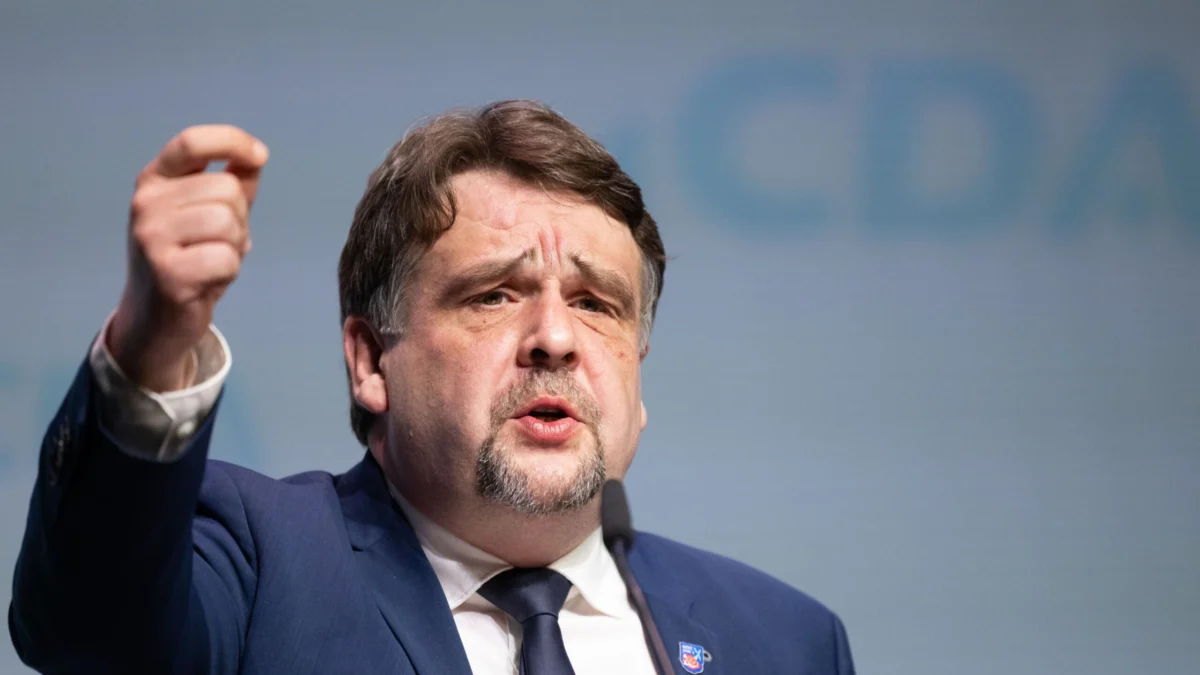
Following a series of significant electoral defeats in the recent state elections in Saxony-Anhalt, Mecklenburg-Western Pomerania, and Berlin, the Christian Democratic Union (CDU) is experiencing mounting pressure for a fundamental shift in its political direction. Dennis Radtke, the chairman of the party’s worker’s wing, the Christian Democratic Labor Union (CDA), has voiced sharp criticism, asserting that the CDU is no longer fulfilling its aspiration to be a broad people’s party. He declared, "The CDU is neither a FDP-light nor a solely conservative party," signaling a growing internal dissent regarding the party’s current trajectory and ideological positioning.
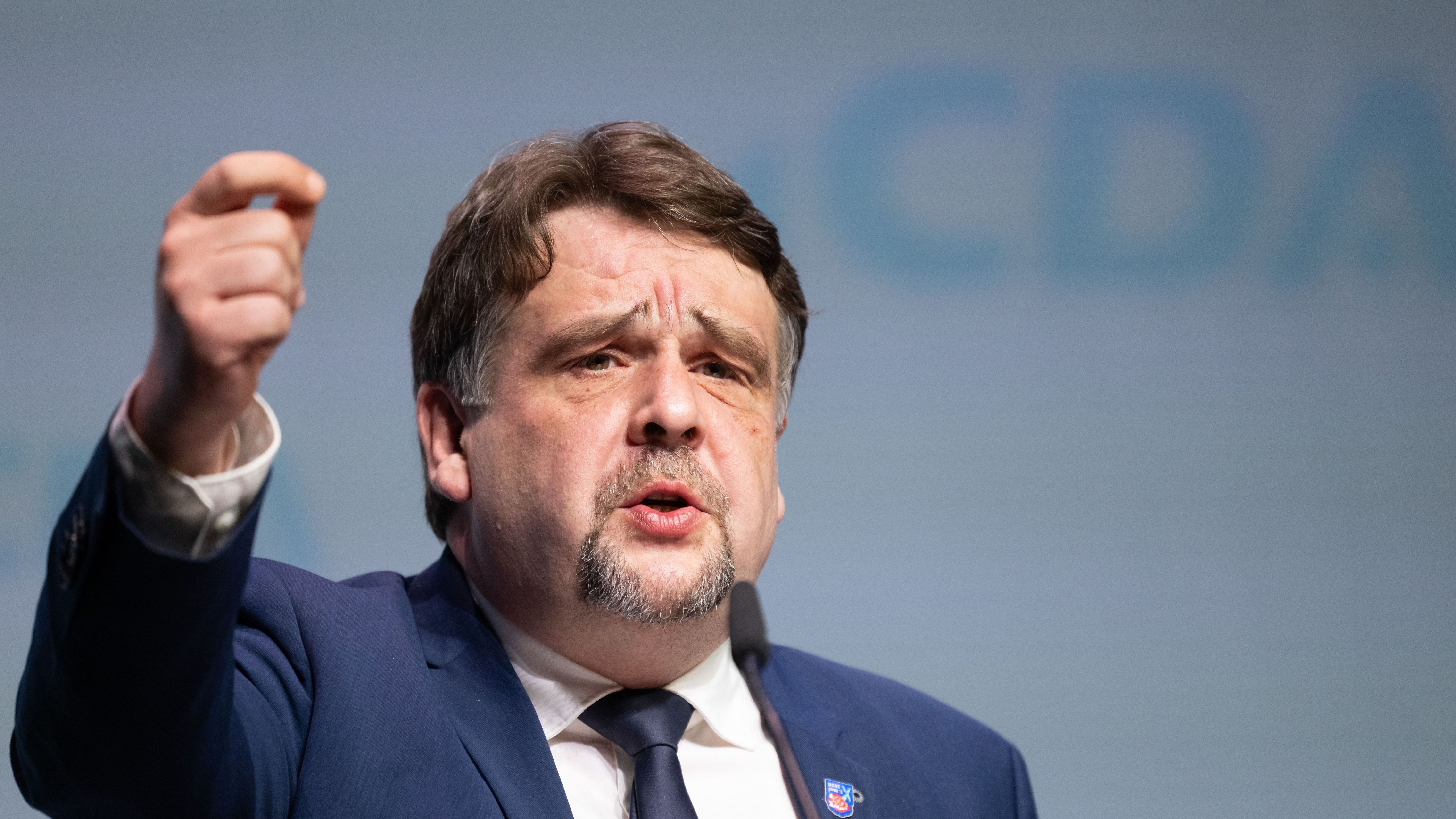
The CDA has been a vocal critic since the leadership of Friedrich Merz, arguing that the party under his guidance has increasingly focused on the business wing, neglecting the concerns and interests of working-class voters. This perceived "narrowing" of the CDU’s appeal is seen by many within the party as a direct contributor to their electoral woes. The recent losses, particularly in states that have historically been CDU strongholds, have amplified these internal discussions and are now demanding concrete action.
The Context of Electoral Defeats
The string of losses at the state level represents a critical juncture for the CDU, a party that has historically dominated German politics. The recent elections have seen a significant decline in support, with results indicating a struggle to connect with key voter demographics.

- Saxony-Anhalt: While the CDU managed to remain the strongest party, its vote share saw a notable decrease, highlighting a weakening of its traditional support base.
- Mecklenburg-Western Pomerania: The party experienced a substantial drop in its electoral performance, falling behind other parties and underscoring a loss of voter confidence.
- Berlin: The CDU faced a particularly disappointing outcome in the capital, failing to secure a leading position and signaling a deep disconnect with urban voters.
These results are not isolated incidents but rather a trend that points to a broader challenge for the CDU in adapting to the evolving political landscape and voter priorities. The rise of other political forces and the shifting socio-economic concerns of the electorate have left the CDU struggling to articulate a compelling vision that resonates across the political spectrum.
Calls for a Broader Appeal
Dennis Radtke’s critique is not merely an expression of discontent but a call for a tangible reorientation of the CDU’s policy agenda. He explicitly stated that the party must give more space to social concerns, a departure from what is perceived as an overemphasis on economic liberalization and conservative ideals. This includes the introduction of specific policy proposals that aim to address the needs of working families and individuals, a segment of the population that Radtke believes has been increasingly alienated by the party’s current direction.
The CDA’s concerns are rooted in the traditional understanding of the CDU as a "Volkspartei," a party that seeks to represent a wide array of societal interests, from the working class to the middle class and beyond. The current leadership, under Friedrich Merz, has been perceived by some as prioritizing the interests of business elites and a more narrowly defined conservative base. This perceived ideological shift has created a vacuum that other parties, including the Social Democratic Party (SPD) and the Green Party, have successfully exploited.
Radtke’s statement, "The CDU is neither a FDP-light nor a solely conservative party," directly challenges the notion that the party should align itself too closely with the liberal economic policies of the Free Democratic Party (FDP) or adopt a purely conservative stance. Instead, he advocates for a more balanced approach that integrates social welfare policies with economic pragmatism.

Proposed Policy Interventions and Business Concerns
While the specifics of Radtke’s proposed policy interventions remain to be fully detailed, his call for greater emphasis on social issues suggests a potential push for policies that could impact various sectors of the economy. One particular proposal, which is already generating apprehension among business representatives, hints at a more interventionist approach to social and economic policy.
The fear among many business leaders is that a renewed focus on social concerns could translate into increased regulation, higher labor costs, or a greater redistribution of wealth. Such measures, if implemented without careful consideration of their economic impact, could potentially stifle investment and hinder economic growth. However, proponents argue that addressing social inequalities and ensuring a fairer distribution of economic gains are crucial for long-term societal stability and sustainable economic development.

The CDA’s strategy appears to be an attempt to reclaim the party’s historical roots as a defender of workers’ rights and social justice, while still maintaining a commitment to a robust economy. This delicate balance is expected to be a central theme in the upcoming party deliberations.
Timeline and Upcoming Deliberations
The internal debate within the CDU is set to intensify as the party leadership convenes for a special strategy meeting in Berlin on October 11th. This "Klausurtagung" (closed-door meeting) will be a crucial forum for discussing the implications of the recent electoral defeats and charting a new course for the party.

However, early indications suggest that consensus on the path forward may be elusive. Reports indicate a division among CDU state leaders and ministers-presidents regarding the appropriate response to the electoral setbacks.
- Reform and Mitigation Advocates: Some within the party are pushing for a moderation of planned reforms and austerity measures, suggesting that a more compassionate approach is needed to regain voter trust.
- Hardline Implementation Faction: Conversely, others are reportedly advocating for the resolute implementation of announced measures, believing that a clear and decisive stance is necessary to demonstrate leadership and conviction.
This divergence of opinion highlights the deep-seated ideological rifts within the CDU and the challenge of forging a unified strategy that can appeal to a broad electorate. The outcome of this meeting will be keenly watched as it will likely shape the CDU’s political positioning in the lead-up to future elections.

Broader Implications for German Politics
The internal struggles within the CDU have significant implications for the broader German political landscape. As the traditional center-right anchor of German politics, the CDU’s ability to redefine itself and reconnect with voters is crucial for political stability and the formation of future governing coalitions.
If the CDU fails to address the concerns raised by figures like Dennis Radtke, it risks further erosion of its support base, potentially ceding more ground to other parties. This could lead to a more fragmented political system and make coalition-building more complex.

The debate also reflects a wider trend in European politics, where established center-right parties are grappling with the challenge of maintaining their broad appeal in the face of changing social and economic conditions. The CDU’s internal deliberations could serve as a case study for other parties facing similar pressures.
The emphasis on social issues, as advocated by Radtke, could also signal a shift in the national political discourse, potentially influencing policy debates on issues such as income inequality, social welfare, and labor market regulations. The outcome of the CDU’s internal discussions will undoubtedly contribute to shaping the future of German politics.
