

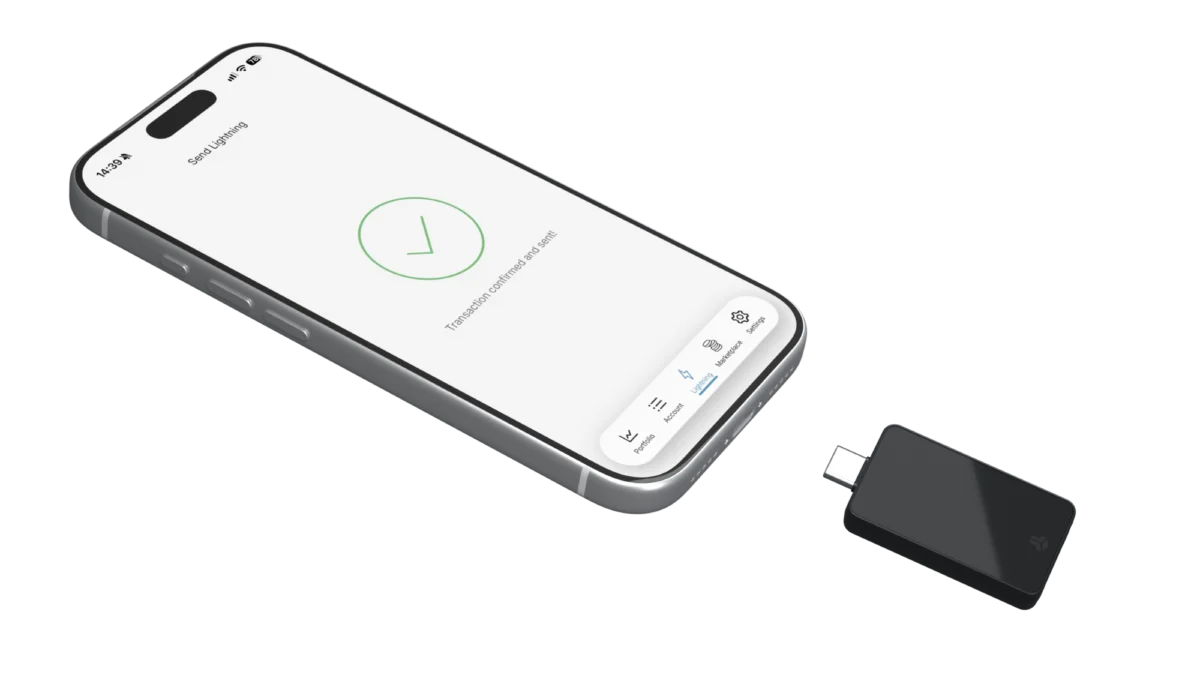
Bitcoin wallet manufacturer BitBox has announced a significant development in its commitment to user-friendly Bitcoin adoption, integrating the Lightning Network directly into its popular hardware wallets. This move aims to bridge the gap between the security of cold storage and the need for fast, low-cost everyday Bitcoin transactions, effectively putting the Lightning Network within reach of the average user’s pocket. Owners of any BitBox hardware wallet can now create a Lightning "hot" wallet within the mobile BitBoxApp. This integration allows users to fund their Lightning wallet directly from their existing on-chain balance and seamlessly pay Lightning invoices without the need to switch between multiple applications, wallets, or engage third-party services.
The company stated in a Tuesday announcement that a key benefit of this new feature is its simplicity for existing users. No new recovery phrase is required. The Lightning wallet is intrinsically derived from the BitBox backup the user already possesses, eliminating the burden of memorizing or securely storing additional seed phrases. This approach ensures that the security of the primary hardware wallet remains paramount while enabling the convenience of Lightning transactions. The two wallets, on-chain and Lightning, operate distinctly yet are managed cohesively within the BitBox ecosystem.
Enabling Everyday Bitcoin Transactions
The newly integrated Lightning functionality is designed to operate as a "hot" wallet, specifically optimized for smaller amounts and frequent, everyday spending. This includes micro-transactions such as purchasing coffee, settling invoices, or executing quick peer-to-peer transfers. Concurrently, users’ long-term savings and larger Bitcoin holdings remain securely locked behind the physical security of their BitBox hardware device, a core principle of hardware wallet security.
Within the BitBoxApp, users will find a suite of features tailored for Lightning Network interaction. These capabilities include the ability to scan and pay Lightning invoices directly, send and receive Bitcoin over the Lightning Network, and claim their own personalized Lightning address for easy receiving. The app also facilitates the seamless topping up of the Lightning wallet from the user’s on-chain Bitcoin balance, and the ability to sweep funds back to the on-chain wallet when desired. This streamlined experience is designed to demystify Lightning and make it as accessible as traditional payment methods.
Underlying Technology and Ecosystem Integration
Under the hood, this groundbreaking integration is powered by the Breez SDK. Breez, a prominent player in the Lightning Network infrastructure space, has now welcomed BitBox as one of its over 100 integration partners. The Breez SDK abstracts away the complexities that have historically deterred casual users from adopting the Lightning Network. This means users no longer need to manage their own nodes, open and maintain payment channels, or worry about liquidity management – tasks that were previously significant barriers to entry. Crucially, the BitBox integration ensures that user custody of their Bitcoin is maintained throughout the entire process, aligning with the decentralized ethos of Bitcoin.
This collaboration builds upon Breez’s recent advancements. In August, Breez debuted "Glow," an application designed to provide developers with deep insights into the inner workings of their Lightning wallet technology. Glow allows developers to visualize and understand the Lightning Network’s operational mechanics, empowering them to build their own innovative products and services on top of the Lightning infrastructure. BitBox’s integration signifies a major real-world application of this underlying technology, demonstrating its maturity and readiness for mainstream adoption.
Background and Context: The Evolution of Bitcoin Payments
The introduction of Lightning Network capabilities by hardware wallet manufacturers like BitBox represents a pivotal moment in the ongoing evolution of Bitcoin as a medium of exchange. Since its inception, Bitcoin has faced challenges related to transaction speed and fees, particularly during periods of high network congestion. The Lightning Network, a layer-two payment protocol built on top of the Bitcoin blockchain, was conceived to address these limitations.
The concept of the Lightning Network was first proposed in 2015 by Tadge Dryja and Joseph Poon. It operates by creating off-chain payment channels between users. These channels allow for an almost infinite number of transactions to occur instantaneously and with negligible fees between the participants. Only the opening and closing of these channels are recorded on the main Bitcoin blockchain, significantly reducing the burden on the main chain and enabling the scalability required for widespread adoption.
Early Lightning Network implementations were often complex, requiring users to run their own nodes, manage channel liquidity, and possess a degree of technical expertise. This created a significant barrier for mainstream users who were accustomed to the simplicity of traditional payment systems. Wallets like Electrum and mobile applications like Breez began to abstract these complexities, but the integration of Lightning directly into hardware wallets, which are designed for maximum security, marks a critical step towards bridging the gap between security and usability for everyday transactions.
BitBox’s move is particularly significant because hardware wallets are the gold standard for securing digital assets. By enabling Lightning transactions directly from a hardware wallet, BitBox is offering users the best of both worlds: the peace of mind that comes with cold storage for their primary holdings, and the convenience of fast, cheap payments for their daily needs, all managed through a single, familiar interface.
Supporting Data and Market Trends
The adoption of the Lightning Network has been steadily increasing. While precise real-time data can fluctuate, network statistics from various sources, such as the Lightning Network statistics dashboard, have shown a consistent upward trend in network capacity, the number of active nodes, and the number of payment channels. As of recent reports, the total Bitcoin capacity locked on the Lightning Network has reached new all-time highs, indicating growing confidence and usage.
This trend is further supported by the increasing number of merchants and services that are beginning to accept Bitcoin payments via the Lightning Network. From small online businesses to larger platforms, the ability to accept lightning payments offers a compelling alternative to traditional payment processors, particularly in regions with high inflation or unstable fiat currencies. The integration by hardware wallet providers like BitBox is expected to accelerate this adoption by making it easier for individuals to acquire and spend Bitcoin on the network.
The global remittance market, a significant area where low-cost, fast international transfers are crucial, is another potential beneficiary. The Lightning Network, with its minimal fees, presents a compelling alternative to existing remittance services, which often carry substantial charges. The ability to easily transact on Lightning via a trusted hardware wallet could open up new avenues for individuals to send and receive funds across borders more efficiently.
Official Statements and Reactions (Inferred)
While specific quotes from BitBox or Breez beyond the initial announcement were not immediately available for this report, the strategic nature of this integration speaks volumes. BitBox’s decision to incorporate the Lightning Network signals a clear understanding of market demands and a commitment to staying at the forefront of Bitcoin technology. Their focus on leveraging existing recovery phrases underscores a user-centric approach, prioritizing ease of use and security.
The partnership with Breez highlights the importance of robust and user-friendly SDKs in driving mainstream adoption of complex technologies. Breez’s success in abstracting away technical complexities is crucial for making the Lightning Network accessible to a broader audience. The fact that BitBox has chosen the Breez SDK suggests confidence in its reliability, scalability, and security.
From a broader industry perspective, this development is likely to be met with enthusiasm by Bitcoin proponents and developers. It validates the ongoing efforts to build a functional and accessible Bitcoin ecosystem that can support both secure long-term savings and everyday commerce. It also sets a precedent for other hardware wallet manufacturers, potentially spurring further innovation and competition in the space.
Broader Impact and Implications
The integration of the Lightning Network into BitBox hardware wallets has several profound implications for the Bitcoin ecosystem:
- Enhanced Usability for Everyday Transactions: This is arguably the most significant impact. By removing the friction associated with using the Lightning Network, BitBox is making it practical for users to spend Bitcoin on daily purchases. This is a critical step towards Bitcoin fulfilling its promise as a peer-to-peer electronic cash system.
- Increased Security for Lightning Users: Hardware wallets provide a level of security that software wallets or exchange accounts cannot match. By allowing Lightning transactions to originate from a hardware wallet, users can have greater confidence that their funds are protected from online threats, even when conducting frequent, smaller transactions.
- Accelerated Lightning Network Adoption: As more users gain easy access to the Lightning Network through trusted hardware wallets, the network is likely to experience accelerated growth in terms of users, transaction volume, and overall liquidity. This can create a positive feedback loop, encouraging more merchants to accept Lightning payments.
- Democratization of Financial Services: By enabling low-cost, fast, and secure transactions, the Lightning Network, in conjunction with user-friendly hardware wallets, can empower individuals in regions with underdeveloped financial infrastructures. It offers a pathway to greater financial inclusion and autonomy.
- Validation of Layer-Two Solutions: This integration serves as a strong endorsement of the viability and importance of layer-two scaling solutions for Bitcoin. It demonstrates that these technologies can be effectively integrated with core Bitcoin infrastructure to enhance its capabilities.
- Future Innovation: The success of this integration may inspire other wallet manufacturers to explore similar partnerships and feature developments. It could also lead to further innovation in how hardware wallets interact with off-chain payment networks, potentially paving the way for even more advanced functionalities.
In conclusion, BitBox’s integration of the Lightning Network into its hardware wallets represents a significant stride towards making Bitcoin a more practical and accessible payment tool for everyday use. By prioritizing user experience and security, BitBox is not only enhancing its own product offering but also contributing to the broader goal of Bitcoin adoption as a global medium of exchange. This development signals a maturing ecosystem where the robust security of hardware wallets can seamlessly coexist with the speed and affordability of the Lightning Network, bringing the vision of everyday Bitcoin payments closer to reality.
