

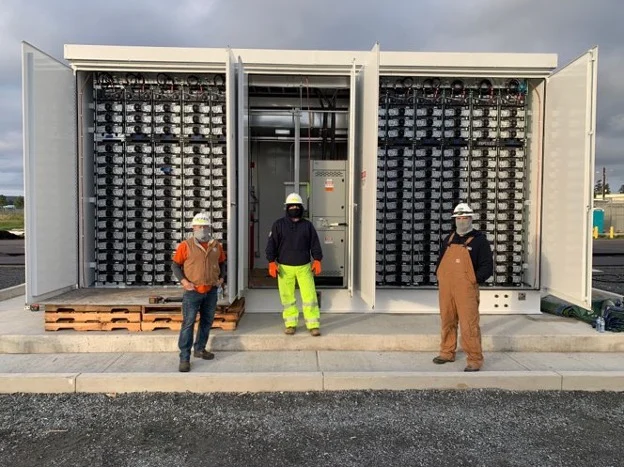
The global energy transition is currently entering a critical secondary phase where the dominance of lithium-ion technology, specifically lithium iron phosphate (LFP), is being challenged by a suite of emerging chemistries tailored for specific grid requirements. While lithium-ion has served as the foundational pillar for stationary energy storage systems (ESS) for over a decade, the industry is reaching a consensus that a "one-size-fits-all" approach is no longer sustainable as grid demands become more complex. As utilities and independent power producers (IPPs) seek to integrate higher percentages of intermittent renewable energy, the focus is shifting toward technologies that offer longer durations, improved safety profiles, and lower sensitivities to extreme temperatures.
The Incumbency of Lithium Iron Phosphate
Lithium iron phosphate (LFP) is projected to maintain its position as the primary chemistry for stationary storage through at least the next ten years. The technology benefits from a significant head start in terms of manufacturing scale, supply chain maturity, and what is known in the industry as "bankability." Bankability refers to the willingness of financial institutions to provide low-interest loans for projects based on proven performance data and the long-term viability of the manufacturer.
When lithium-ion was first introduced to the grid roughly 15 years ago, it was viewed as a high-risk asset. In 2010, total global energy storage capacity was a mere fraction of today’s levels, with many early adopters questioning the cycle life and safety of the cells. Today, the landscape has shifted entirely. LFP has become the incumbent because it offers a superior safety profile compared to nickel-manganese-cobalt (NMC) chemistries, primarily due to its higher thermal runaway threshold. However, as the market matures, the limitations of LFP—including its reliance on a supply chain heavily concentrated in specific geographic regions and its performance degradation in extreme cold—are driving the search for alternatives.
A Chronology of Storage Evolution
The trajectory of energy storage can be viewed through three distinct eras. The first era, from 2010 to 2018, was defined by experimental pilots and the use of repurposed electric vehicle (EV) batteries for short-duration applications like frequency regulation. The second era, spanning from 2019 to the present, saw the massive scaling of four-hour LFP systems designed for energy arbitrage and "peaker" plant replacement.
The industry is now entering the third era, characterized by diversification. In this phase, which is expected to peak between 2025 and 2035, the market will see the commercialization of sodium-ion for cost-sensitive applications, flow batteries for mid-to-long duration needs, and iron-air systems for multi-day storage. This chronological shift is necessitated by the evolving needs of a decarbonized grid, which requires more than just the four-hour discharge window that lithium-ion comfortably provides.
Sodium-Ion: The Primary Challenger for Cost and Safety
Among the emerging technologies, sodium-ion represents the most immediate threat to lithium’s dominance in specific niches. Sodium is the sixth most abundant element on Earth, making it significantly less susceptible to the price volatility and geopolitical bottlenecks associated with lithium mining.
Technically, sodium-ion batteries share a similar architecture with lithium-ion, allowing manufacturers to utilize existing "gigafactory" infrastructure with relatively minor modifications. Sodium-ion offers several distinct advantages:
- Temperature Resilience: Unlike lithium-ion, which requires energy-intensive thermal management systems to operate in sub-freezing conditions, certain sodium-ion chemistries maintain high performance across a broader temperature spectrum.
- Safety and Transport: Sodium-ion batteries can be shipped at zero volts, eliminating the fire risks associated with the transportation of partially charged lithium batteries.
- Fast-Cycling: For applications requiring rapid charge and discharge cycles, sodium-ion can offer a smaller physical footprint than lithium.
However, the technology is not without its drawbacks. Current iterations can release up to 2.5 times more gas during a thermal event compared to lithium systems, necessitating more robust ventilation and tighter environmental controls. Analysts suggest that while sodium-ion is scaling rapidly, it likely will not reach true cost parity or widespread grid adoption until approximately 2030.
The Long-Duration Horizon: Flow and Iron-Air Systems
As the penetration of wind and solar power exceeds 50% in many regional grids, the demand for long-duration energy storage (LDES) is intensifying. Standard lithium-ion systems become prohibitively expensive when scaled for durations exceeding eight hours because the cost scales linearly with the number of battery cells required.

Flow Batteries:
Vanadium- and zinc-based flow batteries decouple power from energy. In these systems, energy is stored in liquid electrolyte tanks. To increase the duration of the system, a developer simply needs to install larger tanks rather than more expensive battery stacks. This makes flow batteries an economical choice for 6- to 12-hour applications. Furthermore, flow batteries do not suffer from the same degradation issues as lithium; they can remain at zero charge or full charge for extended periods without losing capacity. The primary hurdle for flow technology remains the risk of electrolyte leaks, which requires secondary containment systems and increases the complexity of site preparation.
Iron-Air Batteries:
For the most extreme requirements—such as multi-day storage to cover "dunkelflaute" periods (extended periods of low wind and sun)—iron-air technology is emerging as a frontrunner. These systems utilize the "rusting" and "unrusting" of iron to store and release energy. While they are physically large and have a slower response time than lithium, they can provide up to 100 hours of storage at a fraction of the cost of other chemistries. The technical challenge lies in the "unrusting" process, which can degrade internal components over thousands of cycles.
Strategic Implications for Manufacturing and Supply Chains
The diversification of battery chemistries is forcing a radical rethink of manufacturing strategy. Bill Mitchell, a senior business executive at Jabil, emphasizes that the future of the industry lies in "configurable platforms." Because the ultimate winner of the "chemistry war" is still unknown, original equipment manufacturers (OEMs) are moving away from rigid, chemistry-specific designs.
The focus is now on developing standardized mechanical, electrical, and thermal interfaces. By creating a universal enclosure or "container" system that can accommodate different cell formats—whether they be sodium-ion pouches or lithium-ion prismatic cells—manufacturers can hedge against supply chain disruptions.
The supply chain itself is undergoing a geopolitical realignment. Currently, a vast majority of the lithium-ion processing and manufacturing capacity is concentrated in China. This has led to concerns regarding energy security in the United States and Europe. In response, the U.S. has seen a surge in domestic activity, including direct brine extraction projects in Texas and Louisiana and the development of lithium deposits in Utah. The rise of sodium-ion is viewed as a strategic move to further localize production, as sodium can be sourced globally without the same environmental or political baggage as lithium and cobalt.
Market Projections and Industry Responses
Industry analysts from firms like BloombergNEF and Wood Mackenzie have noted that while the "toolkit" of storage technologies is expanding, the transition will be evolutionary rather than revolutionary. Current market data indicates that:
- LFP will remain the "bankable" standard for the majority of utility-scale projects through 2028.
- Sodium-ion will first penetrate the low-speed EV and residential backup markets before moving into large-scale grid storage.
- Flow batteries will see a 20-30% compound annual growth rate in the industrial sector, particularly for facilities aiming for 24/7 carbon-free energy.
Utility operators have expressed a cautious but optimistic reaction to these developments. In recent industry forums, representatives from major utilities have stated that while they are eager to adopt lower-cost alternatives, they require at least three to five years of field data before they can commit to multi-gigawatt-hour deployments of non-lithium technologies. To bridge this gap, many developers are initiating "hybrid" pilots that combine the high power of lithium-ion with the long duration of flow or iron-air systems.
Conclusion: A Multi-Technology Toolkit for the Future Grid
The evolution of energy storage is moving toward a highly specialized future. The narrative is no longer about which technology will "kill" lithium-ion, but rather how different chemistries will coexist to optimize grid performance. A project located in the Arctic Circle may choose sodium-ion for its cold-weather resilience; a data center in a metropolitan area may choose lithium-ion for its energy density and small footprint; and a massive solar farm in the desert may utilize flow batteries for overnight energy shifting.
For customers and investors, this diversity is a net positive. It fosters competition, reduces reliance on a single, volatile supply chain, and allows for more precise engineering of energy solutions. As the industry matures toward 2030, the ability of manufacturers to remain flexible and the ability of developers to understand the nuances of these varying chemistries will be the primary drivers of profitability and grid reliability in the renewable energy era.
