

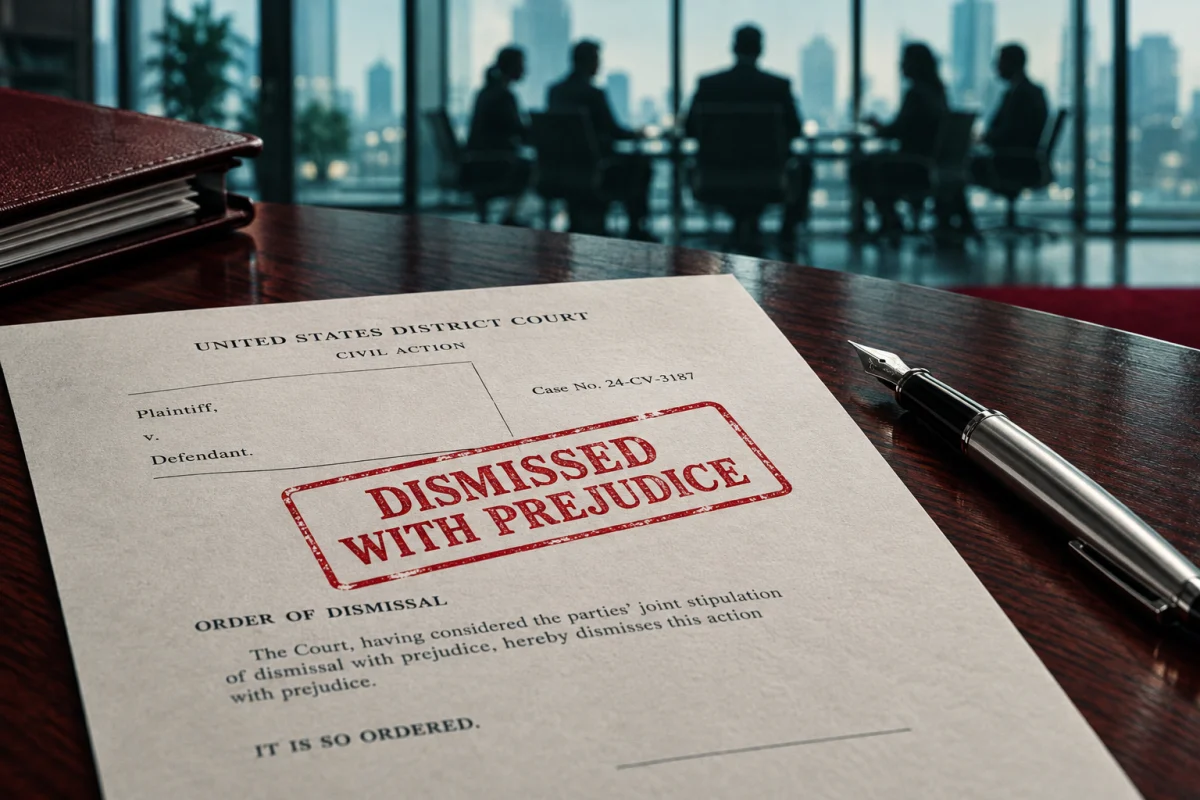
The legal and corporate governance battle that has consumed Better Home & Finance Holding Co. for months reached a definitive conclusion this week as the company voluntarily dismissed its federal securities lawsuit against its founder and largest shareholder, Vishal Garg. According to a court filing dated Oct. 5 in the U.S. District Court for the Southern District of New York, the mortgage lender moved to end its litigation with prejudice, a legal designation that prevents the company from refiling the same claims against Garg in the future. This dismissal marks the finalization of Garg’s successful campaign to regain control of the digital mortgage firm he founded, following a period of intense internal strife and a dramatic restructuring of the company’s board of directors.
The cessation of legal hostilities follows a chaotic two-month period during which the leadership of Better was effectively in limbo. The conflict began in early August when the board of directors removed Garg from his role as Chief Executive Officer, appointing investor Daniel Lewis as interim CEO. The board’s decision at the time was seen as an attempt to stabilize the company following a series of public relations challenges and a volatile transition to the public markets. However, the move triggered a swift counter-offensive from Garg, who utilized his significant voting power to challenge the board’s authority and eventually force a complete overhaul of the company’s governing body.
The Genesis of the Leadership Dispute
The friction within Better Home & Finance is rooted in a long-standing tension between Garg’s aggressive leadership style and the board’s efforts to steer the company through a challenging macroeconomic environment. Better, which gained national attention for its digital-first approach to mortgage lending, faced significant headwinds as rising interest rates dampened the demand for home refinancing—a core component of its business model.
The situation reached a breaking point on Aug. 13, when Garg publicly announced his intention to retake control of the company. Garg asserted that he had secured the backing of a majority of the company’s voting power through a coalition of shareholders. To lead his legal and strategic effort, Garg retained Alex Spiro of Quinn Emanuel Urquhart & Sullivan, a high-profile attorney known for representing prominent tech figures in high-stakes corporate disputes.
In response to Garg’s maneuver, the company filed a federal lawsuit on Aug. 18, alleging that the founder had violated the Securities Exchange Act. The complaint specifically accused Garg of organizing a group of shareholders to act in concert without providing the required timely disclosures to the Securities and Exchange Commission (SEC). Better’s legal team further alleged that Garg had made misleading statements regarding the extent of his shareholder support and had solicited votes without first filing the necessary proxy materials. The lawsuit sought to freeze Garg’s efforts by requesting court orders for corrective disclosures and a halt to further solicitation until the company’s concerns were addressed.
The Shareholder Vote and Board Reconstitution
Despite the pending litigation, Garg’s campaign gained momentum through a formal consent solicitation process. On Oct. 5, the same day the lawsuit was dismissed, Garg announced that an independent election inspector had certified the results of a shareholder vote. The certification confirmed that shareholders representing 52.02% of the company’s outstanding voting power had supported Garg’s proposal to remove several key members of the board.
The purge targeted five directors who had been instrumental in the decision to sideline Garg: Chairman Harit Talwar, interim CEO Daniel Lewis, and directors Arnaud Massenet, Bhaskar Menon, and Prabhu Narasimhan. With the removal of these individuals, the board was effectively downsized from nine seats to five. Garg, as the sole remaining incumbent director, moved immediately to fill the vacancies with allies and strategic partners.
The newly reconstituted board includes Bing Gordon, the co-founder of Electronic Arts and a former director at Amazon; Steven Sarracino, the founder of Activant Capital; and two current Better employees. One of the first acts of the new board was to dismantle the company’s "poison pill"—a stockholder rights plan that had been implemented to prevent a hostile takeover or a rapid accumulation of shares by a single entity. Additionally, the board directed the company to dismiss all pending litigation against Garg, effectively ending the legal standoff that had threatened to tie up the company in court for years.
Strategic Appointments and Ongoing Transitions
In the wake of the board’s reorganization, Better has continued to refine its leadership structure. On Oct. 15, the company announced the appointment of Linda Yaccarino as an independent director. Yaccarino, who currently serves as the CEO of the telehealth firm eMed and was formerly the CEO of X Corp. (the company formerly known as Twitter), brings significant experience in corporate scaling and brand management. Her term is set to run through the 2027 annual meeting.
According to regulatory filings, Yaccarino will receive an annual compensation of $175,000 in the form of restricted stock. Her appointment is viewed by industry analysts as an attempt to bolster the board’s credibility with institutional investors and to provide a seasoned perspective as the company navigates its post-dispute era.
Further changes occurred on Oct. 22, when Paula Tuffin resigned from the board of directors. Tuffin’s departure was described by the company as a move that did not stem from any disagreement regarding operations or policy. She will remain in her executive roles as Better’s general counsel, chief compliance officer, and secretary, ensuring continuity within the company’s legal and regulatory departments.
Chronology of the Better Home & Finance Power Struggle
The following timeline outlines the key events that led to the dismissal of the federal lawsuit and the current state of Better’s leadership:
- Early August: The board of directors removes Vishal Garg as CEO and appoints Daniel Lewis as interim CEO.
- August 13: Vishal Garg announces a campaign to regain control, claiming support from a majority of voting shareholders.
- August 18: Better Home & Finance files a federal securities lawsuit against Garg in the Southern District of New York.
- September: Garg continues his consent solicitation process to replace board members, represented by attorney Alex Spiro.
- October 5: An independent inspector certifies that 52.02% of voting power backed Garg’s board changes.
- October 5: Better voluntarily dismisses the federal lawsuit against Garg with prejudice.
- October 5: The board is reduced to five seats; five directors are removed, and new members, including Bing Gordon and Steven Sarracino, are appointed. The "poison pill" is rescinded.
- October 15: Linda Yaccarino is appointed to the board as an independent director.
- October 22: Paula Tuffin resigns from the board but retains her executive positions as General Counsel and Chief Compliance Officer.
Financial Context and Market Implications
The internal governance battle at Better Home & Finance has unfolded against a backdrop of significant financial pressure. The company went public via a merger with a special purpose acquisition company (SPAC), Aurora Acquisition Corp., in August 2023. Since its debut, the company’s stock has faced substantial volatility, reflecting broader investor skepticism toward the mortgage tech sector in a high-interest-rate environment.
Data from the mortgage industry indicates that loan origination volumes have plummeted across the board as the Federal Reserve maintained elevated interest rates to combat inflation. For a company like Better, which relies on a high-volume, technology-driven model, the contraction in the housing market has been particularly acute. The company has undergone several rounds of layoffs over the past two years, a process that was famously marred by Garg’s decision to fire 900 employees over a Zoom call in late 2021—an event that many cite as the origin of the company’s internal and external friction.
The dismissal of the lawsuit and the consolidation of power under Garg may provide the company with a singular strategic direction, but it also places the burden of performance squarely on the founder’s shoulders. Analysts suggest that the new board’s composition, featuring heavyweights like Bing Gordon and Linda Yaccarino, is designed to reassure the market that while Garg is back in control, there is sufficient independent oversight to guide the company toward profitability.
Analysis of the Settlement and Future Outlook
The decision to dismiss the lawsuit "with prejudice" is a significant legal victory for Vishal Garg. It effectively clears his record of the specific allegations of securities fraud and proxy violations brought by the previous board. By ensuring the case cannot be reopened, Garg has secured a "clean slate" to lead the company’s next chapter.
The removal of the stockholder rights plan, or poison pill, is another critical development. Such plans are typically used by boards to defend against activists or founders seeking to exert unilateral control. By removing this barrier, the reconstituted board has signaled a total alignment with Garg’s vision for the company’s future.
However, the road ahead remains fraught with challenges. Better Home & Finance must still prove to the public markets that its digital mortgage platform can remain viable in a "higher-for-longer" interest rate environment. The company’s ability to innovate and capture market share from traditional lenders will be the ultimate litmus test for whether Garg’s return to power was a necessary correction or a return to the volatility that led to his initial removal.
As of the time of publication, spokespeople for both Better Home & Finance and Vishal Garg have declined to comment on the specific details of the dismissal or whether a private settlement agreement was reached. For now, the focus shifts from the courtroom to the boardroom, as the mortgage lender attempts to move past its internal divisions and stabilize its operations in an unforgiving economic climate.
