

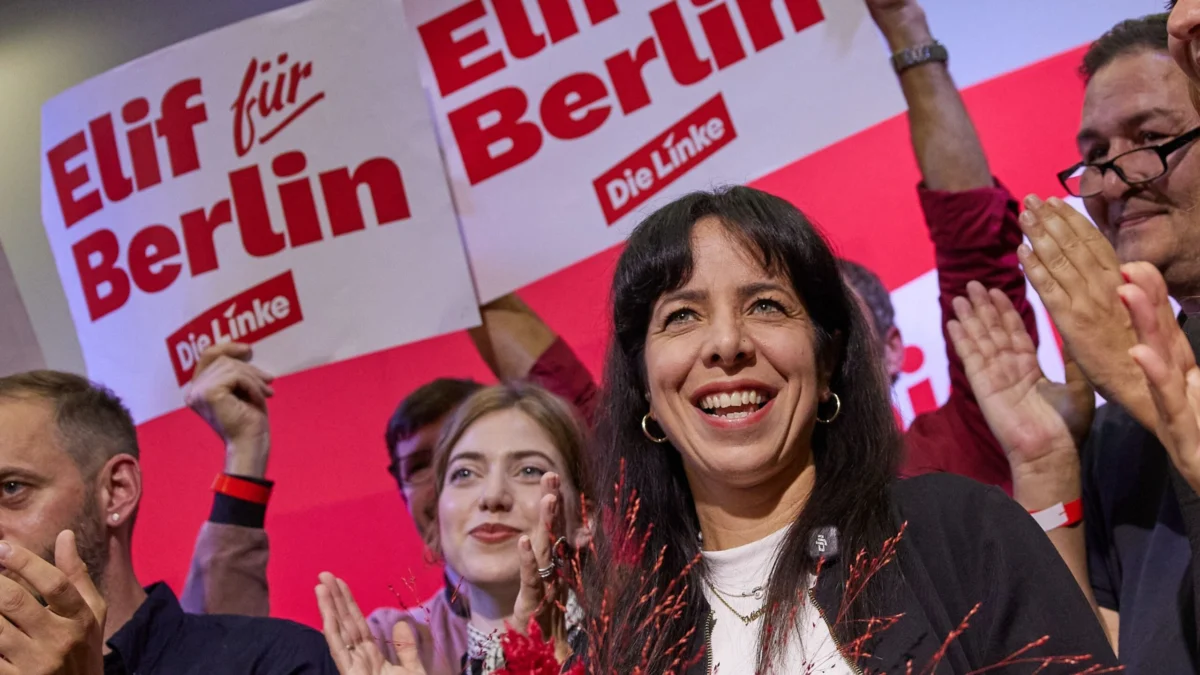
Berlin, Germany – The Berlin chapter of Die Linke (The Left party) has overwhelmingly voted to initiate exploratory coalition talks with the Green Party and the Social Democratic Party (SPD) following a party congress held on Friday. This decision positions Elif Eralp, the party’s top candidate, to potentially lead coalition negotiations and assume the role of Governing Mayor from the Rotes Rathaus (Red City Hall). However, the path to a potential three-party coalition is fraught with significant challenges, including deep-seated disagreements on policy and persistent allegations of antisemitism that have cast a shadow over the party.
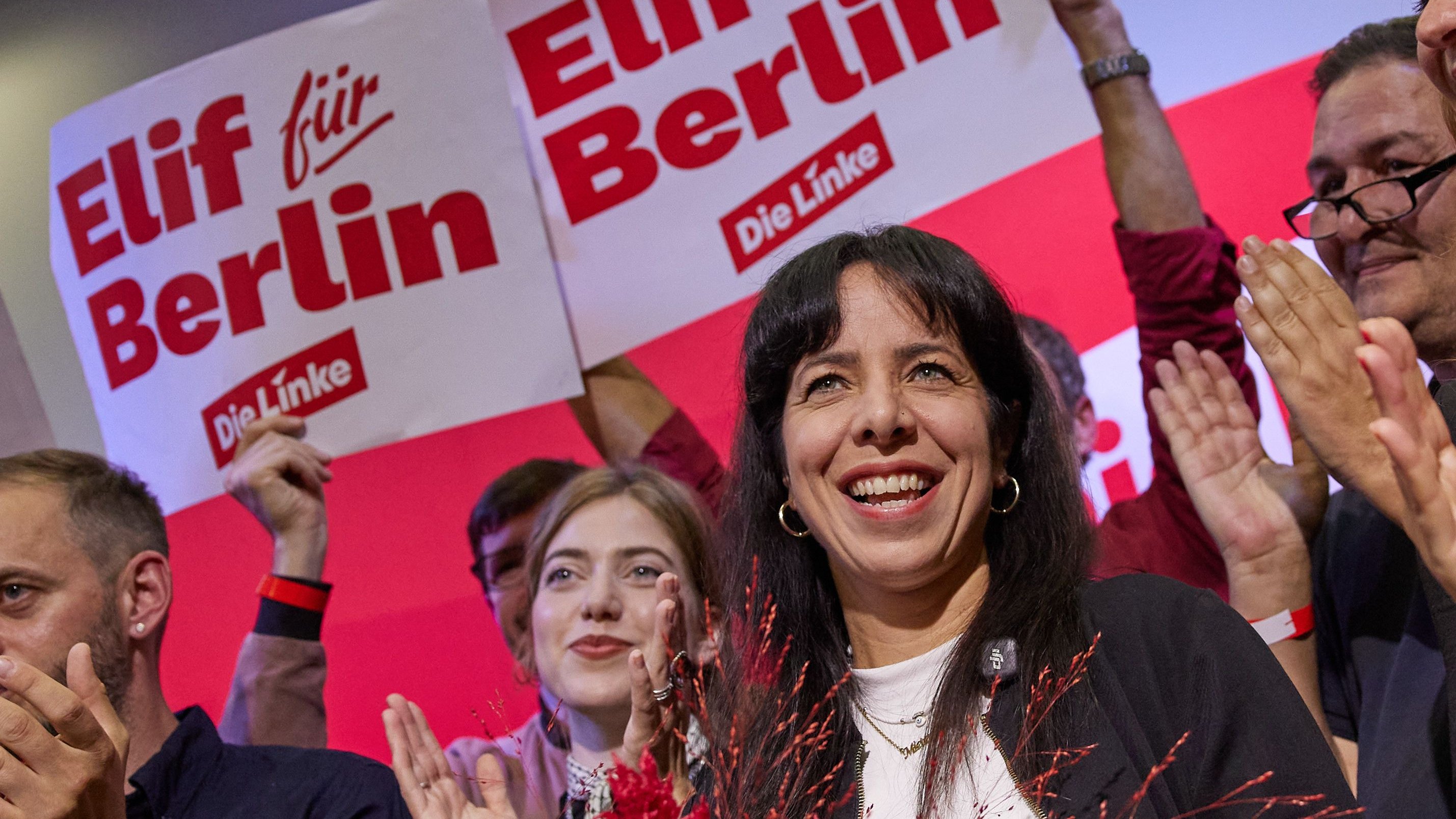
The strong mandate received by Die Linke in the recent election, securing 25.7 percent of the vote and emerging as the strongest single force in the Abgeordnetenhaus (House of Representatives), has placed them at the center of coalition discussions. Yet, it remains uncertain whether the Greens and the SPD are willing to govern alongside Die Linke, given the contentious issues at play.
Key Policy Disagreements and Allegations
Central to the potential coalition’s hurdles are Die Linke’s ambitious plans for the socialization of large housing stocks, a policy championed through a referendum. This proposal has met with significant resistance, particularly from parties like the SPD, which have expressed reservations about the economic feasibility and practical implementation.

Compounding these policy differences are the persistent accusations of antisemitism leveled against elements within Die Linke. These allegations have created a significant rift, raising concerns among potential coalition partners and segments of the public. The SPD, in particular, faces internal debates on how to address these accusations and whether a partnership with Die Linke is politically tenable.
SPD’s Internal Deliberations and External Pressures
Within the Berlin SPD parliamentary group, significant doubts persist regarding a potential alliance with Die Linke. Prominent former Social Democratic Governing Mayors, including Michael Müller and Walter Momper, have publicly cautioned against such a coalition. Their concerns echo broader hesitations about the ideological alignment and the potential consequences of aligning with a party grappling with such serious allegations.

Despite these reservations, there is a growing chorus within the SPD advocating for collaboration. Cansel Kiziltepe, the Vice State Chairwoman, emphasized that Berliners had voted for a "left-wing policy" and that the SPD, despite a decline in its vote share, shares evident common ground with Die Linke and the Greens. She argued that it is a democratic imperative to pursue coalition negotiations with these parties given the electoral outcomes.
The Shadow of Antisemitism Allegations
The accusations of antisemitism against Die Linke are not new, but they have intensified in the wake of the recent election. A stark illustration of this concern came from the national leadership of the SPD. Party leaders Lars Klingbeil and Bärbel Bas, along with General Secretary Tim Klüssendorf, issued a joint Instagram post stating, "Antisemitic slogans have no place in our society or our politics." They further asserted, "Die Linke will be measured by this and must unequivocally leave no room for antisemitism and clan criminals in its ranks."

The context for these statements appears to stem from pro-Palestinian stances adopted by some members and individuals associated with the Berlin chapter of Die Linke. Additionally, the presence of a clan chief, Issa Remmo, at a Die Linke election party on Sunday further fueled these concerns. Eralp, in her post-election interview with ZDF, distanced the party from organized crime, stating, "We have nothing to do with organized crime." She clarified that the clan member was not an invited guest.
A Wider National Debate on Die Linke’s Stance
The controversy surrounding antisemitism has transcended Berlin, becoming a national talking point. Ferat Kocak, a Die Linke Member of the Bundestag, temporarily withdrew from public life and the Bundestag’s interior committee due to controversial contacts with the Remmo family. This move highlights the gravity of the situation and the pressure Die Linke is under to address these issues effectively.

In her address at the party congress, Eralp directly confronted these accusations, stating, "Jewish people must feel safe in our city." She pledged to "strengthen diverse Jewish life and combat antisemitism." Eralp also addressed the broader national debate, characterizing the accusations as having a "destructive dimension" rather than being "differentiated criticism." She contrasted this with the rise of a "fascist party in Saxony-Anhalt," suggesting that the focus on Die Linke was a politically motivated attempt to prevent a party committed to social justice, diversity, and democracy from coming to power.
Reactions from the Jewish Community
The Jewish community itself has presented a spectrum of reactions to the ongoing debate. Josef Schuster, President of the Central Council of Jews in Germany, initially stated on Sunday that Die Linke "no longer possesses any credibility in the fight against the hatred of Jews that this party tolerates and freely allows within its ranks." He later clarified his position, noting that he was not accusing the party as a whole of antisemitism, but rather pointing to specific groups that were not adhering to the state association’s resolutions for protecting Jewish life.

Conversely, a group of 150 Berliners of Jewish faith, including notable authors Eva Menasse and Deborah Feldman, published an open letter challenging the prevalent narrative. The letter argued that the constant accusations of antisemitism against Die Linke are not only a cynical political instrumentalization but also equate almost any criticism of Israeli policy with antisemitism. They posited that the flood of accusations aims to suppress dissenting opinions and undermine international law.
Menasse, in her support for Eralp, highlighted the potential for a female leader with a migration background to become Governing Mayor for the first time. She expressed concern that Eralp might be forced to contend with antisemitism allegations as her primary challenge. Menasse believes Die Linke is uniquely positioned to mediate between democratic criticism of Israel and deeply rooted antisemitism.

Alternative Coalition Scenarios
While a Red-Red-Green coalition remains a possibility, other configurations are also being considered for Berlin’s governance. A three-party alliance involving the CDU, SPD, and Greens, potentially led by the CDU’s top candidate Stefan Evers, presents an alternative. Although the CDU experienced a significant drop in support, losing 9.5 percentage points, they still secured 18.8 percent of the vote, placing them ahead of both the SPD and the Greens in Berlin.
The outcome of these coalition negotiations will not only shape the political landscape of Berlin but also send a significant signal regarding the viability of left-wing alliances in Germany amidst complex societal and political challenges. The coming weeks are expected to be crucial as parties navigate these intricate discussions, balancing policy aspirations with the pressing need to address divisive allegations and build a stable governing majority. The potential for Die Linke to participate in governing Berlin hinges on its ability to convincingly address the concerns surrounding antisemitism and to find common ground on key policy issues with its potential partners.
