

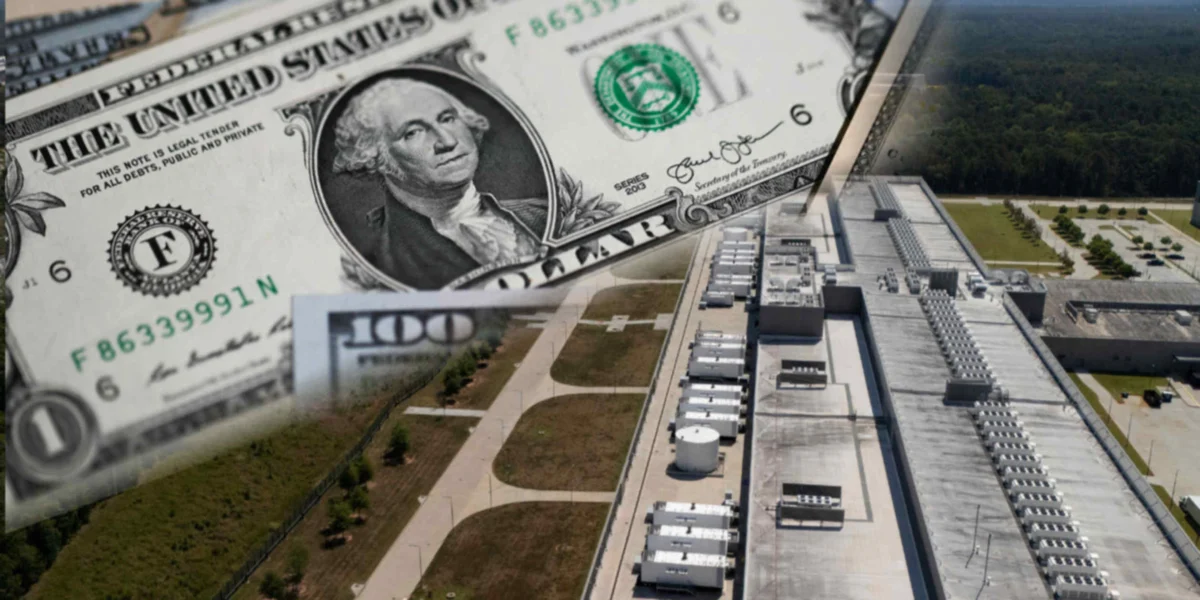
Financing the monumental expense of building artificial intelligence data centers is presenting a growing challenge for companies that do not possess the vast financial resources of established tech giants. This trend, particularly evident in the United States, is introducing a layer of complexity and potential risk, especially as the long-term trajectory of AI demand remains subject to considerable uncertainty. While the allure of AI’s transformative potential continues to drive investment, the sheer scale of infrastructure required, coupled with evolving funding models, necessitates a closer examination of the financial underpinnings of this burgeoning sector.

The insatiable appetite for computing power to train and deploy sophisticated AI models has created an unprecedented demand for specialized data centers. These facilities are not merely warehouses for servers; they are highly engineered environments requiring immense power, advanced cooling systems, and robust network connectivity. The cost of constructing a single, state-of-the-art AI data center can run into hundreds of millions, if not billions, of dollars. This capital expenditure is a significant hurdle for many companies seeking to capitalize on the AI revolution, forcing them to explore innovative and often more intricate financing strategies.
Historically, large technology companies like Google, Microsoft, Amazon, and Meta have been able to fund their data center expansions through a combination of strong balance sheets, access to cheap debt, and profitable existing operations. Their sheer scale allows them to absorb the upfront costs and benefit from economies of scale. However, a new wave of companies, ranging from AI startups to enterprises in traditional sectors looking to integrate AI deeply into their operations, are finding themselves on a different playing field. These entities often lack the deep reserves or established revenue streams to self-finance such massive projects.

The Evolving Landscape of AI Data Center Funding
The complexity in financing arises from several interconnected factors. Firstly, the rapid evolution of AI technology means that hardware and infrastructure requirements can change quickly. What is cutting-edge today might be obsolete in a few years, introducing a degree of obsolescence risk that lenders and investors must consider. Secondly, the economic viability of these data centers is intrinsically linked to the sustained and growing demand for AI services. While current demand is robust, driven by the hype and initial adoption of generative AI, there is a lack of long-term, granular data proving consistent, high-margin utilization for all players.
This uncertainty complicates traditional lending models. Banks and financial institutions are accustomed to assessing risks based on historical performance and predictable revenue streams. AI data centers, particularly those built by newer entrants, present a more speculative investment. Consequently, a variety of creative funding mechanisms are emerging to bridge this gap:

1. Joint Ventures and Partnerships: Companies are increasingly forming alliances to share the financial burden and risks. This can involve partnerships between AI developers and infrastructure providers, or even collaborations between multiple companies that require similar data center capabilities. These arrangements allow for pooled resources and expertise, mitigating individual financial exposure. For instance, a consortium of companies in the automotive sector looking to accelerate their AI-driven autonomous driving research might jointly invest in a dedicated data center.
2. Sale-Leaseback Agreements: Established companies with existing data center assets might sell these facilities to institutional investors (such as pension funds or private equity firms) and then lease them back. This frees up capital for new AI investments while ensuring continued operational access. This strategy is particularly attractive to companies that have existing, well-maintained infrastructure but need liquidity.

3. Infrastructure as a Service (IaaS) Models: Some companies are opting to build data centers not for their own exclusive use, but to offer computing power as a service to other AI developers. This shifts the model from capital expenditure for internal use to an operational revenue stream, though it requires a robust go-to-market strategy and significant sales efforts. This approach is akin to a landlord operating a commercial building, where the tenants pay for space and services.
4. Specialized Debt Financing: Lenders are developing more tailored debt instruments for AI infrastructure. This might include project finance loans with terms structured around projected AI service demand, or green bonds specifically for energy-efficient data center construction, appealing to environmentally conscious investors. The challenge here is accurately forecasting future demand and revenue to ensure loan repayment.

5. Equity Investments and Venture Capital: While venture capital has historically focused on software and AI models, there is a growing trend of VCs and private equity firms investing in the physical infrastructure supporting AI. This often involves taking significant equity stakes, sharing in the upside but also the downside if the AI market doesn’t mature as expected.
Background and Chronology of the AI Infrastructure Boom
The current surge in AI data center construction is not an overnight phenomenon. Its roots can be traced back to the increasing computational demands of machine learning and deep learning algorithms over the past decade. Early AI research relied on university clusters and on-premises servers. The advent of cloud computing in the late 2000s and early 2010s democratized access to powerful computing resources, allowing more researchers and developers to experiment with AI.

However, the explosion of large language models (LLMs) and generative AI, particularly following the public release of models like ChatGPT in late 2022, has dramatically amplified the need for specialized infrastructure. These models require enormous datasets for training and significant processing power for inference (generating responses). This has led to a scramble for GPUs (Graphics Processing Units), the workhorse of AI computation, and consequently, for the data centers capable of housing and powering them.
Key Milestones:

- Mid-2010s: Growing interest and investment in deep learning, leading to increased demand for high-performance computing, often met by cloud providers.
- Late 2010s: Early signs of specialized AI hardware and the need for more power-efficient and high-density data centers.
- 2020-2022: Accelerated growth in AI research and development, further straining existing data center capacity. Companies begin to consider building dedicated AI facilities.
- November 2022: OpenAI releases ChatGPT, marking a watershed moment for public awareness and adoption of generative AI. This triggers an unprecedented surge in demand for AI computing power.
- 2023-Present: Companies across various sectors announce ambitious plans for AI data center construction and expansion. The financing landscape begins to diversify beyond traditional methods as the scale of investment required becomes apparent.
Supporting Data and Market Trends
The scale of investment required is staggering. Analysts at various firms have projected that the global AI infrastructure market, including hardware, software, and data centers, could reach hundreds of billions of dollars annually within the next few years. For example, some reports suggest that the spending on AI-specific data centers alone could exceed $200 billion by 2027.
The demand for GPUs, crucial components for AI training, has also seen a dramatic spike. NVIDIA, the dominant supplier, has reported record revenues driven by its AI-focused chip sales. This demand translates directly into a need for physical space and power. A single AI data center might house thousands of high-end GPUs, each consuming significant amounts of electricity and requiring sophisticated cooling solutions to prevent overheating.

Illustrative Data Points:
- Power Consumption: A typical AI data center can consume anywhere from 50 to 200 megawatts of power, equivalent to powering tens of thousands of homes. This necessitates access to massive, reliable, and often renewable energy sources.
- GPU Density: Modern AI servers can pack dozens of GPUs into a single rack, leading to extremely high power densities that require specialized cooling systems, such as liquid cooling, beyond the traditional air cooling methods.
- Investment Growth: Major cloud providers have announced plans to invest tens of billions of dollars in AI infrastructure over the next few years. For instance, Microsoft has indicated plans to invest $100 billion in AI development, a significant portion of which will go towards computing power and data centers.
Analysis of Implications and Potential Risks
The reliance on complex funding mechanisms for AI data centers introduces several critical implications and potential risks:

1. Heightened Financial Risk for Smaller Players: Companies that are heavily leveraged or rely on speculative funding may face significant financial distress if the projected AI demand does not materialize or if market conditions change unfavorably. A downturn in the AI sector, a slowdown in enterprise AI adoption, or the emergence of more efficient computing paradigms could leave these companies with underutilized, expensive infrastructure.
2. Increased Systemic Risk: As more companies engage in large-scale infrastructure investments with complex financing, there is a potential for systemic risk within the financial sector. A widespread failure of AI data center projects could have ripple effects across lenders, investors, and the broader economy.

3. Concentration of Power: While smaller players struggle to fund their infrastructure, the continued dominance of tech giants in building out massive AI campuses could further entrench their market positions, potentially leading to less competition and higher costs for end-users in the long run.
4. Regulatory Scrutiny: The rapid build-out of data centers, with their substantial energy consumption and environmental footprint, is likely to attract increased regulatory attention. Concerns about power grid stability, water usage for cooling, and e-waste could lead to new regulations that impact development and operational costs.

5. The Pace of Technological Change: The risk of technological obsolescence is a constant factor. If new AI architectures or hardware emerge that are significantly more efficient or require different types of infrastructure, existing investments could be devalued rapidly. Companies using complex financing models might find it harder to adapt or upgrade.
Official Responses and Industry Reactions
While there have been no widespread official pronouncements from governments specifically addressing the complexities of AI data center financing, the broader conversation around AI regulation and infrastructure development is ongoing. Policymakers are increasingly focused on the strategic importance of AI and the need for robust, secure, and sustainable infrastructure.

Industry bodies and financial institutions are actively working to understand and mitigate these risks. Discussions at industry conferences and in financial publications often revolve around:
- Standardization: Efforts to standardize certain aspects of data center design and financing to make them more attractive to traditional lenders.
- Risk Assessment Tools: Development of more sophisticated modeling tools to forecast AI demand and assess the viability of AI infrastructure projects.
- Public-Private Partnerships: Exploring models where government entities can de-risk certain aspects of AI infrastructure investment, particularly in areas deemed strategically important or underserved.
The current environment reflects a period of rapid innovation and significant investment in a nascent but transformative technology. The creative financing solutions being deployed are a testament to the industry’s ingenuity and its commitment to scaling AI capabilities. However, as the market matures, the sustainability and resilience of these funding models will be a critical determinant of the long-term success of the AI infrastructure ecosystem. Companies that can navigate this complex financial landscape, while remaining adaptable to technological shifts and market uncertainties, are best positioned to thrive in the age of artificial intelligence.
