

New research from the United States Department of Energy (DOE) has revealed a significant and largely untapped opportunity for domestic renewable energy production within the nation’s existing water infrastructure. According to a detailed assessment led by the Oak Ridge National Laboratory (ORNL) and Idaho National Laboratory (INL), the United States could generate as much as 15.2 terawatt-hours (TWh) of electricity annually by retrofitting non-powered dams (NPDs) with hydropower technology. This figure represents a critical frontier in the country’s transition toward a carbon-neutral power grid, highlighting a massive reserve of clean energy that requires no new dam construction.
The study, which serves as a refined update to previous national assessments, identifies more than 2,600 non-powered dams across the country that possess the technical potential to support hydropower generation. Collectively, these facilities could provide a capacity of approximately 4 gigawatts (GW)—roughly equivalent to the output of four large nuclear reactors. Currently, only about 3% of the roughly 90,000 dams in the United States are equipped to generate electricity. The vast majority of these structures were originally designed for secondary purposes, including flood control, navigation, municipal water storage, and recreational use. By converting these existing structures into dual-purpose facilities, the U.S. could bolster its energy security while minimizing the environmental footprint typically associated with new large-scale infrastructure projects.
The Evolution of Hydropower Assessments and Technical Methodology
The drive to quantify the energy potential of existing dams has evolved significantly over the last decade. Early estimates regarding the technical capacity of non-powered dams were often broad, ranging wildly between 12 GW and 30 GW. However, ORNL researchers noted that these prior figures were frequently hampered by data gaps, particularly regarding seasonal water flow variations and the specific mechanical constraints of retrofitting older structures.
To address these inaccuracies, the current study utilized "HydroGenerate," a sophisticated modeling tool developed by researchers at Idaho National Laboratory. Unlike previous models that relied on static averages, HydroGenerate incorporates decades of daily streamflow records to create a high-fidelity simulation of energy potential. The tool calculates the design flow—the volume of water available for power generation—and the hydraulic head, which is the vertical distance the water falls. By integrating these factors with data on modern turbine efficiency, the researchers were able to produce the most accurate projections to date regarding expected plant capacity and daily electricity generation.
“This project was really motivated by the need to improve confidence in what’s technically possible,” explained Carly Hansen, the project’s principal investigator and a senior researcher at ORNL. By providing a more granular view of operational constraints and seasonal water availability, the report offers a roadmap for utilities and federal agencies to prioritize the most viable sites for development.
Geographic Distribution and the Role of Federal Ownership
A central finding of the report is the high concentration of potential within federally owned infrastructure. Approximately 86% of the identified 4 GW of potential capacity is located at dams owned or operated by federal entities, such as the U.S. Army Corps of Engineers (USACE). This concentration presents a unique opportunity for the federal government to lead by example in the deployment of renewable energy technologies.
Geographically, the potential is most pronounced in the industrial and agricultural heartlands of the United States. The upper Mississippi River basin and the Great Lakes region have been identified as the most promising areas for hydropower expansion. These regions contain a high density of large-scale navigation locks and flood-control dams that maintain consistent water levels and flow rates—ideal conditions for steady hydropower generation.
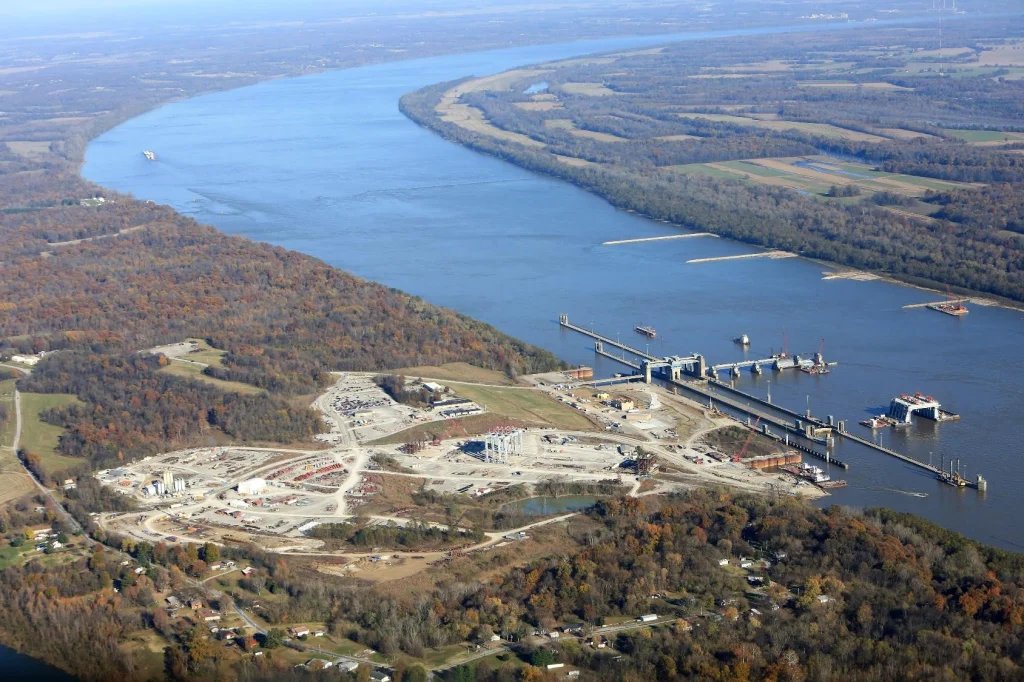
One prominent example of such a site is the Olmsted Locks and Dam in Illinois. Situated on the Ohio River, the facility is a vital node for inland navigation but currently lacks power generation capabilities. Under the new assessment, sites like Olmsted are being re-evaluated as prime candidates for "run-of-the-river" hydropower, which generates electricity by utilizing the natural flow of the river without requiring large reservoirs or significant alterations to water levels.
Beyond large federal projects, the assessment also highlights opportunities for state and local agencies. While many of the sites identified are smaller—averaging approximately 1.5 megawatts (MW) in potential capacity—they could serve as vital sources of distributed energy for rural communities or provide localized grid stability.
Chronology of U.S. Hydropower Development and Modern Context
To understand the significance of this assessment, it is necessary to view it through the lens of America’s energy history. The mid-20th century marked the "Golden Age" of dam construction in the U.S., during which massive projects like the Hoover Dam and the Grand Coulee Dam were built to provide both water and power to a growing nation. However, as environmental concerns grew and the most viable sites for large dams were exhausted, new dam construction slowed to a near-halt by the 1980s.

- 1930s–1960s: Period of massive federal investment in multi-purpose dams. Hydropower becomes a cornerstone of the U.S. electrical grid.
- 1970s–1990s: Shift in focus toward environmental protection and the passage of the Wild and Scenic Rivers Act. New dam construction declines.
- 2010s: Initial DOE assessments begin to look at "low-impact" hydropower, specifically focusing on non-powered dams and conduits.
- 2020s: The emergence of advanced modeling (HydroGenerate) and a renewed federal push for carbon-free energy leads to the current, refined assessment of NPD potential.
Today, the focus has shifted from building new dams to "powering up" the ones that already exist. This approach avoids the massive capital costs and decades-long environmental impact studies required for new dam construction. By utilizing the existing "footprint" of a dam, developers can bypass many of the ecological disruptions associated with blocking new river segments.
Stakeholder Perspectives and Industry Reactions
The release of the ORNL and INL report has garnered significant attention from both the public and private sectors. Proponents of hydropower argue that it remains one of the most reliable forms of renewable energy, providing "baseload" power that is more consistent than wind or solar, which are subject to weather fluctuations.
Juan Gallego-Calderon, a researcher at INL, emphasized the collaborative nature of the new data. “The [HydroGenerate] tool is also offered as an open-source package so stakeholders such as researchers and project developers can use it to verify their own feasibility assessments,” he stated. This transparency is expected to lower the barrier to entry for private developers who may be interested in entering into public-private partnerships to develop federal sites.
However, industry experts also acknowledge the hurdles that remain. Developing hydropower at an existing dam is a complex undertaking that involves navigating the regulatory requirements of the Federal Energy Regulatory Commission (FERC), the U.S. Army Corps of Engineers, and various state-level environmental agencies. Even with a pre-existing dam, the installation of turbines, transmission lines, and fish-passage systems can take a decade or more to move from the planning phase to full operation.
Environmental Considerations and Climate Resilience
While hydropower is a low-carbon energy source, the retrofitting of dams must be balanced with ecological health. Researchers and environmental advocates emphasize that any new hydropower development must include modern mitigation strategies. This includes the installation of "fish-friendly" turbines and the maintenance of water quality standards to ensure that downstream ecosystems are not adversely affected by changes in water oxygenation or temperature.
The report also looks toward the future, acknowledging the reality of a changing climate. The next phase of the ORNL and INL research will incorporate streamflow variability models to predict how shifting precipitation patterns might affect hydropower potential over the next 50 to 100 years.
“Hydropower development takes time, often decades, so we need to consider what future water availability might look like,” Carly Hansen noted. She pointed out that while some regions may face droughts, others—particularly in the Northeast and Midwest—might see increased precipitation, which could actually enhance the energy-generating potential of existing dams in the coming decades.
Broader Impact and Economic Implications
The potential addition of 15.2 TWh of electricity to the U.S. grid would have a measurable impact on the nation’s climate goals. To put this in perspective, 15.2 TWh is enough to power more than 1.4 million average American homes for an entire year. By displacing fossil-fuel-based generation, these retrofitted dams could prevent millions of tons of carbon dioxide emissions annually.
Furthermore, the economic impact of these projects could be substantial. The construction and maintenance of hydropower facilities at 2,600 sites would create thousands of skilled jobs in the manufacturing, engineering, and construction sectors. Many of these dams are located in rural areas where the infusion of infrastructure investment could provide a significant boost to local economies.
As the Department of Energy prepares to extend its assessment to include Alaska and Hawaii, the message from the research community is clear: the path to a cleaner energy future may not require the creation of entirely new landscapes, but rather a more intelligent and efficient use of the structures we have already built. The non-powered dams that have sat idle for decades in terms of energy production are now being viewed not just as relics of 20th-century engineering, but as vital components of a 21st-century renewable energy strategy.
