

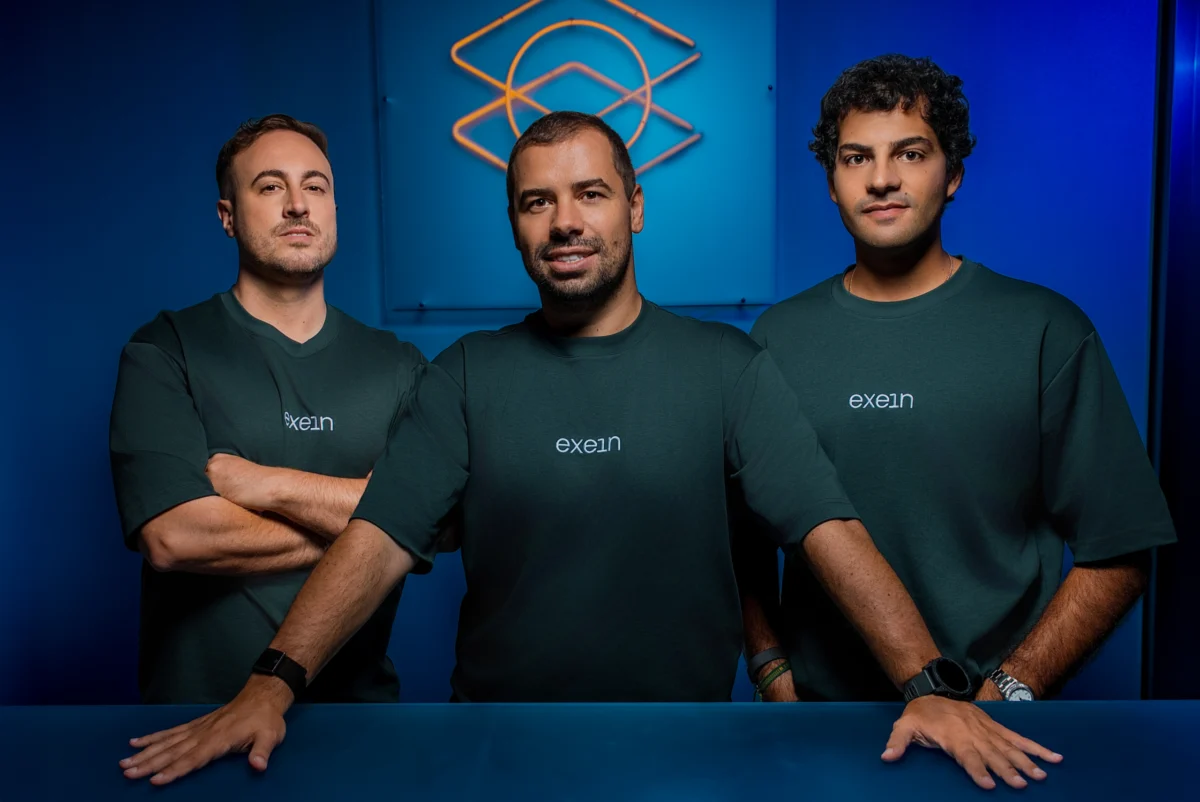
Rome, Italy – Exein, an Italian startup at the forefront of embedded cybersecurity, has officially achieved unicorn status after successfully closing a monumental $270 million funding round. The investment, led by venture capital firm Headline, propels the company’s valuation to an impressive $1.7 billion, solidifying its position as a critical player in the evolving landscape of physical AI security. This landmark achievement marks a significant milestone for the European tech ecosystem, particularly for Italy, showcasing the region’s capacity for deep technology innovation. The substantial capital infusion is earmarked for aggressive expansion, strategic acquisitions, and the continued development of its cutting-edge security solutions designed to protect the increasingly interconnected world of physical AI devices.
The Evolution of Device Security: From IoT to Physical AI
Founded in 2018, Exein’s journey began with a foundational premise: to empower every device with the inherent ability to defend itself, irrespective of its network connectivity. "The concept of Exein is that every device should be able to defend itself, regardless if they are connected to a secure network or not," stated Gianni Cuozzo, CEO and founder of Exein, in an interview. This vision was initially focused on the burgeoning Internet of Things (IoT) market, where a proliferation of connected devices across various industries presented new and complex cybersecurity challenges. The company recognized early on that traditional perimeter-based security solutions were insufficient for the distributed, often resource-constrained nature of IoT endpoints.
Exein’s strategy from its inception involved working in close partnership with original equipment manufacturers (OEMs) and silicon vendors. This collaborative approach allowed Exein to embed its security directly at the hardware and firmware level, providing a more robust and intrinsic layer of protection. This foresight proved prescient as the volume of connected devices exploded, creating significant tailwinds for Exein’s growth. The company asserts that it has already secured over 2 billion connected devices across highly sensitive and critical sectors, including aerospace, industrial automation, automotive manufacturing, energy, healthcare, and semiconductors. In these domains, a cyberattack could have catastrophic, paralyzing consequences, underscoring the vital importance of Exein’s work.
The global IoT market is projected to grow from an estimated $690 billion in 2023 to over $1.8 trillion by 2028, with billions more devices coming online. This rapid expansion, while offering unprecedented opportunities for efficiency and innovation, also broadens the attack surface dramatically. Traditional IoT security often relies on network-level protection or cloud-based solutions, which can be vulnerable if a device is compromised at its core or operating in an isolated environment. Exein’s approach directly addresses this vulnerability by providing runtime security at the kernel level, as exemplified by its latest product, Photon. Photon is designed to prevent attacks by monitoring and controlling the deepest layers of a device’s operating system, making it resilient even if disconnected from a secure network.
As the technological landscape continues to evolve, Exein has strategically shifted its focus to "Physical AI" – an advanced iteration of its core mission. Physical AI encompasses a vast array of intelligent, connected devices that incorporate artificial intelligence models at the edge, enabling them to perceive, reason, and act in the physical world. This includes AI-powered robots, autonomous drones, self-driving cars, advanced industrial sensors, smart home appliances, and a myriad of other embedded systems. Cuozzo highlighted that Exein’s product suite is uniquely positioned to cover these sophisticated devices, which often share the same supply chains and underlying architectures as traditional IoT devices but with added complexities introduced by AI processing capabilities. The market for AIoT (AI of Things) is expected to reach hundreds of billions of dollars in the coming years, indicating a massive addressable market for Exein’s specialized security offerings.
Battling the Rise of Machine-Speed Attacks
The exponential growth of AI is a double-edged sword. While it fuels innovation and drives the demand for secure physical AI, it also significantly empowers malicious actors. Cuozzo observed that AI has boosted attackers’ capabilities, making cyber threats more sophisticated, efficient, and harder to detect. This phenomenon is exacerbated by the proliferation of open-source AI models that can be adapted and deployed without stringent guardrails, lowering the barrier to entry for cybercriminals. Consequently, it has become "much easier and cheaper to target physical devices in novel ways," leading to a surge in what Cuozzo terms "machine-speed attacks."
Machine-speed attacks leverage AI to automate and accelerate various stages of a cyberattack, from reconnaissance and vulnerability exploitation to payload delivery and evasion. These attacks can adapt in real-time, overwhelm defenses with sheer volume, and exploit complex vulnerabilities that human attackers might miss. The implications for critical infrastructure, manufacturing, and transportation systems secured by physical AI are profound. A compromised industrial robot, a hijacked drone, or a manipulated medical device could lead to physical damage, loss of life, or widespread disruption. The average cost of a data breach continues to climb, and breaches involving critical infrastructure sectors often incur even higher financial and reputational damages.
In response to this escalating threat landscape, Exein is developing a foundational model specifically for Physical AI security. This ambitious project aims to create an AI-driven defense mechanism capable of understanding, predicting, and neutralizing machine-speed attacks autonomously. The company is currently training this foundational model on vast datasets of machine data and telemetrics, including device behavior, network traffic patterns, and threat intelligence. The objective is to enable devices to not only defend themselves but also to learn and adapt to new threats in real-time. Exein anticipates having this groundbreaking model ready for deployment in the first quarter of 2027, which could revolutionize how embedded systems are protected against AI-powered adversaries.
A Trajectory of Explosive Growth and Investor Confidence
Exein’s recent funding success is not an isolated event but the culmination of a remarkable financial trajectory that underscores strong investor confidence in its technology and market strategy. The company’s valuation has seen an astounding thirty-fold increase since its Series B round approximately two years ago, when it raised $15 million. This rapid ascent continued with its Series C round, which secured €100 million in equity and debt in December 2025, valuing the company at €700 million at the time. The latest $270 million round, pushing its valuation to $1.7 billion, represents more than a doubling of its valuation in a relatively short period, highlighting the urgency and perceived value of its cybersecurity solutions.
The fact that the latest funding round was "significantly oversubscribed" speaks volumes about the market’s recognition of Exein’s potential. Investors, including lead investor Headline, are clearly bullish on the company’s ability to capitalize on the burgeoning Physical AI market and address its inherent security challenges. This level of interest in a deep tech startup, particularly one based in Europe, signals a maturing venture capital ecosystem increasingly willing to back ambitious, capital-intensive ventures that tackle complex problems.
Exein’s growth metrics further justify this investor enthusiasm. The company reported an impressive 400% year-on-year growth, a rate that is exceptionally challenging to maintain but indicative of strong product-market fit and effective execution. This hyper-growth phase is often characteristic of companies that are addressing critical, underserved needs in rapidly expanding markets. The fresh capital will be instrumental in sustaining this momentum, allowing Exein to scale its operations, enhance its product offerings, and expand its global footprint.
Strategic Global Expansion and Talent Acquisition
The $270 million infusion will be strategically deployed to accelerate Exein’s global ambitions. A significant portion of the funds is earmarked for mergers and acquisitions (M&As) to strategically complete its portfolio of products. This inorganic growth strategy will enable Exein to acquire complementary technologies, talent, and market share, further solidifying its position as a comprehensive provider of embedded security for physical AI. In a fast-evolving sector like cybersecurity, M&As can be crucial for rapid innovation and market consolidation.
Simultaneously, Exein plans to hire aggressively to staff its expansion efforts, particularly in the United States and the Asia Pacific region. The Asia Pacific market currently drives half of Exein’s revenue, underscoring its strategic importance and the region’s rapid adoption of connected devices and AI technologies. Expanding operations and talent in these key geographical areas will allow Exein to better serve its existing client base, penetrate new markets, and capture a larger share of the global cybersecurity spend. The U.S. market, with its robust tech sector and significant investments in AI and IoT, represents a massive opportunity for growth.
Gianni Cuozzo acknowledged that being spread across three continents has presented Exein’s main challenge so far, requiring considerable operational adjustments and coordination. However, he also emphasized that this global presence has "borne fruit," evidenced by the company’s explosive growth. Attracting and retaining top-tier cybersecurity talent is a perpetual challenge across the industry, given the specialized skills required. Exein’s unicorn status and ambitious mission will likely enhance its appeal to leading engineers, researchers, and business development professionals worldwide.
Regulatory Tailwinds: The European Cyber Resilience Act
Exein’s growth trajectory is set to receive an additional boost from favorable regulatory developments, particularly within the European Union. The EU’s Cyber Resilience Act (CRA), a landmark piece of legislation, began its reporting obligations last week and is slated to come into full force in December 2027. The CRA’s overarching objective is to "make sure all digital products are safe from cyber threats" by imposing stringent cybersecurity requirements on manufacturers throughout the product lifecycle.
This regulation will significantly impact any company producing or selling connected devices in the EU, compelling them to integrate security by design and by default. Manufacturers will be legally required to address cybersecurity risks from the design phase, conduct risk assessments, report vulnerabilities, and ensure ongoing security support for their products. For Exein, the CRA represents a powerful tailwind. Its core business model, focused on embedding deep-level security into devices from the manufacturing stage, directly aligns with the CRA’s mandates. The Act will likely create an increased demand for solutions like Exein’s, as manufacturers seek to achieve compliance and avoid hefty fines for non-conformance.
The CRA is part of a broader global trend towards increased regulation of cybersecurity, especially for critical infrastructure and consumer devices. Similar legislative efforts are underway in other jurisdictions, signaling a collective recognition by governments of the systemic risks posed by insecure connected technologies. This regulatory push not only creates market opportunities for companies like Exein but also helps to elevate the overall cybersecurity posture of the global digital economy.
Implications for European Tech and the Global Cybersecurity Landscape
Exein’s emergence as a unicorn is a significant win for the Italian and broader European tech ecosystem. It demonstrates that Europe can nurture and scale deep technology companies capable of competing on a global stage. This success story could inspire further investment and entrepreneurial activity in the region, particularly in specialized fields like cybersecurity, AI, and embedded systems. Italy, in particular, has been working to foster its startup scene, and Exein’s achievement provides a powerful validation of these efforts.
Globally, Exein’s ascent highlights the increasing convergence of IT (Information Technology), OT (Operational Technology), and IoT security. As physical and digital worlds become inextricably linked through AI and connected devices, the demand for holistic, embedded security solutions will only intensify. Exein’s focus on securing physical AI positions it at the cutting edge of this convergence, addressing a critical need that traditional cybersecurity firms may not be equipped to handle. The company’s vision of self-defending devices is not merely a technological ambition but a necessity for a future where intelligent machines play an ever-larger role in human society.
The leadership team, comprising Gianni Cuozzo (CEO & founder), Gerardo Gagliardo (CFO & co-founder), and Giovanni Alberto Falcione (CTO & co-founder), has steered Exein through rapid growth and complex technological challenges. Their continued vision and strategic execution will be crucial as Exein embarks on this next phase of expansion, aiming to secure the foundational layers of the physical AI revolution against an increasingly sophisticated array of cyber threats. With substantial funding, a proven track record, and a clear strategic roadmap, Exein is poised to become a defining force in the future of embedded cybersecurity.
