

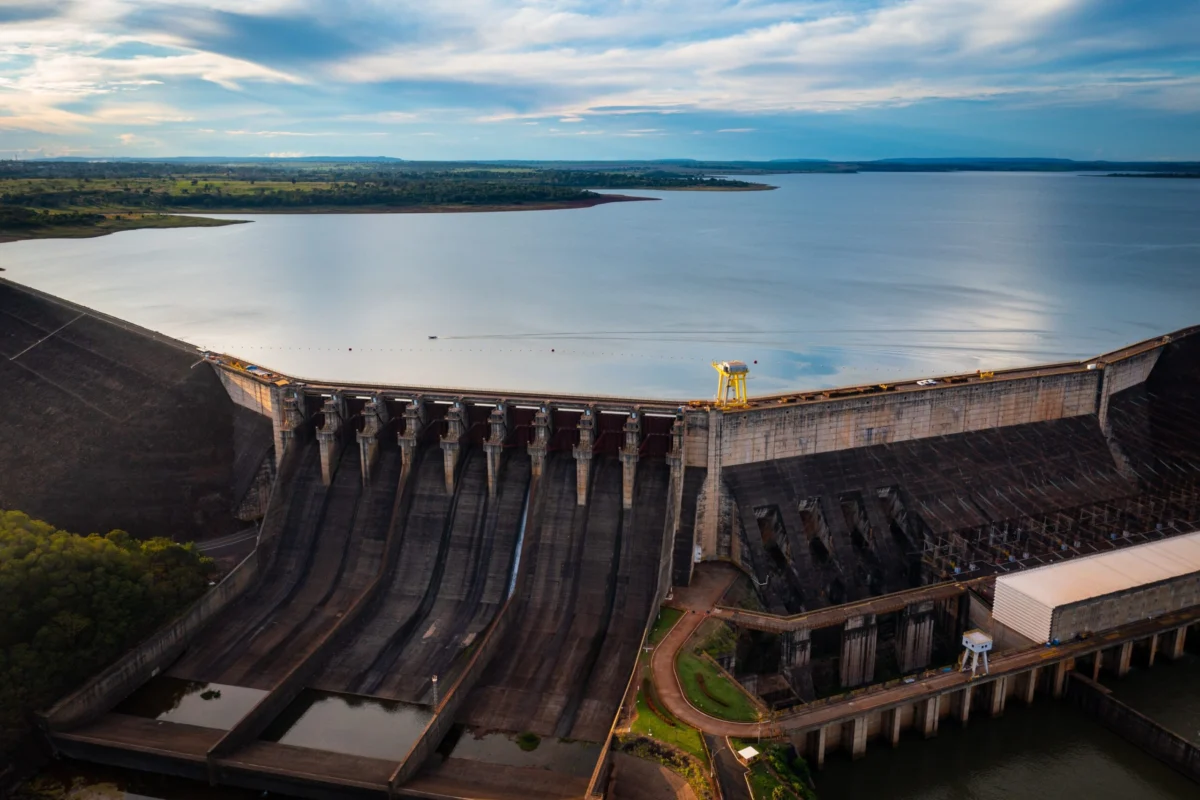
The successful completion of the modernization of Generating Unit 3 (UG3) at the São Simão Hydroelectric Power Plant marks a significant milestone in Brazil’s ongoing efforts to revitalize its aging energy infrastructure. Announced jointly by SPIC Brasil and GE Vernova, the delivery of this third unit represents the halfway point in a massive overhaul of the facility’s six primary generating units. The project, which was executed in just 10.3 months, has set a new internal benchmark for efficiency, comfortably beating the 12-month regulatory limit established by the National Electric Energy Agency (Aneel) and the National System Operator (ONS).
Located on the Paranaíba River, straddling the border between the states of Minas Gerais and Goiás, the São Simão plant is a cornerstone of the Brazilian power grid. Since its inauguration in 1978, the facility has played a critical role in providing base-load power to the country’s industrialized southeast. With a total installed capacity of 1,710 MW, the plant generates enough electricity to power approximately six million homes. However, after more than four decades of continuous operation, the plant’s original analog systems and mechanical components required a comprehensive upgrade to meet the demands of a modern, digitally integrated grid.
A Strategic Partnership for Energy Security
The modernization project is being spearheaded by a consortium led by GE Vernova, a global leader in energy equipment and services, in collaboration with Powerchina. While GE Vernova manages the overarching engineering, integration, and commissioning of the turbine-generator units, Powerchina is tasked with the supply of hydromechanical systems, electrical and mechanical balance of plant (BOP) systems, and specialized SDSC (Supervisory Control and Data Acquisition) technologies.
This R$ 1.2 billion investment, distributed over a ten-year timeline, is not merely a maintenance exercise but a complete technological transformation. The primary objective is to extend the operational life of the São Simão plant by at least 30 years while significantly enhancing its reliability and safety. By transitioning from 1970s-era analog architecture to a 100% digital control system, the operators gain unprecedented visibility into the health of the machinery, allowing for predictive maintenance and more agile responses to fluctuations in the national grid.
Technical Execution and Engineering Challenges
The modernization of a facility as large as São Simão involves monumental logistical and engineering hurdles. According to GE Vernova, the process for UG3 required the dismantling and handling of massive components, some weighing as much as 410 tons. The dismantling phase alone took three months, as engineers had to carefully extract the legacy equipment without compromising the structural integrity of the dam or the operation of the remaining five units.
One of the most complex maneuvers involved the operation of a 12-meter-high railcar gate, a critical component for water management and safety during the refurbishment. The precision required to move such "gigantic" structures within the confines of the powerhouse reflects the high level of technical expertise required for hydro-modernization.
The efficiency of the UG3 project—completing the work in 10.3 months—is a direct result of the iterative "lessons learned" approach adopted by the consortium. By applying data and procedural refinements gained from the modernization of the first two units, the team was able to streamline the installation and commissioning phases. This acceleration is particularly vital in the Brazilian energy market, where the availability of generating units is strictly monitored by the ONS to ensure grid stability, especially during periods of low rainfall when hydroelectric reservoirs are under pressure.
Chronology of the São Simão Modernization
The roadmap for the São Simão overhaul is a long-term commitment that reflects the scale of the infrastructure.
- 1978: The São Simão Hydroelectric Plant is inaugurated, becoming one of the largest power projects in the region.
- 2017: SPIC Brasil (a subsidiary of State Power Investment Corporation of China) wins the 30-year concession to operate the plant.
- 2020-2022: Planning and initial phases of the modernization program begin, focusing on the procurement of long-lead items and engineering designs.
- 2023-Present: Successive modernization of Generating Units. With UG3 now complete, the team is transitioning to UG1, which will be the fourth unit to undergo the cycle.
- 2029: Expected completion date for the modernization of all six original units.
In addition to the refurbishment of the existing six units, SPIC Brasil is moving forward with an expansion project known as UG7. This future unit will add further capacity to the plant, leveraging the existing dam structure to increase output without the environmental footprint associated with building a new dam. Adriana Waltrick, CEO of SPIC Brasil, noted that the teams are capturing significant synergies between the modernization of the old units and the construction of the new one, sharing resources and processes to ensure "excellence and safety" across both projects.

Industry Perspectives and Leadership
The completion of UG3 has been hailed as a success for the "refurbishment over new-build" strategy. Cláudio Trejger, CEO of Hydro Power at GE Vernova in Latin America, emphasized that updating existing infrastructure is one of the most cost-effective ways to bolster national energy security.
"The São Simão Hydroelectric Plant is a fundamental asset for the country’s energy," Trejger stated. "Completing this challenging stage well below the average industry timeframe reinforces the technical capacity of our team. This successful collaboration demonstrates how the efficient refurbishment of existing plants is today one of the smartest and most competitive ways to help support national energy security and update the infrastructure of the electricity sector."
From the perspective of SPIC Brasil, the project aligns with their broader portfolio goals. As a subsidiary of one of the world’s largest power generation companies, SPIC Brasil currently manages 5.6 GW of assets in the country. Beyond São Simão, their portfolio includes significant investments in renewable energy, such as the Millennium and Vale dos Ventos wind farms in Paraíba, and majority stakes in the Marangatu, Panati, and Luiz Gonzaga solar complexes.
Broader Implications for the Brazilian Energy Sector
The modernization of São Simão serves as a case study for the wider Brazilian hydroelectric sector. Hydroelectric power accounts for roughly 60% of Brazil’s total electricity generation. However, many of the country’s largest dams were built between the 1960s and 1980s. As these plants age, their efficiency naturally declines, and the risk of mechanical failure increases.
The transition to digital control systems at São Simão is particularly relevant given Brazil’s increasing reliance on intermittent renewable sources like wind and solar. Modernized hydroelectric plants act as "water batteries," providing the flexibility needed to balance the grid when wind and solar output drops. A digitalized plant can ramp power up or down much faster and more accurately than an analog one, making the entire national grid more resilient to the volatility of the energy transition.
Furthermore, the project highlights the deepening economic ties between Brazil and China in the energy sector. SPIC’s long-term investment in São Simão and its partnership with GE Vernova (an American-headquartered company) and Powerchina illustrate the international cooperation required to maintain large-scale infrastructure.
Looking Ahead: The Path to 2029
With UG3 back online and contributing to the grid, the focus now shifts to UG1. The modernization program is structured into seven major packages. These include:
- The replacement of aging power transformers.
- The refurbishment of heavy-duty overhead cranes used for maintenance.
- The installation of new turbines and generators designed for higher efficiency.
- A total overhaul of the auxiliary electrical and mechanical systems.
- The implementation of the digital control and protection system.
As the team prepares for the shutdown of UG1, the experience gained from the first three units will be crucial. The goal remains to maintain the accelerated pace while adhering to the rigorous safety standards required for high-voltage environments.
The São Simão project is a testament to the fact that the future of energy is not just about building new plants, but about making existing ones smarter, faster, and more reliable. By the time the final unit is delivered in 2029, São Simão will not just be a relic of the 20th-century industrial boom, but a state-of-the-art facility ready to power Brazil through the mid-21st century. For the six million households that depend on this plant, the successful modernization of UG3 is a guarantee that the lights will stay on, powered by a blend of historical engineering and cutting-edge digital innovation.
