

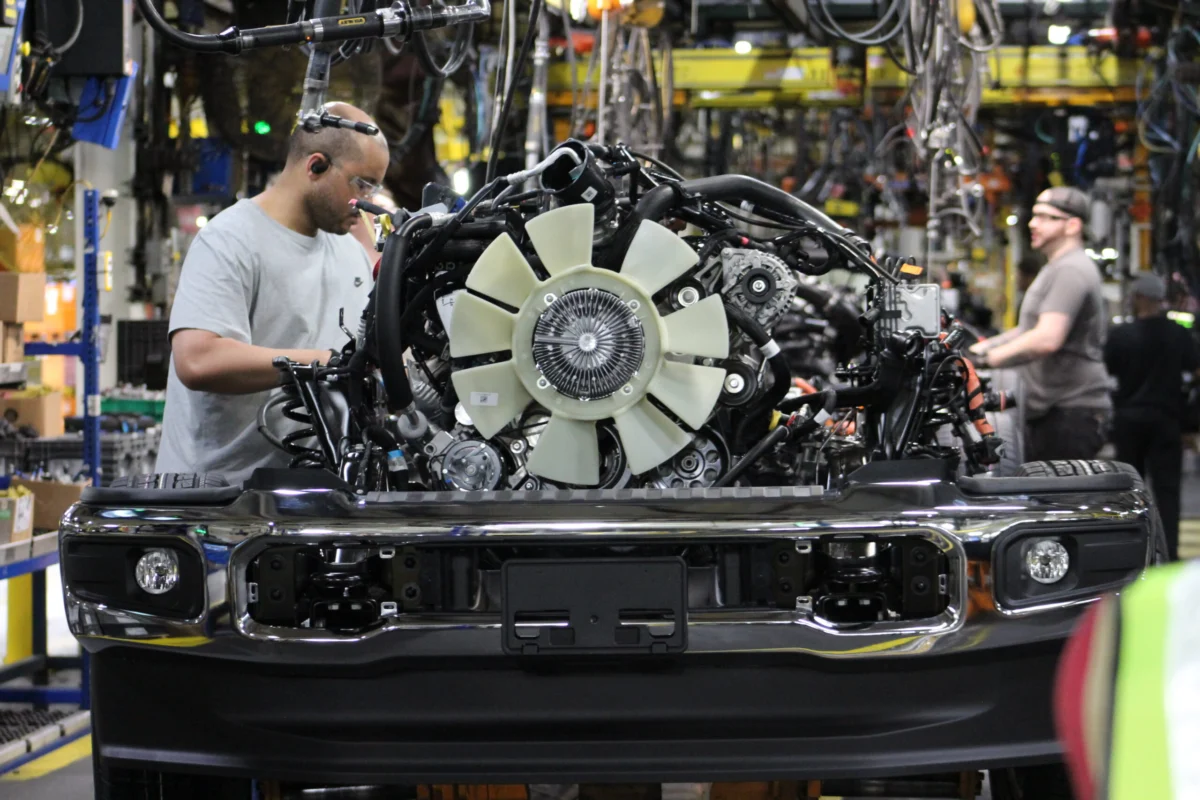
DETROIT – Ford Motor Company announced on Thursday a significant $1 billion investment to construct an advanced paint shop at its critically important Kentucky Truck Plant (KTP), a move designed to modernize one of its most profitable global manufacturing operations and reinforce its commitment to American production. This substantial financial commitment comes just two days after Transportation Secretary Sean Duffy of the Trump administration voiced "profound concern" regarding the automaker’s "manufacturing integrity" in the U.S. and its perceived entanglements with Chinese entities, raising questions about potential detriment to the American automotive industry.
Strategic Investment in a Cornerstone Facility
The Kentucky Truck Plant, located in Louisville, is widely recognized by Ford as its most important and lucrative manufacturing facility worldwide. It is the sole producer of Ford’s highly profitable F-Series Super Duty trucks, encompassing the F-250 to F-550 models, which are stalwarts of the commercial and heavy-duty vehicle markets. Additionally, KTP manufactures the full-size Ford Expedition and luxury Lincoln Navigator SUVs, vehicles that command significant profit margins for the company. The planned $1 billion investment will fund a brand-new, state-of-the-art paint shop, which is slated to replace the plant’s existing facility. Paint shops represent one of the most capital-intensive, technologically complex, and environmentally sensitive components of any vehicle assembly plant. Modernizing this critical process is essential for enhancing vehicle quality, improving production efficiency, and meeting increasingly stringent environmental regulations.
Ford’s press release on Thursday emphasized that this investment aims to further modernize one of its most vital manufacturing operations, underscoring the company’s continuous effort to maintain a competitive edge. The Detroit-based automaker confirmed that groundbreaking on the new facility is scheduled for later this year, though a Ford spokesperson declined to specify an expected completion date for the project. This new investment adds to a series of substantial capital injections into Ford’s Kentucky facilities, totaling approximately $4 billion in recent years, demonstrating a sustained commitment to the region’s manufacturing infrastructure and workforce.
Navigating Political Crosscurrents and Reinforcing Domestic Production
The timing of Ford’s announcement is particularly noteworthy, unfolding against a backdrop of heightened political rhetoric concerning U.S. manufacturing and supply chain independence. Secretary Duffy’s public admonition to Ford CEO Jim Farley, conveyed in a letter released by the Trump administration on Tuesday, specifically questioned Ford’s U.S. "manufacturing integrity" and its connections to Chinese companies. This critique tapped into broader national discussions about economic nationalism, the reshoring of manufacturing jobs, and the strategic decoupling of critical industries from potentially adversarial foreign influences.
Ford, which consistently highlights its status as the leading vehicle producer in the United States, swiftly dismissed Duffy’s comments as a "wrongheaded attempt to capture headlines." The company has long championed its "Built in America" narrative, a strategy that resonates deeply with American consumers and policymakers alike. Following a comprehensive response from Ford addressing the administration’s concerns, the White House’s Rapid Response account on X (formerly Twitter) issued a notably positive statement on Wednesday, declaring Ford "a GREAT American company." This rapid shift in tone from the administration underscores the delicate balance companies like Ford must maintain between global operations and domestic political pressures, especially concerning high-profile investments and job creation in the U.S.
Jim Farley, Ford CEO, articulated the strategic rationale behind the investment in the company’s press release: "These investments demonstrate our confidence in Kentucky’s workforce, our commitment to American manufacturing, and our belief that the future of mobility and energy will be built right here in the United States." Farley’s statement aligns Ford’s investment directly with national priorities, emphasizing job security for American workers and the strategic importance of domestic production in the evolving landscape of automotive technology and energy.
The Indispensable Role of Paint Shops in Modern Automotive Manufacturing
A modern automotive paint shop is far more than just a place to apply color; it is a sophisticated, multi-stage process that is critical to a vehicle’s aesthetic appeal, durability, and corrosion resistance. It typically involves multiple layers of coatings, from pre-treatment and electrocoating (e-coat) for rust protection, to primer, basecoat (color), and clearcoat for gloss and protection. Each stage requires precise temperature and humidity control, dust-free environments, and highly specialized robotic application systems. The complexity and sheer scale of operations in a plant like KTP, which produces hundreds of thousands of vehicles annually, necessitate constant technological upgrades to maintain quality and efficiency.
The cost associated with building or upgrading a paint shop is staggering, often representing a substantial portion of total plant investment, sometimes exceeding 25-30% of a new plant’s cost. This is due to the extensive infrastructure required, including massive ventilation systems, water treatment facilities, hazardous waste management, and specialized robotics. A new paint shop allows for the implementation of advanced technologies such as robotic application systems that ensure consistent coverage and minimal overspray, leading to material savings and reduced emissions. It also facilitates the use of more environmentally friendly paint formulations, such as waterborne paints, which significantly reduce volatile organic compound (VOC) emissions compared to traditional solvent-based systems. This contributes to Ford’s broader sustainability goals and compliance with environmental regulations.
For the Super Duty trucks, Expedition, and Navigator, vehicle appearance and long-term durability are paramount. These vehicles are often subjected to demanding use, and a superior paint finish is crucial for customer satisfaction and resale value. The new paint shop at KTP is expected to deliver enhanced paint quality, greater color accuracy, and improved resistance to chips, scratches, and environmental wear, directly benefiting Ford’s premium product lines.
Economic Impact and Regional Significance
The Kentucky Truck Plant is an economic powerhouse for Kentucky and the broader U.S. automotive supply chain. With a workforce exceeding 8,700 employees, KTP is one of the largest manufacturing facilities in the state. This $1 billion investment is not just about a new paint shop; it represents job security for existing workers and could potentially lead to additional job creation in the future, both directly at the plant and indirectly through the vast network of suppliers and service providers. Such a large-scale project typically generates hundreds of construction jobs over its multi-year development phase, providing a significant boost to the local economy.
Kentucky Governor Andy Beshear has frequently highlighted the state’s strong partnership with Ford, citing the automaker as a cornerstone of the state’s manufacturing sector. While specific statements from state officials regarding this particular investment were not immediately available, past reactions to Ford’s investments have consistently been positive, emphasizing job creation, economic growth, and the state’s attractiveness for industrial development. Labor unions, particularly the United Auto Workers (UAW), whose members comprise a significant portion of KTP’s workforce, would likely view this investment as a positive sign of Ford’s long-term commitment to its unionized workforce and a boost for job stability.
Beyond direct employment, the plant’s operations generate substantial tax revenues for local and state governments and support a vast ecosystem of ancillary businesses, from logistics and transportation to maintenance and technology services. The continued modernization of KTP ensures its viability and competitiveness for decades to come, safeguarding this critical economic engine for the region.
Broader Strategic Implications for Ford
Ford’s $1 billion investment in KTP holds several key strategic implications for the company. Firstly, it solidifies Ford’s leadership in the highly lucrative full-size truck and SUV segments. The F-Series Super Duty trucks, in particular, are not just vehicles; they are tools for businesses and often represent the largest purchase many individuals make outside of their homes. Maintaining cutting-edge manufacturing capabilities for these products is vital for market share and profitability.
Secondly, the investment reinforces Ford’s "Built in America" strategy. In an era where supply chain resilience and national manufacturing capabilities are paramount, showcasing significant domestic investment is a powerful message to consumers, investors, and policymakers. This strategy helps Ford differentiate itself from competitors and aligns with national initiatives to strengthen the U.S. industrial base.
Thirdly, it prepares KTP for future production demands, potentially including the integration of new technologies or the expansion of vehicle lines. While the current focus is on a paint shop, a modernized facility provides a more adaptable foundation for future innovations, including the potential for electric vehicle variants or new powertrain technologies in these large platforms, though Ford’s primary EV strategy is currently focused elsewhere.
Finally, the announcement serves as a timely response to political scrutiny. By making a substantial domestic investment shortly after criticism from a high-profile administration official, Ford effectively demonstrates its commitment to U.S. manufacturing, potentially deflecting future political attacks and solidifying its image as a key contributor to the American economy. This proactive approach helps manage corporate reputation and stakeholder relations in a politically charged environment.
Conclusion: A Commitment to the Future of American Manufacturing
Ford’s $1 billion investment in a new paint shop at its Kentucky Truck Plant is a multifaceted strategic move. It is a testament to the enduring importance of KTP as a profit center, a critical technological upgrade ensuring the quality and efficiency of its flagship trucks and SUVs, and a powerful reaffirmation of Ford’s commitment to American manufacturing. By modernizing a crucial part of its production process, Ford is not only enhancing its operational capabilities but also strategically navigating political currents and solidifying its position as a major contributor to the U.S. economy and workforce. This investment underscores the company’s belief that the future of mobility, and the high-value jobs associated with it, will continue to be built on American soil.
