

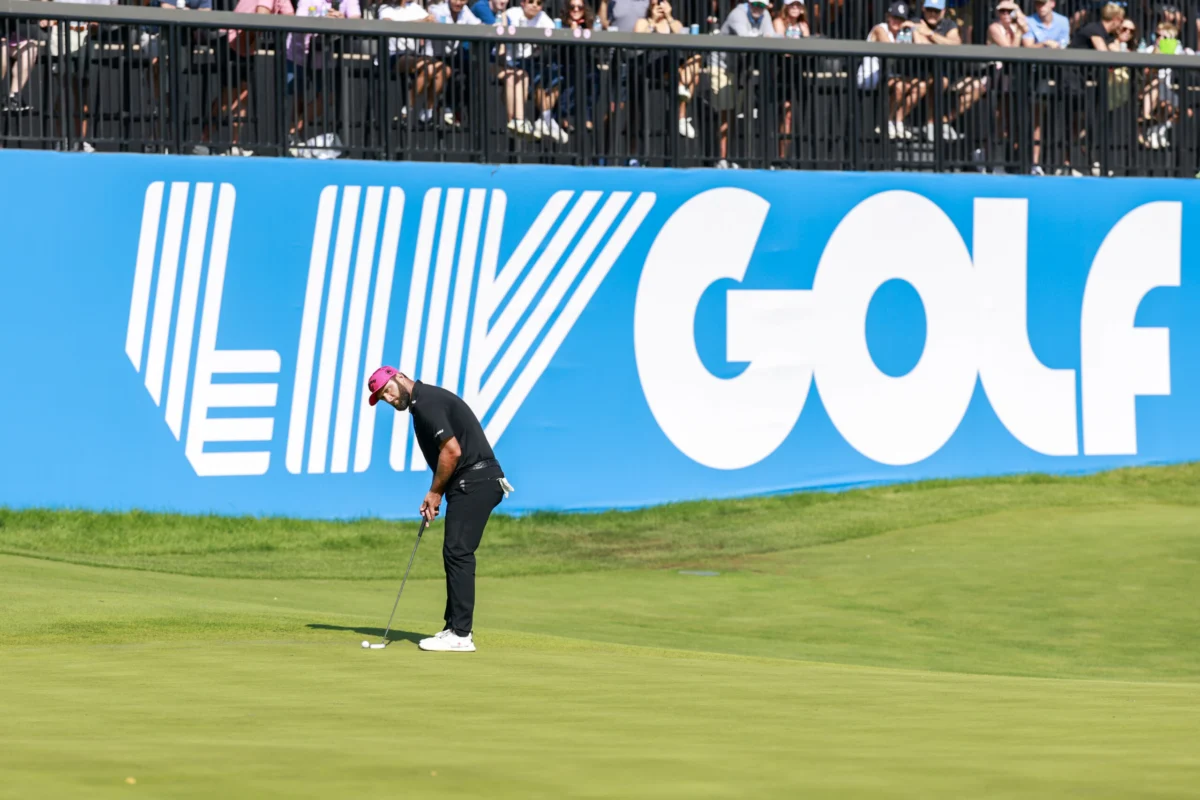
LIV Golf, the controversial upstart professional golf league, has formally filed for Chapter 11 bankruptcy protection in the U.S. Bankruptcy Court for the District of New Jersey. This strategic maneuver comes as the league grapples with the impending cessation of primary funding from Saudi Arabia’s Public Investment Fund (PIF) and actively seeks new investment avenues to ensure its long-term viability. The filing, announced Tuesday, marks a pivotal moment in the tumultuous journey of a venture that dramatically reshaped the landscape of professional golf.
The golf enterprise, which burst onto the scene with significant financial backing from the Saudi PIF, confirmed it has entered into a restructuring support agreement with BC Partner Advisors LP, the credit arm of the prominent private equity firm BC Partners. This agreement is designed to facilitate a comprehensive financial overhaul, aiming to stabilize operations and pave the way for a sustainable future. A key component of the proposed bankruptcy deal, which awaits court approval, is a fundamental shift in ownership structure, with the league expected to become majority-owned by its players. LIV Golf stated in its Tuesday news release that it remains in advanced discussions with its players regarding this innovative ownership model.
The Genesis of LIV Golf and the Funding Challenge
LIV Golf emerged in 2022, backed by billions from Saudi Arabia’s sovereign wealth fund, the Public Investment Fund, with an audacious goal: to challenge the long-established dominance of the PGA Tour. The league quickly attracted a roster of high-profile players, including major champions like Phil Mickelson, Dustin Johnson, Brooks Koepka, Bryson DeChambeau, and Jon Rahm, by offering unprecedented guaranteed contracts and lucrative prize money pools. Initial reports suggested that the PIF had committed well over $2 billion to launch and sustain the league, with player signing bonuses alone reportedly ranging from tens of millions to hundreds of millions of dollars for top talent. This aggressive financial strategy ignited what became known as the "golf war," characterized by legal battles, public spats, and a deep schism within professional golf.
However, the immense capital outlay required to operate such a league, coupled with challenges in securing traditional revenue streams like robust television deals and corporate sponsorships, placed significant financial strain on the model. CNBC had previously reported in April 2026 that the PIF was slated to cease its direct funding of LIV Golf at the conclusion of the 2026 season. This impending "funding cliff" prompted LIV to launch an investor roadshow earlier this year, aiming to raise up to $350 million from external stakeholders to support its ongoing operations beyond the PIF’s direct involvement. The urgency of this fundraising became critical as the 2026 season progressed.
A Detailed Timeline of LIV Golf’s Financial Evolution and Challenges
- 2021-2022: Inception and Aggressive Expansion: LIV Golf is formally announced, funded by the Saudi PIF. It begins signing high-profile players away from the PGA Tour with massive, guaranteed contracts, sparking immediate controversy and a "golf war." The league launches its inaugural season with an eight-event schedule.
- June 2023: The Shock Merger Announcement: In a stunning development, the PGA Tour, DP World Tour, and PIF announce a framework agreement to merge their commercial interests into a new, yet-to-be-named entity. This announcement, made by PGA Tour Commissioner Jay Monahan alongside PIF Governor Yasir Al-Rumayyan, promises to unify professional golf under a single umbrella. The deal is met with mixed reactions, including skepticism from players on both sides and scrutiny from antitrust regulators.
- 2023-2026: Stalled Merger and Continued Operations: Despite the framework agreement, the proposed merger faces significant hurdles, including ongoing antitrust reviews in the United States and pushback from some PGA Tour players and board members. The deadline for finalizing the deal is repeatedly extended, with little public progress. LIV Golf continues its operations, expanding its schedule and adding more players, but the underlying financial model remains heavily reliant on PIF funding. Concerns about the league’s long-term financial sustainability begin to mount, especially without a clear path to a unified tour.
- April-June 2026: Funding Cliff Reports Intensify: CNBC reports surface, indicating that the PIF intends to significantly scale back or completely withdraw its direct operational funding for LIV Golf by the end of the 2026 season. LIV Golf CEO Scott O’Neil, in a June interview with CNBC, acknowledges the organization’s reliance on the PIF but expresses confidence in the sovereign wealth fund’s commitment through the season’s end. Simultaneously, LIV initiates its investor roadshow to seek alternative funding.
- August 2026: Chapter 11 Filing: Faced with the imminent funding cliff and a need for structural reform, LIV Golf files for Chapter 11 bankruptcy protection, entering a restructuring support agreement with BC Partner Advisors LP. The move signals a critical pivot towards a new financial and ownership model.
The Restructuring Plan: Player Ownership and New Financing
The core of LIV Golf’s proposed bankruptcy deal revolves around a significant shift in its operational and ownership framework. Under the terms of the restructuring support agreement, the league anticipates becoming majority-owned by its players. This innovative "player-first ownership model" aims to align the interests of the league more directly with its primary assets—the athletes themselves. This could potentially foster a greater sense of stability and commitment among the players, who have often been criticized for prioritizing guaranteed money over traditional golf legacies.
To ensure continuity during the bankruptcy proceedings, the PIF has agreed to provide $49.6 million in debtor-in-possession (DIP) financing. This critical interim funding will allow LIV Golf to maintain its operations, including paying staff, event costs, and prize money, while navigating the complexities of Chapter 11. Following its emergence from bankruptcy protection, BC Partners Credit and other minority stakeholders are expected to step in and provide long-term financing, signaling a new chapter of private equity involvement and a diversified funding base.
Official Statements and Inferred Industry Reactions
Scott O’Neil, CEO of LIV Golf, articulated the league’s perspective on the filing in Tuesday’s release: "This process gives us the structure and time to pursue a landmark transaction and begin the next chapter of LIV Golf — one built around the fans, an innovative, player-first ownership model, and a part of the global golf ecosystem. We are excited about what lies ahead and yet, there is still much to accomplish in the months ahead." O’Neil’s statement emphasizes a strategic pivot, aiming for a more integrated role within the broader golf landscape and a renewed focus on fan engagement.
The bankruptcy filing is likely to elicit a range of reactions across the professional golf world:
- PGA Tour: While no immediate official statement is expected from the PGA Tour, the development could significantly alter the dynamics of any future unification talks. The financial instability of its rival may strengthen the PGA Tour’s negotiating position. It might also lead to renewed discussions about how to reintegrate LIV players, potentially under more favorable terms for the PGA Tour. There could be an underlying sense of vindication among those who viewed LIV’s model as unsustainable.
- LIV Golf Players: For the players who made the leap to LIV, this news could bring a mix of apprehension and relief. The uncertainty surrounding the PIF funding cliff has been a persistent concern. The prospect of player-majority ownership, while unprecedented, could offer a pathway to greater stability and a direct stake in the league’s future, provided the restructuring is successful. However, the bankruptcy process itself implies a period of uncertainty and potential financial adjustments.
- Industry Analysts: Financial analysts will likely view this as a necessary, albeit costly, step for LIV Golf to achieve long-term sustainability. The initial investment by the PIF, estimated in the billions, yielded significant disruption but struggled to generate commensurate returns through traditional golf business models. The transition to private equity backing and a player-ownership model suggests a move towards a more conventional, albeit still innovative, commercial enterprise. Questions will remain about the league’s ability to attract major sponsors and secure lucrative broadcast deals in a post-bankruptcy landscape.
- Saudi Public Investment Fund (PIF): The PIF’s decision to provide interim financing while stepping back from primary operational funding suggests a strategic recalibration. While maintaining a financial interest, their role is shifting from direct operator to a more passive investor or facilitator of the transition. This aligns with broader trends of sovereign wealth funds seeking more diversified and sustainable investment opportunities. The initial objective of disrupting golf and raising Saudi Arabia’s profile was undoubtedly achieved, albeit at a very high cost.
Broader Impact and Implications for Professional Golf
The Chapter 11 filing by LIV Golf carries profound implications for the entire ecosystem of professional golf:
- Future of a Unified Tour: The bankruptcy could either facilitate or further complicate the prospects of a unified professional golf tour. On one hand, a financially restructured LIV Golf, with a new ownership model and external private equity backing, might be a more stable and palatable negotiating partner for the PGA Tour than one solely dependent on sovereign wealth. On the other hand, the legal and financial complexities of a bankruptcy proceeding could introduce new hurdles to any merger discussions. The original framework agreement for the merger remains in limbo, and this development adds another layer of uncertainty to its potential completion.
- Player Careers and Mobility: The shift to a player-majority ownership model could redefine player agency within professional golf. It remains to be seen how this structure will impact player contracts, prize money guarantees, and the ability of players to move between tours. For younger players, the stability of either tour will be a major factor in career decisions.
- Financial Sustainability of Alternative Models: LIV Golf’s journey serves as a stark reminder of the immense financial challenges in establishing a new sports league from scratch, particularly when competing against an entrenched institution like the PGA Tour. The billions invested by the PIF highlight the capital required, and the bankruptcy filing underscores the difficulty in translating that investment into a profitable, self-sustaining enterprise without traditional revenue streams fully developed. This experience will likely inform future attempts to disrupt established sports leagues.
- The Role of Sovereign Wealth Funds in Sport: The PIF’s involvement in LIV Golf has been a high-profile example of "sportswashing" allegations and the increasing influence of sovereign wealth funds in global sports. While the PIF is providing interim financing, its reduced direct operational role in LIV could signal a more cautious approach to future, direct sports league ownership, potentially favoring strategic partnerships or minority stakes.
- Legal and Regulatory Landscape: The antitrust scrutiny that has surrounded the PGA Tour-LIV Golf merger will continue to be a factor. Any restructured LIV Golf, particularly one with new ownership, will still operate within a complex regulatory environment. The bankruptcy court will also oversee the process, adding another layer of legal oversight.
LIV Golf’s Chapter 11 filing is more than a financial maneuver; it represents a significant turning point in the ongoing saga of professional golf. It marks the end of one chapter defined by unprecedented spending and direct sovereign wealth control, and the beginning of another, aiming for a more sustainable, player-centric model, albeit through the challenging path of bankruptcy and restructuring. The coming months will be crucial in determining whether this strategic action can indeed pave the way for LIV Golf to secure a lasting place within the global golf ecosystem.
