

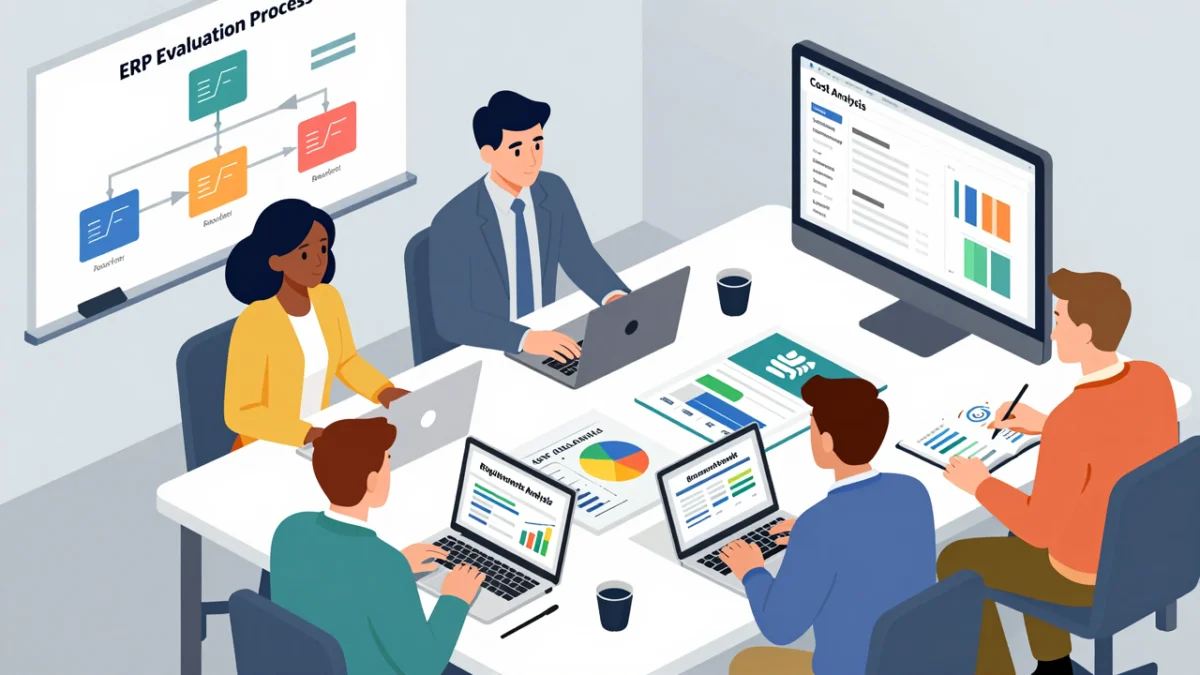
The global Enterprise Resource Planning (ERP) market is currently undergoing a period of unprecedented expansion, with industry analysts projecting the sector to exceed $100 billion in valuation by the end of the decade. As organizations across the manufacturing, retail, and service sectors grapple with the complexities of "Industry 4.0," the selection of an ERP system has transitioned from a mere IT procurement task to a critical strategic imperative. Choosing the right ERP system is not merely about purchasing software; it is an exercise in organizational alignment, requiring a deep synergy between technological capabilities and long-term business objectives. To navigate this high-stakes transition, firms must adopt a rigorous framework that encompasses requirement definition, leadership engagement, user-centric design, and a comprehensive analysis of the total cost of ownership.
The Foundation of Selection: Defining Multi-Departmental Requirements
The genesis of a successful ERP implementation lies in the meticulous identification of business requirements. Modern enterprises often operate in silos, with finance, human resources, and supply chain departments utilizing disparate tools that lead to data fragmentation. The selection process must begin with a comprehensive audit of these departmental needs. By engaging stakeholders at every level—from C-suite executives to front-line operators—organizations can develop a robust ERP system requirements list that reflects the actual day-to-day challenges of the workforce.

Industry experts recommend the "MoSCoW" method (Must have, Should have, Could have, and Won’t have) to categorize features. This prioritization is essential to prevent "scope creep," a phenomenon where the project expands beyond its original parameters, leading to budget overruns and delayed timelines. A functional needs assessment should specifically target bottlenecks in current workflows, such as manual data entry in the finance department or lack of real-time inventory visibility in the supply chain. Furthermore, the selection criteria must account for future scalability and regulatory compliance, ensuring the system remains viable as the company enters new markets or faces evolving data protection laws like GDPR or CCPA.
The Role of Executive Sponsorship and Change Management
A significant percentage of ERP failures are attributed not to technical glitches, but to a lack of organizational commitment. Securing leadership buy-in is the primary safeguard against project stagnation. When the executive tier views the ERP as a strategic asset rather than a departmental expense, resource allocation becomes more fluid, and inter-departmental conflicts are resolved with greater speed.
The business case presented to leadership must be grounded in strategic alignment. It should illustrate how the centralized data provided by an ERP can lead to faster decision-making and a more agile response to market fluctuations. To foster a culture of accountability, measurable objectives should be tied to the performance metrics of department heads. This top-down approach ensures that the ERP project is woven into the company’s broader vision, transforming it from a software installation into a comprehensive business transformation initiative.

Prioritizing the Human Element: User Experience and Adoption Rates
In the modern workplace, the success of a digital tool is increasingly measured by its adoption rate. If an ERP system is cumbersome or unintuitive, employees are likely to find "workarounds," maintaining their own offline spreadsheets and thereby negating the benefits of a centralized system. Prioritizing User Experience (UX) is, therefore, a functional necessity.
During the vendor evaluation phase, organizations should insist on live demonstrations that involve the actual end-users. This allows the selection committee to gauge the ease of navigation and the clarity of the interface. An intuitive design reduces the "time-to-competency," lowering the initial productivity dip that often accompanies new software rollouts. Furthermore, companies must evaluate the quality of the training resources and ongoing support offered by the vendor. A system that is familiar or shares a similar architecture with existing tools can significantly enhance user satisfaction and long-term engagement.
Integration Architecture and the Legacy Challenge
Modern ERP systems do not exist in a vacuum; they must function as the central nervous system of an organization’s digital ecosystem. Evaluating integration capabilities is perhaps the most technical yet vital aspect of the selection process. A seamless flow of data between the ERP and existing Customer Relationship Management (CRM) tools, Business Intelligence (BI) platforms, and third-party logistics software is essential for maintaining a "single source of truth."

Organizations must conduct a thorough gap analysis of their current technical architecture. This includes determining whether the ERP can integrate with legacy systems—older software that may still house critical historical data but lacks modern API (Application Programming Interface) connectivity. Additionally, for firms involved in global trade, the system must support Electronic Data Interchange (EDI) to facilitate automated communication with international suppliers and distributors. Addressing these integration challenges during the selection phase prevents costly "middleware" development later in the implementation cycle.
The Financial Reality: Total Cost of Ownership and ROI Projections
The financial commitment required for an ERP implementation extends far beyond the initial purchase price. The Total Cost of Ownership (TCO) is a comprehensive metric that includes license fees, implementation consultancy, data migration, customization, and ongoing maintenance. On average, the cost of a robust ERP system can reach approximately $9,000 per user, though this varies significantly based on whether the solution is cloud-based (SaaS) or on-premise.
Calculating the Return on Investment (ROI) requires a long-term perspective, typically spanning five to seven years. The primary drivers of ROI are often found in "soft" savings, such as increased employee productivity, reduced administrative errors, and optimized inventory levels. For example, automating the accounts payable process can reduce the cost per invoice significantly, while improved demand forecasting can lower carrying costs in a warehouse. A thorough financial analysis should weigh these efficiency gains against the TCO to provide a clear picture of the project’s value proposition.

Chronology of a Standard ERP Selection and Implementation Lifecycle
The transition to a new ERP system is a multi-stage journey that requires disciplined project management. While timelines vary by organization size, a typical chronology follows this trajectory:
- Phase 1: Discovery and Planning (Months 1-3): Formation of the project team, stakeholder interviews, and the drafting of the requirements document.
- Phase 2: Vendor Evaluation (Months 4-6): Issuing Requests for Proposals (RFPs), attending demonstrations, and conducting reference checks with existing clients of the vendor.
- Phase 3: Selection and Contract Negotiation (Month 7): Finalizing the vendor choice, negotiating service level agreements (SLAs), and securing final board approval.
- Phase 4: Implementation and Data Migration (Months 8-18): System configuration, cleansing and migrating historical data, and developing custom integrations.
- Phase 5: Testing and Training (Months 16-19): Conducting User Acceptance Testing (UAT) and rolling out comprehensive training programs for all staff.
- Phase 6: Go-Live and Optimization (Month 20+): The official "cut-over" to the new system, followed by a period of hyper-care support and continuous process improvement.
Broader Impact and Industry Implications
The shift toward modern ERP systems is having a profound impact on global business operations. By breaking down data silos, companies are achieving a level of transparency that was previously impossible. This visibility is particularly crucial in an era of supply chain volatility; an integrated ERP allows a business to see a disruption in a Tier 2 supplier and adjust its production schedule in real-time.
Furthermore, the integration of Artificial Intelligence (AI) and Machine Learning (ML) into ERP platforms is paving the way for "Predictive ERP." Instead of merely reporting what happened in the past, these next-generation systems can forecast future trends, such as predicting when a piece of machinery will require maintenance or identifying which customers are at risk of churning.

In conclusion, the selection of an ERP system is a transformative event that dictates an organization’s operational efficiency for years to come. By focusing on the convergence of functional requirements, executive leadership, user experience, and financial viability, businesses can mitigate the risks associated with such large-scale projects. Those that succeed in this alignment will not only streamline their internal processes but will also gain a formidable competitive advantage in an increasingly data-driven global marketplace. The path to a successful ERP implementation is demanding, but for the modern enterprise, it is an essential step toward long-term resilience and growth.
