

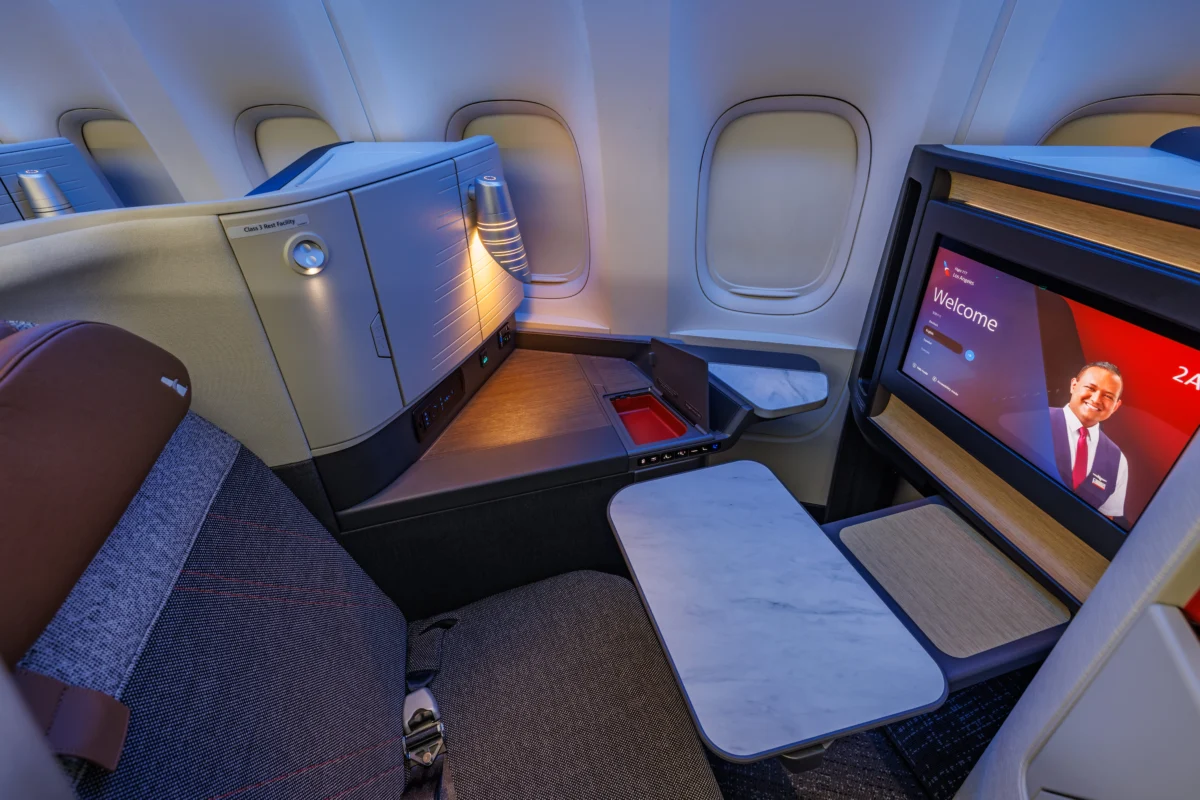
American Airlines has officially launched its first retrofitted Boeing 777-300ER, a pivotal move underscoring the carrier’s intensified focus on the lucrative premium travel segment. This milestone deployment on Wednesday marks a significant step in the airline’s multi-year strategy to elevate its product offering on its largest and most critical long-haul international routes, including high-demand corridors to global hubs like London, Tokyo, and Sydney. The new cabin configuration drastically increases the number of premium seats, aiming to capture a larger share of the high-spending business and leisure traveler market, an area where competitors Delta Air Lines and United Airlines have established a considerable lead.
Strategic Shift: Embracing the Premium Paradigm
The introduction of the reconfigured 777-300ER is not merely an incremental upgrade but a foundational element of American Airlines’ broader strategic realignment. In 2022, the airline publicly announced its intention to phase out traditional international first class on many of its wide-body aircraft. This decision reflected an industry-wide trend where the distinction between first class and an increasingly luxurious business class has blurred, with many carriers opting for a single, expansive premium cabin offering unparalleled comfort and privacy. American’s Flagship Suite, featuring lie-flat seats with sliding doors, is the embodiment of this evolution.
The economic rationale behind this shift is compelling. Premium cabins, while occupying a smaller footprint of an aircraft, generate a disproportionately large share of revenue and profit. A single lie-flat seat on a long-haul international route can command fares nearing $10,000, dwarfing the $2,000 or less typically paid for a seat in the main cabin. This vast revenue differential means that even a modest increase in premium seating can significantly boost an airline’s average revenue per available seat mile (RASM) and overall profitability, making the substantial investment in retrofitting economically viable. Industry analysts have long pointed to the higher margins associated with premium products as a key driver for airline financial success, particularly in the post-pandemic recovery era where corporate travel budgets, while recovering, are often allocated to more efficient and comfortable options.
Anatomy of the Enhanced Cabin Experience
The newly retrofitted Boeing 777-300ER boasts a meticulously redesigned interior tailored to maximize passenger comfort and optimize revenue generation. The wide-body aircraft, a workhorse for ultra-long-haul flights, now features a total of 144 premium seats out of its updated capacity.
At the apex of this offering is the Flagship Suite, positioned at the front of the aircraft. This cabin comprises 70 lie-flat seats, each equipped with sliding doors, providing an unparalleled level of privacy and personal space for passengers. This design choice aligns American with global premium carriers that have adopted similar "suite" concepts, offering an exclusive, residential-style experience in the skies. The suites typically include direct aisle access, ample storage, advanced in-flight entertainment systems, and enhanced dining options, catering to the exacting standards of high-value travelers.
Beyond the Flagship Suite, the aircraft introduces a significantly expanded Premium Economy section, featuring 44 seats. These seats offer enhanced comfort compared to standard economy, including greater recline, increased legroom, privacy headrest wings, and adjustable calf and footrests. Premium Economy has emerged as a critical hybrid product in the aviation industry, appealing to leisure travelers willing to pay a moderate premium for a more comfortable journey, as well as corporate travelers on tighter budgets who still seek an upgrade from the main cabin. It acts as an important bridge between the main cabin and the Flagship Suite, diversifying the airline’s revenue streams.
Further back, the cabin includes 30 Main Cabin Extra seats, which provide additional legroom, a feature consistently popular with passengers seeking a bit more space without the full cost of Premium Economy. The remainder of the aircraft, 186 seats, constitutes the updated Main Cabin, which also benefits from a refresh in aesthetics and passenger amenities, ensuring a consistent brand experience throughout the aircraft. The total premium seat count (Flagship Suite, Premium Economy, and Main Cabin Extra) now represents over 43% of the aircraft’s capacity, a substantial increase from previous configurations, reflecting a clear strategic pivot.
Timeline and Rollout: A Phased Transformation
The journey to this retrofit has been marked by both strategic foresight and logistical challenges. American Airlines first unveiled its ambitious plans for cabin enhancements and the introduction of the Flagship Suite in late 2022. The initial timeline projected a swifter rollout, with the first suites expected to take to the skies sooner. However, like many airlines navigating the post-pandemic supply chain disruptions, American faced delays from suppliers for crucial cabin components. These delays, which affected various aspects of aircraft production and cabin refurbishment across the industry, pushed back the scheduled debut. The airline began flying some initial suites last year on a limited basis as part of the integration process, gathering valuable feedback.
The official launch of the first fully retrofitted Boeing 777-300ER signifies the overcoming of these hurdles and the acceleration of the transformation plan. American Airlines has committed to retrofitting its entire fleet of 20 Boeing 777-300ER aircraft. This comprehensive upgrade program is projected to be completed by next year, ensuring a standardized premium product across its long-haul wide-body operations.
Furthermore, the premium expansion strategy extends beyond the 777-300ER fleet. American Airlines also plans to implement a similar, albeit smaller, premium-focused layout on its new Airbus A321XLR aircraft. The A321XLR is a narrow-body long-range jet designed for transatlantic and other medium-to-long-haul routes, allowing American to deploy a premium product on routes that may not require the larger capacity of a 777, further democratizing access to its enhanced offerings across its international network. This indicates a holistic approach to maximizing premium revenue across various operational scales.
Catching Up in a Competitive Arena
American Airlines’ aggressive push into premium travel is largely seen as a concerted effort to close the gap with its primary domestic rivals, Delta Air Lines and United Airlines. Both Delta, with its Delta One Suites, and United, with its Polaris business class, embarked on significant premium product overhauls several years ago, securing a "head start" in attracting and retaining high-spending travelers. These carriers have successfully marketed their enhanced premium cabins, leading to strong financial performance and a loyal base of business and affluent leisure customers.
Industry observers note that American Airlines’ prior premium offerings, while competitive, had not always kept pace with the innovations introduced by its rivals. The new Flagship Suite, with its privacy doors and advanced features, positions American to directly compete for the same discerning clientele. This investment is crucial not just for revenue generation but also for brand perception and market positioning. A superior premium product can significantly influence corporate travel managers’ decisions and attract high-value individual travelers, enhancing the airline’s reputation as a top-tier global carrier.
Broader Strategic Implications
The cabin retrofit program is part of a multi-faceted strategy by American Airlines to enhance its overall competitiveness and profitability. Beyond the physical product, the airline has been diligently working on several other fronts:
- Loyalty Program Growth: Strengthening its AAdvantage loyalty program is paramount. A compelling premium product provides a strong incentive for frequent flyers to consolidate their travel with American, earning status and rewards that further cement their loyalty.
- On-Time Performance: Improving operational reliability and on-time rates is a critical factor for business travelers, for whom schedule adherence is often as important as comfort. Consistent punctuality enhances customer satisfaction and reduces disruptions.
- Network Expansion: American continues to strategically expand its global network. Just last week, the airline announced the addition of seven new international routes to its 2027 schedule. While none of these specific new routes are slated for the Boeing 777-300ER, they collectively demonstrate the airline’s ambition to grow its international footprint and offer more connectivity, thereby increasing the utility and appeal of its enhanced premium product across a wider array of destinations.
This integrated approach suggests that American Airlines views its premium cabin upgrade not as an isolated project but as an integral component of a larger strategy to enhance the entire customer journey, from booking to arrival. By investing heavily in the physical product, alongside operational improvements and network growth, American aims to cultivate a more loyal and lucrative customer base.
Looking Ahead: The Future of Premium Travel
The aviation industry continues to witness a robust demand for premium travel experiences, even amidst broader economic uncertainties. High-net-worth individuals and corporate clients consistently prioritize comfort, privacy, and efficiency, making the premium segment resilient. American Airlines’ substantial investment in its Flagship Suite and expanded Premium Economy reflects a confident bet on this enduring trend.
The completion of the 777-300ER retrofit program next year, followed by the deployment of the A321XLRs with similar premium configurations, will fundamentally alter American’s competitive standing in the international market. While the financial outlay for such a comprehensive retrofit is considerable, the long-term returns in terms of increased revenue, improved brand perception, and enhanced market share are expected to validate this strategic pivot. As the global aviation landscape continues to evolve, American Airlines’ aggressive embrace of premium travel positions it to compete more effectively for the most profitable segments of the market, signaling a new chapter in its quest for leadership in international air travel.
