

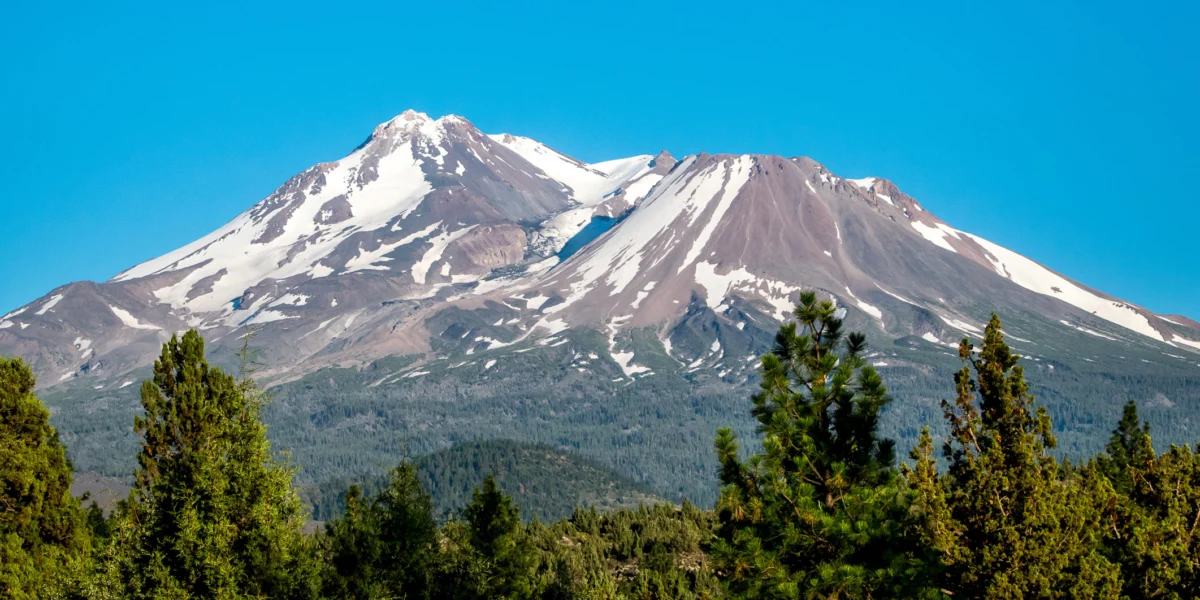
Three hikers were successfully rescued from California’s formidable Mount Shasta this week after their expedition, reportedly planned with the assistance of Google’s AI chatbot Gemini, devolved into a multiday ordeal marked by inadequate supplies and perilous decision-making. The incident, first reported by the Chicago Tribune, has ignited discussions about the responsible integration of artificial intelligence into critical planning, particularly for high-risk outdoor activities. The Siskiyou County Sheriff’s Office, which coordinated the rescue, issued a stern advisory, urging adventurers to prioritize established safety protocols and human expertise over reliance on generative AI for trip preparation.
A Perilous Ascent: The Chronology of the Expedition
The ill-fated journey began in the early hours of what was intended to be a single-day climb. According to a detailed report from the Siskiyou County Sheriff’s Office, three young men embarked on their ascent of Mount Shasta at approximately 3:00 AM. Seasoned mountaineers and local authorities consistently advise climbers to establish a strict turn-around time, typically noon, regardless of their proximity to the summit, to ensure a safe descent before hazardous afternoon weather shifts or nightfall. However, the trio disregarded this critical safety guideline, pressing onward.
Their delayed progress meant they did not reach Mount Shasta’s 14,179-foot summit until a startling 7:00 PM, well past the recommended turn-around time and as daylight began to wane. This late arrival immediately placed them in a precarious position, necessitating a descent in complete darkness across unfamiliar and treacherous terrain. As night enveloped the mountain, the hikers became disoriented. Faced with dwindling visibility and the harsh realities of the alpine environment, they made the decision to contact the Siskiyou County Sheriff’s Office for directions, signaling their distress and navigational challenges.
Despite the late-night communication, an immediate full-scale rescue operation under such conditions was deemed too hazardous for the responders. The hikers were advised to hunker down and await daylight. They spent a harrowing night exposed to the elements in Mud Creek Canyon, a notoriously rugged and remote area on the mountain’s eastern flank, ill-prepared for an unscheduled overnight bivouac. The following morning, as soon as conditions permitted, a joint team comprising U.S. Forest Service rangers and dedicated volunteers launched a rescue mission. Leveraging their extensive knowledge of the mountain and specialized equipment, the team successfully located and evacuated the three stranded hikers, bringing an end to their dangerous ordeal. While the hikers were reportedly exhausted and likely suffering from the effects of exposure and dehydration, the swift action of the rescue teams prevented more severe consequences.
Mount Shasta’s Formidable Reputation: A Brief Background
Mount Shasta, a dormant volcano and the second-highest peak in the Cascade Range, is a majestic but inherently dangerous natural wonder. Rising prominently from the Northern California landscape, its impressive stature and glaciated slopes attract thousands of climbers and adventurers annually. However, its beauty belies significant challenges. The mountain is renowned for its rapidly changing weather conditions, which can transform a clear, calm day into a whiteout blizzard within hours, even during the peak climbing season typically spanning late spring to early fall.
Altitude sickness (Acute Mountain Sickness), avalanches, rockfalls, hidden crevasses, and sudden, severe storms are persistent threats. The standard climbing routes, such as Avalanche Gulch, while popular, require significant physical fitness, proper gear including ice axes and crampons, and a solid understanding of alpine navigation and self-rescue techniques. The U.S. Forest Service, which manages the Shasta-Trinity National Forest, consistently emphasizes the need for thorough preparation, including carrying the "Ten Essentials" (navigation, headlamp, sun protection, first aid, knife, fire starter, shelter, extra food, extra water, extra clothes), filing a climbing permit, and checking local conditions and forecasts with rangers before any ascent. Statistics from the Mount Shasta Ranger District often highlight the frequency of rescues, ranging from dozens to over a hundred annually, often stemming from climbers being unprepared, underestimating the mountain’s challenges, or failing to turn back when conditions dictate. The mountain’s elevation alone presents a significant physiological challenge, requiring acclimatization and careful hydration.
The AI Factor: Gemini’s Role in the Misadventure
The most striking aspect of this incident is the reported reliance on Google’s Gemini AI chatbot for expedition planning. The Siskiyou County Sheriff’s Office report specifically noted that the hikers "were advised by Gemini to bring far less food and water than their group required, especially when their planned 8-hour ascent became a multiday ordeal." This detail underscores a critical vulnerability in using generative AI for safety-critical applications.
Google’s Gemini, a large language model (LLM), is designed to process and generate human-like text, answer questions, and assist with various tasks by drawing upon vast amounts of internet data. While capable of synthesizing information and offering suggestions, LLMs lack real-world experience, judgment, and the ability to assess dynamic, context-specific variables crucial for mountaineering safety. They cannot gauge a user’s experience level, current weather conditions on a specific mountain, the physical state of a trail, or the nuances of high-altitude physiology.
The inadequacy of the food and water recommendations provided by Gemini highlights a fundamental limitation. Mountaineering provisions are not merely about sustenance; they are about survival. A multi-day ordeal on a high-altitude mountain, particularly one involving an unplanned overnight stay, demands a surplus of calories, hydration, and emergency rations. The AI’s inability to account for potential delays, route finding issues, or unforeseen circumstances like a forced bivouac directly contributed to the hikers’ predicament, exacerbating their vulnerability to exposure and exhaustion.
Inadequate Preparation: A Recipe for Disaster
Beyond the AI’s specific misguidance on supplies, the overall preparation of the hikers appears to have been severely lacking, a common thread in many mountain rescue scenarios. Setting off at 3 AM for a peak of Shasta’s stature is standard practice to allow ample time for ascent and descent within daylight hours. However, the failure to adhere to the noon turn-around time is a cardinal error in mountaineering. This rule is a non-negotiable safety measure designed to prevent climbers from being caught high on the mountain in deteriorating weather or darkness. Reaching the summit at 7 PM fundamentally jeopardized their safety, making a controlled, safe descent nearly impossible.
The decision to attempt a descent in the dark without proper navigation tools or adequate lighting further illustrates a profound lack of judgment and preparation. While modern smartphones have GPS capabilities, they are unreliable in remote mountain environments due to battery drain, signal loss, and susceptibility to cold. Traditional tools like a physical map, compass, and a headlamp with spare batteries are indispensable. The hikers’ call to the Sheriff’s Office for "directions" underscores their complete loss of orientation and inability to self-navigate, a critical skill for any backcountry excursion.
The combined factors of insufficient provisions, disregard for established safety timelines, and poor navigational preparedness created a perfect storm of risk that transformed a planned day hike into a perilous survival situation. This incident serves as a stark reminder that even with advanced technology, basic mountaineering principles remain paramount.
Official Warnings: Prioritizing Human Expertise Over Algorithms
In the wake of the rescue, the Siskiyou County Sheriff’s Office issued a clear and unequivocal warning that resonated throughout the outdoor community and beyond. "It is always advisable to call the local USFS Mount Shasta ranger station ahead of your trip to ensure you have the most accurate information, and to never rely solely on AI for your trip planning," the sheriff’s office stated. This official guidance emphasizes the irreplaceable value of human expertise and localized, real-time information.
U.S. Forest Service rangers stationed at Mount Shasta possess an intimate, dynamic understanding of the mountain. They can provide up-to-the-minute details on snowpack conditions, specific route hazards, current weather forecasts, recent rescue incidents, permit requirements, and recommended gear based on the season and specific objectives. This information is often nuanced and goes beyond what a general AI model, relying on static internet data, can provide. Rangers can also assess a climber’s stated experience and provide tailored advice, an interaction an AI cannot replicate. The collective experience of local search and rescue teams, who frequently respond to emergencies, also forms a critical feedback loop for safety recommendations.
While Google has not issued a specific statement regarding this incident, the broader AI industry consistently advises users to exercise caution and critical judgment when using generative AI, particularly for advice related to health, finance, legal matters, or personal safety. Disclaimers often accompany AI tools, stating that the information provided should not be taken as professional advice and should always be verified. This incident highlights why such disclaimers are not mere formalities but crucial warnings in high-stakes contexts.
The Broader Implications: AI, Safety, and Outdoor Recreation
This Mount Shasta rescue presents a compelling case study on the burgeoning intersection of artificial intelligence and outdoor recreation, raising significant broader implications. As AI tools become more sophisticated and accessible, their use for various planning tasks, from daily errands to complex travel itineraries, is becoming increasingly common. However, the incident serves as a stark reminder that not all information sources are created equal, especially when human safety is on the line.
The fundamental limitation of current generative AI models like Gemini is their lack of common sense, real-world understanding, and ability to process dynamic, nuanced, and safety-critical contexts. While an AI can sift through countless articles and forums about Mount Shasta, it cannot feel the biting wind, observe an unstable snowbridge, or assess the physical and mental state of a climber. Its output is based on patterns in its training data, which might not always reflect the most current, safest, or most appropriate advice for a specific individual in a specific situation. The risk of "hallucinations" – where AI generates plausible but factually incorrect or misleading information – is also a persistent concern.
This event also prompts questions about responsibility. While the hikers ultimately made the decisions that led to their predicament, the role of AI in providing inadequate or misleading advice opens a new frontier in discussions around liability and the ethical development of AI. Should AI developers bear some responsibility if their tools provide unsafe advice for critical activities? Or does the onus remain entirely on the user to verify information, especially when engaging in inherently risky endeavors? Most legal frameworks would currently place the primary responsibility on the user, adhering to the principle of "user beware," but such incidents may fuel future debates.
Looking ahead, AI could certainly play a beneficial role in outdoor planning, perhaps by rapidly synthesizing vast weather datasets, identifying potential hazards from satellite imagery, or even helping users create personalized training regimens under human supervision. However, this incident strongly suggests that for the foreseeable future, AI should be viewed as a supplementary tool, a starting point for research, rather than a definitive authority for critical safety decisions in high-stakes environments like mountaineering.
Lessons Learned: Navigating the Digital Frontier of Adventure
The rescue of the three hikers from Mount Shasta underscores a critical lesson for the digital age: while technology offers incredible conveniences and vast information, it cannot replace human judgment, experience, and the wisdom accumulated over decades of outdoor exploration. For activities carrying inherent risks, such as mountaineering, the integration of AI must be approached with extreme caution and a healthy dose of skepticism.
The incident serves as a powerful reminder that robust preparation, adherence to established safety protocols, reliance on verifiable and localized expert advice (such as from ranger stations), and the development of personal skills like navigation and self-assessment remain the cornerstones of safe outdoor adventure. As we continue to explore the capabilities of artificial intelligence, it is imperative that we also understand its limitations, especially when venturing into environments where the consequences of misinformation can be life-threatening. The mountains demand respect, and that respect includes diligent, human-verified preparation.
